A suppressed 450 Bushmaster upper is one of the more satisfying big-bore projects you can put on an AR-15 lower, but it asks more of your parts list than a typical 5.56 can setup. The cartridge pushes a wide, heavy bullet, so the thread pitch, the suppressor bore, the muzzle device and the gas system all have to agree with each other. Our editors broke the build into the pieces that matter: a properly threaded barrel, a can rated for the caliber, the right mounting hardware, sensible ammunition, a gas system that tolerates extra back pressure and the federal paperwork. Get those right and you end up with a hard-hitting rifle that is noticeably more pleasant to shoot.
Want to see which big-bore uppers are ready to go?
Key Takeaways
- Start with a 450 Bushmaster barrel whose thread pitch matches your suppressor mount, because big-bore barrels do not share the 1/2x28 pitch common on 5.56 rifles.
- Choose a suppressor rated by its manufacturer for 450 Bushmaster or a larger bore, and confirm the rating in writing before you buy.
- Expect more gas and more carrier speed with a can attached, and plan on tuning the gas or buffer side rather than altering the barrel.
- Since January 1, 2026 the federal suppressor tax is $0, but ATF registration and approval are still required before you take possession.
- State and local laws on suppressors and hunting with them vary, so check your own rules before you build or hunt.
Why a Suppressed 450 Bushmaster Makes Sense
The 450 Bushmaster was designed to put a large-diameter, straight-wall cartridge into an AR-15 platform. That combination is popular with hunters in states that restrict deer rifles to straight-wall cartridges, and with shooters who want heavy-bullet performance at woods ranges. You can read more about the cartridge's role in the field in AR15Parts.com's look at what 450 Bushmaster is good for.
The downside of all that power is noise and muzzle blast. Many factory 450 uppers ship with an aggressive brake to tame recoil, and brakes send a lot of concussion back toward the shooter and anyone beside them. A suppressor addresses both problems at once. It traps and slows the expanding gas, which cuts the report at the shooter's ear and also takes some of the push out of recoil.
What a Suppressor Will and Will Not Do
A suppressor does not make a supersonic rifle quiet like a movie prop. Standard 450 Bushmaster hunting loads are supersonic, so you still hear the bullet's crack downrange. What you gain is a meaningful reduction in muzzle report, less flash and a softer shooting experience, which makes follow-up shots and range sessions easier. Hearing protection is still a smart idea, especially indoors or under cover.
Hunting Versus Range Use
For hunters, the main benefits are a calmer experience at the shot and less disturbance for hunting partners. For range shooters, a can makes a big-bore upper far more sociable on a shared firing line. Either way, the parts list below stays the same.
Start With the Right Barrel and Upper
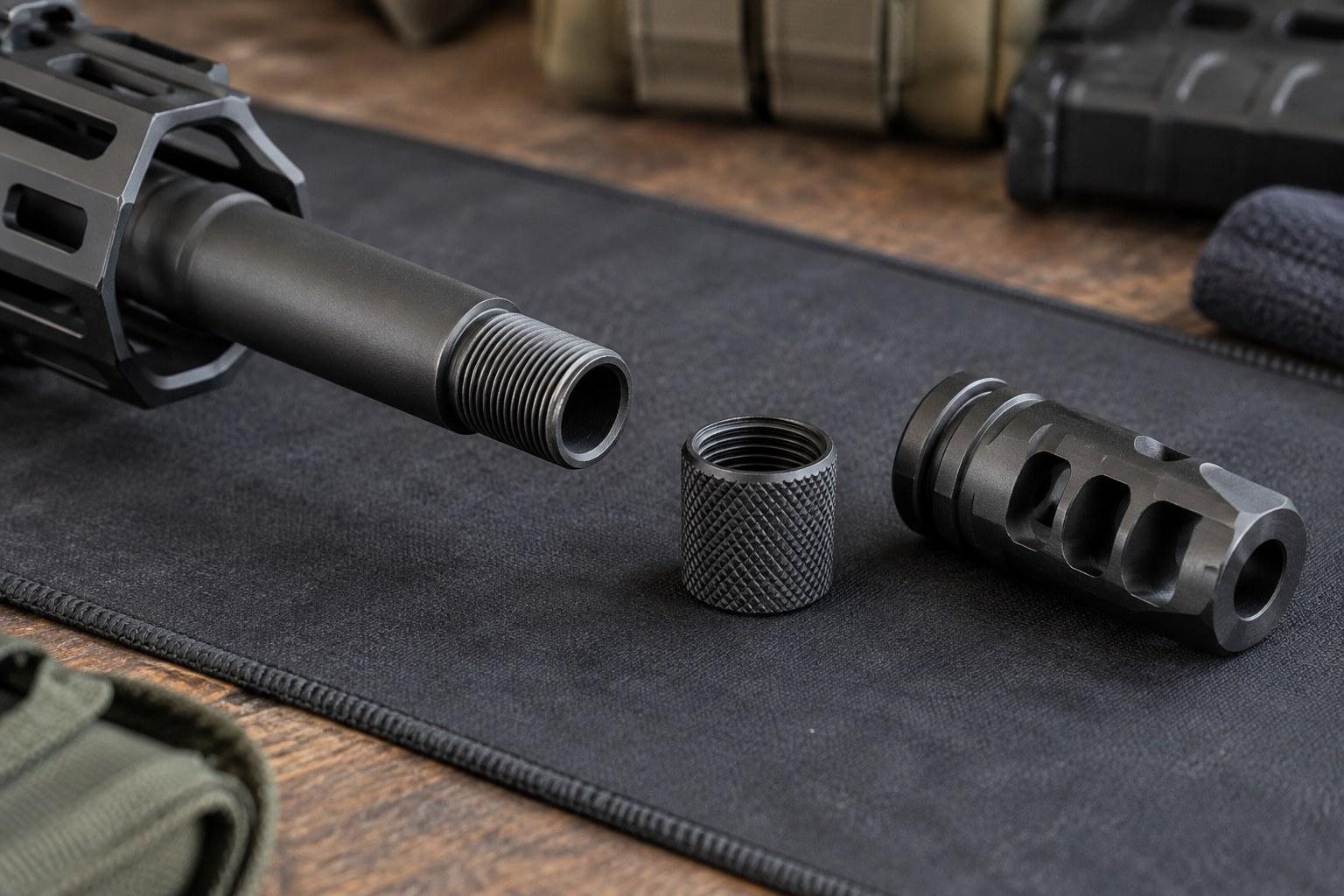
Everything in a big-bore suppressor build starts at the muzzle threads. The cartridge uses a .452 inch bullet, so the barrel needs a larger thread pitch than a standard 5.56 barrel, and your suppressor mount has to match it exactly.
Thread Pitch Is the First Decision
450 Bushmaster barrels commonly use one of two thread pitches, 5/8x32 or 3/4x24, depending on the barrel's weight profile and manufacturer. Both pitches are common in the big-bore suppressor world, but they are not interchangeable, so pick your mount or direct-thread can only after you confirm which pitch your barrel uses.
| Barrel (listed at AR15Parts.com) | Length | Material and Finish | Twist | Muzzle Thread |
|---|---|---|---|---|
| Heavy Parkerized barrel | 16 inch | 4150 chrome, Parkerized | 1:24 | 5/8x32 |
| Satern Barrels heavy barrel | 16 inch | 416R stainless | 1:20 | 3/4x24 |
| Satern Barrels heavy barrel | 18 inch | 416R stainless | 1:20 | 3/4x24 |
Complete Upper or Barreled Build
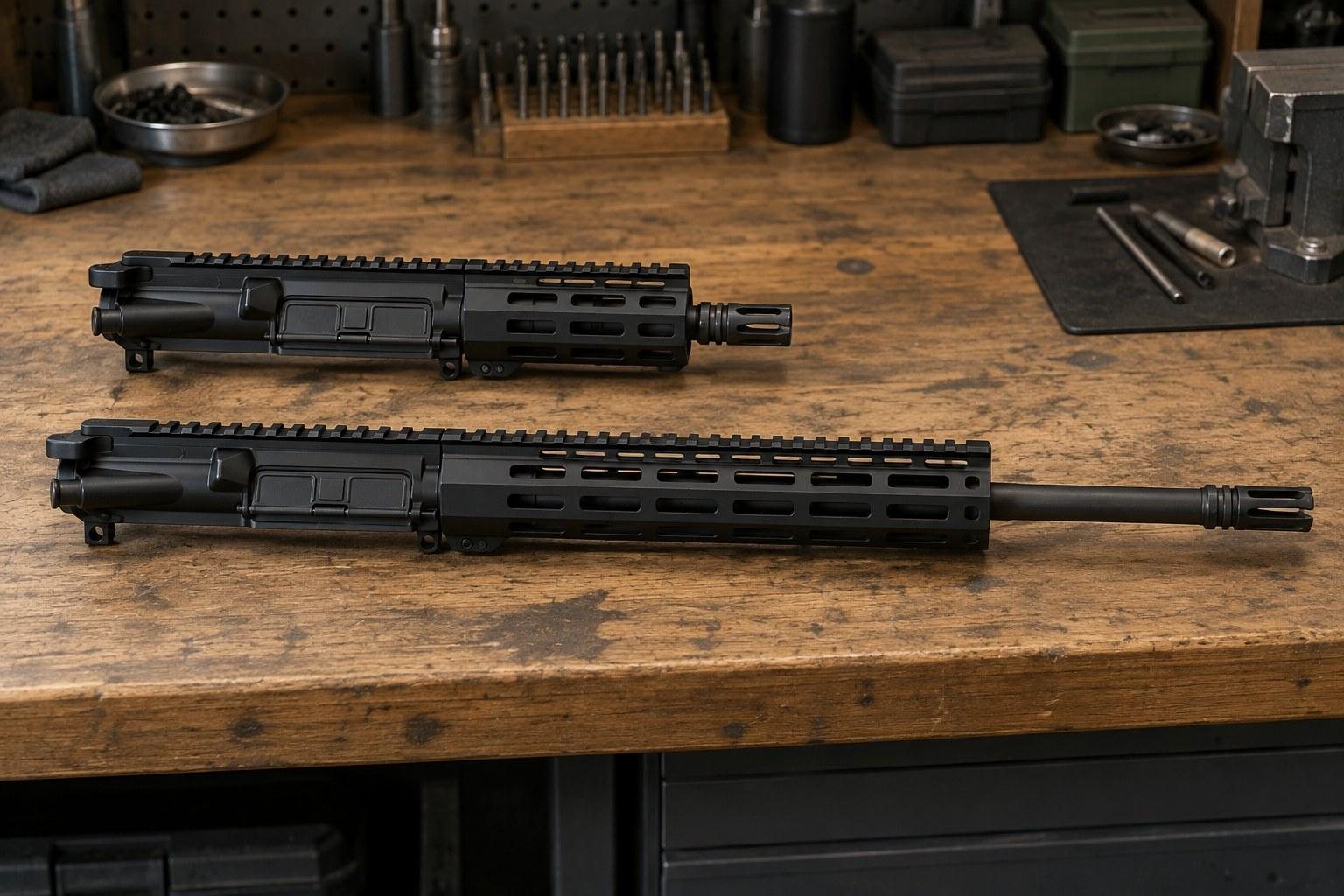
If you would rather not assemble the upper yourself, the 450 Bushmaster uppers category offers complete versions with a range of rail lengths. Some complete uppers ship with a muzzle brake, while others ship with a thread protector, which is a cleaner starting point if a suppressor is already in your plans. Complete uppers are assembled in-house, headspaced and function-checked before they ship, and shipping runs 3 to 5 business days.
Barrel Length and the NFA
16 inches or longer is the common barrel length for 450 Bushmaster uppers, which keeps the rifle out of short-barreled rifle territory under federal law. A barrel under 16 inches on a rifle, or an overall length under 26 inches, creates an SBR that requires its own ATF registration. Our AR-15 barrel length guide explains how length affects handling and legality.
Comparing suppressor-friendly uppers across calibers?
Picking a Suppressor for a Suppressed 450 Bushmaster
The suppressor is the part where shortcuts are most expensive. A can that is too small in bore, or not rated for the pressure and bullet weight, risks a baffle strike that can damage the suppressor, the barrel and potentially the shooter.
Bore Size and Caliber Rating
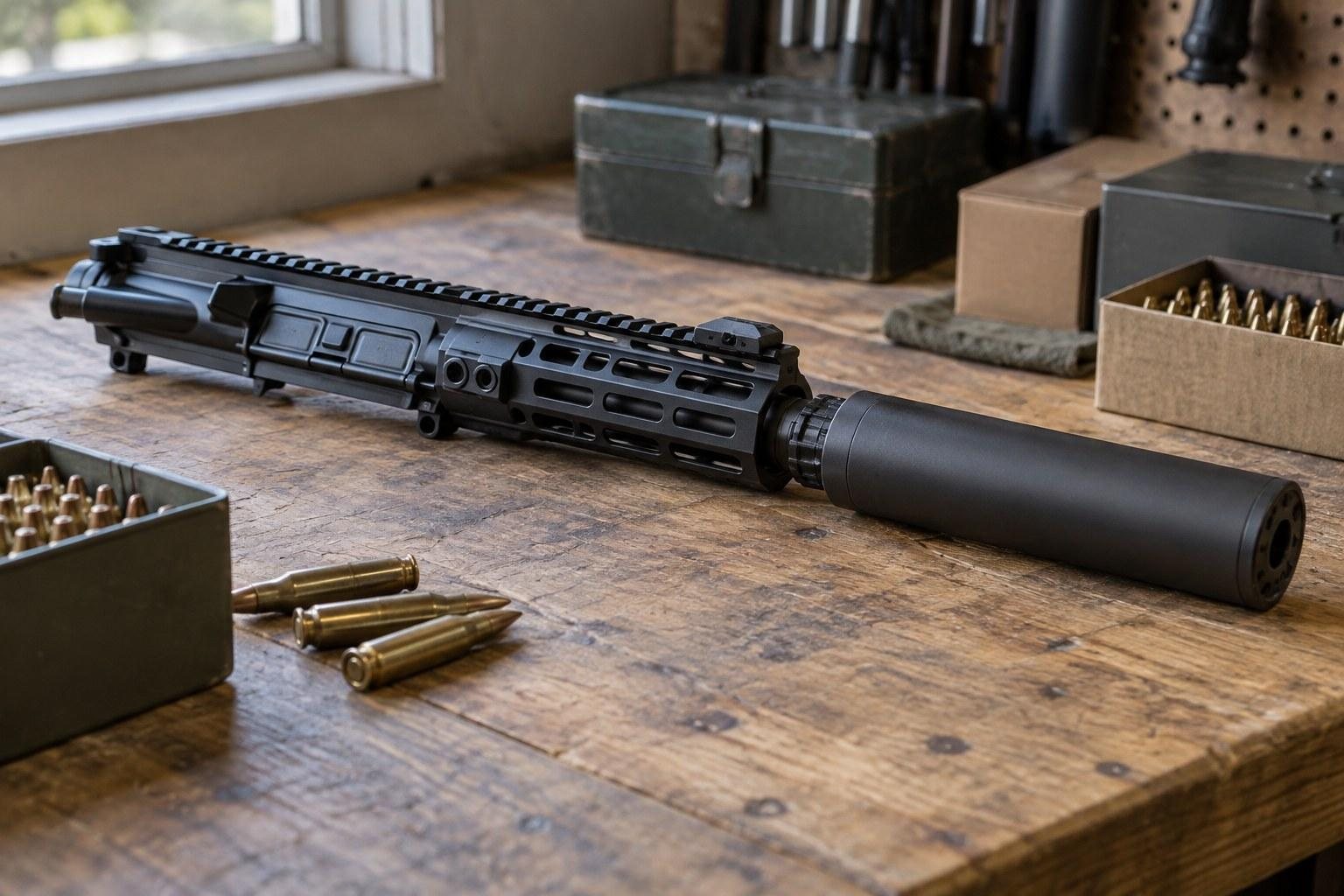
Look for a suppressor that its manufacturer specifically rates for 450 Bushmaster, or a larger-bore can rated for it, such as many 45 or 46 caliber rifle-rated models. Pistol-only 45 caliber cans are not a safe assumption, because rifle pressure and gas volume are very different. Read the manufacturer's caliber list and barrel length limits, and if anything is unclear, call the suppressor maker before you mount it.
Direct Thread or Quick Detach
You have two broad mounting approaches:
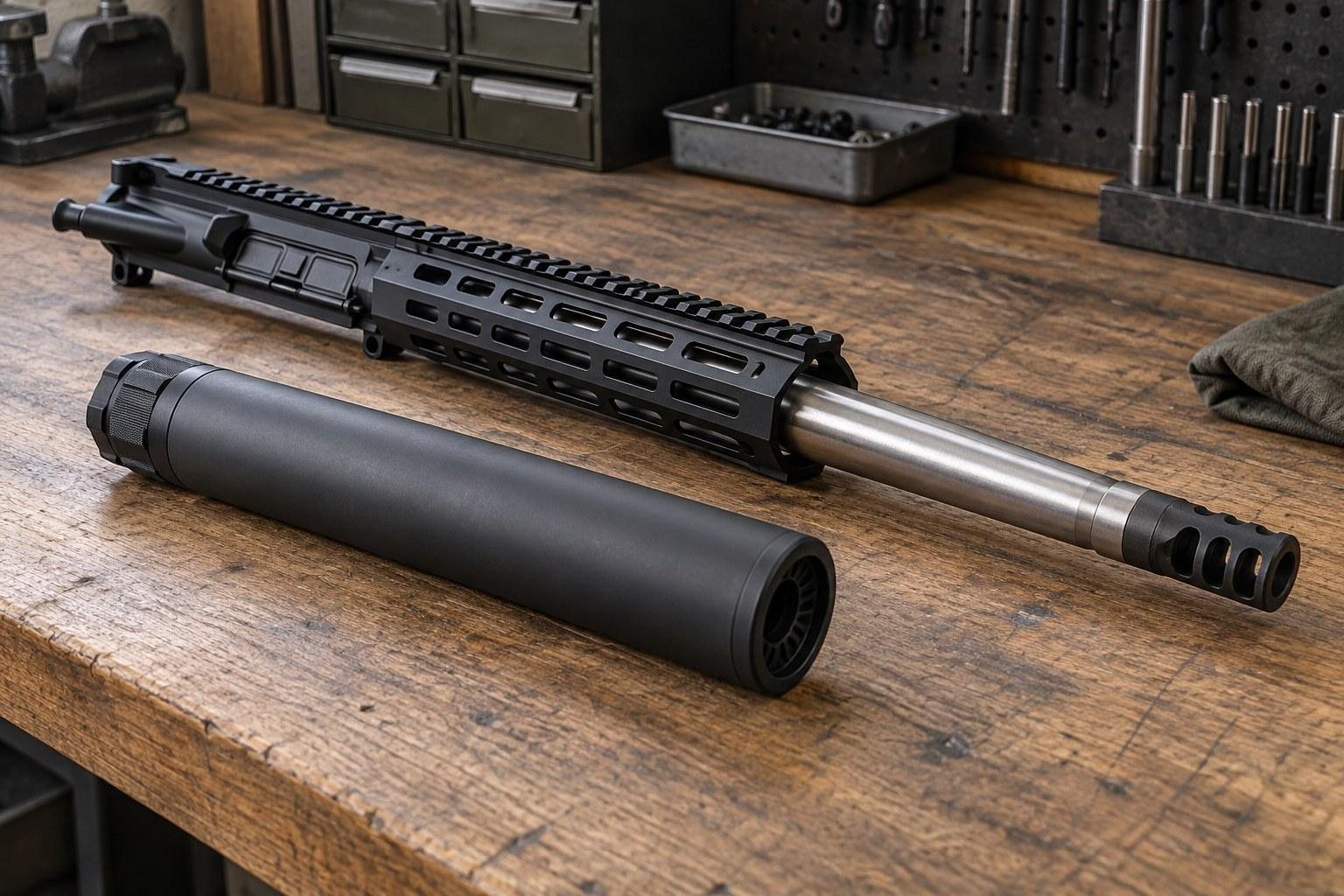
- Direct thread: the suppressor screws straight onto the barrel threads. It is simple and usually offers solid alignment, but you need a can or adapter in the same pitch as your barrel.
- Quick detach: a muzzle brake or flash hider stays on the barrel, and the suppressor locks onto it. It is convenient if you move one can between rifles, but the mount must match both your barrel threads and the suppressor's system.
Whichever route you take, use the thread adapter or mount the suppressor maker recommends, and follow its torque and indexing instructions. Our muzzle devices guide covers how brakes, flash hiders and mounts differ.
Check Alignment Before Firing
With the rifle unloaded and the bolt removed, an alignment rod dropped through the bore and suppressor is a common way to confirm the can is concentric with the bore. If the rod does not pass cleanly, stop and have a qualified gunsmith inspect the barrel threads and shoulder before you fire a round.
Gas, Buffer and Bolt Carrier Considerations
Adding a suppressor increases back pressure. More gas returns through the gas system, which can make the carrier cycle harder, raise felt recoil and blow more gas toward your face at the charging handle.
Signs Your Upper Is Overgassed
Watch for brass ejecting far forward of the usual angle, harder recoil than you had unsuppressed, more gas at the charging handle and heavier fouling in the receiver. None of these alone proves a problem, but together they suggest the system needs tuning.
Ways to Tune Without Modifying the Barrel
Never drill or modify a gas port. The usual options work on the other side of the system:
- An adjustable gas block lets you reduce gas flow for suppressed use. Our adjustable gas block guide walks through how they work.
- A heavier buffer or stiffer spring can slow the carrier. Follow the buffer maker's recommendations for your setup.
- A gas-busting charging handle can reduce the gas that reaches your face.
Make changes one at a time, test with the ammunition you plan to use, and confirm the rifle still locks back on an empty magazine. If you are unsure about any change, a qualified gunsmith can help.
The Bolt Carrier Group
A 450 Bushmaster upper uses a bolt with an enlarged face for the cartridge's rim, so you cannot drop in a standard 5.56 bolt. Suppressed shooting also deposits more carbon on the bolt and carrier, so keep the group clean and lubricated. When you shop bolt carrier groups, confirm the listing names 450 Bushmaster compatibility, or buy a complete upper that already includes the correct BCG.
Ammunition and Magazines for Suppressed Shooting
Ammunition choice affects both how well the rifle cycles and how much fouling the suppressor collects.
Supersonic Loads
Most factory 450 Bushmaster ammunition is built as supersonic hunting ammunition. That is fine with a suppressor, but expect the bullet crack downrange. Test a couple of loads, since back pressure can change how a given load cycles once the can is attached. If you want trajectory and energy figures, use the ammunition maker's published data for the exact load rather than generic numbers.
Subsonic Loads
Subsonic 450 Bushmaster loads exist, and they reduce report much further with a suppressor. They may not generate enough gas to cycle every rifle reliably, especially unsuppressed, so treat them as something you must test in your own rifle. Also confirm that heavy subsonic bullets are suited to your twist rate and intended use according to the ammunition maker.
Magazines
Dedicated 450 Bushmaster magazines feed the fat, straight-wall cartridge more reliably than modified 5.56 magazines. Check your state's magazine capacity rules and any hunting limits before you load up for the field.
Paperwork, Laws and a Pre-Range Checklist
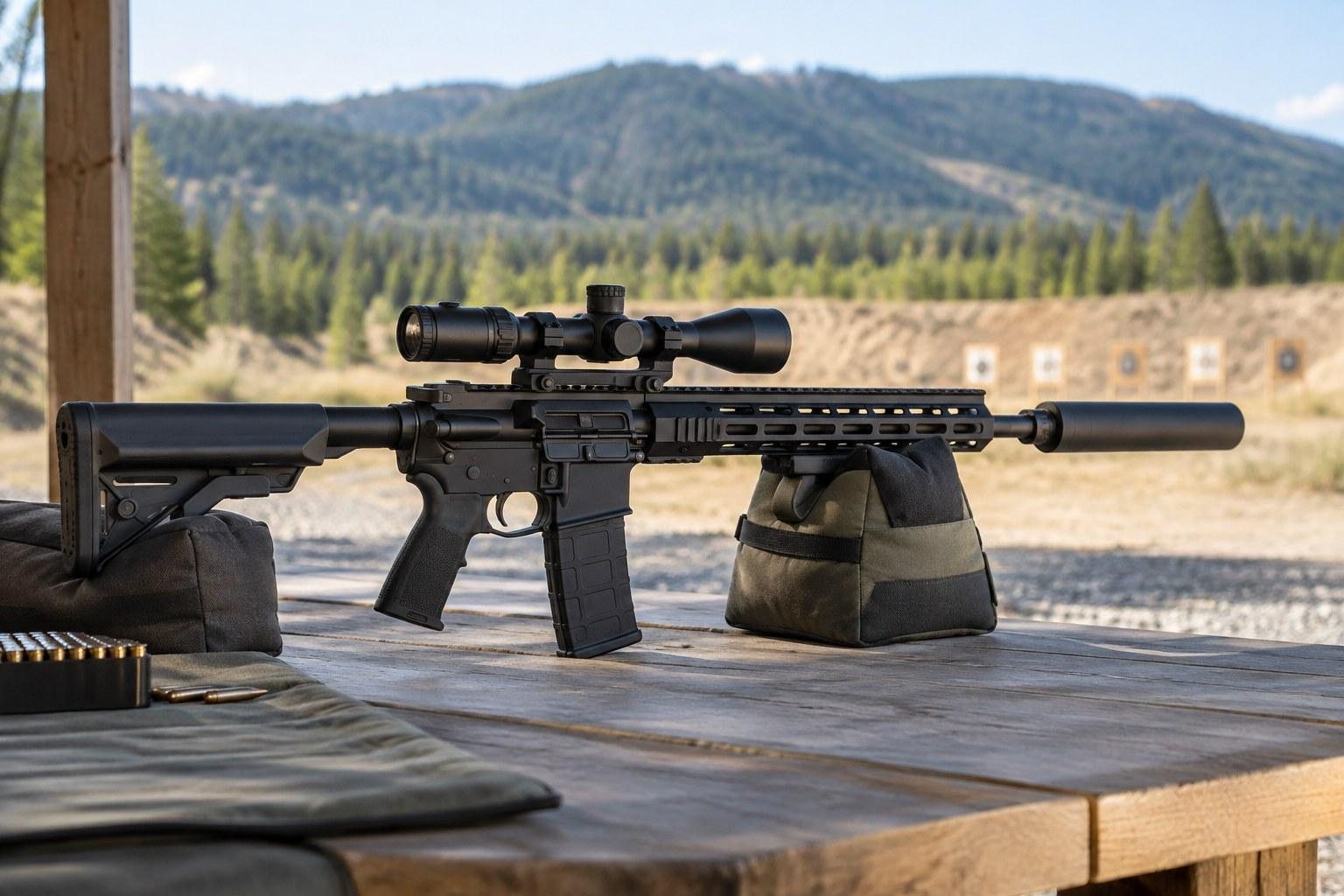
The suppressor itself is regulated under the National Firearms Act. Since January 1, 2026 the federal tax on suppressors is $0 under the One Big Beautiful Bill Act, but the registration and approval process still applies, and you may not take possession until ATF approves the transfer. The ATF's National Firearms Act page is the authoritative starting point.
State and Local Rules
Suppressor ownership is not legal everywhere, and some states that allow ownership limit hunting with a can. State and local laws vary, so check your state statutes and wildlife agency regulations before you build or hunt. Nothing here is legal advice.
Pre-Range Checklist
- Confirm the firearm is unloaded before any assembly or inspection.
- Verify the suppressor's caliber rating covers 450 Bushmaster.
- Match the barrel thread pitch to the can or mount.
- Install the mount per the manufacturer's torque and timing instructions.
- Run an alignment rod check with the bolt removed.
- Fire a few rounds, then inspect the mount and suppressor for loosening.
- Note cycling behavior and tune gas or buffer as needed.
Want more guides on calibers and setups like this one?