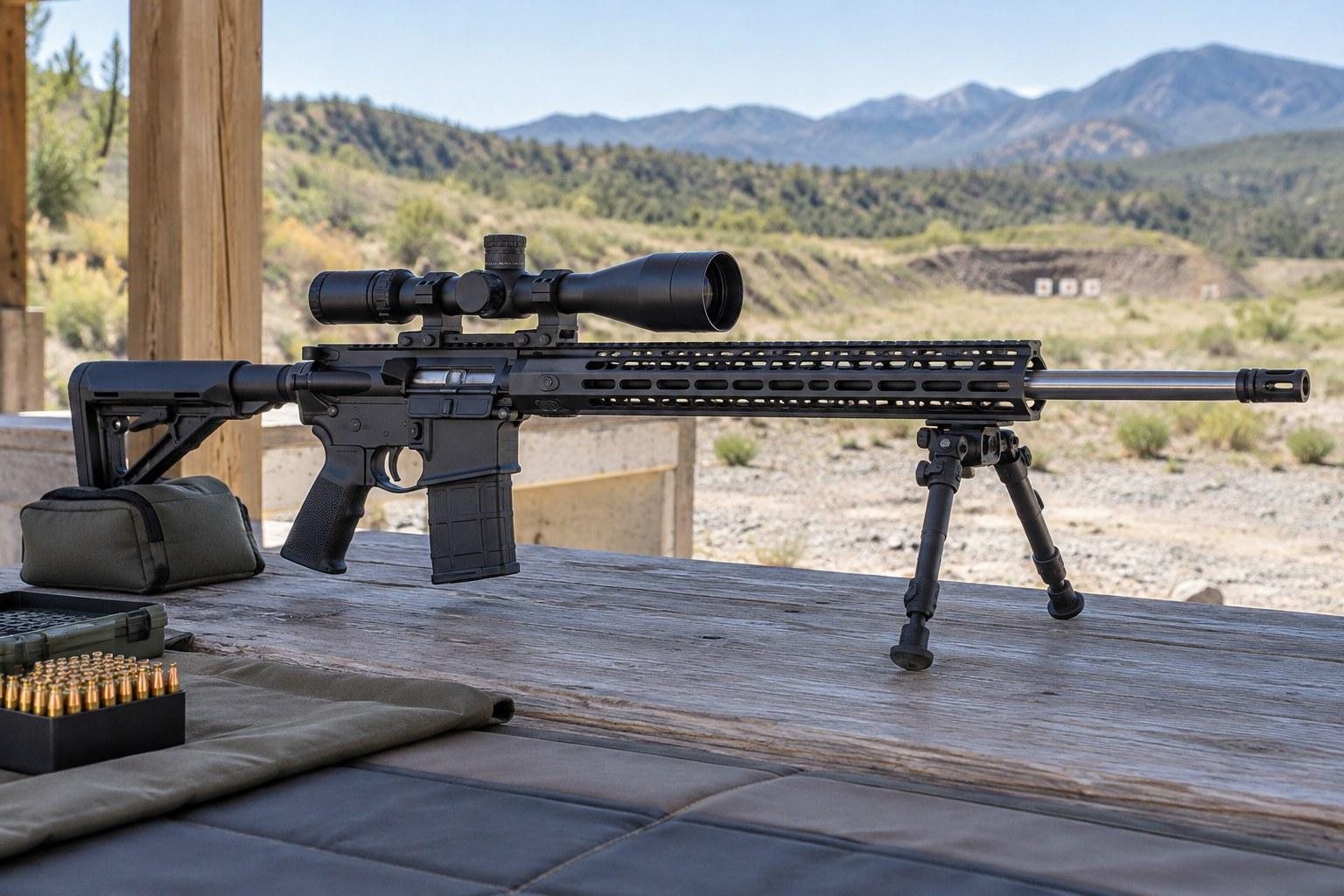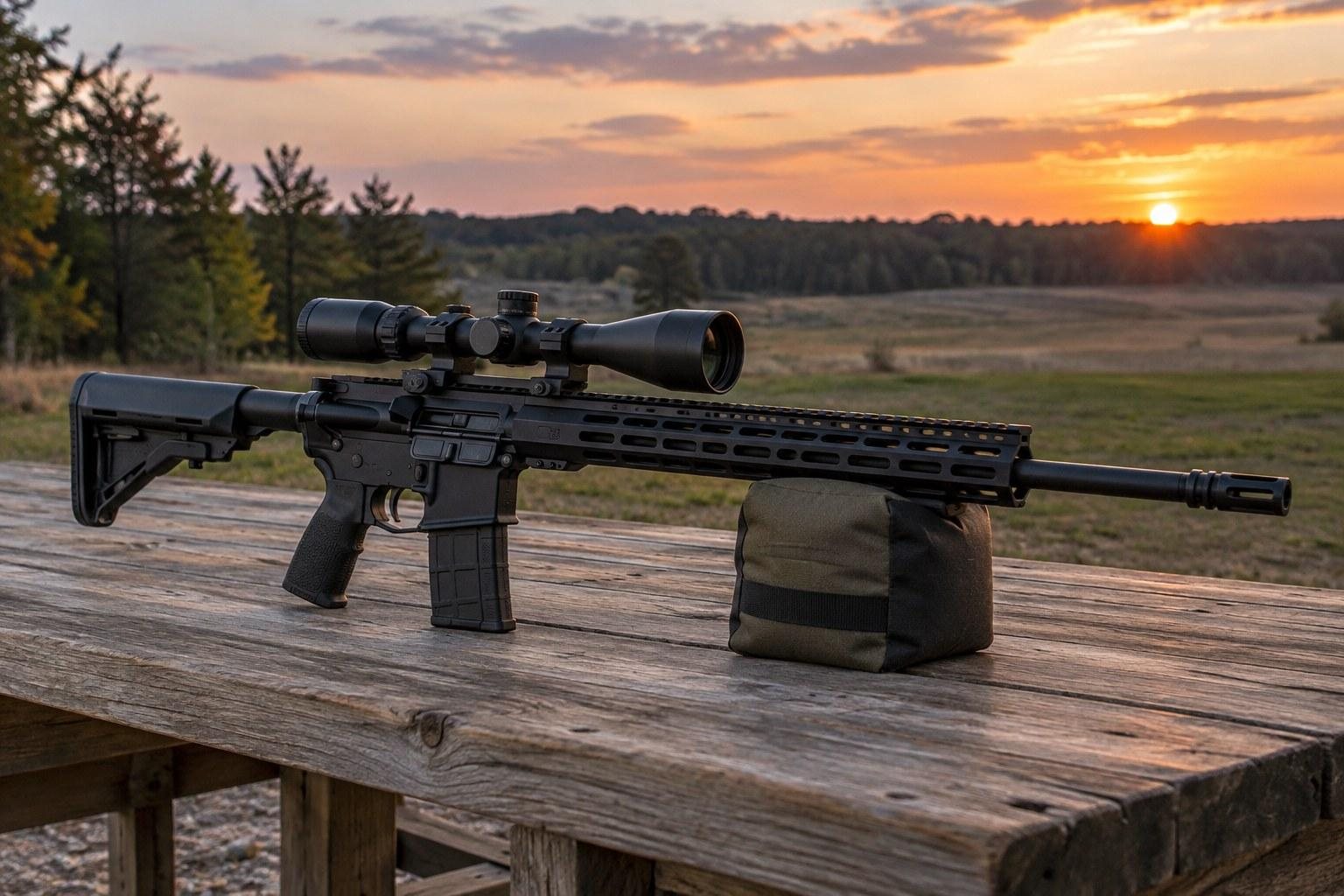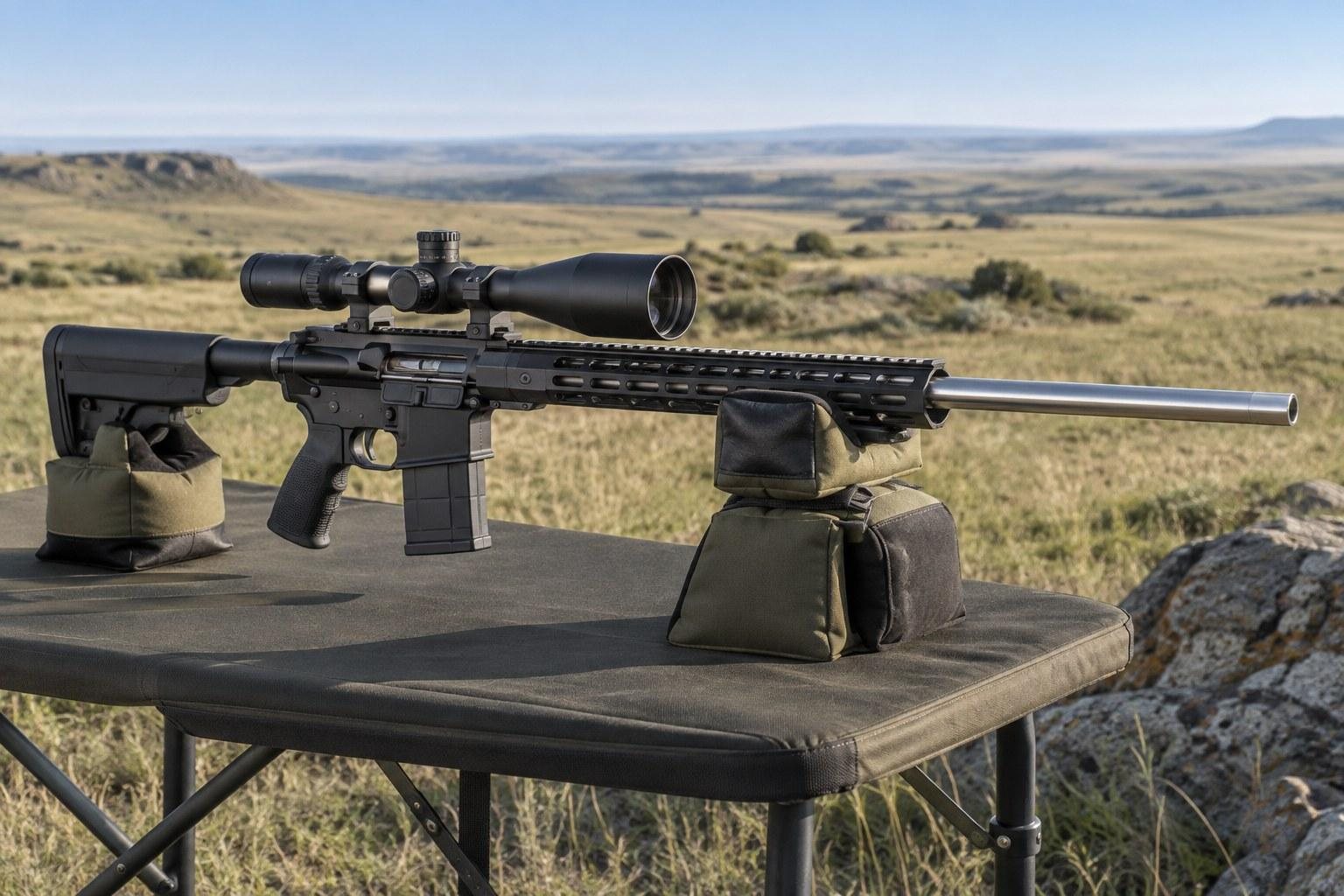
A good prairie dog rifle has to do three things well: hit a very small target at varying distances, keep doing it through a long day of shooting, and stay comfortable enough that you can spot your own hits. On the AR platform, the upper receiver is where almost all of those traits live.
This guide looks at the varmint calibers and barrel configurations that actually fit a standard AR-15 lower, then compares them the way a dog town trip really plays out. Below you will find how 204 Ruger, 223 Wylde, 22 ARC and 224 Valkyrie stack up, what barrel profile and length make sense, and which supporting parts matter on a high-volume day.
Want to see finished varmint uppers before you read on?
Key Takeaways
- Small, fast .20 and .22 caliber cartridges are the natural fit for prairie dogs because they shoot flat and recoil lightly enough to watch your impacts.
- 223 Wylde is the most flexible choice because it chambers both 5.56 NATO and 223 Remington and uses standard AR-15 magazines and bolts.
- 204 Ruger and 22 ARC push the range and flatness further, while 224 Valkyrie is the long-distance specialist of the group.
- Heavier, longer stainless barrels in the 18 to 24 inch range handle sustained strings of fire better than light carbine profiles.
- Heat management, a stable rest and a quality magnified optic matter as much as caliber on a long day in a dog town.
What Makes a Good Prairie Dog Rifle Upper?
Prairie dogs are small targets, and shots can run from close range out to distances where wind becomes the main challenge. That puts a premium on accuracy, a flat trajectory and a cartridge that does not tire you out after a few hundred rounds.
The upper receiver controls nearly all of that. The barrel, chamber, gas system, handguard and bolt carrier group all ride on top of your lower, so choosing the right upper is really choosing the rifle.
Accuracy and Trajectory
A flat-shooting cartridge reduces how much holdover you need as distances change from one mound to the next. Lightweight, aerodynamic varmint bullets help here, and so does a barrel with the right twist rate to stabilize them.
Consistent accuracy also depends on a free-floated handguard, so nothing you rest on the bench presses against the barrel. Complete uppers with a full-length rail make that easy.
Recoil and Spotting Your Hits
One of the most satisfying parts of a dog town trip is watching your own impacts through the scope. Light recoil makes that possible, and a muzzle brake helps keep the rifle settled so you can call misses and correct quickly.
Brakes are loud, so plan on quality hearing protection for yourself and anyone shooting near you.
Durability Over a Long Day
Varmint days can involve far more rounds than a typical hunting outing. A barrel profile with enough mass to absorb heat, a reliable bolt carrier group and a gas system that runs cleanly all matter when you are shooting steadily for hours.
Comparing Prairie Dog Rifle Calibers for the AR-15
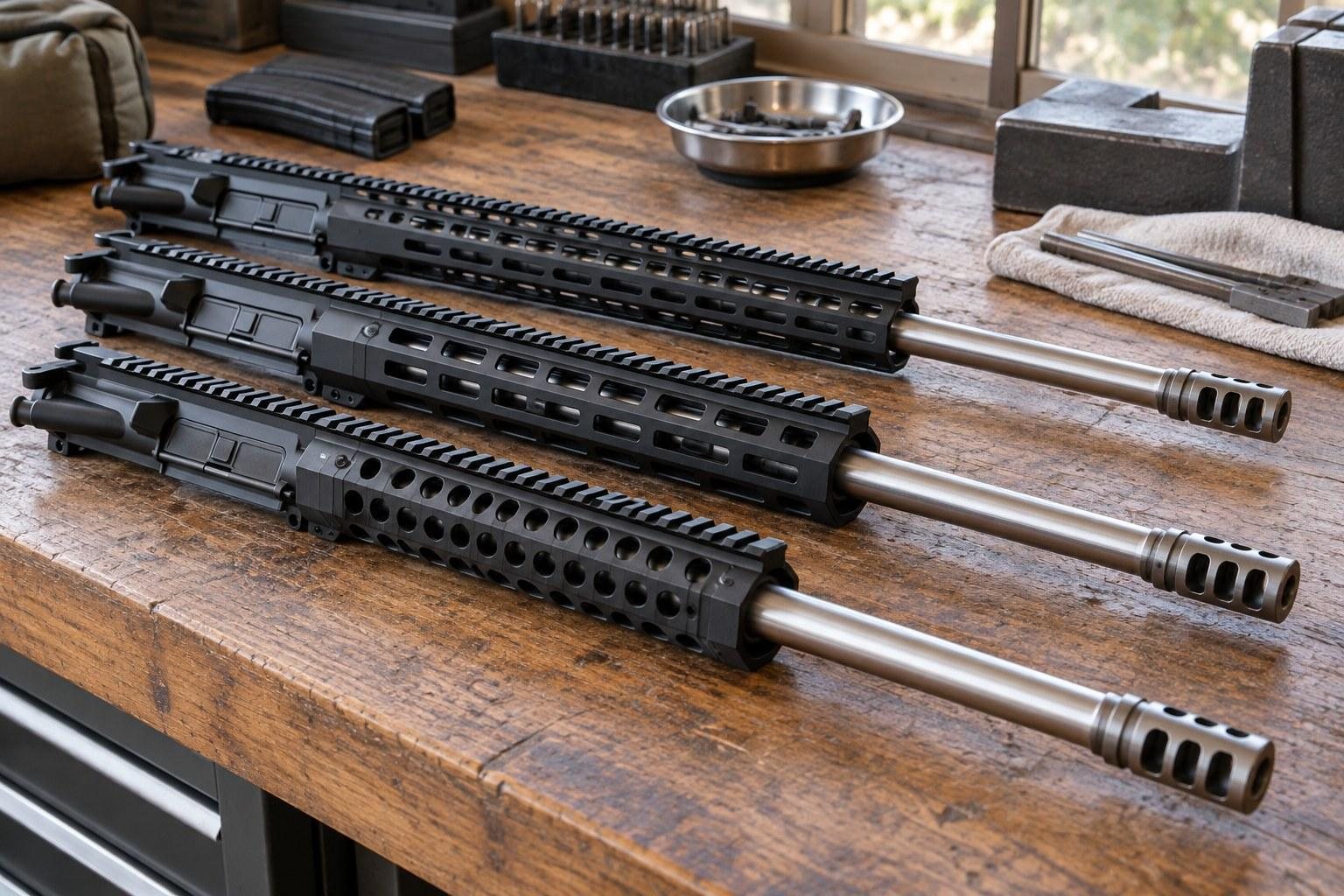
Several cartridges fit a standard AR-15 lower and make sense for varmints. Each one trades a little flexibility for a little more reach, so the right pick depends on how far you expect to shoot and how much you care about ammunition availability.
| Caliber | Strength for Prairie Dogs | Tradeoff | Common Twist Rates |
|---|---|---|---|
| 223 Wylde | Shoots 5.56 and 223 ammo, wide bullet selection | Not as flat at longer range as the specialty rounds | 1:8 |
| 204 Ruger | Very flat, light recoil, classic varmint round | Ammo is less common than 223 | 1:12 |
| 22 ARC | Fast twist for heavy, high-BC bullets | Needs caliber-specific bolt and magazines | 1:7 |
| 224 Valkyrie | Built for long-range .22 caliber shooting | Needs caliber-specific bolt and magazines | 1:7 and 1:6.5 |
223 Wylde: The All-Around Choice
The 223 Wylde chamber accepts both 223 Remington and 5.56 NATO, which means you can shoot almost any .223 caliber ammunition you can find. For a high-volume trip, that availability is a real advantage.
It also uses a standard AR-15 bolt and standard magazines. If you already own an AR-15, a 223 Wylde upper is the simplest way to turn it into a varmint rifle.
204 Ruger: Flat and Mild
The 204 Ruger was designed as a varmint cartridge, and it shines in exactly this role. It shoots small, light bullets at high speed with very mild recoil, which makes spotting hits easy.
204 Ruger uppers are commonly offered with barrels in 18 and 20 inch lengths from manufacturers such as Satern Barrels, Shaw and Wilson Combat. Ammunition is less common than 223, so buy enough for your trip before you leave.
Ready to compare twist rates before you choose?
22 ARC: Modern Long-Range Varmint Round
The 22 ARC is built around heavier, high ballistic coefficient .22 caliber bullets, which is why the barrels carry a fast 1:7 twist. Those bullets resist wind well, and wind is often what decides a long shot in open country.
It requires a caliber-specific bolt and magazines, so factor those into your plan. 22 ARC uppers are commonly available with barrels from manufacturers such as Ballistic Advantage and Satern Barrels in several lengths.
224 Valkyrie: The Distance Specialist
The 224 Valkyrie was developed to push heavy .22 caliber bullets to longer ranges from an AR-15. It is a strong option if your dog towns are wide open and you expect to stretch your shots.
Like the 22 ARC, it uses its own bolt and magazines. 224 Valkyrie uppers are commonly available with 22 and 24 inch barrels from manufacturers such as Satern Barrels, as well as fluted options like the Wilson Combat Super Sniper with a 1:6.5 twist. The 224 Valkyrie upper roundup breaks down the options in more detail.
Barrel Length, Profile and Material
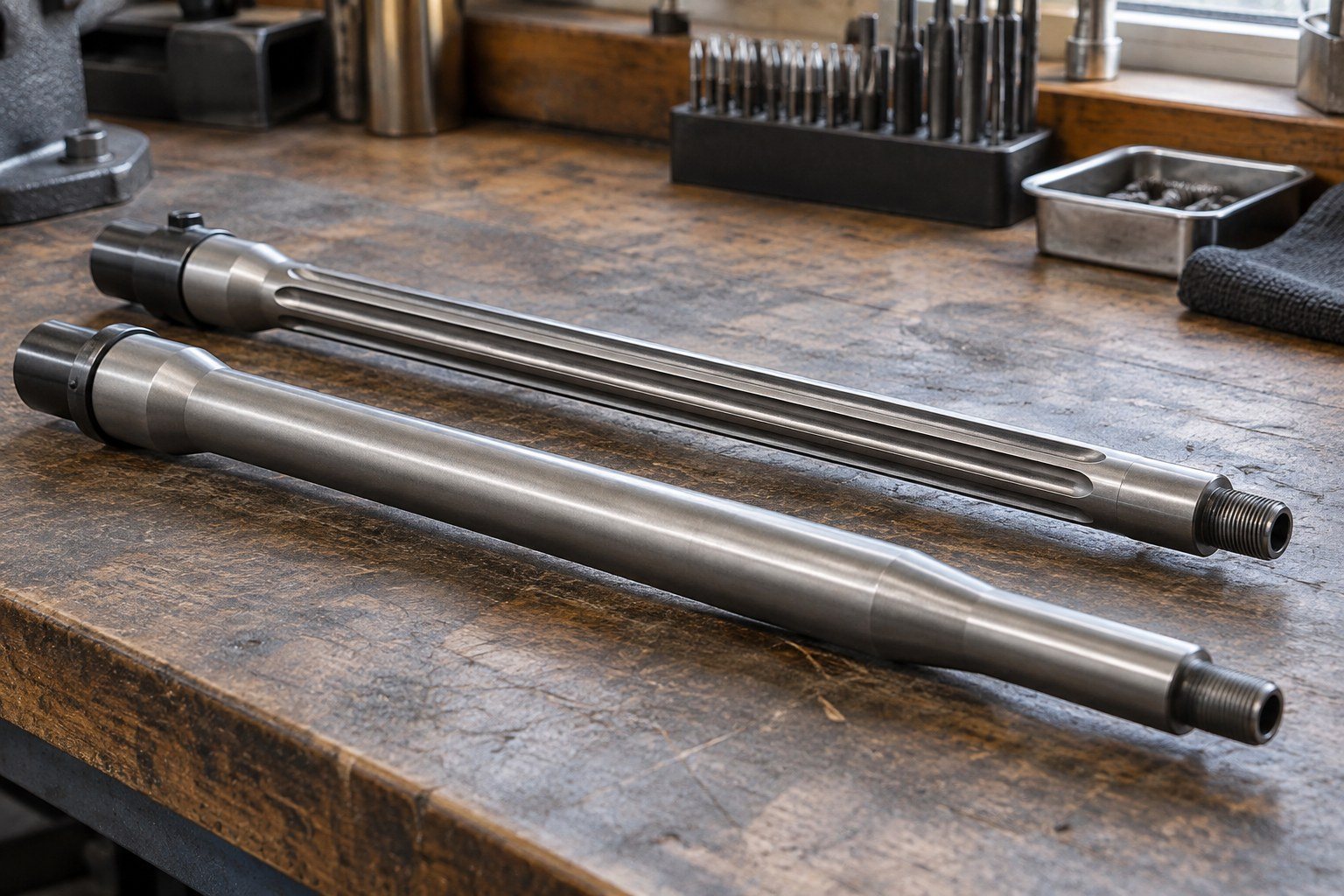
Caliber gets most of the attention, but the barrel is what determines how your prairie dog rifle behaves after the first hundred rounds. Length, profile and steel all play a role.
Choosing a Barrel Length
Varmint uppers are usually built longer than defensive carbines. Longer barrels generally give more velocity, which helps a flat trajectory, and the added weight steadies the rifle on a rest. For a dog town, portability matters less than stability.
Varmint calibers in this category often fall between 18 and 24 inches. Our AR-15 barrel length guide explains the tradeoffs in more detail.
Barrel Profile and Heat
Heavier profiles hold more steel, which lets them absorb heat longer before accuracy starts to wander. Medium, heavy, bull and fluted profiles are all common choices for varmint barrels. Fluting removes some weight while keeping much of the stiffness of a thicker barrel.
No barrel profile makes you immune to heat. Pace your strings, let the barrel cool between them, and never touch a hot barrel or handguard without protection.
Stainless Steel Barrels
Many varmint barrels are made from 416R stainless steel. Stainless is popular for precision work because it machines cleanly and resists corrosion. For a full comparison with chrome-lined and nitride options, read our breakdown of chrome-lined vs nitride vs stainless barrels.
Complete Upper or Build Your Own?
You can buy a complete upper ready to pin onto your lower, or source a barrel and parts and assemble one yourself. Both routes work, and the right one depends on your experience and tools.
Complete Uppers
Complete uppers from AR15Parts.com are assembled in-house, headspaced and function-checked before they ship. Varmint uppers commonly include a 15 inch rail and a comp brake, and complete versions come with a bolt carrier group and charging handle.
Shipping takes 3 to 5 business days, so order well ahead of your trip and leave time to zero.
Building From Components
If you prefer to choose every part, start with the barrel. Varmint options are listed in the AR barrel catalog, with manufacturers such as Satern Barrels, Shaw, Wilson Combat and Ballistic Advantage commonly represented across the calibers covered here.
Assembly requires proper tools and attention to headspace. Always work on an unloaded firearm, follow each component manufacturer's instructions and torque specs, and have a qualified gunsmith check your work if you are unsure.
Optics, Rests and Gear for a Dog Town
The best upper in the world still needs a capable optic and a steady platform. These pieces turn a good rifle into a productive day.
Scope Choice
Prairie dogs are small, so a magnified scope with clear glass and a reticle you can use for holdover is worth the investment. Turrets that track reliably help when you dial for longer shots instead of holding over.
Bench, Bipod and Bags
Many shooters bring a portable shooting bench, while others shoot prone from a bipod. Either way, rear bags help you stay steady and let you spot through the scope without fighting the rifle.
Ammunition and Magazines
Bring more ammunition than you think you need, especially for the less common calibers. Remember that 22 ARC and 224 Valkyrie need their own magazines, while 223 Wylde uses standard AR-15 magazines.
Picking the Right Prairie Dog Rifle for Your Trip
There is no single winner, but there is a clear way to choose. Match the cartridge to the distances you expect and the ammunition you can realistically get.
- First varmint upper or tight budget on ammo: 223 Wylde, because it shoots common 223 and 5.56 and uses standard parts.
- Mostly moderate distances and maximum fun: 204 Ruger, for its flat trajectory and mild recoil.
- Windy, open country with longer shots: 22 ARC or 224 Valkyrie, for heavy, high-BC bullets.
Before any trip, check the rules where you plan to shoot. Some prairie dog species and areas are protected or closed, landowner permission may be required, and state and local laws vary. Your state wildlife agency is the right place to confirm seasons and licensing.
Want to compare more hunting builds before you decide?