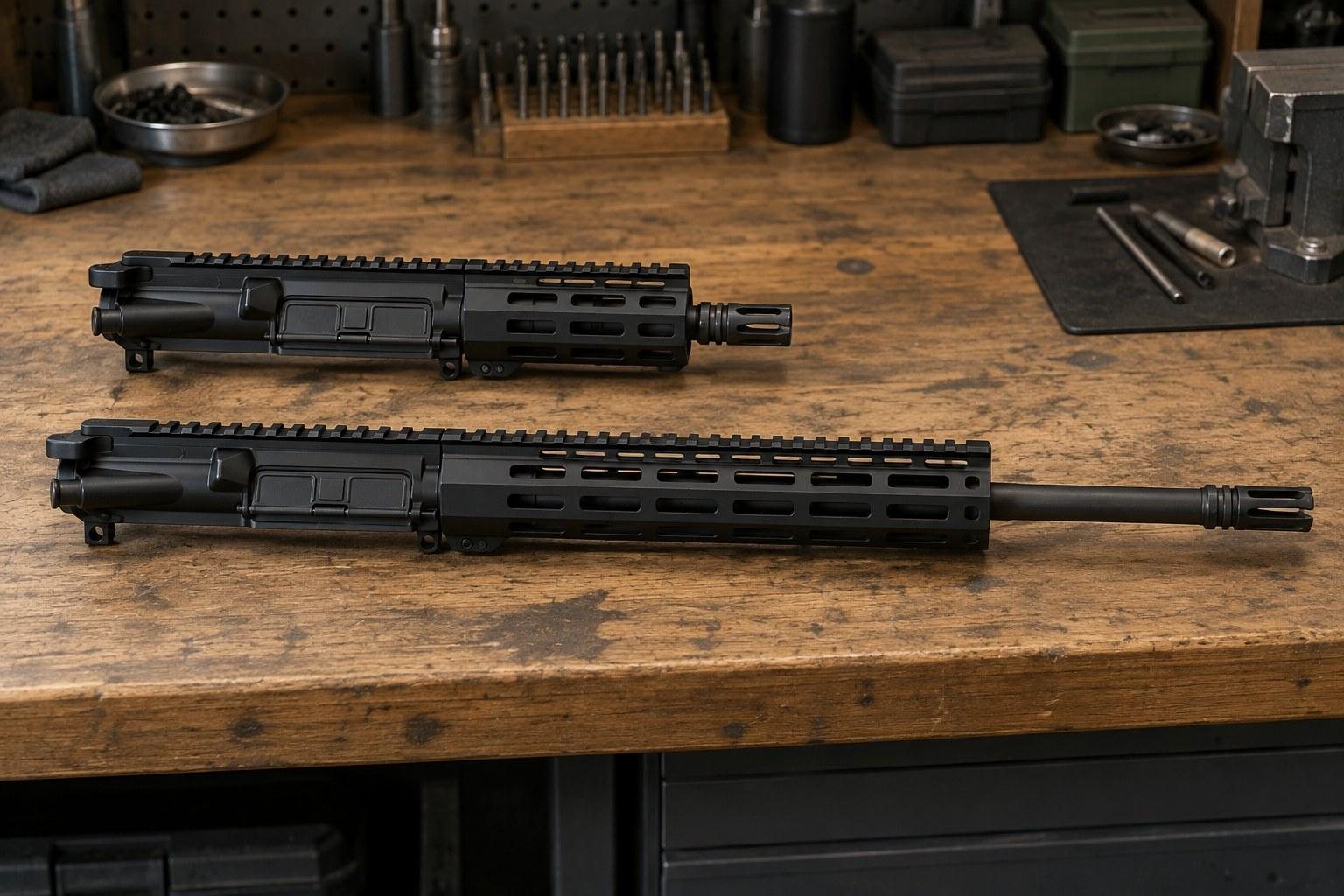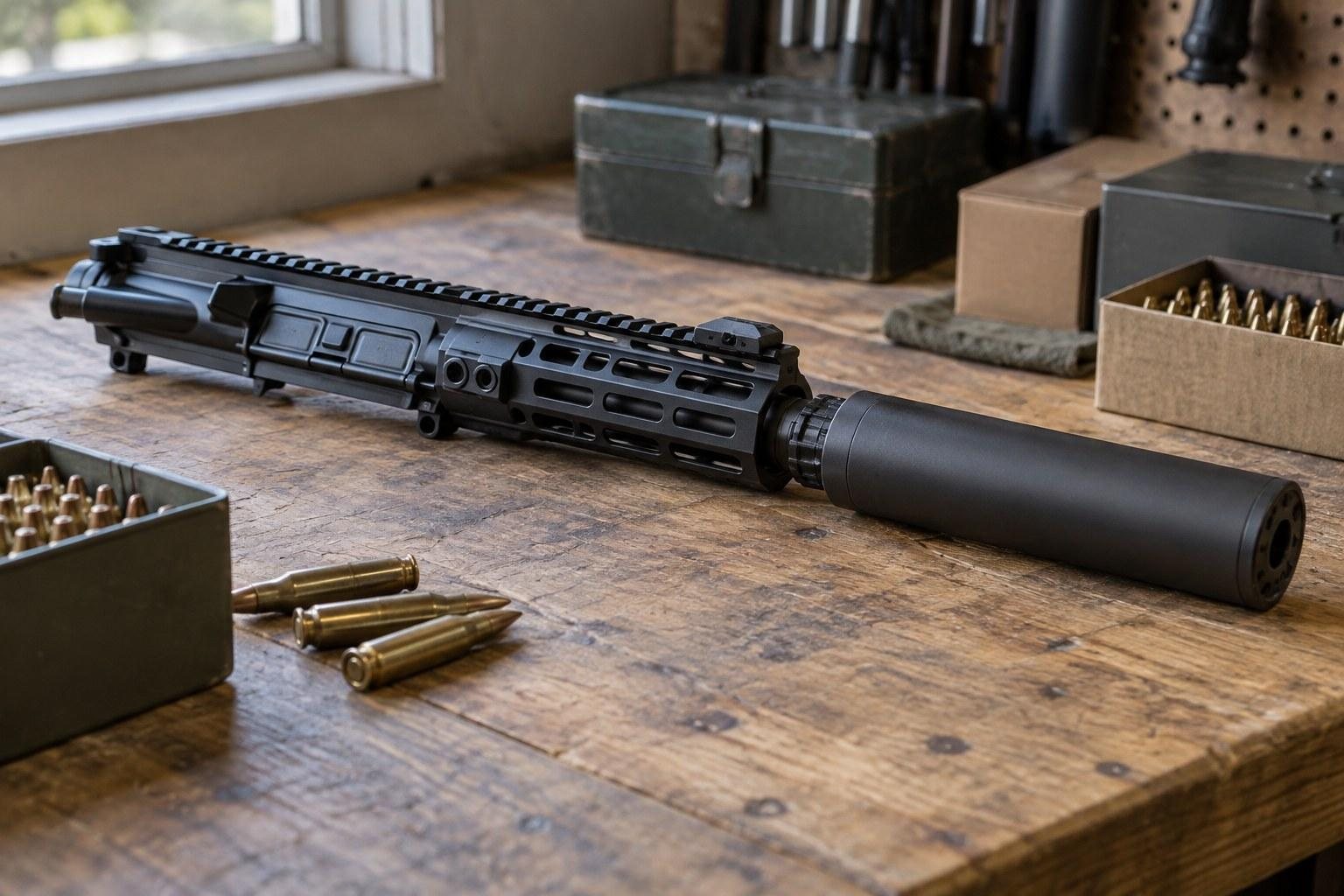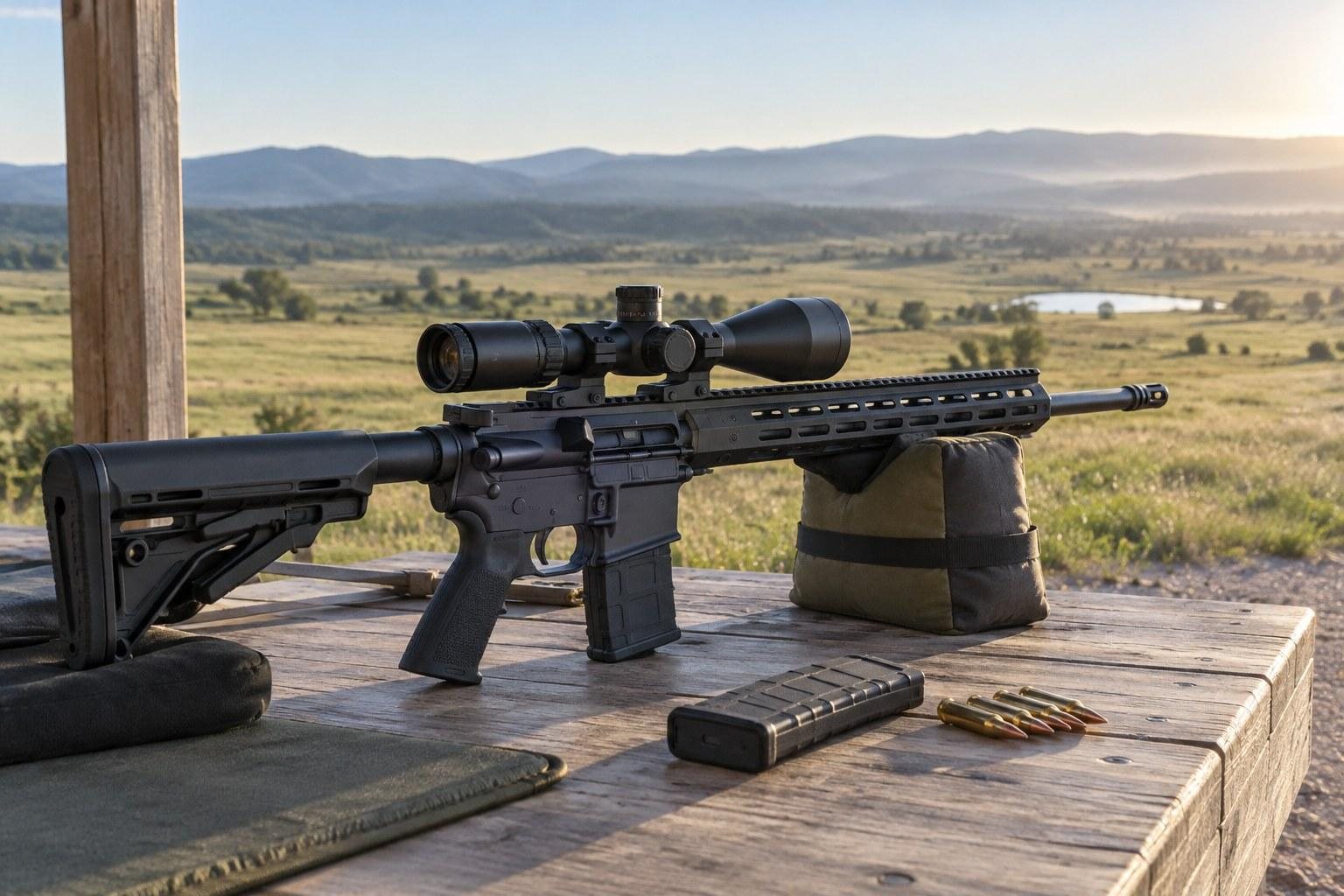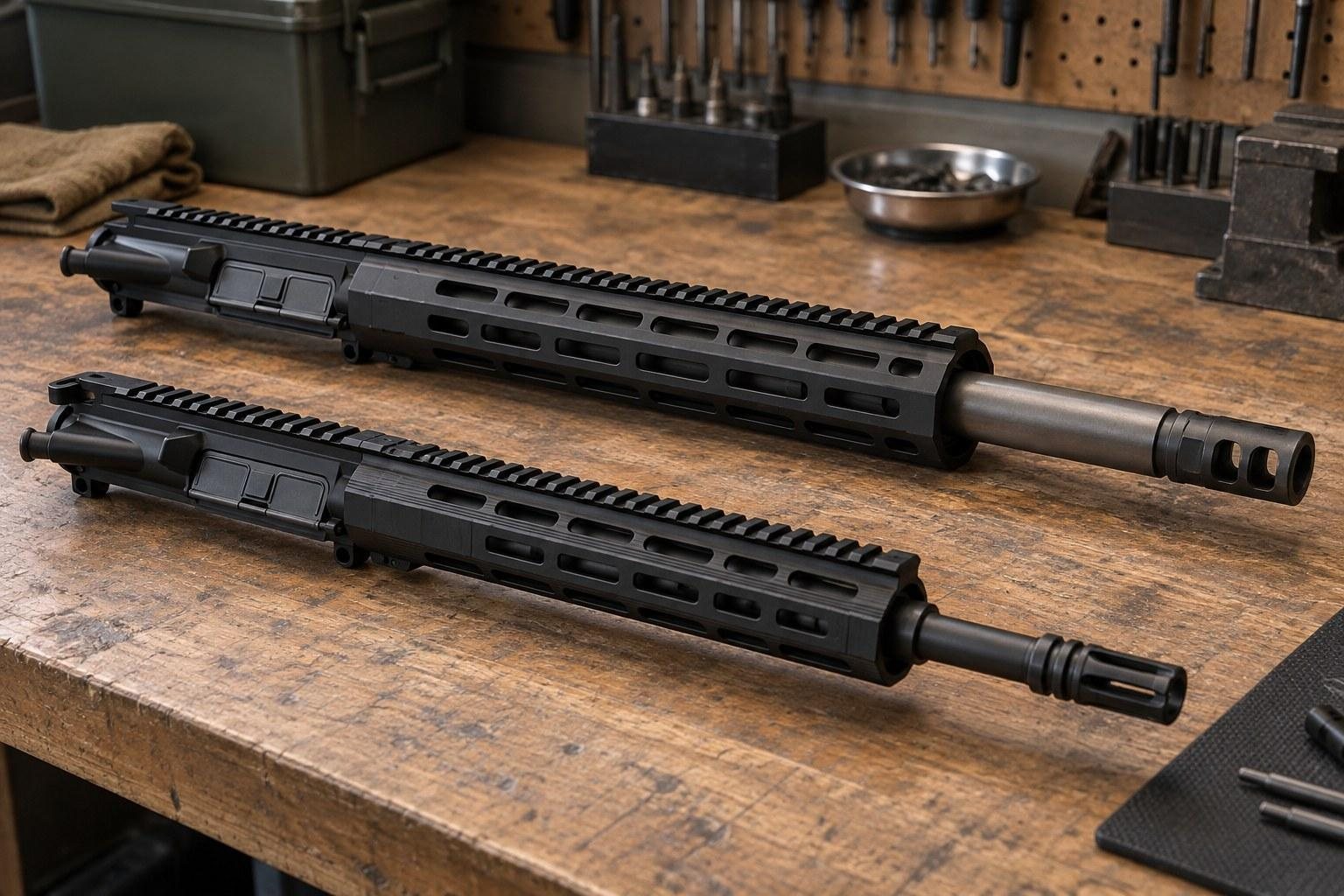
The 50 Beowulf vs 5.56 question comes down to two very different jobs sharing one lower receiver. The 5.56 NATO is the cartridge the AR-15 was designed around: small, fast, light to carry and easy on the shoulder. The 50 Beowulf is a big-bore, straight-walled round that throws a heavy half-inch bullet at short range.
Both run on a standard AR-15 lower, but the uppers, bolts, magazines and barrels are not interchangeable. This guide breaks down where each cartridge makes sense, what changes inside the upper, and how to choose without second-guessing the purchase later.
Want to see both side by side? Browse complete uppers at AR15Parts.com.
Key Takeaways
- The 50 Beowulf and the 5.56 NATO both run on a standard AR-15 lower receiver, so you can swap uppers on the same lower.
- A 50 Beowulf upper needs its own bolt with an enlarged bolt face and its own barrel, and while it typically feeds single-stack from standard AR magazines, dedicated magazines are optional but common.
- The 5.56 NATO shoots flatter, carries lighter and recoils far less, which makes it the more versatile all-around choice.
- The 50 Beowulf trades range for heavy bullets and big frontal area, which suits short-range hunting and brush work.
- On a rifle, a barrel under 16 inches, or an overall length under 26 inches, creates a short-barreled rifle that still requires ATF registration, even with the federal tax now at $0.
Two Cartridges Built for Different Jobs
Before comparing parts, it helps to understand why each round exists. The two cartridges sit at opposite ends of what an AR-15 can do, and that gap explains every hardware difference that follows.
The 5.56 NATO in a Nutshell
The 5.56 NATO is a small-caliber, bottlenecked, high-velocity cartridge. It is the default chambering for the AR-15 and the military variants that came before civilian rifles. Its light bullets and mild recoil make it easy to shoot well, quick to follow up and practical for long range sessions.
Because it is the native chambering, nearly every AR-15 part on the market assumes 5.56 or .223 dimensions. That includes standard bolts, standard magazines and the widest selection of barrels, twist rates and gas systems. If you want to understand how 5.56 NATO relates to .223 Remington and .223 Wylde chambers, read our 5.56 vs .223 Wylde vs .223 Remington breakdown.
The 50 Beowulf in a Nutshell
The 50 Beowulf, also listed as 12.7x42mm, was developed by Alexander Arms to put a true half-inch bore into an AR-15 sized rifle. It uses a straight-walled case with a rebated rim, so it fits a standard lower and magazine well while carrying a far larger bullet than any 5.56 load.
The design goal was short-range stopping power in a familiar platform. It is not built to compete with 5.56 at distance. It is built to deliver heavy, wide bullets at close and moderate range where frontal area matters more than a flat trajectory.
Why the Comparison Matters
Many shooters own a 5.56 rifle first and then look for a second upper to expand what the same lower can do. The 50 Beowulf is a versatile choice for that role. Knowing exactly what changes helps you avoid buying the wrong bolt, the wrong magazines or a barrel length that creates legal trouble.
50 Beowulf vs 5.56 Inside the Upper
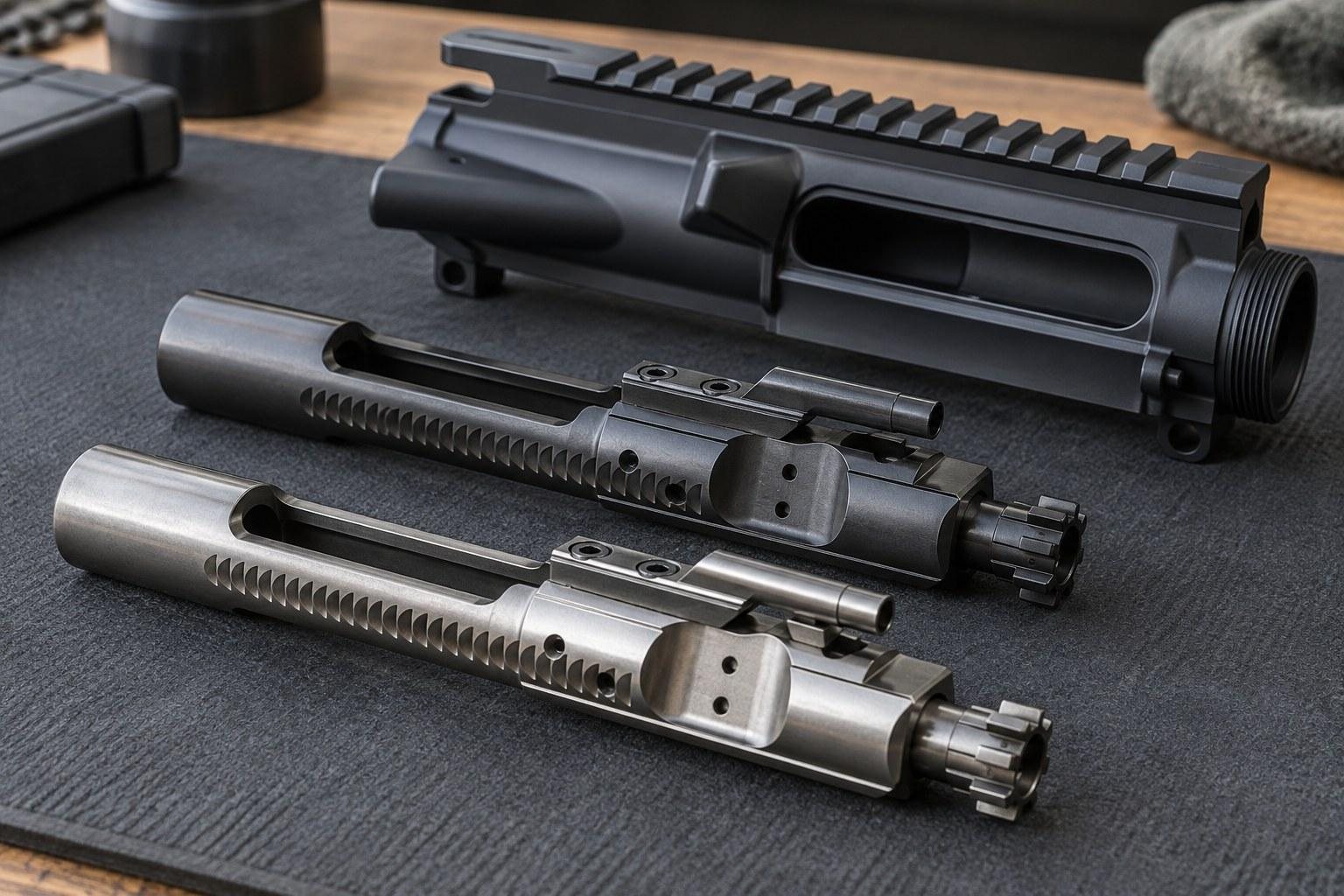
From the outside, a 50 Beowulf upper looks much like any other AR-15 upper. Inside, several parts are caliber specific. Here is how the two compare component by component.
| Component | 5.56 NATO Upper | 50 Beowulf Upper |
|---|---|---|
| Lower receiver | Standard AR-15 lower | Standard AR-15 lower |
| Upper receiver | Standard AR-15 upper receiver | AR-15 upper, usually with an enlarged ejection port |
| Bolt | Standard 5.56 bolt face | Caliber-specific bolt with an enlarged face |
| Barrel bore | .224 inch class | .50 inch class |
| Typical twist rate | 1:7 or 1:8 | 1:20 |
| Common barrel lengths | 10.5 and 16 inches | 16 and 18 inches |
| Magazines | Standard 5.56/.223 magazines | Standard AR mags work single-stack; dedicated 50 Beowulf magazines also available |
| Barrel profile | Government, M4 and lighter profiles common | Bull and heavy profiles |
The Bolt Is the Biggest Change
A 5.56 bolt will not work in a 50 Beowulf upper. The Beowulf case head is much wider, so the upper needs a bolt with an enlarged face cut to match. The rest of the bolt carrier group operates on the same direct impingement principle you already know.
It is generally wise to buy a 50 Beowulf upper as a complete unit with its matching bolt carrier group whenever possible. Mixing parts is where headspace and extraction problems start. Our AR-15 headspacing guide explains why a matched barrel and bolt matter.
Barrels and Twist Rates
50 Beowulf barrels are commonly available in 16 inch and 18 inch lengths with a 1:20 twist, often in a bull parkerized profile or a heavy stainless profile. The slow twist suits the heavy, wide projectiles the cartridge uses. You can compare those options on the 50 Beowulf barrels page.
On the 5.56 side, common barrel options include a 10.5 inch M4 profile with a 1:7 twist and 16 inch options with a 1:8 twist. Those faster twists stabilize the longer, lighter bullets common to 5.56. Browse the full range of 5.56 NATO barrels if you plan to build your own.
Magazines
The 50 Beowulf feeds single-stack from many standard AR-15 magazines at reduced capacity, and dedicated magazines are an optional upgrade for consistent feeding. Alexander Arms 50 Beowulf magazines are commonly available in 4 round and 10 round capacities, which can also help with hunting regulations that limit magazine size in some places.
Ready to dig deeper into how the big-bore options stack up against each other?
Recoil, Range and Trajectory
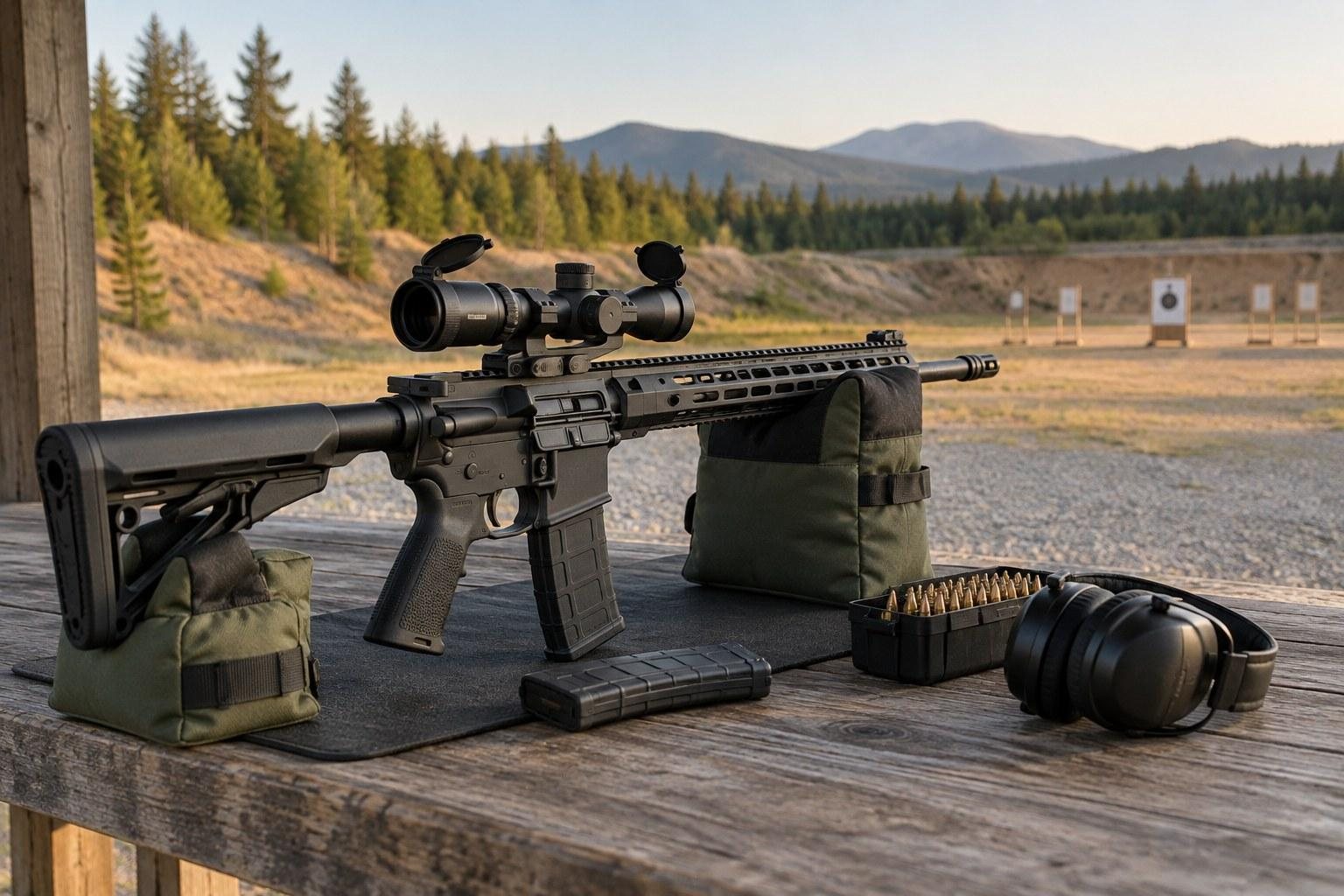
This is where the two cartridges feel the most different behind the rifle. This section stays qualitative on purpose, because published velocity and energy figures vary widely by load, bullet weight and barrel length. Always check the ammunition maker's published data for the exact load you plan to shoot.
Recoil and Shootability
The 5.56 NATO is famous for light recoil. You can stay on target through rapid follow-up shots, and new shooters adapt to it quickly. Long range sessions are comfortable, and ammunition is easy to find.
The 50 Beowulf kicks noticeably harder. A heavy half-inch bullet leaving the muzzle produces a sharp push that feels closer to a big-game rifle or a shotgun slug than to a 5.56 carbine. Heavy barrel profiles common on Beowulf uppers add weight that helps soak some of that up, and a muzzle device can help further.
Effective Range
The 5.56 shoots much flatter and stays useful at longer distances, which is why it is popular for varmints, predators, target shooting and general-purpose carbines. The 50 Beowulf drops quickly past moderate range because its heavy, blunt bullets lose speed faster.
In practice, the Beowulf is a short-range tool. It makes sense in thick timber, brush, swamps and other places where shots are close and you want a large wound channel. It is not the right pick if you want to ring steel at long distance.
Terminal Behavior
A 5.56 relies on velocity and bullet construction to do its work. A 50 Beowulf relies on mass and diameter. Neither approach is automatically better. Match the bullet design to the animal and distance, and confirm that the cartridge and bullet are legal for the game you are hunting where you live.
Choosing a Barrel Length and Staying Legal
Barrel length affects handling, muzzle blast and legal status. Both cartridges are available in lengths that keep you on the right side of federal rules, but the 5.56 also comes in short-barreled options that require extra paperwork.
The 16 Inch Line
Under the National Firearms Act, a rifle barrel shorter than 16 inches, or a rifle with an overall length under 26 inches, makes a short-barreled rifle. That rifle still requires ATF registration before you build or possess it. Since January 1, 2026, the federal tax on SBRs, SBSs and suppressors is $0, but registration is still required. The ATF's NFA page is the place to start.
50 Beowulf uppers are commonly 16 and 18 inch, so they sit at or above the federal line. A 10.5 inch 5.56 upper falls under the SBR rules when installed on a rifle. State and local laws vary, so check your own rules before buying, and talk to a qualified attorney if you are unsure.
Handling Trade-Offs
A 16 inch 5.56 upper with an M4 or lightweight profile carries easily and balances well. A 16 inch Beowulf upper with a bull or heavy barrel is noticeably front-heavier. If you plan to carry the rifle a long way, factor that weight in. For more on barrel length decisions, read our guide to the best 16 inch AR-15 uppers.
Which Upper Fits Your Shooting
Neither cartridge wins every category. The better choice is the one that matches how and where you actually shoot.
Choose 5.56 NATO If You Want
- A versatile do-everything carbine for range days, training and home use.
- Light recoil and fast follow-up shots.
- Flatter trajectory for varmints, predators and target work at distance.
- The widest choice of barrels, magazines and accessories.
Choose 50 Beowulf If You Want
- A heavy-hitting short-range hunting upper for thick cover.
- A second upper that turns an existing lower into a big-bore rifle.
- Large, heavy bullets where frontal area matters more than reach.
- A distinctive, specialized rifle that fills a role the 5.56 cannot.
Running Both on One Lower
Many owners keep a 5.56 upper as the everyday setup and add a 50 Beowulf upper for specific hunts. Because both share the standard lower, swapping is a matter of pushing two pins. Make sure the firearm is unloaded, keep the correct magazines with each upper, and never mix Beowulf and 5.56 ammunition in the same range bag.
Shopping Tips for Either Upper
Whatever you pick, a few habits make the purchase smoother and the rifle more reliable.
Buy Complete When You Can
Complete uppers from AR15Parts.com are assembled in-house, headspaced and function-checked before they ship. That matters most for a caliber-specific build like the Beowulf, where the bolt and barrel must match. You can see the current lineup of 50 Beowulf uppers and 5.56 NATO uppers, which commonly include a range of rail lengths and barrel profiles.
Check Compatibility First
Confirm your lower is a standard mil-spec pattern AR-15 lower before ordering. Our AR-15 upper compatibility checklist walks through the common fit points. For torque values or gas system settings, follow the component manufacturer's published spec, and see a qualified gunsmith if anything feels off.
Plan Your Ammunition
5.56 ammunition is widely available. 50 Beowulf ammunition is more specialized, so plan ahead and buy enough of one load to zero and practice with. Zero the rifle with the exact load you intend to use, since point of impact can shift between loads.
Still deciding between the two? Our caliber guides lay out more options.