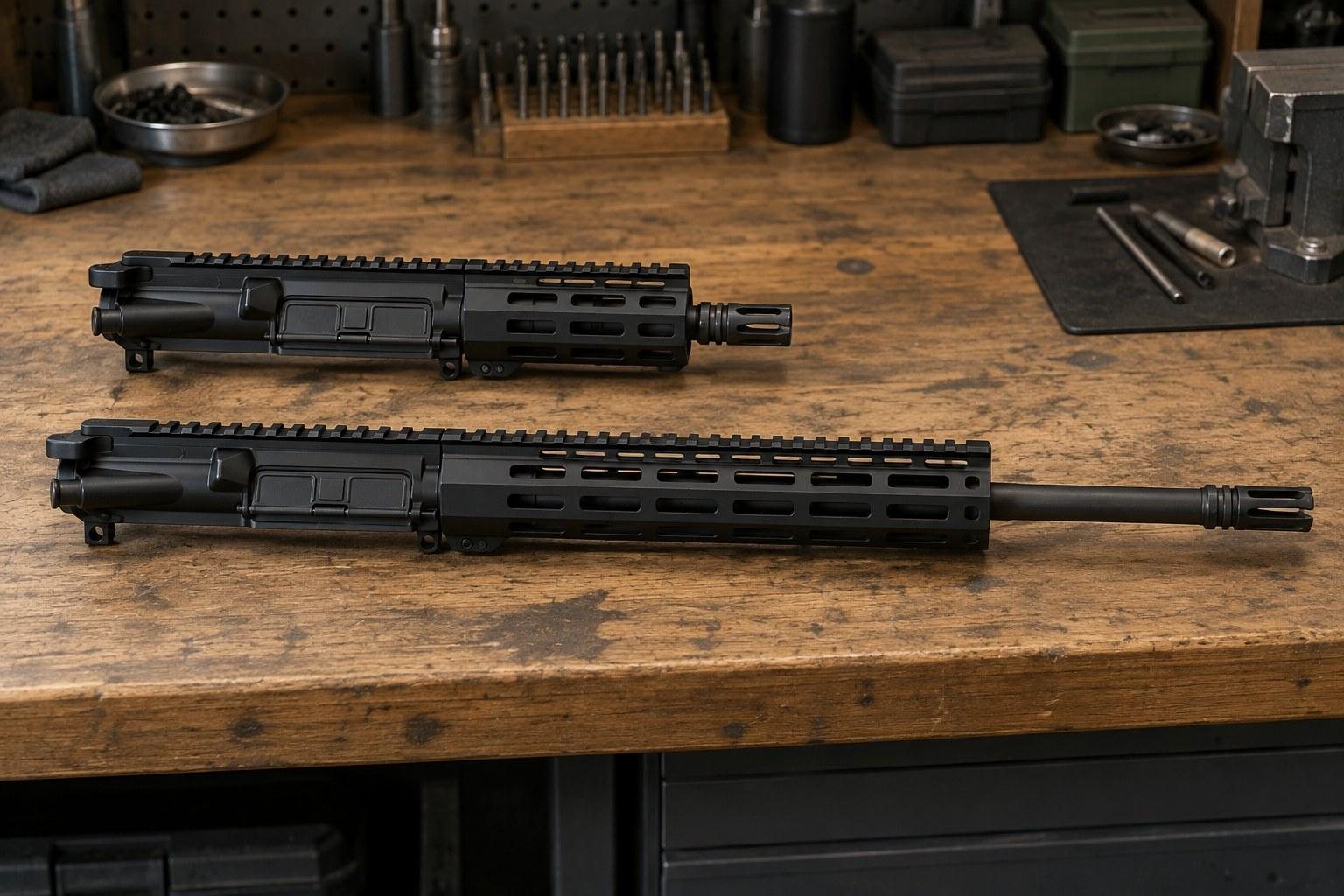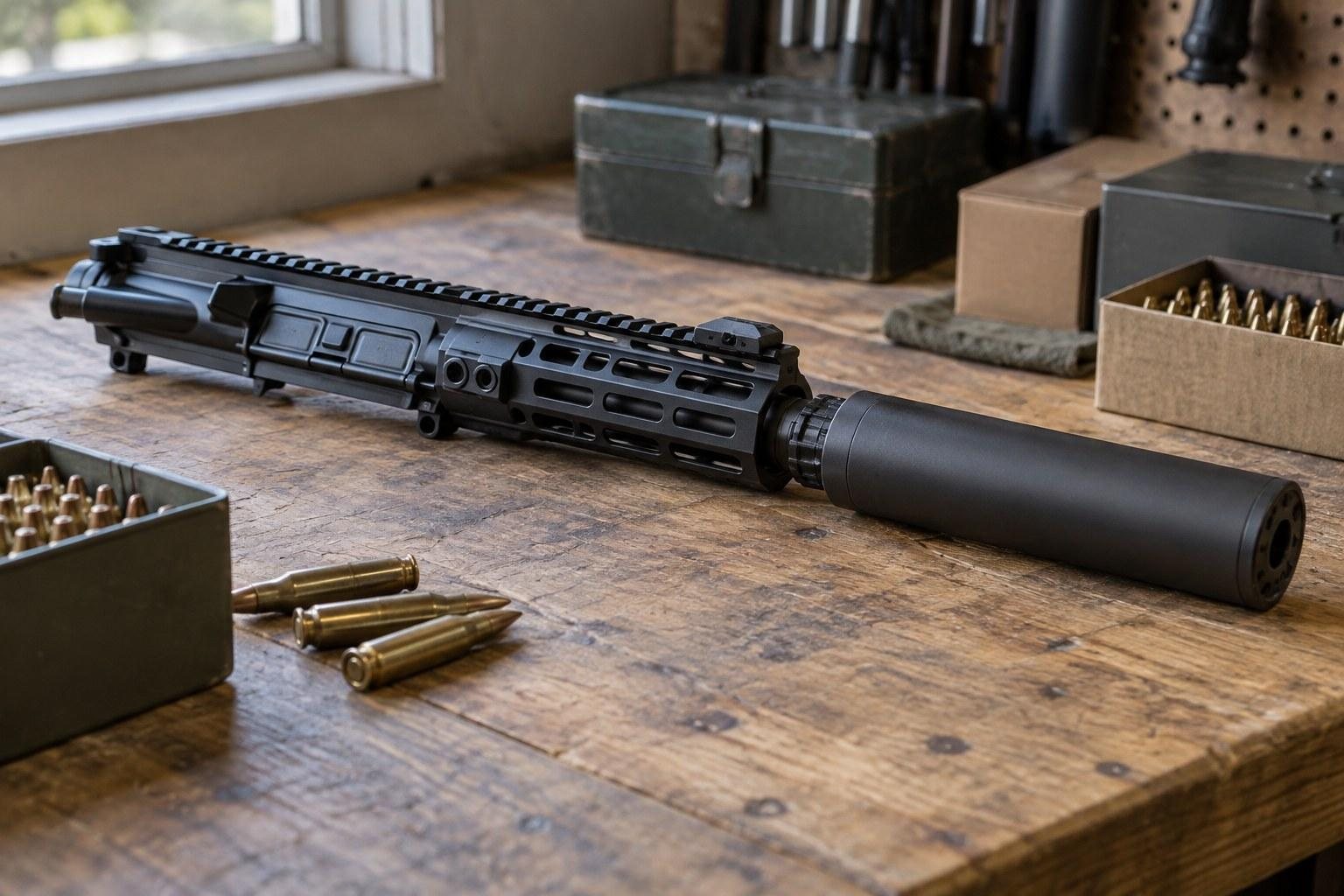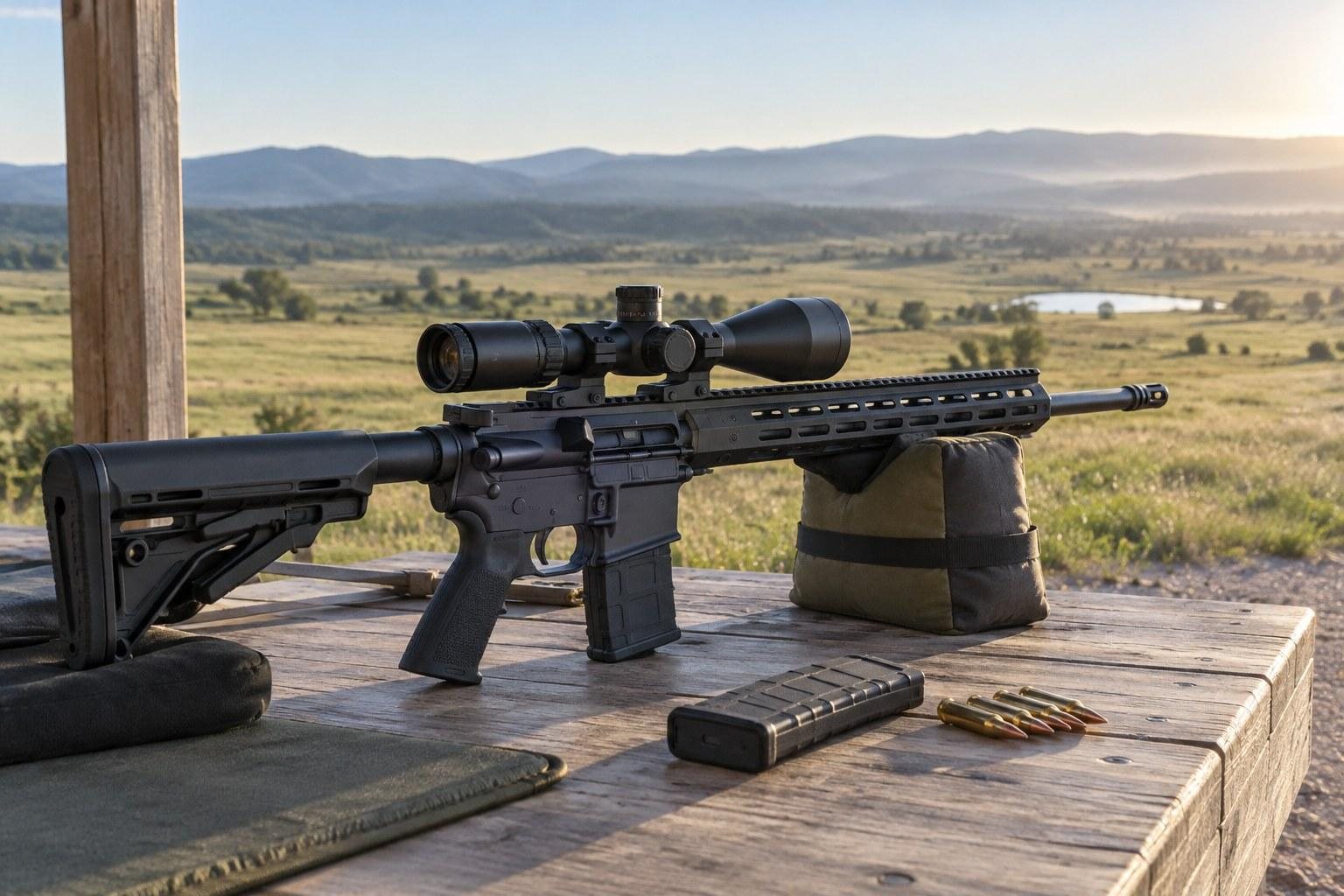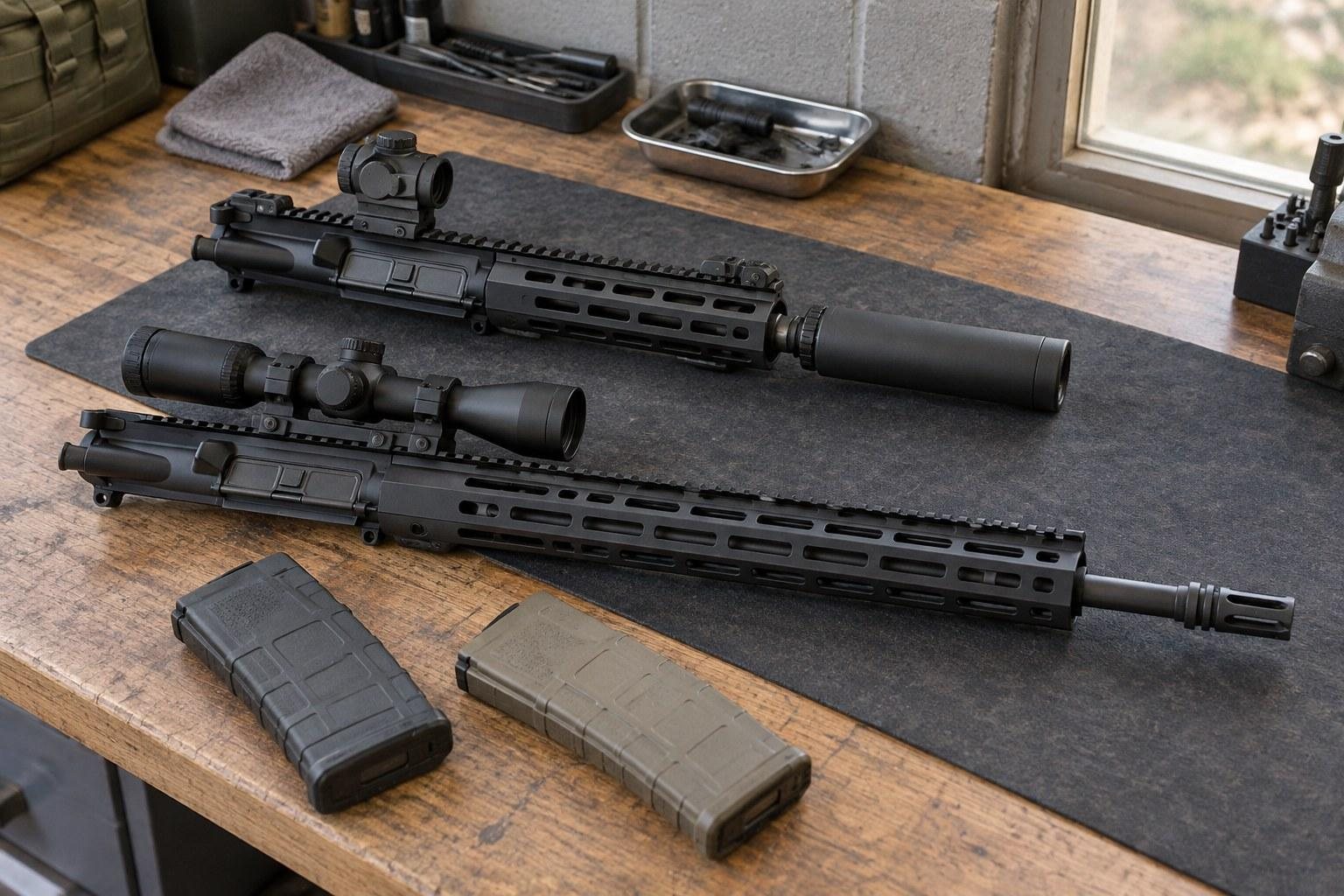
The 6.8 SPC vs 300 Blackout question comes up whenever an AR-15 owner wants more punch than 5.56 without moving to a heavier AR-10. Both cartridges run in a standard AR-15 lower, both throw heavier bullets than 5.56, and both have loyal followings. They solve different problems, though.
300 Blackout was built around short barrels, suppressors and subsonic loads. The 6.8 SPC was built to carry more energy at practical rifle distances. In the sections below, we compare parts compatibility, barrel lengths, twist rates and intended use, so you can pick the upper that matches how you shoot.
Want to see complete uppers for both calibers side by side?
Key Takeaways
- Both cartridges drop onto a standard AR-15 lower receiver, so the caliber choice lives entirely in the upper and the magazines.
- 300 Blackout uses a standard 5.56 bolt and standard AR-15 magazines, while the 6.8 SPC needs its own bolt and its own magazines.
- 300 Blackout is at its best in short barrels and suppressed builds, especially with subsonic ammunition.
- The 6.8 SPC is a supersonic, rifle-length cartridge that favors 16 to 20 inch barrels and medium game hunting.
- Any barrel under 16 inches on a rifle creates a short-barreled rifle that still requires ATF registration, even though the federal tax is now $0.
Two Different Answers to the Same Question
Both rounds came out of the same frustration: the 5.56 is light for some jobs, and an AR-10 is big and heavy. Each cartridge keeps the AR-15 lower and its ergonomics while putting a heavier bullet downrange. Where they split is in what they were designed to do well.
What 300 Blackout Was Built For
300 Blackout fires .30 caliber bullets from a case based on the .223 Remington. Its design goal was full efficiency from short barrels and smooth operation with a suppressor. It can run lighter supersonic bullets or heavy subsonic bullets that stay below the speed of sound, which makes it a favorite for quiet, compact builds.
What the 6.8 SPC Was Built For
The 6.8 SPC (Special Purpose Cartridge) fires .277 caliber bullets from a fatter case. It was developed to deliver more energy than 5.56 from a carbine or rifle length barrel while still fitting the AR-15 magazine well. The SPC II chamber is the version you will see on most modern barrels.
The Short Version
If you picture a suppressed 10.5 inch pistol or SBR, you are picturing 300 Blackout territory. If you picture a 16 or 18 inch rifle carried in a deer stand, you are picturing 6.8 SPC territory. Neither is a universal winner; the right one depends on barrel length and mission.
6.8 SPC vs 300 Blackout Parts Compatibility
For many builders, compatibility decides the 6.8 SPC vs 300 Blackout matchup before ballistics even enter the conversation. Both run on a standard AR-15 lower, buffer system and trigger group, but the upper side and the magazines differ in important ways.
Bolts and Bolt Carrier Groups
300 Blackout uses the same bolt face as 5.56, so a standard AR-15 bolt carrier group works. That is why a lot of owners treat a 300 Blackout upper as an easy second upper. The 6.8 SPC has a larger case head, so it needs a 6.8 specific bolt. Running the wrong bolt is not an option, so buy a matched BCG or a complete upper that ships with one.
Magazines
300 Blackout generally feeds from standard AR-15 magazines, and dedicated 223, 5.56 and 300 Blackout magazines are widely available. The 6.8 SPC needs magazines made for its wider case, and purpose-built 6.8 SPC and 224 Valkyrie magazines are typically sold in their own category.
A Safety Note on Mixed Calibers
Because a 300 Blackout round can physically chamber in a 5.56 rifle, mixing ammunition is a real hazard. Label your magazines, keep ammunition separated and always confirm the barrel marking before loading. Work on an unloaded firearm, follow the manufacturer's instructions and see a qualified gunsmith if you are unsure about anything.
| Feature | 300 Blackout | 6.8 SPC II |
|---|---|---|
| Bullet diameter | .308 inch (.30 caliber) | .277 inch |
| Lower receiver | Standard AR-15 | Standard AR-15 |
| Bolt | Standard 5.56 bolt | 6.8 specific bolt |
| Magazines | Standard AR-15 magazines | 6.8 specific magazines |
| Common twist rates | 1:7 and 1:8 | 1:11 and 1:12 |
| Common barrel lengths | 8, 10.5 and 16 inch | 16, 18 and 20 inch |
| Subsonic use | Designed for it | Not its focus |
Ready to compare the 300 Blackout side against 5.56 as well?
Barrel Length and Twist Rate
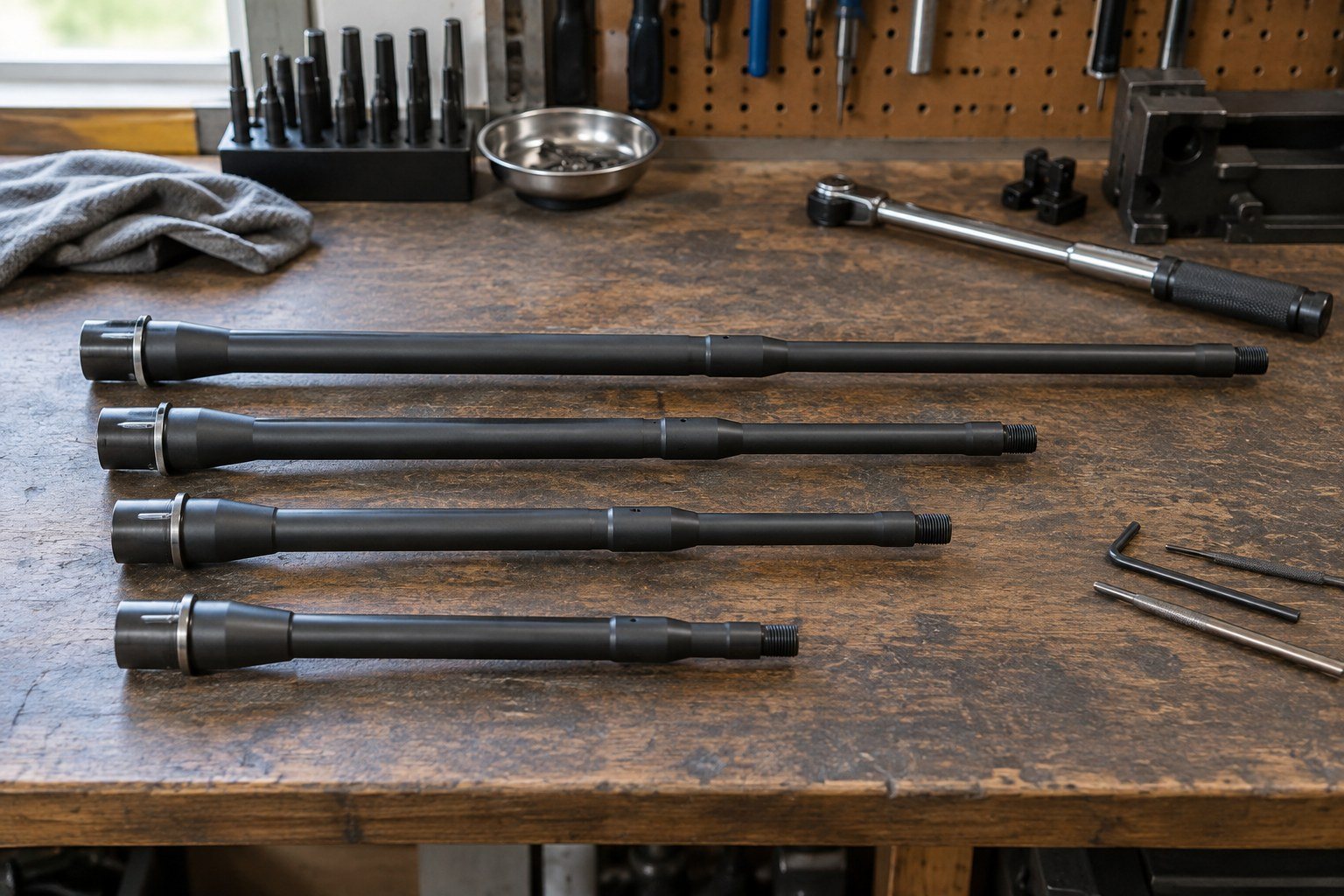
Barrel length is where the two cartridges look most different on the shelf. The barrels AR15Parts.com carries reflect the jobs each round was designed for.
300 Blackout Barrels
300 Blackout barrels commonly come in short 8 and 10.5 inch lengths as well as 16 inch options, often in lightweight and heavy Parkerized profiles. Many use a 1:7 twist, with some heavier profiles at 1:8. Fast twists help stabilize the long, heavy bullets used in subsonic loads.
6.8 SPC II Barrels
6.8 SPC II barrels are commonly available in 16, 18 and 20 inch lengths with 1:11 or 1:12 twist rates. Those longer lengths make sense for a cartridge that relies on velocity. For a deeper look at how twist affects bullet choice, see our AR-15 twist rate guide.
Short Barrels and the NFA
Many 300 Blackout builds use barrels under 16 inches. A rifle barrel under 16 inches, or an overall length under 26 inches, makes a short-barreled rifle that still requires ATF registration. Since January 1, 2026 the federal tax on SBRs and suppressors is $0, but registration remains mandatory. Learn more from the ATF National Firearms Act page. State and local laws vary, so check yours before you build. Our AR-15 barrel length guide covers the tradeoffs in more detail.
Ballistics and Performance in Plain Terms
We are keeping this section qualitative on purpose. Velocity and energy depend heavily on the specific load and barrel length, so the best numbers for your rifle are the ones printed by the ammunition maker for that exact load.
Supersonic Performance
In supersonic loads, the 6.8 SPC generally carries more velocity and flatter trajectory than 300 Blackout at typical rifle distances, especially from 16 inch and longer barrels. That is the core reason hunters choose it. 300 Blackout supersonic loads are effective at closer ranges but drop more quickly as distance grows.
Subsonic Performance
Subsonic shooting is where 300 Blackout pulls far ahead. Heavy .30 caliber bullets below the speed of sound pair well with a suppressor and still cycle a properly set up AR-15. The 6.8 SPC is not designed around subsonic loads, so if quiet shooting is a priority, 300 Blackout is the natural pick.
Recoil and Handling
Both rounds recoil more than 5.56 but remain comfortable in a standard weight AR-15. Short 300 Blackout uppers make compact, maneuverable rifles, while 6.8 SPC uppers tend to be a little longer because of their barrel lengths. Gas system and buffer setup affect felt recoil too, so defer to the component manufacturer's published specs when tuning.
Which Cartridge Fits Your Use
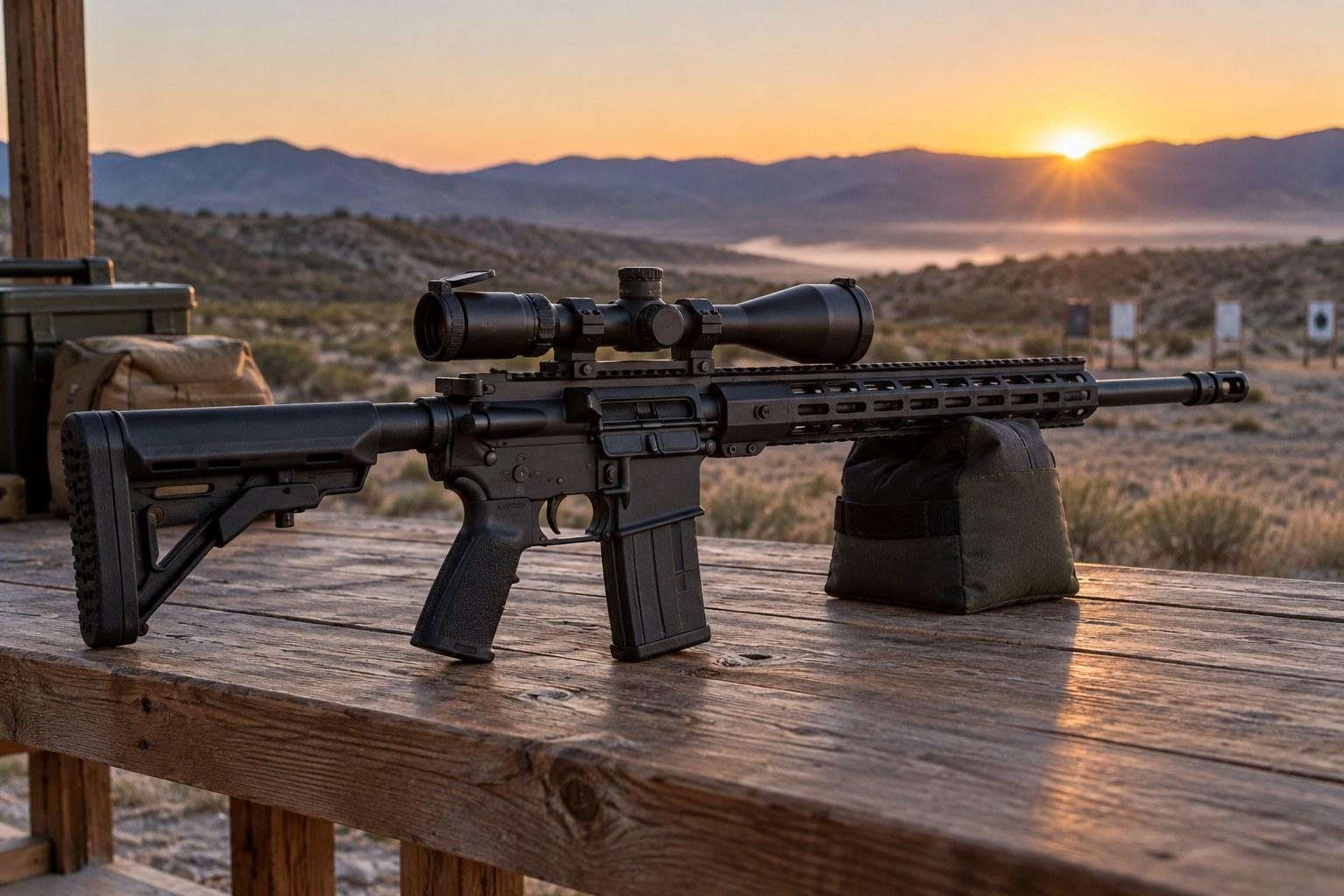
Many buyers settle the 6.8 SPC vs 300 Blackout decision by being honest about where and how they shoot. Here is a common way to sort the typical scenarios.
Hunting
For deer-sized game at moderate distances, the 6.8 SPC is the stronger choice because it was designed to carry energy from rifle-length barrels. 300 Blackout can work for close-range hunting with appropriate supersonic hunting loads. Always confirm your state wildlife agency's caliber and cartridge rules before the season.
Suppressed and Compact Builds
For a quiet, short upper on a registered SBR or a pistol build, 300 Blackout is hard to beat. It was engineered for that role, and short 8 and 10.5 inch barrel options point straight at it.
Home Defense and General Use
Both can serve, and both have tradeoffs. 300 Blackout's shared bolt and magazines make it simple to support if you already own 5.56 gear. The 6.8 SPC requires separate magazines and a dedicated bolt, which is a bigger investment in a second set of parts.
Ammunition Availability
300 Blackout loads are generally easier to find on store shelves than 6.8 SPC loads, though availability changes over time. Check what you can buy locally before committing to either cartridge.
What AR15Parts.com Stocks for Each Caliber
A practical routine is to check current category listings before buying, since product offerings and stock can change.
300 Blackout Uppers
300 Blackout uppers are commonly available in 10.5 inch and 16 inch configurations, often with 10, 12 or 15 inch rail options depending on length.
6.8 SPC II Uppers
6.8 SPC II uppers are commonly available in 16, 18 and 20 inch configurations, often with 12 or 15 inch rails and comp brakes.
Complete Upper or Stripped Build
Complete uppers typically ship with a BCG and charging handle, and they are assembled in-house, headspaced and function-checked before they ship. Shipping takes 3 to 5 business days. For the 6.8 SPC especially, a complete upper takes the guesswork out of matching the bolt. You can compare more cartridges in our AR-15 caliber comparison guide.
Still deciding between calibers? Browse more caliber and configuration guides from our editors.