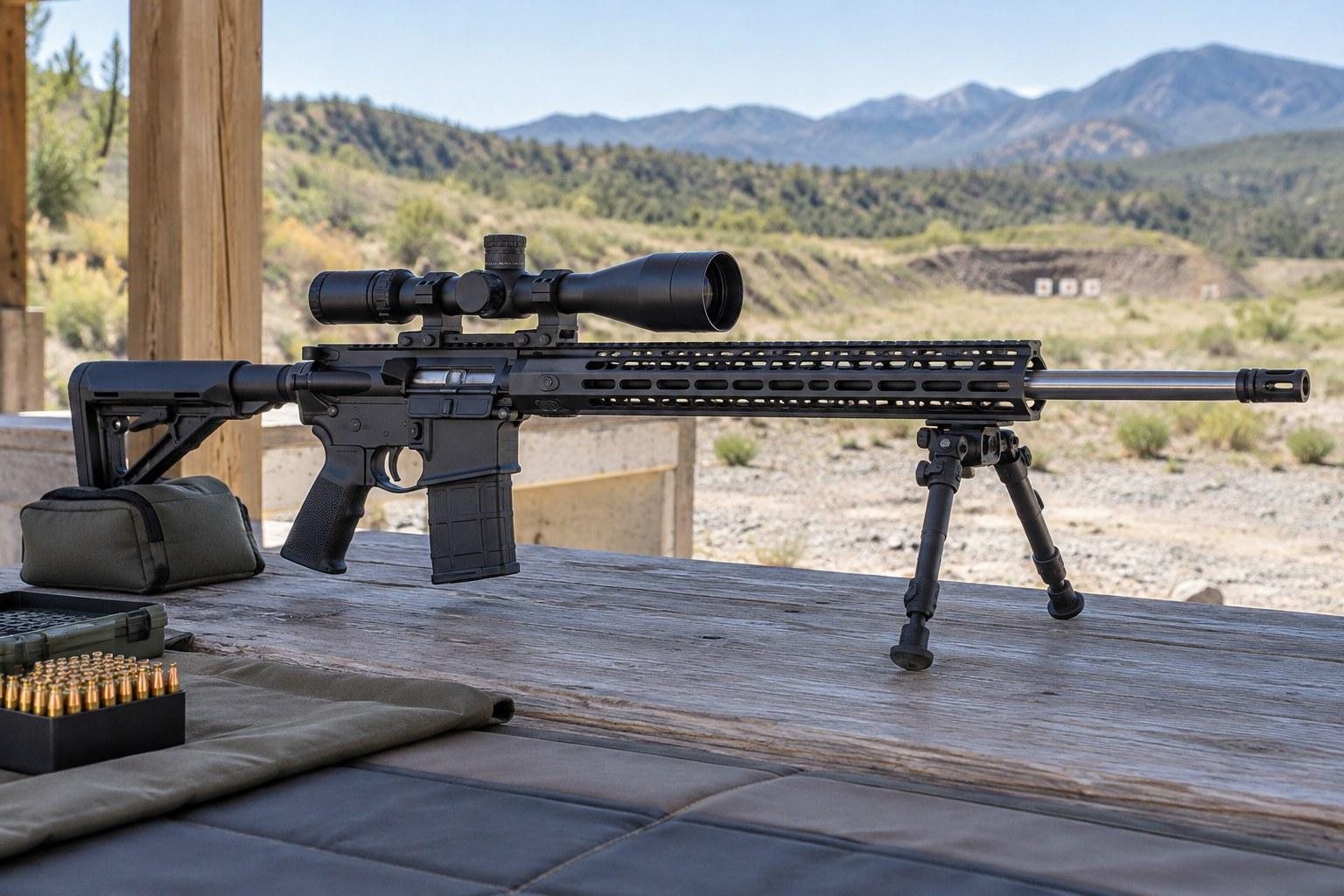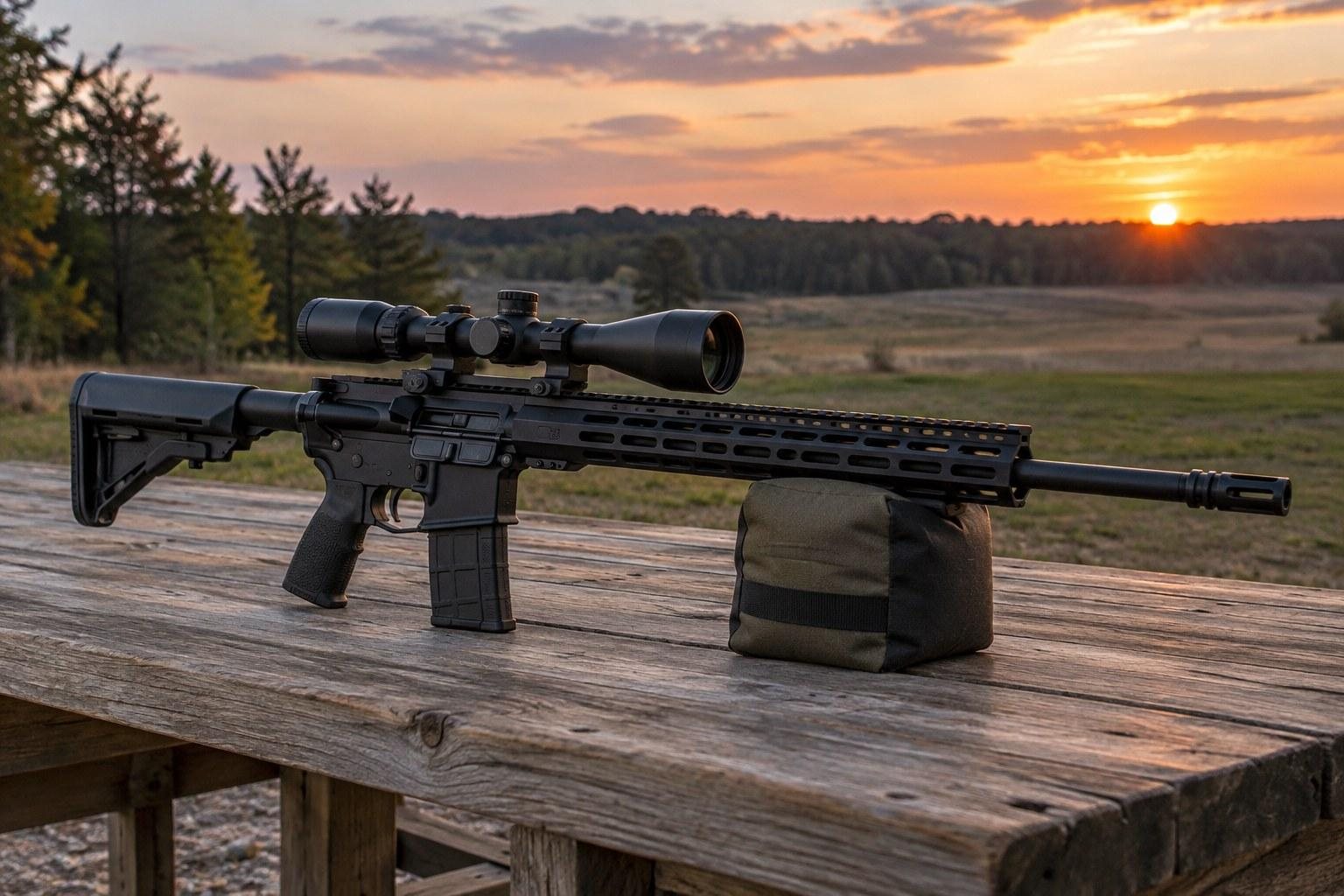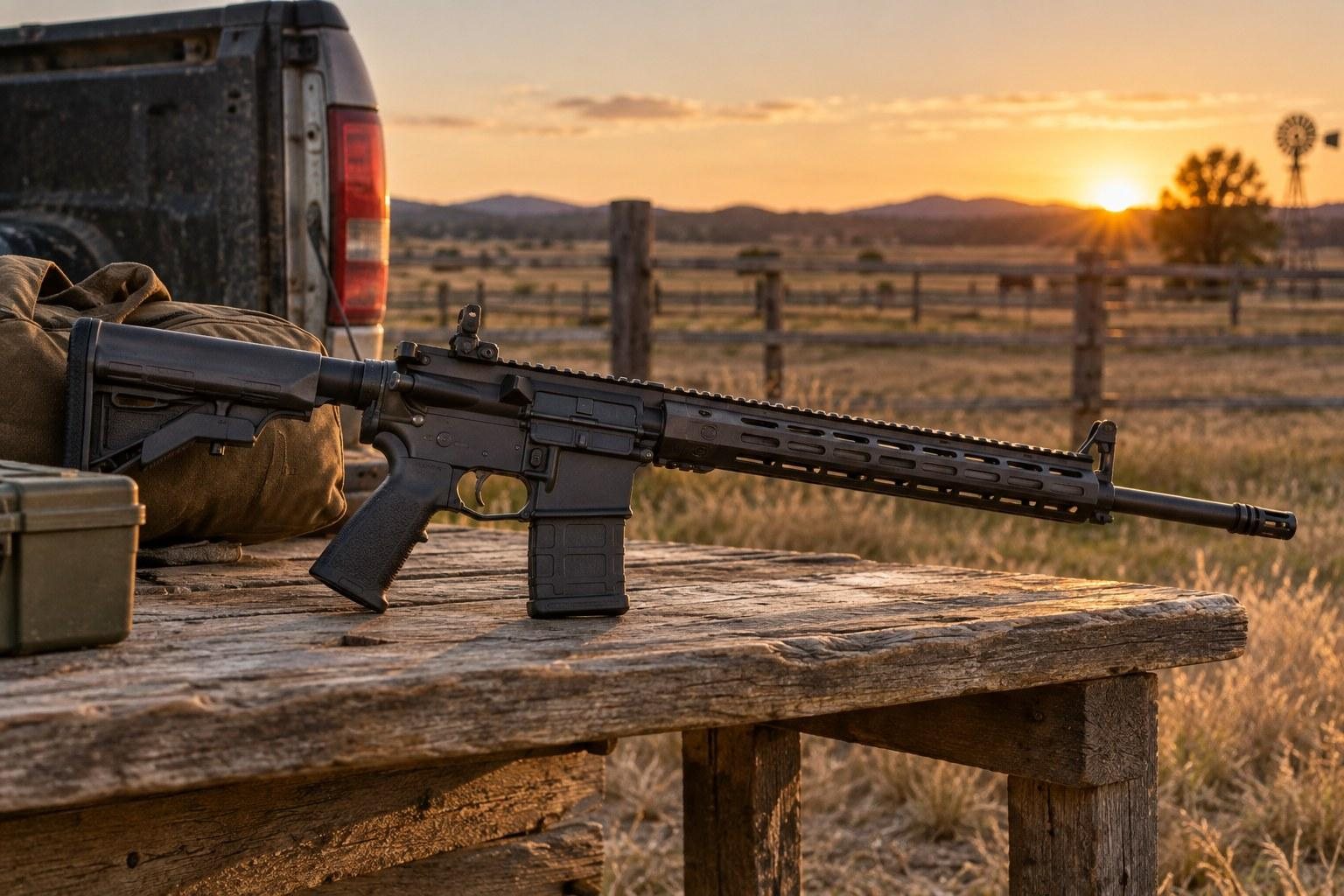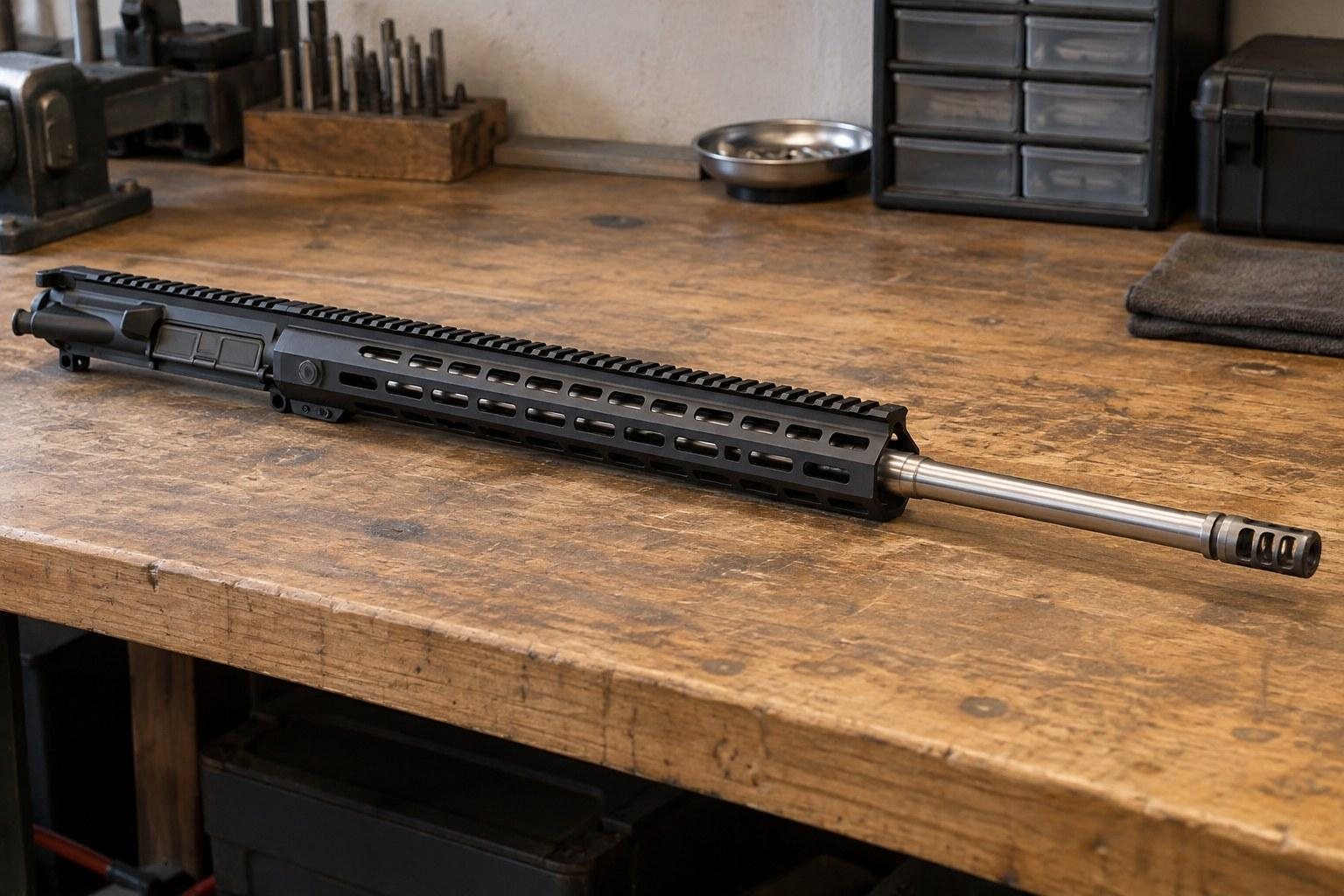
A 20 inch AR upper is where the AR-15 story started, and it is far from obsolete. Short barrels dominate social media, but the original rifle-length configuration still solves real problems for target shooters, hunters and anyone who wants a smooth, predictable rifle.
This guide looks at what the longer barrel actually gives you, what it costs you in handling, and which calibers make the most of the extra length. If you are torn between a carbine and a full-length rifle, the trade-offs below should make the choice much clearer.
Want to see assembled, function-checked uppers in a range of lengths?
Key Takeaways
- A 20 inch barrel lets most AR cartridges burn more of their powder before the bullet exits, which generally means more velocity than a carbine-length barrel.
- Rifle-length gas systems are known for a softer, smoother recoil impulse because the gas port sits farther from the chamber.
- The longer barrel adds weight and length, so it suits benches, prone positions and open country better than vehicles or tight spaces.
- Efficient intermediate chamberings and cartridges such as 223 Wylde, 6mm ARC, 22 ARC and 6.5 Grendel pair especially well with a 20 inch barrel.
- At 20 inches you are well clear of the federal 16 inch minimum for rifle barrels, so no NFA registration questions arise from barrel length.
Where the 20 Inch AR Upper Came From
The earliest AR-15 and M16 rifles used 20 inch barrels with a rifle-length gas system. Shorter carbine and mid-length setups came later, mostly to make the platform handier for vehicles, close quarters and compact storage.
That history matters because the rifle-length layout was the baseline the system was designed around. Gas tube length, port location and buffer weight were all worked out for a long barrel first. Many of the "fixes" shooters apply to short barrels, like heavier buffers or adjustable gas blocks, exist because the shorter systems run with less margin.
What "Rifle Length" Actually Means
"Rifle length" describes the gas system, not just the barrel. It refers to where the gas port is drilled along the barrel and how long the gas tube is that carries gas back to the bolt carrier. Carbine, mid-length and rifle-length are the common AR-15 options, from shortest to longest.
A rifle-length gas system is normally paired with a 20 inch barrel or longer. If you want the deeper mechanics, our guide on how to choose the right gas system length for your AR-15 explains how each length behaves.
Why the Classic Layout Never Went Away
Service rifle competitors, varmint shooters and long-range hobbyists kept using full-length rifles because the configuration works. Barrel makers still offer 20 inch contours in precision and DMR-style profiles, which tells you the demand is real rather than nostalgic.
The Real Advantages of a Longer Barrel
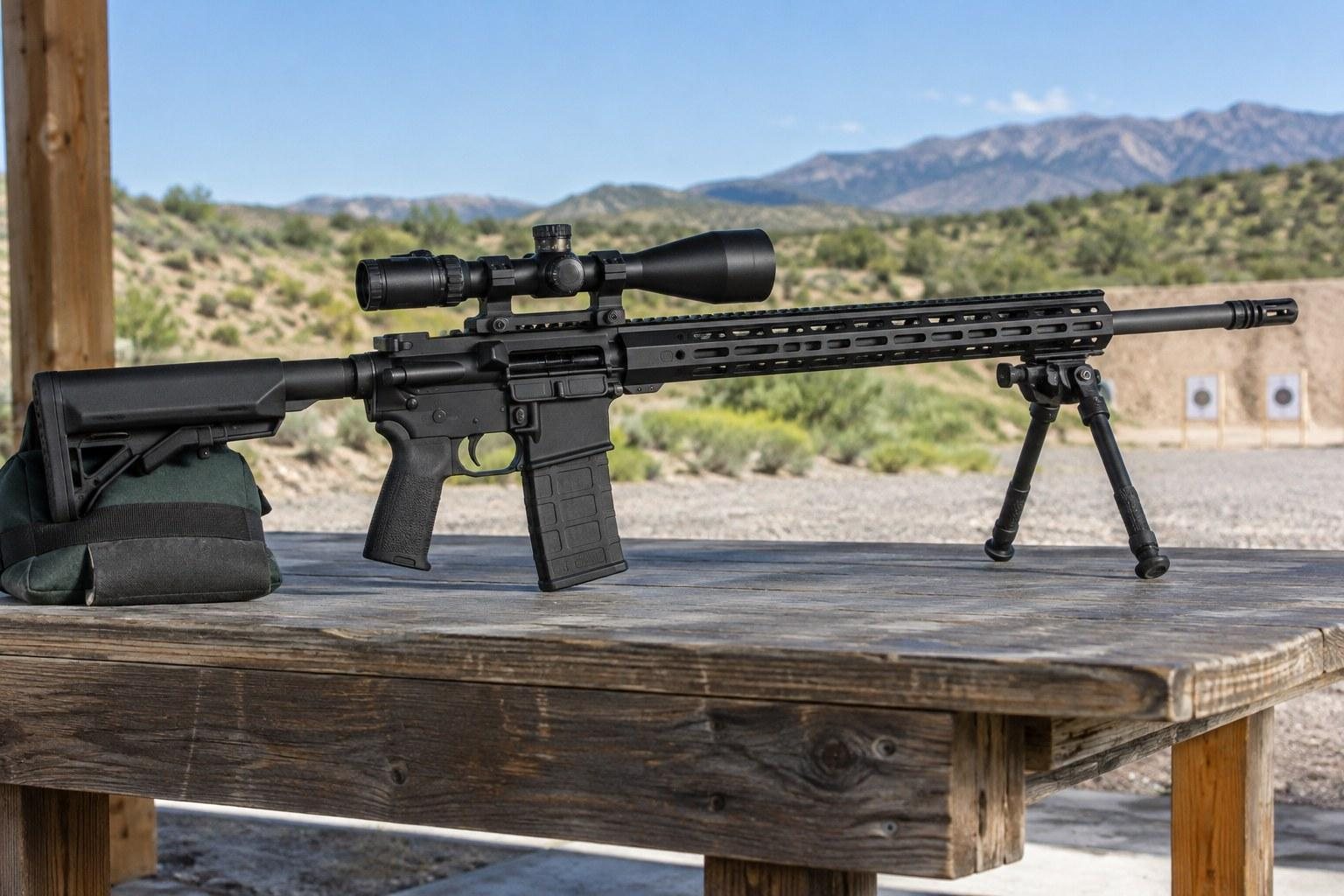
Every extra inch of barrel gives the expanding powder gas more time to push the bullet. The exact gain depends on cartridge, load and barrel, so we will not quote a universal number. Still, the direction is consistent: longer barrels generally produce higher muzzle velocity than shorter ones with the same ammunition.
Velocity and Flatter Trajectory
Higher velocity usually means a flatter trajectory and less wind drift at a given distance. For a shooter ringing steel or taking varmints at longer ranges, that can make holdovers simpler and the margin for error larger. Check the ammunition maker's published data for the barrel length used in testing before you build a dope chart.
Softer Recoil Impulse
Because the gas port on a rifle-length system sits farther down the barrel, the bolt carrier gets its push later and at lower pressure. Shooters commonly describe the result as smoother cycling and a gentler impulse than a carbine gas system. That helps you watch your hits through the optic and stay on target for follow-up shots.
Less Muzzle Blast and Easier Sight Radius
A longer barrel typically means less concussion and flash at the shooter's position, which range neighbors appreciate. If you run iron sights, a longer rail and barrel also allow a longer sight radius, which makes small aiming errors easier to see.
Comparing lengths before you commit? Our barrel length guide walks through every common option.
The Trade-Offs to Weigh Honestly
A full-length rifle is not the right answer for every job. Being clear about the downsides keeps you from building a rifle that sits in the safe.
Weight and Balance
A 20 inch barrel adds steel out front, and heavier contours add even more. The rifle balances farther forward, which steadies it on a bipod or bag but makes offhand shooting more tiring. Fluted or medium contours can trim some of that weight without giving up length.
Handling in Tight Spaces
Getting in and out of a truck, a ground blind or a doorway is simply easier with a shorter rifle. If your main use is home defense or moving through brush, a 16 inch carbine or mid-length setup may serve you better.
Suppressor Length
Adding a suppressor to a 20 inch barrel makes a long rifle longer. Some shooters accept that for the quieter range sessions, but it is worth picturing the total length before you buy. Suppressors remain NFA items that require ATF registration, and since January 1, 2026 the federal tax on them is $0. State and local laws vary, so confirm the rules where you live.
Best Calibers for a 20 Inch AR Upper
Any AR-15 cartridge can run in a 20 inch barrel, but some benefit more than others. Cartridges designed for longer-range efficiency tend to reward the extra length the most.
| Caliber | 20 Inch Twist on AR15Parts.com Barrels | Typical Role |
|---|---|---|
| 223 Wylde | 1:8 | Target shooting, varmints, general use |
| 6mm ARC | 1:7 and 1:7.5 | Long-range steel, medium game where legal |
| 22 ARC | 1:7 | High-velocity varmint and precision work |
| 6.5 Grendel | 1:8 | Hunting and long-range target shooting |
Twist rates in the table reflect common 20 inch barrel offerings from major barrel makers. Our AR-15 twist rate guide explains how twist relates to bullet weight.
223 Wylde
The 223 Wylde chamber is built to safely fire both 5.56 NATO and .223 Remington ammunition while favoring accuracy. That flexibility makes it a natural fit for a do-everything rifle. You can see current options among the 223 Wylde uppers, which often include DMR and fluted profile builds in 20 inch lengths. For the chamber details, read 5.56 vs 223 Wylde vs 223 Remington.
6mm ARC and 22 ARC
Both ARC cartridges were designed around efficient, high ballistic coefficient bullets, so the longer barrel helps them carry speed downrange. The 6mm ARC uppers often include DMR and medium stainless profiles in 20 inch lengths. The 22 ARC uppers often include DMR plus medium and straight flute profiles in 20 inch lengths.
6.5 Grendel
The 6.5 Grendel pushes heavier bullets than 5.56 and keeps its energy well at distance. A 20 inch barrel helps it reach its potential for hunting and target work. The 6.5 Grendel uppers often include medium stainless and fluted profile options in 20 inch lengths.
What to Look for When You Shop
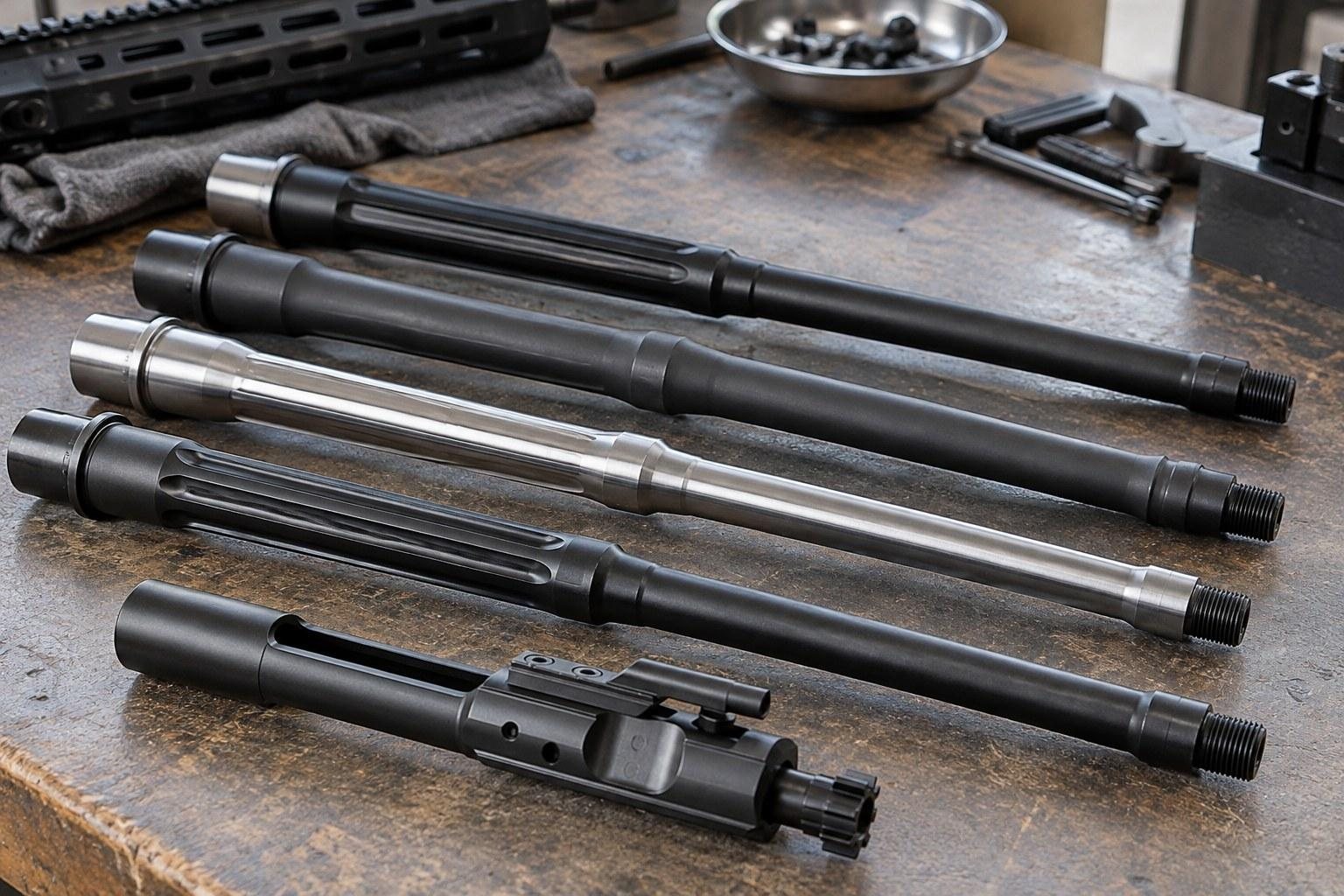
Once you settle on 20 inches, a few component choices decide how the finished rifle feels and shoots.
Barrel Contour and Material
- DMR and medium profiles balance weight with heat tolerance for longer strings.
- Fluted barrels remove material to reduce weight while keeping stiffness.
- 416R stainless is common on precision barrels and appears across many 20 inch offerings from major barrel makers.
Prefer to assemble your own? The 223 Wylde barrels category often includes the same 20 inch barrels used in complete builds, sold on their own.
Handguard Length
20 inch complete uppers often ship with a long rail and a muzzle device such as a compensator or brake. A long free-float handguard gives you room for a bipod and a natural support-hand position without touching the barrel.
Complete Upper or Barreled Upper
Complete uppers generally include the bolt carrier group and charging handle, while barreled versions generally leave those parts to you. AR15Parts.com assembles complete uppers in-house, headspaces them and function-checks them before shipping, and orders typically ship in 3 to 5 business days.
Safety Before Installation
Always make sure the lower is unloaded before swapping uppers. Follow each component manufacturer's published torque and gas specs, and never alter gas ports. If any step feels uncertain, have a qualified gunsmith check the rifle before you shoot it.
Is a 20 Inch AR Upper Right for You?
A 20 inch AR upper makes sense when your shooting happens mostly from a bench, a bipod or a stand, and when you value velocity and a smooth impulse over compact handling. It is also a strong pick if you want to stay clear of short-barrel paperwork entirely.
If you need a rifle for vehicles, tight hallways or fast movement, a shorter barrel is the better tool. Many shooters end up owning both and swapping uppers on one lower, since the AR-15 makes that easy.
Want to compare more caliber and configuration options?