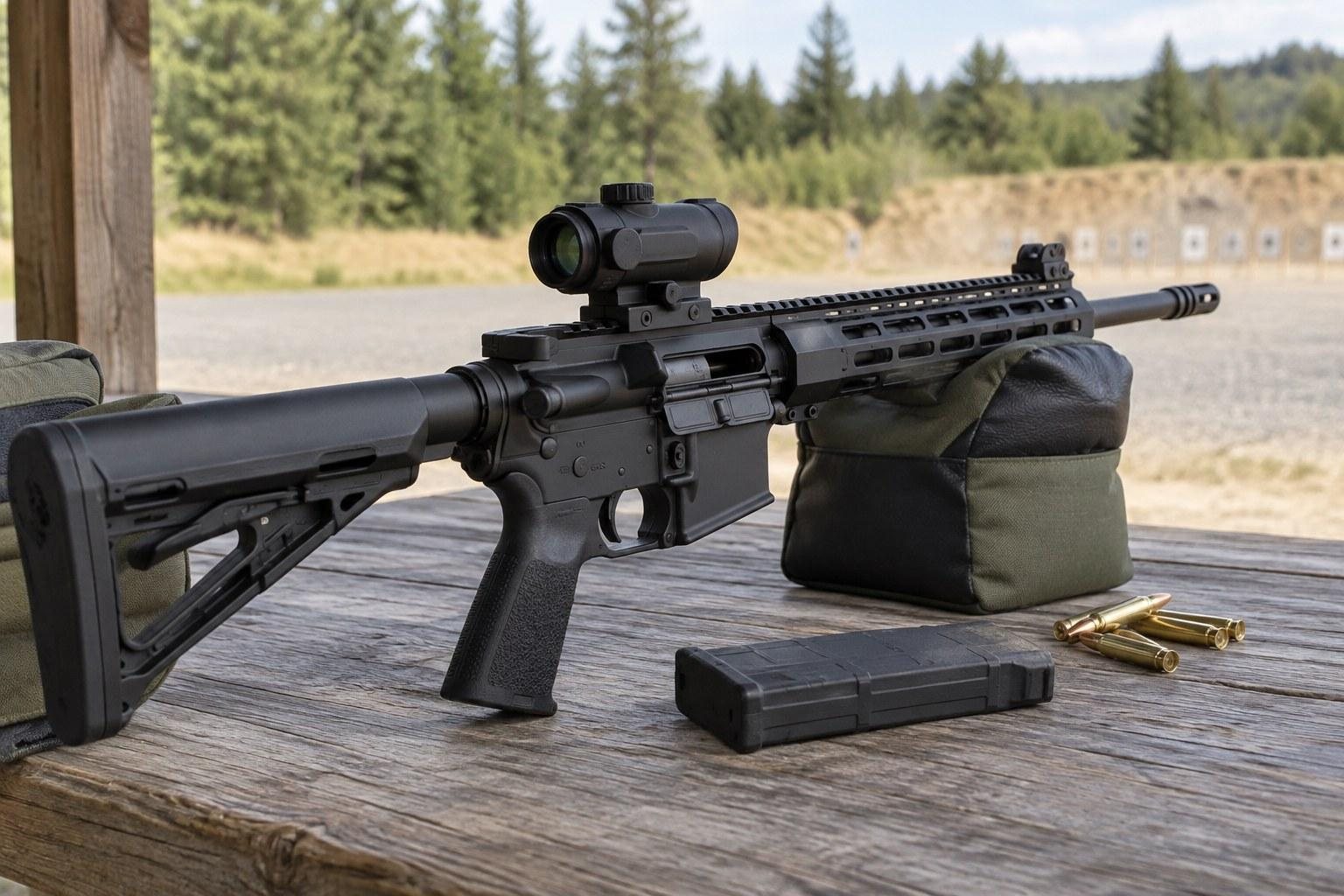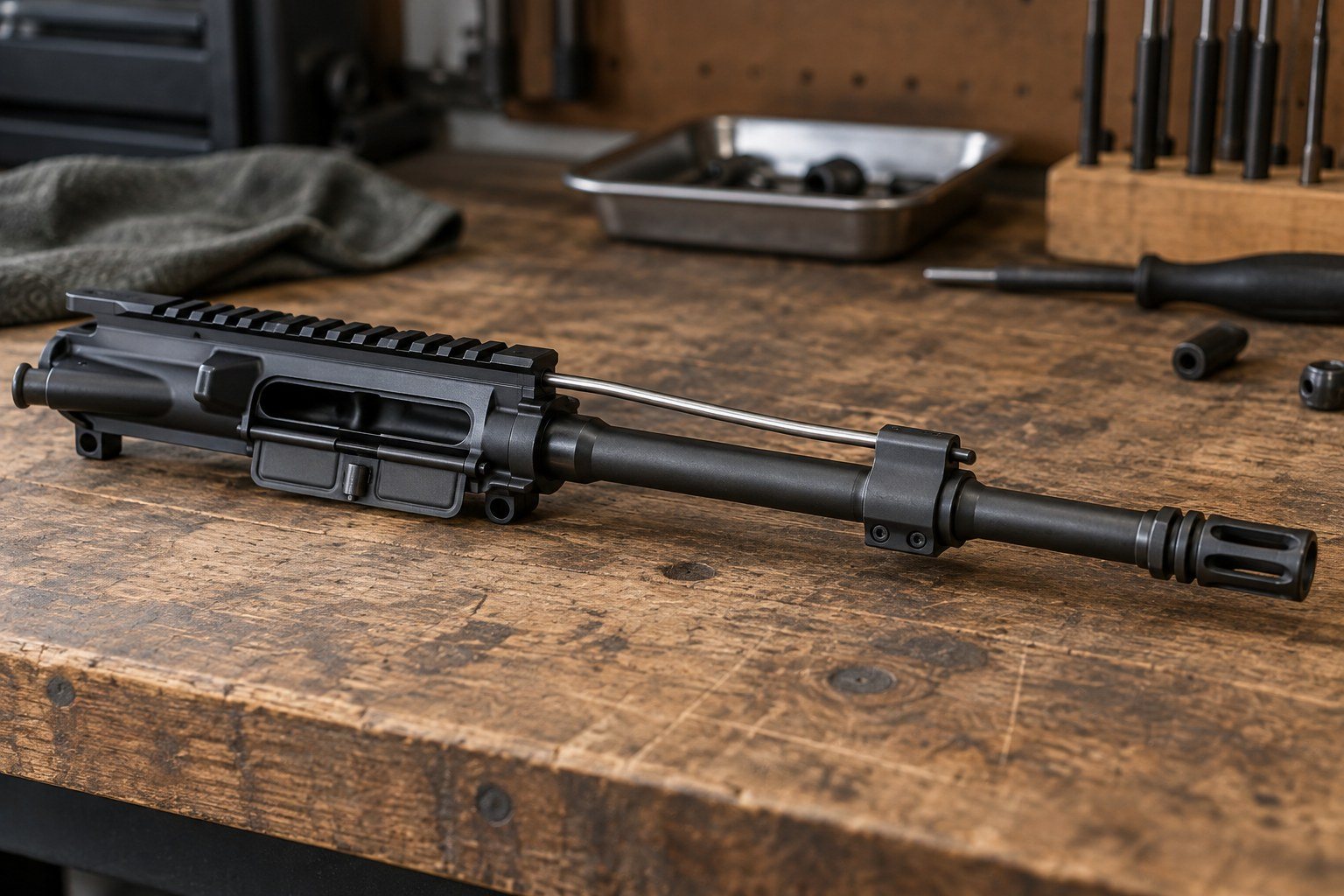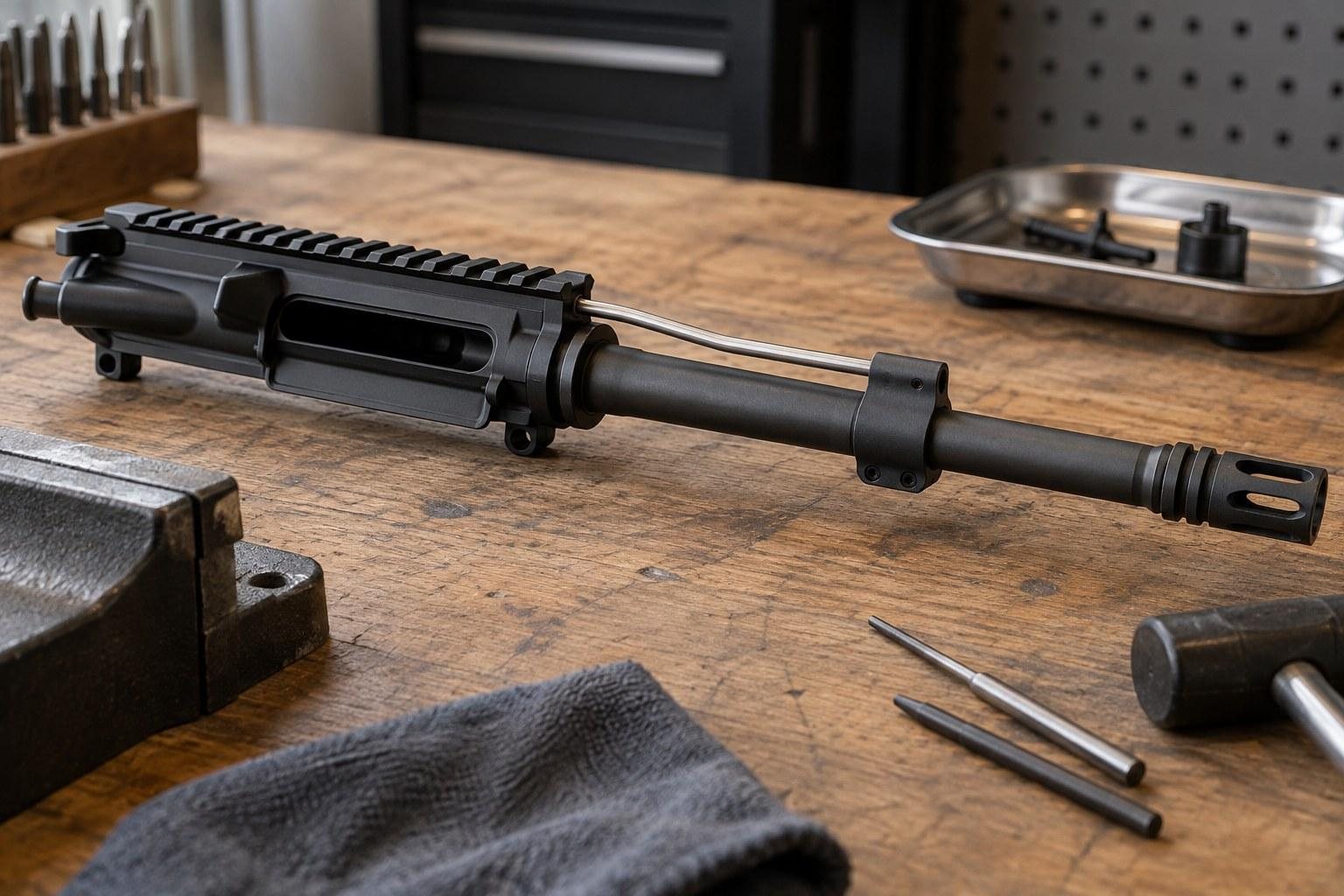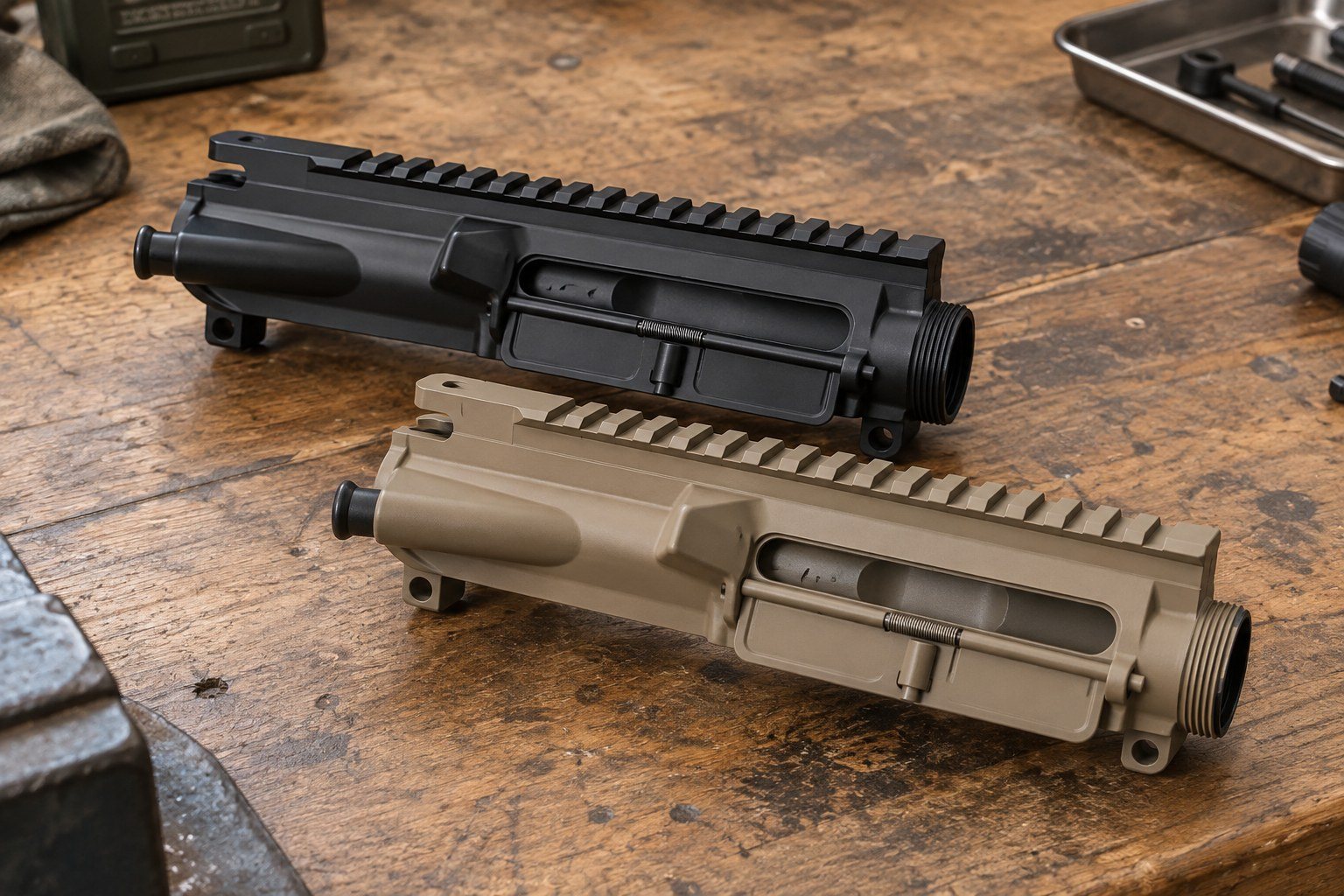
If you shoot, hunt or store rifles where the air stays damp, the cerakote vs anodized question matters more than color. Both finishes protect an aluminum upper receiver, but they do it in very different ways. One is grown into the metal itself. The other is a thin ceramic coating sprayed on and cured over the surface.
This guide breaks down how each finish behaves around moisture, sweat and condensation, where each one tends to wear first, and which parts of an upper need attention no matter what finish sits on the receiver. The goal is simple: help you pick a finish you understand and keep it looking and working right for years.
Want to see a hard coat anodized receiver up close? Browse complete builds first.
Key Takeaways
- Anodizing converts the surface of the aluminum into an oxide layer, so it cannot peel or flake off the way a paint can.
- Cerakote is a thin-film ceramic coating applied on top of the metal, so its protection depends on surface prep and application quality.
- Aluminum does not rust, so the real humidity risk on most uppers is the steel parts: the barrel, bolt carrier group, gas block and small pins.
- Both finishes can be layered, and many custom uppers are Cerakote applied over an anodized receiver.
- Regardless of finish, wiping down, light lubrication and dry storage do more for humidity protection than the coating choice alone.
What Anodizing Actually Does to an Upper Receiver
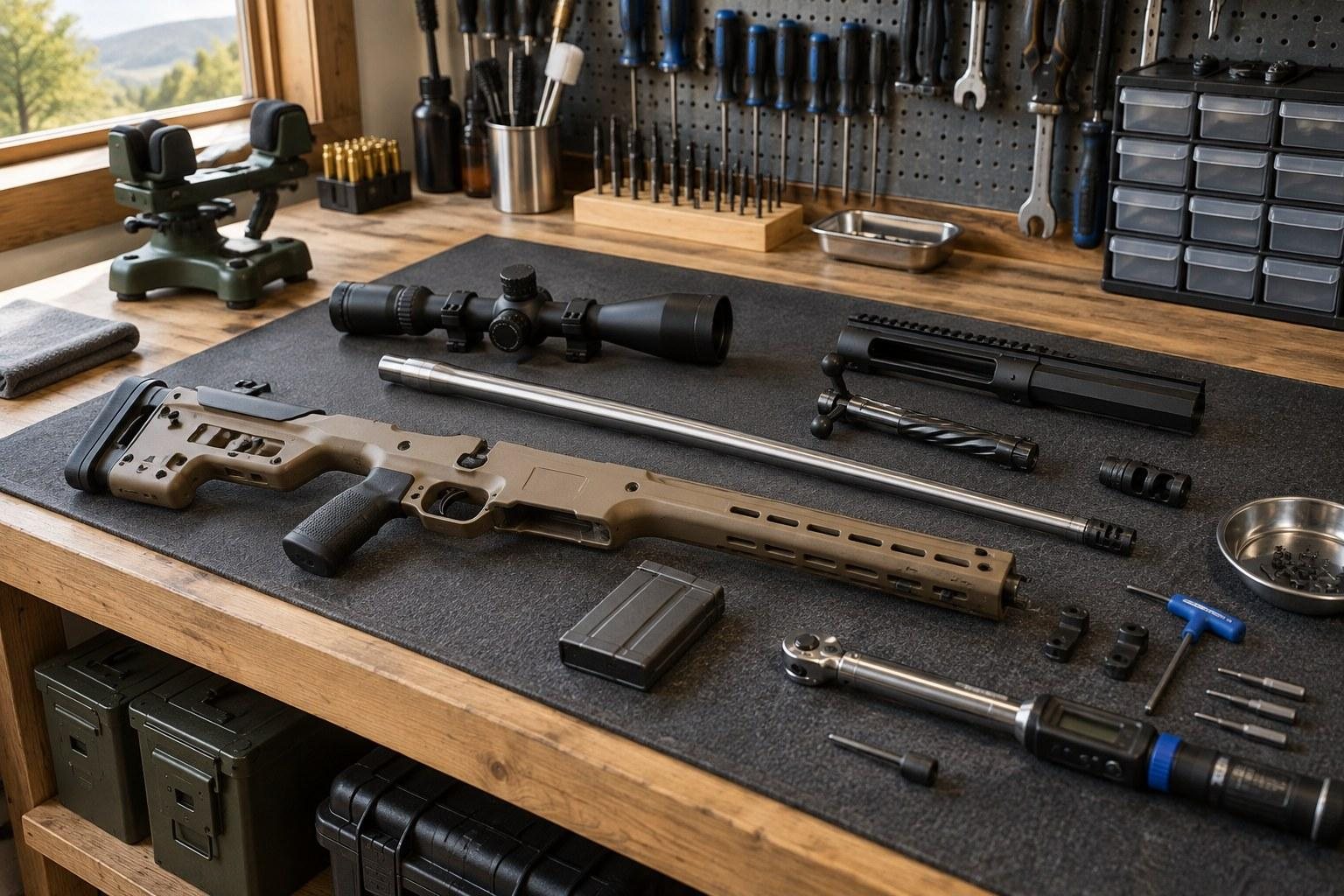
Anodizing is an electrochemical process. The aluminum part is placed in an acid bath and electric current is passed through it, which grows a layer of aluminum oxide out of the base metal. The result is not a coating sitting on top. It is part of the receiver.
That is why a scratched anodized upper shows bright aluminum rather than a chipped edge. The oxide layer is integral, so there is nothing to lift or bubble when moisture gets underneath.
Type III Hard Coat and the Mil-Spec Callout
Most forged AR-15 upper receivers use hard coat anodizing, often written as Type III. Forged stripped receivers are commonly finished in 7075 T6 aluminum with a matte black hard coat anodized finish to Mil 8625 Type 3 Class 2. Class 2 simply means the finish is dyed, which is where the black color comes from.
Hard coat anodizing is thicker and harder than the decorative Type II anodizing used on many consumer goods. That hardness is a big reason it has been the standard finish on military pattern receivers for decades.
How Anodizing Behaves in Damp Air
Aluminum does not rust the way steel does. Bare aluminum forms its own thin oxide film when exposed to air, and anodizing builds on that natural behavior with a much thicker, harder layer. In humid weather, a hard coat anodized receiver generally just needs a wipe-down to stay clean.
Where anodizing can show its age is in color, not protection. Dyed finishes can fade over long sun exposure or harsh solvents, and worn edges show silver. Those cosmetic changes do not mean the receiver is corroding.
You can compare anodized options in the stripped and assembled upper receivers category before deciding whether you want to add a coating later.
What Cerakote Is and How It Is Applied
Cerakote describes its products as thin-film ceramic coatings. On firearms, the coating is typically sprayed onto a prepared part and then cured, creating a hard, thin shell over the metal. It is available in a very wide range of colors, which is a big part of its appeal.
Because Cerakote sits on top of the surface, the quality of the job depends heavily on the applicator. Degreasing, media blasting and correct curing all matter. A well-applied coat bonds tightly. A rushed job can lead to thin spots or poor adhesion.
Cerakote Over Anodizing
Many custom colored uppers aren't Cerakote instead of anodizing. They're Cerakote applied over anodizing. The receiver is anodized at the factory, then blasted and coated in a new color. In that setup, the anodized layer is still underneath if the top coat wears through.
Cerakote on Steel Parts
Cerakote can also be applied to steel components such as barrels and muzzle devices. That is where it may offer the most practical humidity benefit, since steel is the material that actually rusts. Some parts, like the inside of a barrel bore or the bolt, are generally not coated, so those surfaces still need routine care.
For a deeper look at how coatings work on internal steel parts, read our BCG coatings guide.
Ready to compare finishes on bolt carriers and other internals? Start with our coatings overview.
Cerakote vs Anodized in Humid Conditions
When people compare cerakote vs anodized for humid climates, they often expect one clear winner. The honest answer is that both protect an aluminum receiver well, and they fail in different ways when they do wear.
| Factor | Hard Coat Anodized | Cerakote |
|---|---|---|
| How it forms | Grown from the aluminum through an electrochemical process | Thin ceramic coating sprayed on and cured |
| Bond to the part | Integral to the metal, cannot peel | Mechanical and chemical bond, depends on prep |
| Typical wear pattern | Edges and high spots show bare aluminum | Edges can chip or wear through to the layer below |
| Works on steel | No, anodizing is for aluminum | Yes, often used on barrels and muzzle devices |
| Color choice | Usually black, with limited dye colors | Very wide range of colors and patterns |
| Touch-up | Not practical at home | Usually requires stripping and recoating by an applicator |
Where Moisture Becomes a Problem
On a receiver, humidity alone rarely hurts either finish. Problems usually come from moisture trapped against the metal. Think of a rifle stored in a closed case after a rainy hunt, or a soft case left in a hot truck where condensation forms as temperatures swing.
In those situations, the steel parts sitting inside or against the aluminum receiver are the first to show rust. That includes the barrel extension, the gas tube, roll pins and the bolt carrier group.
Wear Points Worth Watching
- Receiver edges and the area around the ejection port, where hands and gear rub.
- The handguard mounting area, where the barrel nut meets the receiver.
- Sling attachment points and any spot that rides against a vehicle rack or case.
- Exposed steel on the barrel and gas block, especially near the muzzle.
If those spots are worn on an anodized receiver, you see silver aluminum, which is cosmetic. If they are worn on a Cerakote finish, you may see the anodized layer or bare metal underneath.
The Steel Parts Matter More Than the Receiver Finish
Because aluminum resists rust on its own, the most important humidity decision on an upper is arguably not the receiver finish at all. It is how the steel parts are finished and maintained.
Barrels
Barrel finishes vary by maker and model. Common options include nitride (also called melonite or QPQ), phosphate (parkerized) and stainless steel, and some barrels are coated with Cerakote. Check the product listing for the specific finish on any barrel you are considering. You can browse options in the AR barrels category.
Bolt Carrier Groups and Small Parts
The bolt carrier group lives inside the receiver and sees heat, carbon and lubricant. Its finish, whether phosphate, nitride, nickel boron or chrome, plays a larger role in corrosion resistance than the receiver coating. Small parts like pins, springs and the forward assist plunger also deserve a light coat of oil in damp weather. Those components live in the upper parts category.
Handguards
Most aluminum handguards are anodized as well. In wet conditions, the handguard often takes more abuse than the receiver because it is where you hold the rifle. Look at AR handguards if you want a matching finish across the upper.
How to Care for Each Finish in Humid Climates
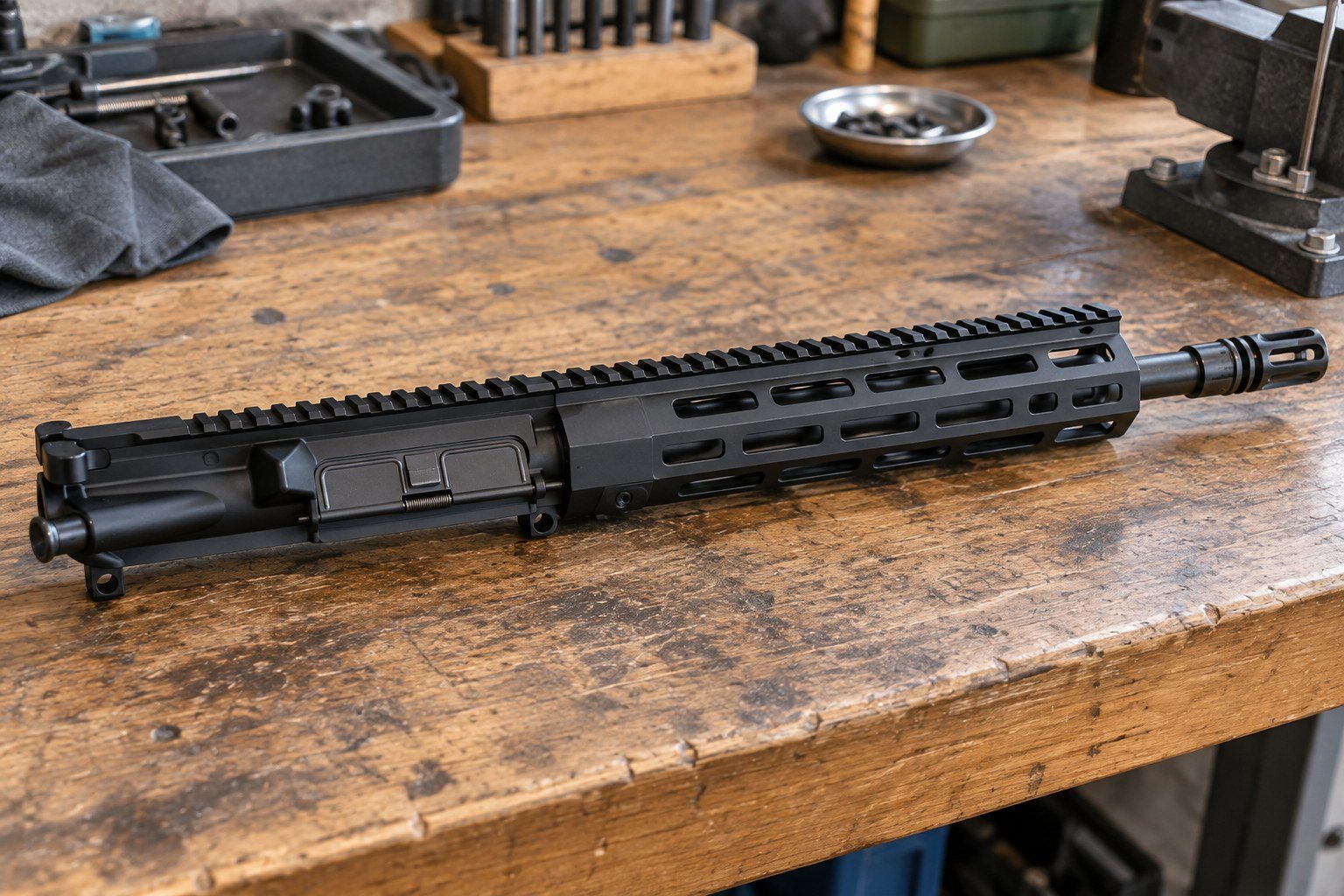
The care routine for both finishes is similar. Always make sure the firearm is unloaded before cleaning, and follow the component manufacturer's instructions for any solvent or lubricant.
Routine Care
- Confirm the rifle is unloaded and remove the magazine.
- Wipe down the exterior with a clean cloth after every outing, especially after rain or heavy sweat.
- Apply a thin film of a quality lubricant or protectant to exposed steel parts.
- Clean and lightly lubricate the bolt carrier group and the inside of the upper.
- Let the rifle dry completely before it goes into a case or safe.
Our upper cleaning guide walks through the full process step by step.
Storage Habits That Prevent Problems
Avoid leaving rifles in closed cases after they get wet. Foam and fabric hold moisture right against the metal. A safe with a dehumidifier or desiccant packs, plus some airflow, makes a bigger difference than any coating.
Solvents and Finish Safety
Most common gun cleaning products are safe on both finishes, but harsh solvents can dull dyed anodizing or affect some coatings over time. If you are unsure, check the coating or product manufacturer's guidance, or ask a qualified gunsmith.
Choosing the Right Finish for Your Upper
For most shooters, a hard coat anodized receiver paired with well-finished steel parts and good maintenance habits handles humid climates very well. It is proven, tough and simple to care for.
Cerakote makes sense when you want a specific color, want an extra layer over the anodizing, or want to add protection to steel parts like a barrel or muzzle device. Just remember that the result depends on the applicator, and repairs usually mean recoating.
Questions to Ask Yourself
- Do you care about color, or is black fine?
- Will the rifle be carried in rain, near salt water or in heavy sweat?
- Are you willing to wipe down and oil steel parts after each trip?
- Do you plan to coat the barrel and other steel parts too?
Ready to compare finishes on a complete build? Start with our complete upper guides.