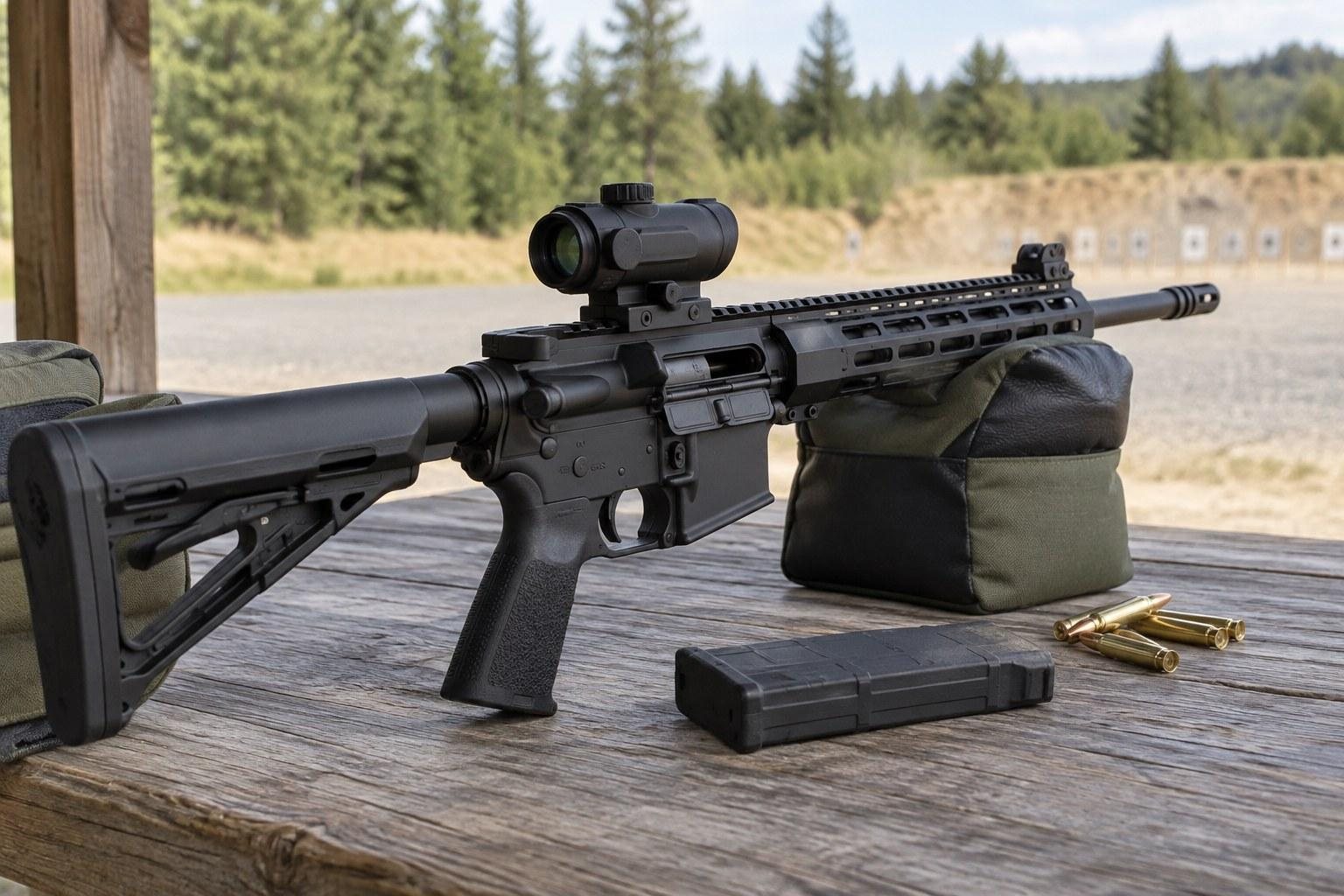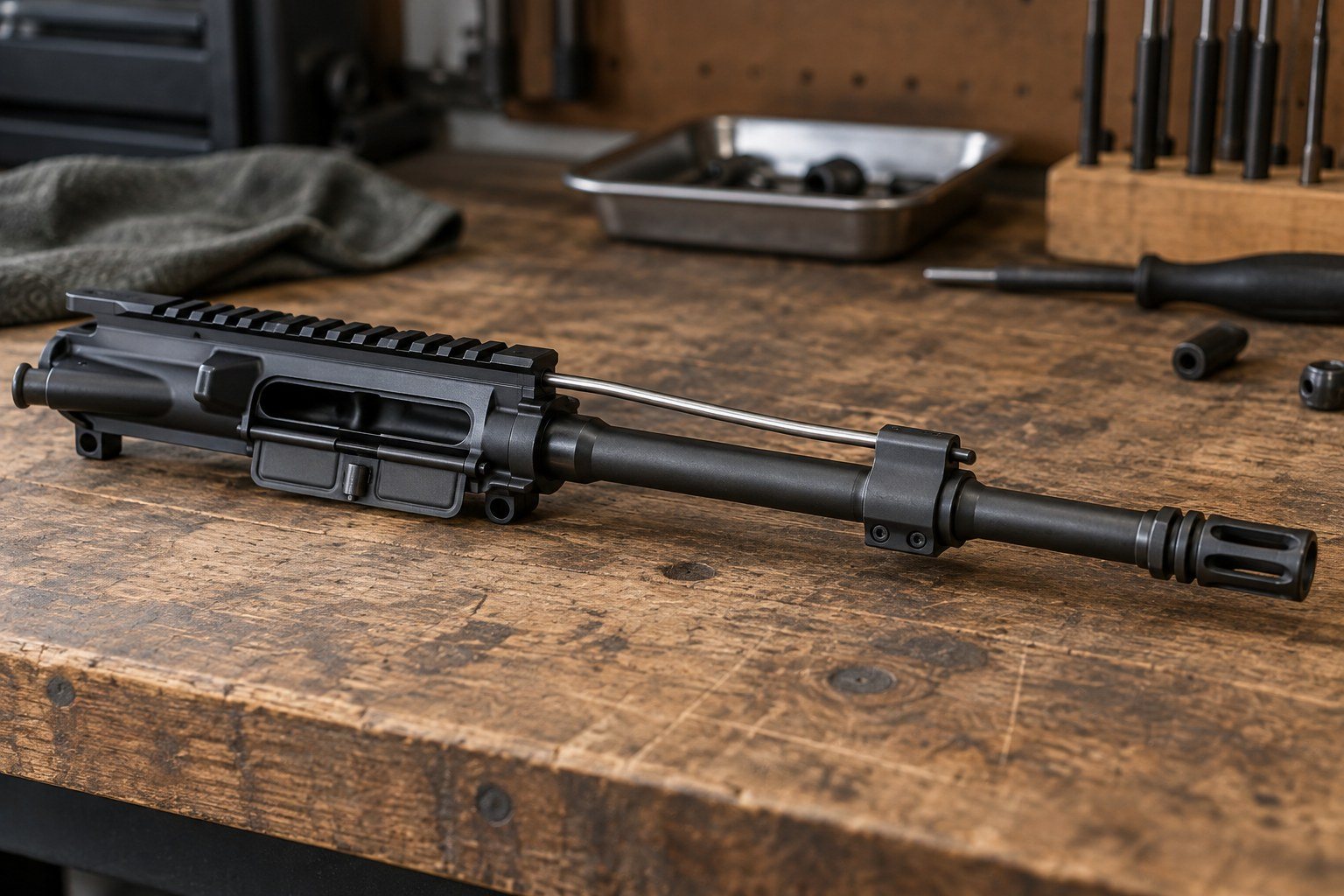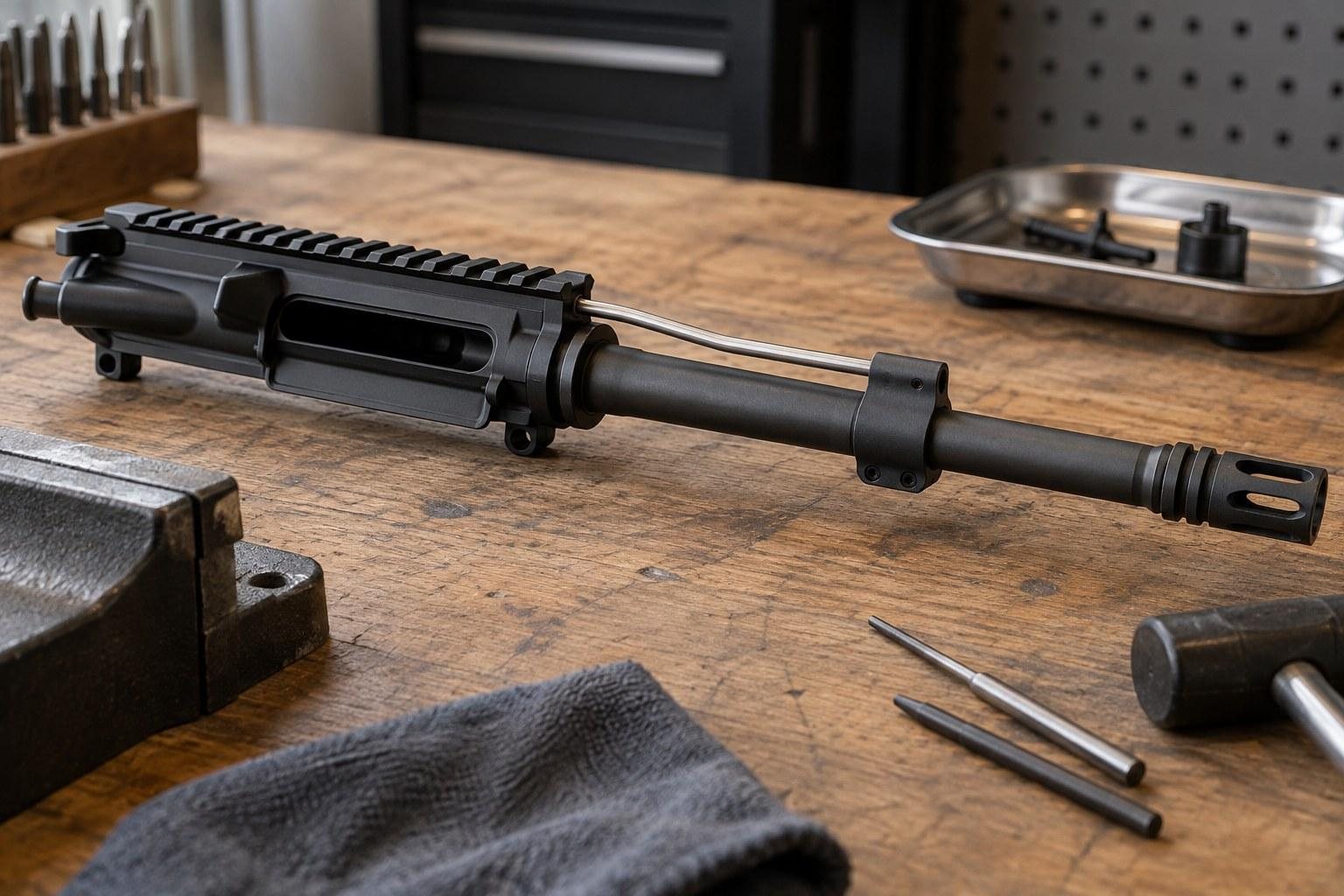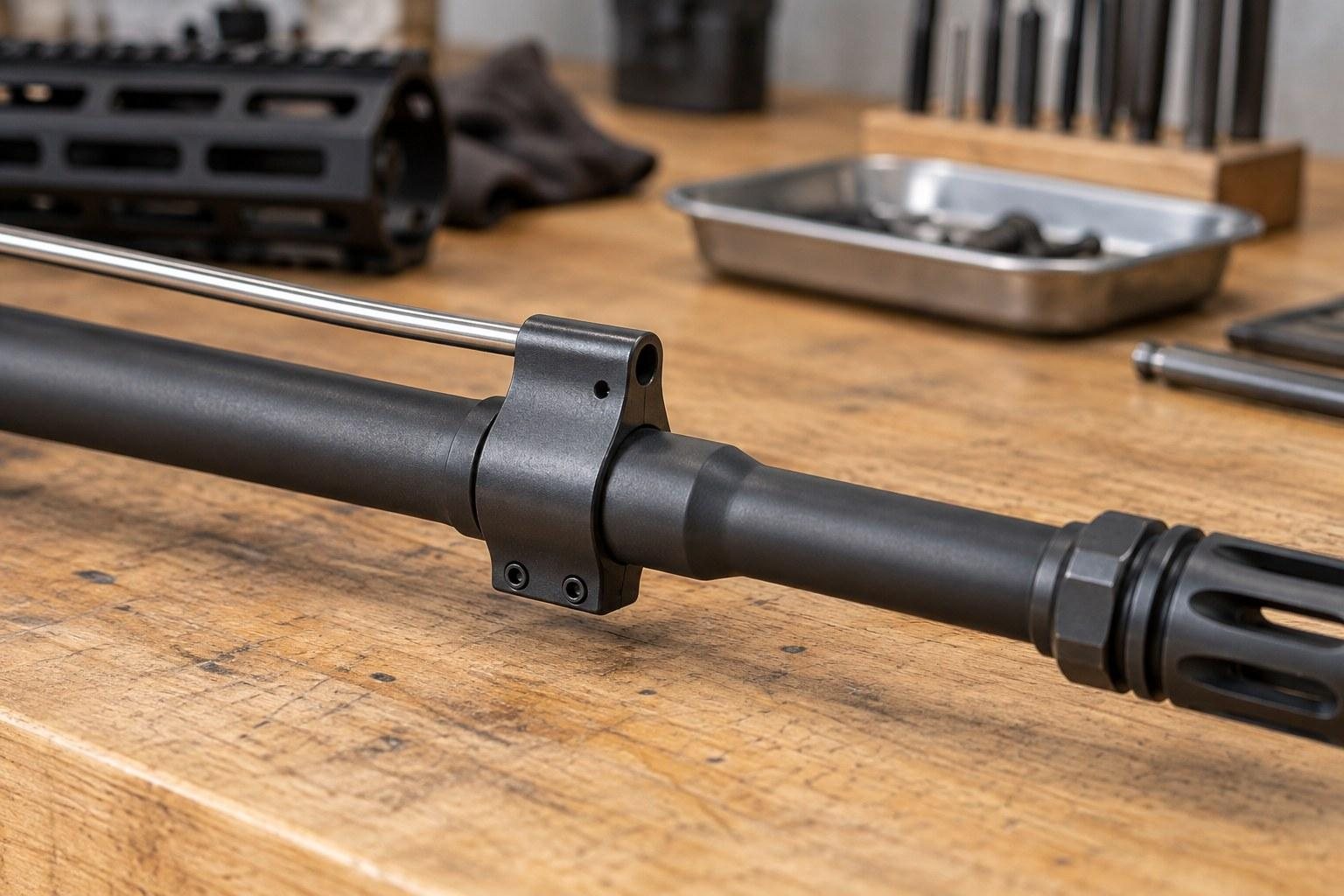
A dimpled barrel has small recesses machined into the gas block journal so the gas block's set screws have something solid to bite into. That simple detail is a big part of what keeps the block from rotating or sliding forward once your AR-15 starts cycling hundreds of rounds.
A common cause of short-stroking and cycling complaints is a gas block that walked out of alignment. Often, the barrel had a smooth journal, the screws were only clamping on round steel, or the thread locker was skipped. Below, we explain what the dimples do, how they compare with pinned and clamp-on designs, and how to install a set-screw block correctly.
Want a ready-to-run upper with the gas system already set up and function-checked?
Key Takeaways
- Dimples give set screw tips a positive seat, which resists rotation and forward creep of the gas block.
- A gas block that shifts even slightly can partially cover the barrel's gas port and cause short-stroking.
- Set-screw, clamp-on and pinned gas blocks each secure the block differently, and each has trade-offs.
- The gas block's inner diameter must match the barrel's journal diameter, such as .750, .875 or .936 inch.
- Always follow the gas block manufacturer's torque and thread locker instructions, and see a qualified gunsmith if you are unsure.
What a Dimpled Barrel Actually Is
Every direct impingement AR-15 barrel has a gas journal, the short section of the barrel's outer surface where the gas block sits. A small gas port is drilled through the barrel wall at that spot. The gas block slides over the journal, and its own port must line up with the barrel's port so gas can travel into the gas tube.
On a dimpled journal, the manufacturer machines one or more shallow recesses into the journal, usually on the underside, positioned to line up with the set screw holes on a matching low-profile gas block. When you tighten the screws, their tips drop into those recesses instead of pressing against a smooth round surface.
Why the Location Matters
The dimples are placed in relation to the gas port. That means a block seated in the dimples is also seated in the right spot over the port. In effect, the dimples serve as both an anchor and an alignment guide.
Dimples Are Not Universal
Not every barrel is dimpled, and not every gas block's screw spacing lines up with every barrel's dimples. Spacing and layout vary by manufacturer. Check the barrel listing and the gas block maker's instructions before you assume they match.
Why Gas Blocks Move in the First Place
A gas block lives in a harsh spot. Every shot sends a pulse of hot, high-pressure gas through the port, and the barrel heats up and cools down over and over. On top of that, the whole rifle is hit with recoil and vibration.
A set screw that clamps only on a smooth journal relies on friction alone. Heat cycles and vibration can slowly loosen that grip. Once a block loosens, it can rotate around the barrel or creep forward toward the muzzle.
What Happens When It Shifts
If the gas block's port no longer lines up with the barrel's port, less gas reaches the bolt carrier group. Common symptoms include:
- Short-stroking, where the bolt does not travel far enough rearward to strip the next round from the magazine.
- The bolt failing to lock back on an empty magazine.
- Weak or inconsistent ejection.
- Gas leaking around the block, which can leave heavy carbon on the journal.
These symptoms can have other causes too, such as a worn gas ring set or a mismatched buffer. Our AR-15 cycling troubleshooting guide walks through how to narrow it down.
Why Low-Profile Blocks Are More Exposed
Low-profile gas blocks are popular because they fit under free-float handguards. Many of them use set screws, though, and the handguard hides the block once the rifle is built. A loose block can go unnoticed until the rifle starts malfunctioning, which is why a secure attachment matters so much.
Shopping for a barrel with the journal and gas system you need?
How a Dimpled Barrel Holds the Gas Block in Place
The physics is simple. A screw tip resting in a recess cannot slide sideways or forward without first backing out of that recess. That turns a friction-only hold into a mechanical one.
Resisting Rotation
Without dimples, a block can twist around the journal if the screws lose tension. With the screw tips sitting in recesses, the block would have to lift the screws out of the dimples before it could rotate, so it stays oriented with its port over the barrel's port.
Resisting Forward Creep
Gas pressure and recoil push on the block. A screw seated in a dimple has a wall in front of it, so the block has a much harder time walking toward the muzzle. That keeps the block's port centered over the barrel's port.
Making Alignment Repeatable
Because the dimples sit in a known position relative to the port, dimples make installation more repeatable. If you ever pull the block for cleaning or a handguard swap, reinstalling it in the dimples puts it back where it belongs.
Set-Screw vs. Clamp-On vs. Pinned Gas Blocks
Dimples matter most for set-screw gas blocks. Other designs secure the block in different ways. Here is how the common options compare.
| Attachment Method | How It Holds | Strengths | Trade-Offs |
|---|---|---|---|
| Set screw on a smooth journal | Screw pressure and friction | Simple to install and remove | Relies heavily on correct torque and thread locker |
| Set screw on a dimpled journal | Screw tips seat into recesses | Positive anchor plus alignment guide | Screw spacing must match the barrel's dimples |
| Clamp-on | Split body squeezes the journal | Even clamping around the barrel | Can be bulkier, may not fit every handguard |
| Pinned | Taper or roll pins pass through the block and journal | Very secure, common on traditional front sight bases | Requires a pin-drilled barrel and block, harder to remove |
When Pinned Makes Sense
Pinned gas blocks and front sight bases are the traditional way to lock things down. They need a barrel that has been drilled for pins, usually by the barrel maker. Do not try to drill a barrel or journal yourself. That work belongs to the barrel maker or a qualified gunsmith.
When Clamp-On Makes Sense
Clamp-on blocks spread clamping force around the journal and do not need dimples. They can be a good fit for smooth journals, but check the outside dimensions against your handguard's inner clearance.
Matching the Gas Block to the Journal
Dimples only help if the block fits it correctly. The first thing to match is the journal diameter. Low-profile gas blocks are commonly sized .750, .875 and .936 inch, which shows how much journal sizes vary. You can browse them alongside other AR-15 parts.
Journal Diameter
Many lighter AR-15 barrels use a .750-inch journal. Heavier profiles can be larger. For example, Heavy-profile barrels, such as those from Satern Barrels, often use a .875-inch journal, and a .750-inch block will not correctly fit it. Always read the barrel listing first.
Gas System Length
The journal also sits at a set distance from the chamber, which determines the gas system length: pistol, carbine, mid-length or rifle. Your gas tube must match that length. If you are building around a 5.56 NATO barrel, confirm the gas system in the product title before ordering a tube.
Handguard Clearance
A free-float handguard has to clear the gas block. Low-profile blocks are designed for that, but check the handguard maker's clearance notes. Our comparison of free-float and drop-in handguards covers what to look for, and you can shop AR-15 handguards once you know your dimensions.
Installing a Set-Screw Gas Block on a Dimpled Journal
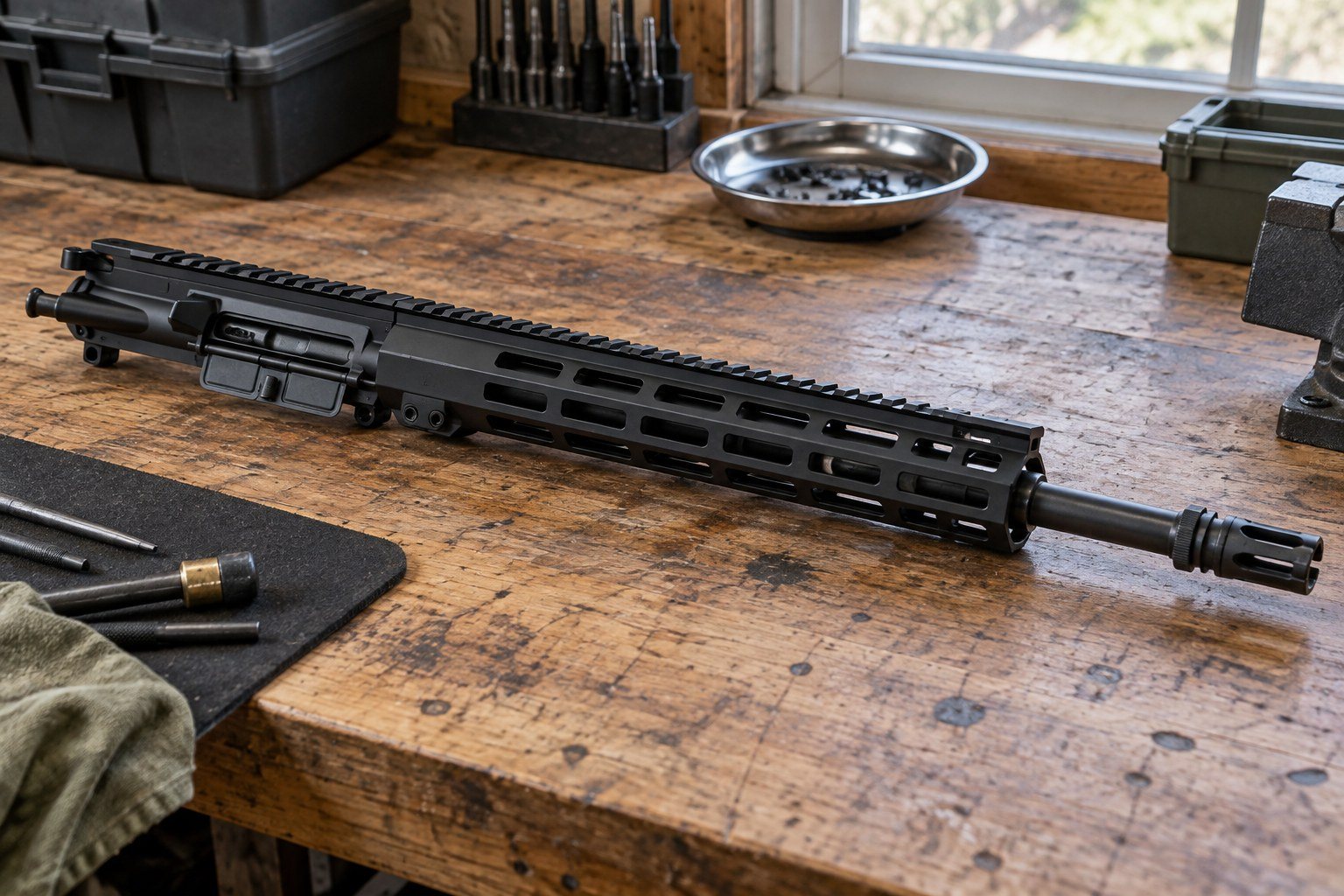
Before any work, make sure the firearm is unloaded, the magazine is out and the chamber is clear. Work with the upper separated from the lower, and follow both the barrel and gas block manufacturers' instructions.
General Steps
- Clean the journal and the inside of the gas block so no oil or debris sits between them.
- Attach the gas tube to the block per the manufacturer's directions and install the roll pin.
- Slide the block onto the journal and guide the tube into the upper receiver.
- Rotate and slide the block until the screw holes line up over the dimples. Snug the screws lightly first.
- Check that the tube enters the receiver without binding and the bolt carrier key moves freely over it.
- Remove one screw at a time, apply the thread locker the manufacturer recommends, and tighten to the published torque spec.
Verifying Alignment
Some builders mark the journal or use a gas port alignment check before final tightening. A simple test is cycling the action by hand to confirm the gas key slides over the tube smoothly. If anything binds, stop and recheck.
Mistakes to Avoid
- Overtightening screws, which can strip threads or damage the journal.
- Skipping thread locker when the manufacturer calls for it.
- Assuming a block's screw spacing matches a barrel's dimples without checking.
- Drilling, enlarging or otherwise modifying the gas port or the journal.
For torque guidance across the rest of the upper, see our AR-15 upper torque specs reference, and always defer to each component maker's published numbers. If you are unsure at any step, a qualified gunsmith is the right call.
Skip the Fitting Work
If you would rather not install a gas block at all, a complete upper is assembled in-house by AR15Parts.com, headspaced and function-checked before it ships. Many complete uppers, including 5.56 NATO uppers, arrive with the gas system already installed.
Ready to compare ready-built options?