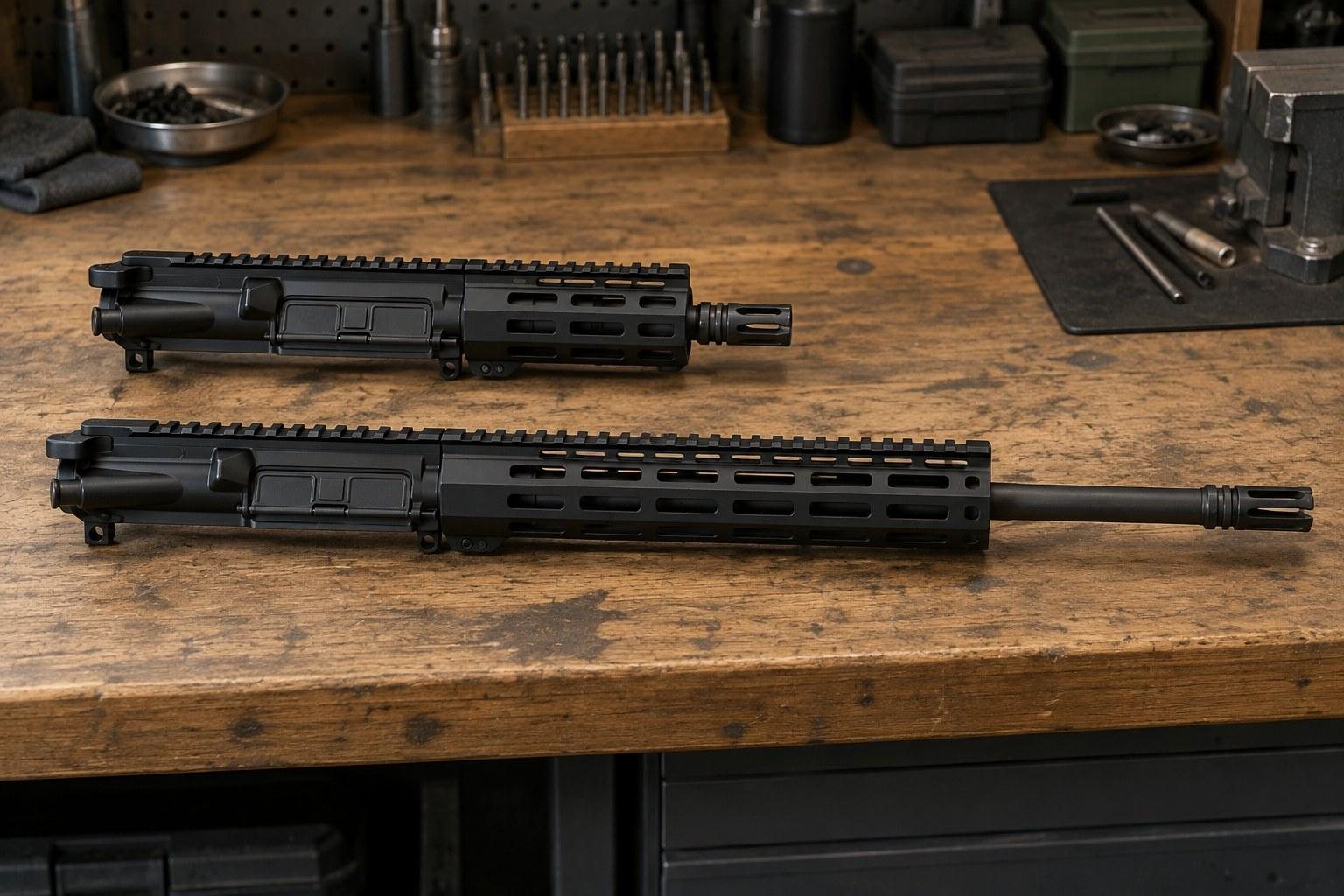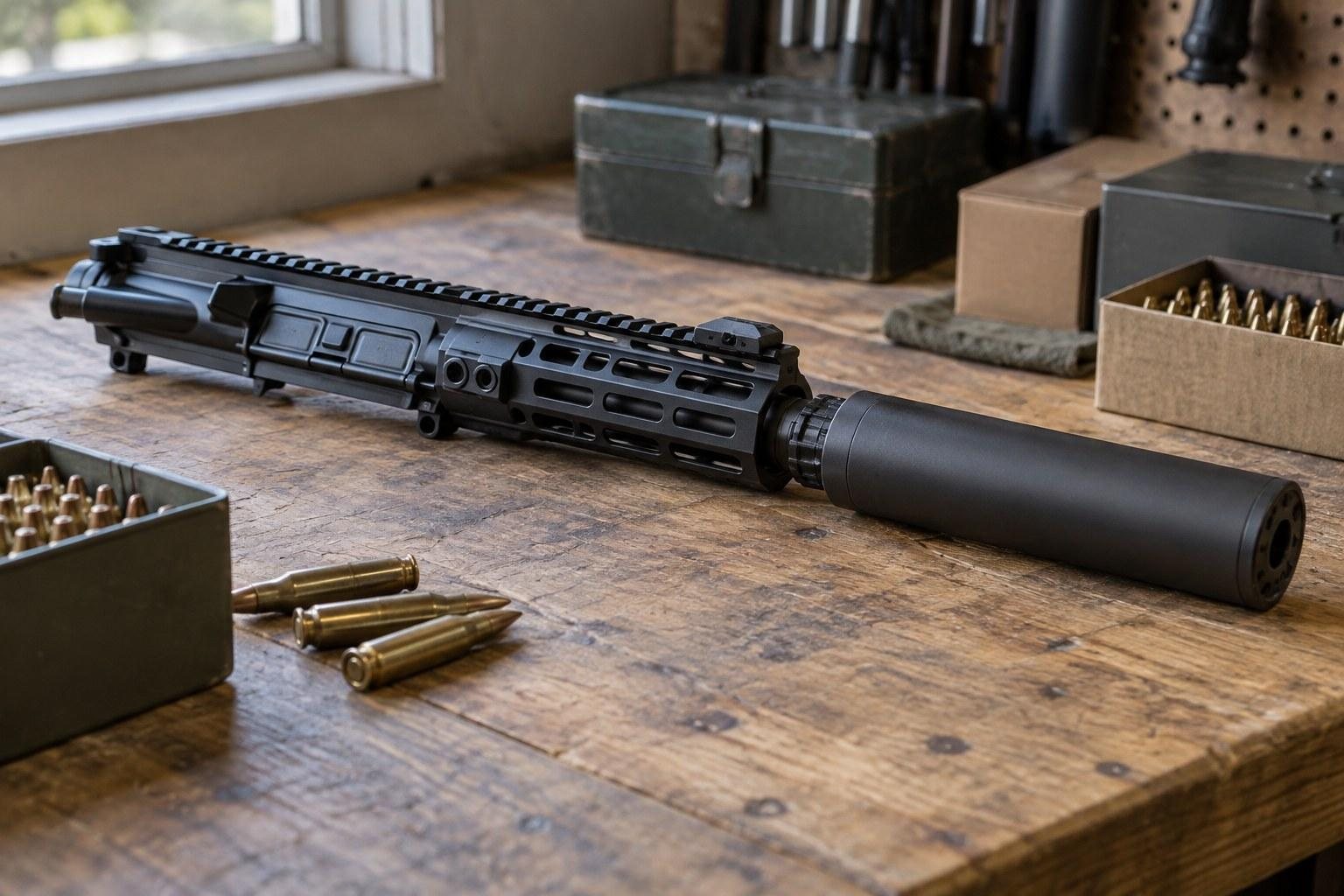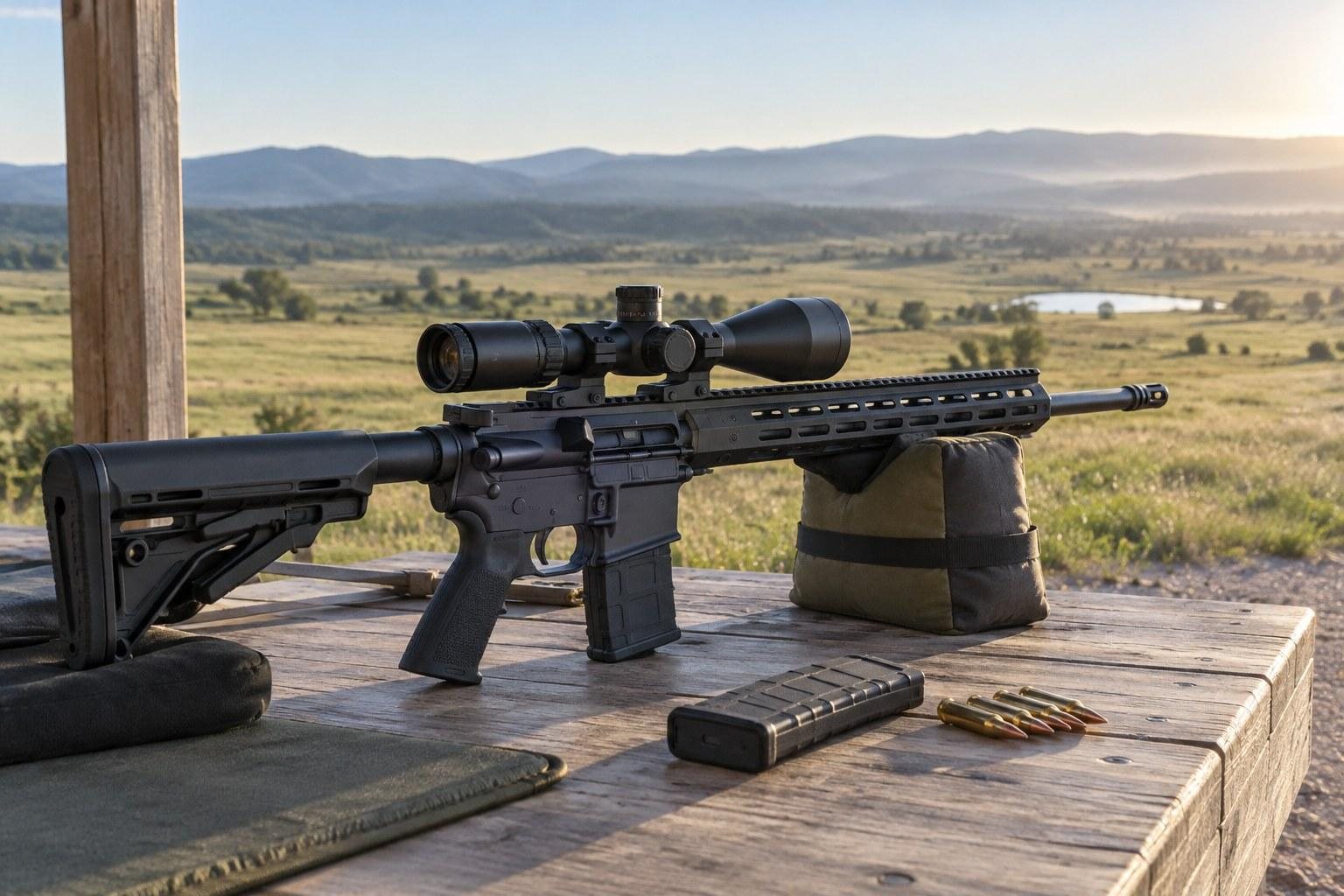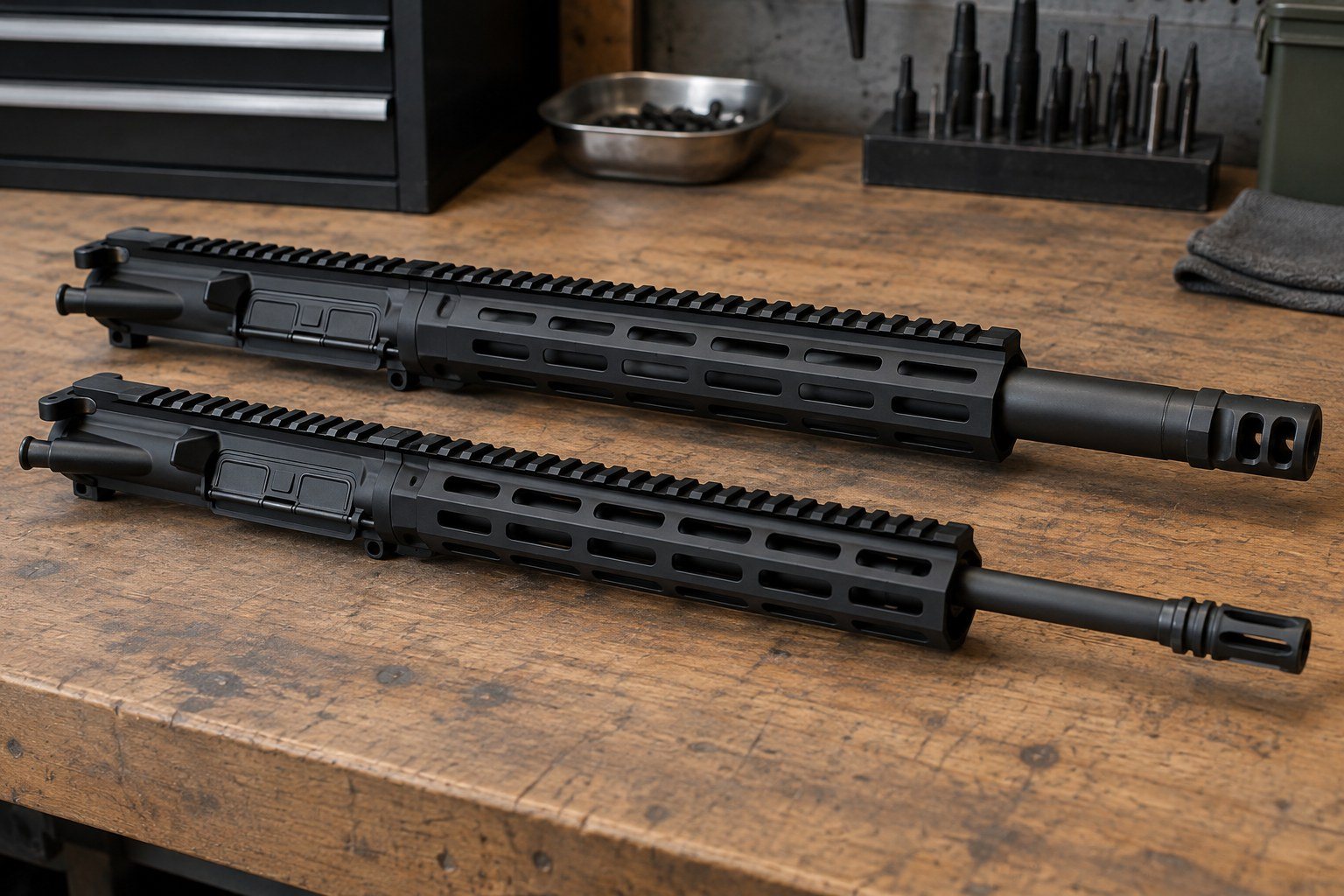
The 458 SOCOM vs 5.56 matchup is not a close call between similar rounds. It is a choice between two very different jobs that happen to fit the same AR-15 lower. The 5.56 NATO fires a small, fast bullet built for flat trajectories and light recoil. The 458 SOCOM fires a much larger, heavier bullet built to hit hard at shorter distances.
This guide walks through what actually changes when you swap one upper for the other: the barrel, the bolt, the magazines, the recoil, the ammunition and the kind of shooting each one suits. By the end you should know which upper belongs on your lower, or whether you want both.
Want to see finished uppers in both calibers side by side?
Key Takeaways
- Both the 458 SOCOM and the 5.56 NATO run on a standard AR-15 lower receiver, so one lower can host either upper.
- The 458 SOCOM needs its own barrel and a caliber-specific bolt, while standard AR-15 magazines generally work, with dedicated ones optional; the 5.56 uses the most common AR-15 parts available.
- The 458 SOCOM delivers a far heavier, wider bullet that favors short-range hunting of large game such as hogs.
- The 5.56 offers lighter recoil, flatter trajectory, cheaper practice ammunition and higher magazine capacity.
- Your typical shot distance, the game you pursue and your ammo budget should drive the decision more than any single ballistic number.
458 SOCOM vs 5.56 at a Glance
Before getting into details, it helps to see the two cartridges side by side. The table below sticks to differences that do not depend on one specific load, because factory velocity and energy vary widely by manufacturer and barrel length.
| Factor | 458 SOCOM | 5.56 NATO |
|---|---|---|
| Rifle platform | AR-15 lower | AR-15 lower |
| Bullet diameter | .458 inch | .224 inch |
| Bullet weight class | Heavy, large-bore bullets | Light, small-bore bullets |
| Barrel twist (typical 16 inch barrels) | 1:14 | 1:7 or 1:8 |
| Bolt | Caliber-specific bolt | Standard 5.56 bolt |
| Magazines | Standard AR-15 magazines (single-stack) or dedicated 458 SOCOM magazines | Standard AR-15 magazines |
| Recoil | Stout, noticeably heavier | Light |
| Trajectory | Pronounced drop past short range | Comparatively flat |
| Ammo availability | Specialized, fewer choices | Widely available |
Why the Bullet Diameter Gap Matters
The 458 SOCOM bullet is roughly twice the diameter of the 5.56 bullet. That extra width, combined with much heavier bullet weights, is the whole point of the cartridge. It trades speed for mass and frontal area.
The 5.56 takes the opposite approach. A small, light bullet moving fast gives you a flatter path, less recoil and the ability to carry a lot of ammunition. Neither design is better in general. Each is better at a specific job.
Same Lower, Different Upper
The biggest practical advantage of the 458 SOCOM is that it fits a standard AR-15 lower. You do not need an AR-10 or a dedicated big-bore receiver. If you already own an AR-15, you can add hard-hitting capability with a complete upper, a set of magazines and nothing else changed on the lower. Our stripped vs complete upper comparison explains the two ways to get there.
What Changes Inside the Upper
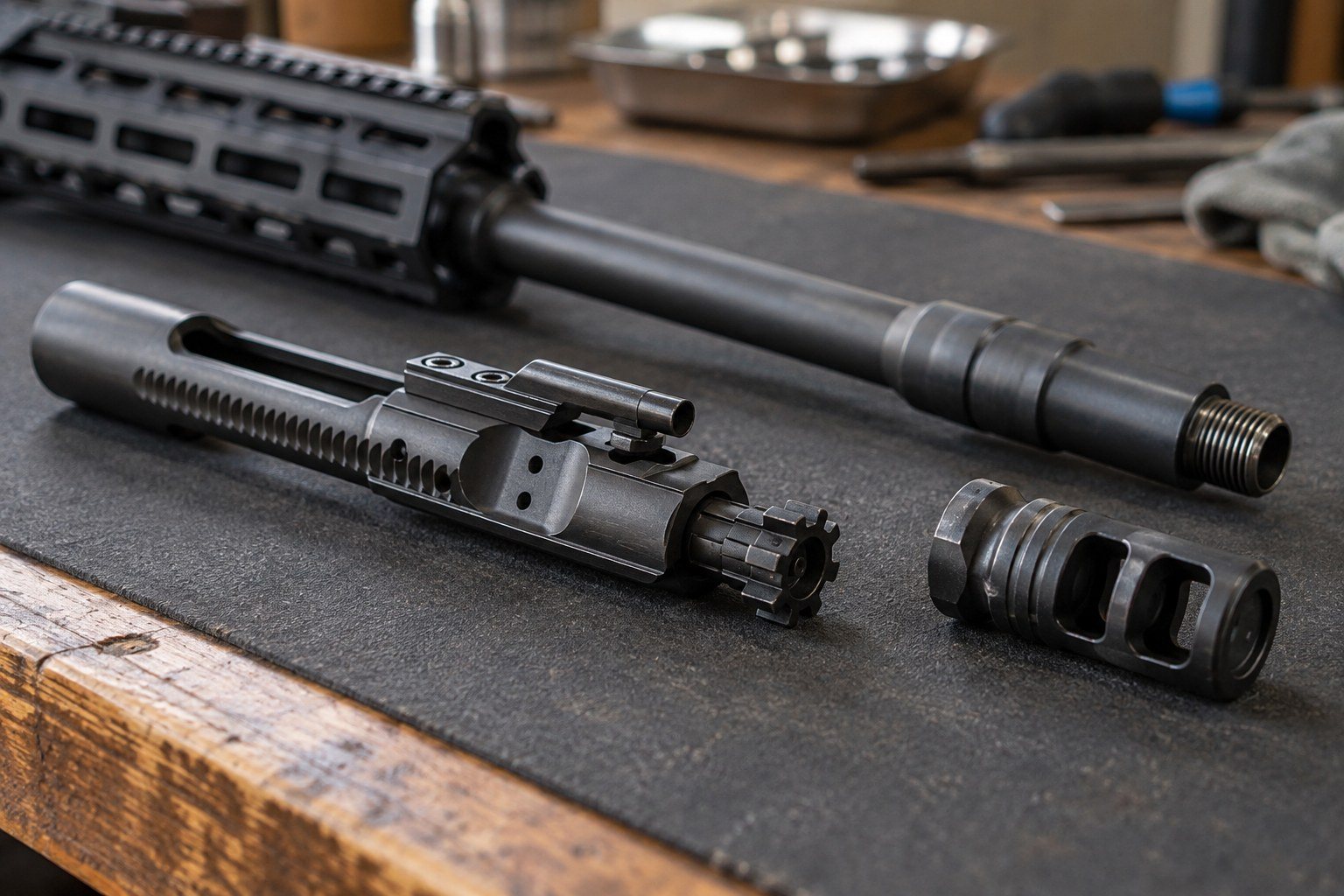
Swapping from 5.56 to 458 SOCOM is not just a barrel change. Several parts in the upper are specific to each caliber, and mixing them up can cause malfunctions or worse.
The Barrel
458 SOCOM barrels are typically found in 16 inch heavy profiles with a 1:14 twist, often in parkerized 4150 chrome or stainless 416R construction with thread pitches like 5/8x32 or 3/4x24. You can compare both on the 458 SOCOM barrels page.
The 5.56 side offers far more choice. The 5.56 NATO barrel lineup generally includes M4 and government profile barrels with 1:7 or 1:8 twist and 1/2x28 threads, across a range of lengths and brands. Our AR-15 barrel length guide covers how length affects handling and velocity.
The Bolt
The 458 SOCOM case head is larger than the 5.56 case head, so it needs a bolt with a matching bolt face. A standard 5.56 bolt will not work. A complete upper generally comes with the correct bolt carrier group installed, which removes the guesswork. For background on how the bolt and carrier work together, read our bolt carrier group explainer.
The Muzzle Device
Because 458 SOCOM barrels typically use larger thread pitches than the common 1/2x28, 5.56 muzzle devices will not thread onto them. Complete 458 SOCOM uppers often come with either a compensator brake or a thread protector to match the barrel. Always confirm thread pitch before buying a muzzle device or suppressor mount.
Curious how other calibers stack up against 5.56 before you commit?
Recoil, Range and Terminal Performance
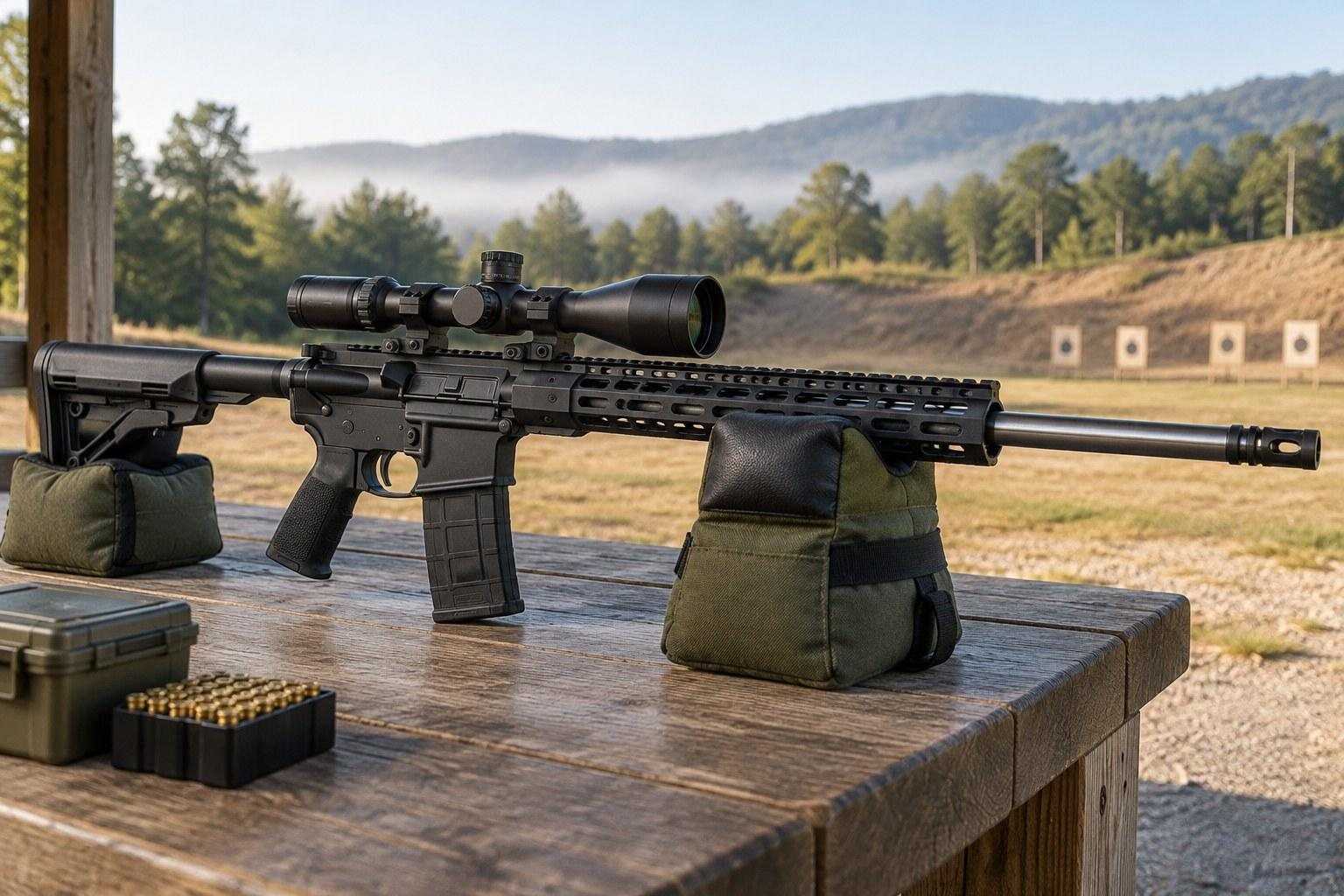
This is where the two cartridges feel the most different behind the rifle. One is gentle and flat shooting, the other is a short-range thumper.
Recoil and Follow-Up Shots
The 5.56 is known for mild recoil in an AR-15. That makes it easy to stay on target, spot your own hits and shoot long sessions without fatigue. It is a forgiving cartridge for new shooters.
The 458 SOCOM pushes a much heavier bullet, so recoil is noticeably sharper. A heavy barrel and a compensator help, which is one reason many complete uppers offer a comp brake option. Expect slower follow-up shots compared with 5.56, especially if you are new to big-bore rifles.
Effective Range
The 5.56 keeps a flatter trajectory, which makes holdovers simpler at moderate distances. The 458 SOCOM bullet drops much more as distance grows, so it is generally treated as a short-range cartridge. Your load, sight height and zero will change the exact numbers, so check your ammunition maker's published data and confirm drop on paper before hunting.
Terminal Effect on Game
For large, tough animals at close range, the 458 SOCOM is the stronger choice. Its wide, heavy bullets are built to penetrate and transfer energy on animals like hogs. The 5.56 can take smaller game and predators with suitable bullets, but many hunters consider it marginal for larger animals. For more on that question, see AR15Parts.com's article on whether 5.56 is good for hunting. Always check your state wildlife agency's rules, since some states set minimum caliber or cartridge requirements for big game.
Magazines, Capacity and Ammunition
Feeding is one of the most overlooked differences between these uppers, and it matters both at the range and in the field.
Magazines
The 5.56 runs in the standard AR-15 magazines found everywhere, offered in a wide range of capacities. The 458 SOCOM uses fat, wide cartridges that stack differently, but they feed single-stack from many standard AR-15 magazines, and a dedicated magazine is an optional upgrade for consistent feeding. 10 round DuraMag 458 SOCOM magazines are a common option. Using dedicated magazines avoids feeding problems and makes it easy to tell your 458 SOCOM mags apart from 5.56 mags.
Ammunition Cost and Availability
The 5.56 is one of the most common rifle cartridges in the country. Practice ammo, hunting loads and match loads are easy to find from many makers. That makes it the cheaper cartridge to train with by a wide margin.
The 458 SOCOM is a specialty round. Fewer companies load it, shelves carry fewer options, and each round costs more. Many owners buy ammo in bulk when they find it, and some take up reloading to keep costs reasonable. Budget for this before you choose.
Keep Your Ammo Separated
Any time you own uppers in more than one caliber, store and label ammunition separately. Mixing calibers in a range bag is a common source of mistakes. Check the headstamp on every box and keep each caliber's magazines marked.
Which Upper Fits Your Shooting
Most shooters who ask about 458 SOCOM vs 5.56 already own a 5.56 rifle and are thinking about adding a second upper. That is a sensible approach because the lower stays the same.
Choose 5.56 If You Want
- A general-purpose upper for training, target shooting and home defense planning.
- Low recoil and fast follow-up shots.
- Inexpensive, widely available ammunition.
- Higher magazine capacity and the widest parts selection.
- A flatter trajectory for moderate distances.
Choose 458 SOCOM If You Want
- A short-range hunting upper for hogs and other large game.
- Heavy, wide bullets with strong terminal effect.
- Big-bore performance without buying a new lower or an AR-10.
- A dedicated brush gun for tight cover where shots are close.
Why Many Owners Keep Both
Because both run on the same lower, owning a 5.56 upper and a 458 SOCOM upper gives you two very different rifles for the cost of one extra upper and some magazines. Train with cheap 5.56, then switch uppers for hog season. If you are weighing other big-bore options, our 458 SOCOM vs 50 Beowulf breakdown is a useful next read.
Buying a Complete Upper in Either Caliber
For most buyers, a complete upper is the simplest way to add a new caliber. A complete upper generally arrives with the barrel, bolt carrier group, charging handle, handguard and muzzle device already matched.
Current 458 SOCOM Upper Options
458 SOCOM uppers are typically built on 16 inch heavy barrels, either parkerized or stainless, with a choice of rail lengths such as 12 inch or 15 inch. Complete versions include the BCG and charging handle, and versions without them are also common if you already have those parts.
Current 5.56 Upper Options
The 5.56 NATO uppers cover far more barrel lengths, profiles and rail options. Complete uppers are assembled in-house, headspaced and function-checked before they ship, and shipping takes 3 to 5 business days.
Safety and Legal Notes
Before installing any upper, make sure the firearm is unloaded, follow the manufacturer's instructions and see a qualified gunsmith if you are unsure about anything. Under federal law, putting a barrel shorter than 16 inches on a rifle, or having an overall length under 26 inches, creates a short-barreled rifle that requires ATF registration under the National Firearms Act. Since January 1, 2026 the federal tax on SBRs is $0, but registration is still required. State and local laws vary, so check yours.
Ready to add a second caliber to your lower?