An upper parts kit is the small bag of springs, pins and covers that turns a bare AR-15 upper receiver into a working assembly. It looks minor next to a barrel or bolt carrier group, but without it a stripped receiver has an open ejection port and an empty forward assist bore.
This is a plain explanation of what typically comes in the bag, what each piece does, and the specific situations where you need one. We also cover when skipping the kit makes more sense, such as buying an assembled receiver or a complete upper that is already built, headspaced and function-checked.
If you would rather start with a receiver and compare your options, browse our upper receiver coverage first.
Key Takeaways
- A typical upper kit covers two subassemblies: the forward assist and the ejection port (dust) cover.
- Kit contents vary by manufacturer, so read the parts list before you order and compare it to your receiver.
- You need these parts when you buy a stripped upper receiver, replace a worn or lost small part, or swap to a receiver style that uses them.
- Slick-side uppers without a forward assist still use dust cover parts but skip the forward assist pieces.
- An assembled upper receiver or a complete upper removes the need for a kit entirely.
- Always work on an unloaded firearm, follow the manufacturer's instructions, and ask a qualified gunsmith when you are unsure.
What This Small Parts Bundle Actually Is
A stripped AR-15 upper receiver is just the machined or forged aluminum housing. It has a bore for the forward assist, holes for the dust cover hinge rod, and a threaded front for the barrel nut. The small hardware that fills those spots is what kit makers bundle together.
The phrase is easy to confuse with other kits. A lower parts kit fills the lower receiver with the trigger group, magazine catch, bolt catch, pins and springs. A barrel installation kit or gas system kit covers the gas block, gas tube and roll pin. The upper kit is usually the smallest of the three.
Why the Parts Come Separately
Receivers are often sold stripped because builders want a choice of finishes, forward assist styles or brands. Selling the small parts on their own also makes it easy to replace a single lost spring without buying a whole new receiver.
Where It Fits in the Build Order
Most builders install the dust cover and forward assist before the barrel goes on, because the receiver is easier to hold and the hinge rod path is unobstructed. For a full picture of how each component relates, see our AR-15 upper anatomy and parts list.
What Comes in a Typical Kit
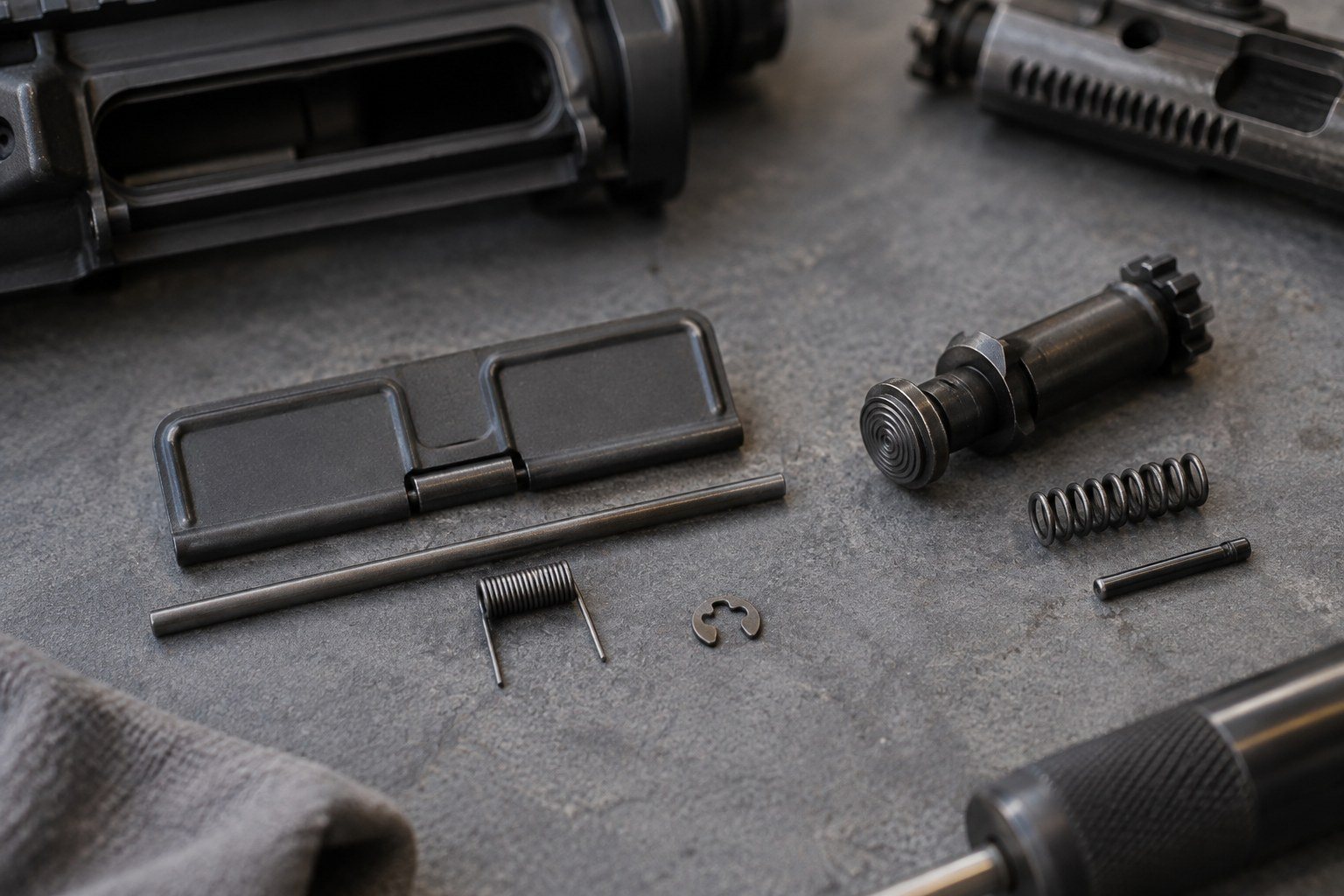
There is no single industry standard for what a kit must contain, so treat the list below as typical rather than guaranteed. Read the product description, and count the pieces when the bag arrives.
Forward Assist Parts
The forward assist lets you push the bolt carrier forward manually if the bolt does not fully close. Its parts usually include:
- Forward assist plunger: the button and pawl assembly that contacts the serrations on the side of the bolt carrier.
- Forward assist spring: returns the plunger to its rest position after you press it.
- Roll pin: retains the plunger in the receiver bore.
Ejection Port Cover Parts
The ejection port cover, often called the dust cover, closes the port to keep debris out and pops open when the carrier moves. Its parts usually include:
- Cover door: the hinged panel itself.
- Hinge rod: runs through the receiver lugs and the door.
- Torsion spring: snaps the door open when the carrier cycles.
- Retaining clip: a small C-clip or snap ring that keeps the hinge rod in place.
Our AR-15 dust cover guide explains how the door and spring work in more detail.
Parts That Are Usually Not Included
Builders sometimes expect more in the bag than they get. The following are generally sold separately:
- The barrel, barrel nut and handguard.
- The bolt carrier group and charging handle.
- The gas block, gas tube and gas tube roll pin.
- Muzzle devices, crush washers and shims.
| Component | Typically in an upper kit | Usually bought separately |
|---|---|---|
| Forward assist plunger, spring, roll pin | Yes | Also sold as an assembly |
| Dust cover door, hinge rod, spring, clip | Yes | Also sold as an assembly |
| Gas block and gas tube | Varies by maker | Yes |
| Bolt carrier group | No | Yes |
| Charging handle | No | Yes |
| Barrel, barrel nut, handguard | No | Yes |
Want a broader look at the part categories that bolt onto an upper? Our buying guides break them down one by one.
When You Need an Upper Parts Kit
The short answer is any time your receiver is missing the forward assist or dust cover hardware. In practice that comes up in a few common situations.
You Bought a Stripped Upper Receiver
This is the most common reason. A stripped receiver arrives without small parts, so you need either a full kit or the two subassemblies purchased individually. Stripped and assembled forged AR-15 upper receivers are both common on the market, so check the product title to see which version you are ordering.
You Are Replacing a Lost or Worn Part
Dust cover springs and retaining clips are small and easy to lose during cleaning. A bent hinge rod or a weak spring can stop the door from opening cleanly. Replacing the single subassembly is usually simpler than tracking down one loose part.
You Are Moving Parts to a New Receiver
Some builders swap to a different receiver finish or brand and want fresh hardware rather than pulling roll pins from the old one. Driving a roll pin out and back in can mar a finish, so new parts can be the cleaner route.
When You Do Not Need One
- You are buying an assembled upper receiver with the forward assist and dust cover already installed.
- You are buying a complete upper that is built and ready to pin onto a lower.
- Your receiver is a slick-side design, in which case only dust cover parts apply, if the receiver has a port cover at all.
Buying the Kit Versus Individual Assemblies
Some sellers skip a bundled kit entirely and instead offer the pieces as ready-made subassemblies, such as an AR-15/AR-10 forward assist assembly, an AR-15 ejection port (dust) cover assembly and an AR-10/LR-308 version of the dust cover. These are often found in an AR-15 upper parts category alongside gas blocks and gas tubes.
Advantages of Subassemblies
- You only buy the half you actually need when replacing a single part.
- Each assembly is matched to its receiver family, which reduces guesswork.
- Mixing a forward assist with a slick-side receiver is avoided entirely.
Matching AR-15 and AR-10 Parts
AR-10 and LR-308 receivers are larger, and dust cover dimensions differ between platforms. That is why the dust cover is listed separately for each family. Confirm your receiver type before ordering, and if your AR-10 receiver follows a specific pattern, such as DPMS-style, match parts to that pattern.
How Installation Generally Works
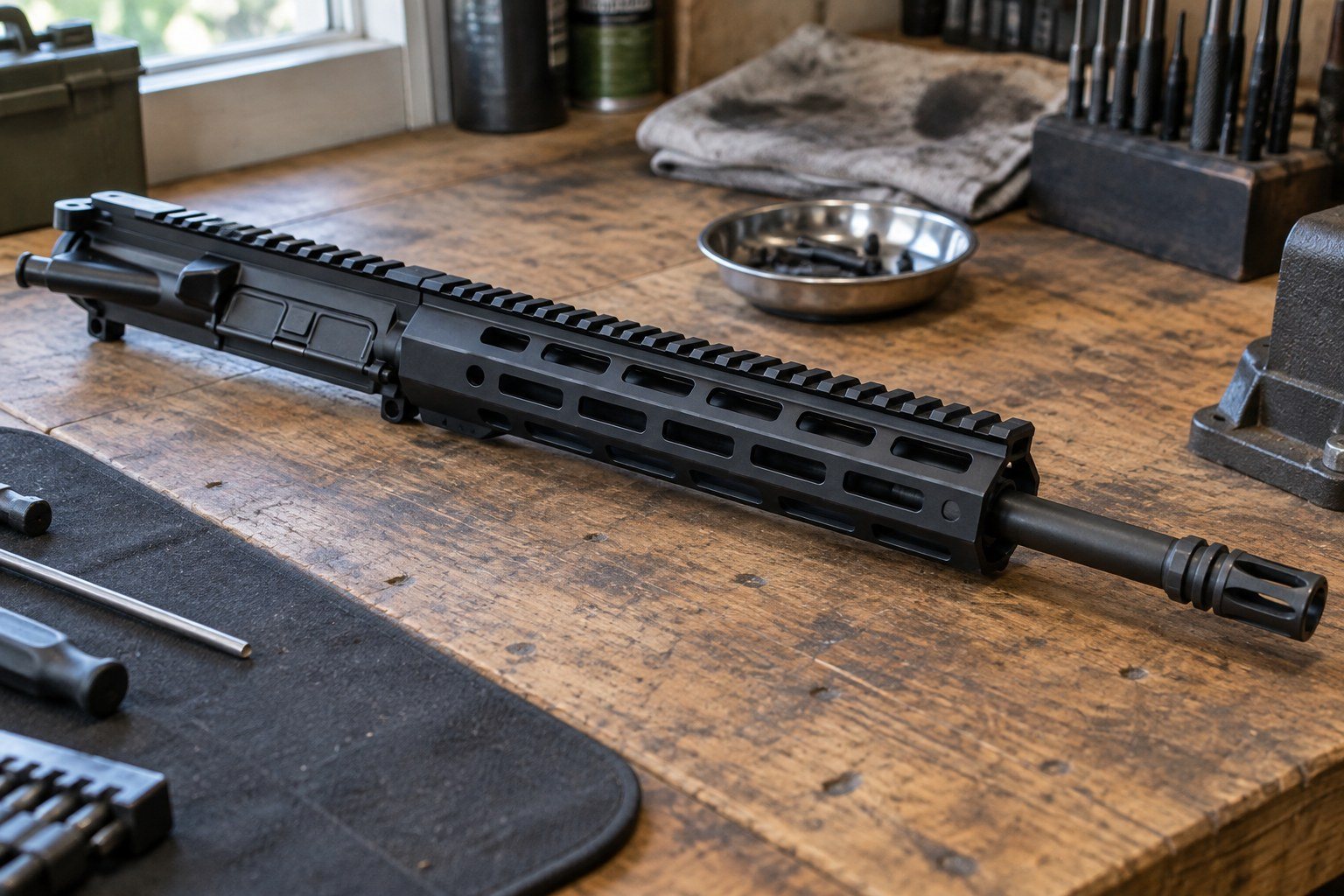
We are describing the general sequence here, not replacing your parts maker's instructions. Every receiver and kit can differ slightly, and the manufacturer's directions take priority.
Safety First
Make sure the firearm is unloaded, remove the magazine, and separate the upper from the lower before you start. Wear eye protection, because torsion springs and roll pins can launch across a room. If anything feels forced, stop and consult a qualified gunsmith.
Dust Cover Sequence
- Slide the hinge rod partway through the receiver lugs and into the door.
- Position the torsion spring according to the manufacturer's diagram, then wind it so it holds the door open.
- Push the rod through the rest of the way and seat the retaining clip in its groove.
- Close and release the door to confirm it snaps open freely.
Forward Assist Sequence
- Insert the spring and plunger into the forward assist bore with the pawl oriented as the manufacturer shows.
- Support the receiver on a padded block or upper vise insert so the roll pin path is not stressed.
- Start the roll pin with a starter punch and finish with a roll pin punch, keeping the plunger depressed.
- Press the button several times to confirm it returns smoothly.
For barrel nut and other torque values, defer to the component manufacturer's published spec. Our AR-15 upper torque specs overview explains where those numbers come from.
Choosing Parts That Fit Your Build
Small parts are inexpensive relative to the rest of a rifle, but fit and quality still matter. A few points help you choose well.
Check Receiver Compatibility
Most AR-15 receivers built to the common mil-spec pattern accept standard forward assist and dust cover parts. Some billet or proprietary receivers use unique dust cover shapes or no forward assist at all, so confirm with the receiver maker. Our billet versus forged receiver comparison covers how the two styles differ.
Think About the Rest of the Upper
Once the small parts are in, the receiver still needs a barrel, bolt carrier group, charging handle and handguard. Bolt carrier groups and charging handles are widely available when you are ready to finish the upper.
Consider a Complete Upper Instead
If gathering every part sounds like more than you want to take on, a complete upper may suit you better. Complete uppers are often assembled in-house, headspaced and function-checked before they ship, with shipping in 3 to 5 business days. A range of complete AR-15 and AR-10 uppers is typically available by caliber.
Weighing a stripped receiver against a ready-built option? Our complete uppers category lays out the choices.