Billet vs. forged AR-15 upper receivers compared: manufacturing, 7075 vs. 6061 aluminum, strength, weight, finish, fit, cost, and which to buy.
The billet vs. forged debate is one of the most repeated arguments in the AR-15 world, and one of the least consequential in terms of actual performance. Both are typically made from 7075-T6 aluminum, both are more than strong enough for any use a civilian will put them to, and neither one makes the rifle more accurate. What actually differs is how they're manufactured, what alloy they use, how much they weigh, how they're finished, how they look, and how much they cost. Here's what matters, in detail.
How Each Is Made
A forged upper starts as a chunk of aluminum that's heated and hammered under massive pressure into a rough upper-receiver shape. That forging is then machined to final spec on a CNC machine. The forging process aligns the metal's grain structure along the shape of the part, which gives forged parts their reputation for strength and is why nearly every mil-spec receiver, upper and lower, has been forged since the rifle's inception.
A billet upper starts as a solid rectangular block ("billet") of aluminum and is machined entirely on a CNC machine into its final shape, with no forging step. Because you're starting from a block instead of a pre-shaped forging, designers have far more freedom to add angular features, integrated shelves, unique trigger guard designs, or custom cuts. It's slower to produce, uses more programming and tooling time, and creates significantly more waste material as chips on the shop floor, which is a major reason billet uppers cost more.
In practice, the line between the two is blurrier than the marketing suggests. Every forged upper spends significant time on a CNC mill after it leaves the forging die: the barrel extension bore, the 1-3/16"-16 TPI barrel nut threads, the Picatinny top rail slots, the charging handle channel, and the bolt carrier bore are all machined, not forged. So both types depend heavily on the same thing, a well-programmed, well-maintained CNC process with tight quality control. The difference is how much of the final shape comes from the forging versus the cutting tool.
7075-T6 vs. 6061-T6 Aluminum
Aluminum alloy matters more than manufacturing method when you're evaluating a receiver's raw material strength. Most quality billet and forged uppers alike use 7075-T6 aluminum, a zinc-based alloy that is harder and stronger than the more common 6061-T6, which is easier to machine and slightly cheaper but has a lower tensile strength. Mil-spec forged receivers have used 7075-T6 for decades, and reputable billet makers match that spec because it's the accepted standard for a load-bearing firearm part.
The published numbers show the gap clearly. Typical minimum values for 7075-T6 are roughly 83,000 psi ultimate tensile strength and 73,000 psi yield strength, while 6061-T6 comes in around 45,000 psi tensile and 40,000 psi yield. 7075-T6 is also harder, which helps threads, rail slots, and the takedown pin lugs resist wear and deformation over years of assembly and disassembly. The tradeoff is that 7075 is less corrosion-resistant bare, which is one more reason quality anodizing matters.
You'll occasionally see 6061-T6 billet uppers marketed at a lower price point. That alloy is not fragile, and plenty of recreational shooters run parts made from it without issue, but it is objectively the weaker of the two grades. If a listing doesn't specify the alloy, ask before you buy, especially for a build you plan to use hard. As always, verify your federal, state, and local laws before purchasing or building any AR-15 upper, since receiver definitions and part restrictions vary by jurisdiction.
Strength Myths and Reality
In pure material terms, forged 7075-T6 is slightly stronger than billet 7075-T6 because the grain structure runs continuously through the part instead of being cut across during machining. In actual use on an AR-15 upper receiver, that difference is meaningless: both are stronger than they need to be by a comfortable margin.
No documented AR-15 upper receiver failure, forged or billet, from a reputable manufacturer, has ever occurred under normal use.
A persistent myth online claims billet uppers are "brittle" because they're carved from a block rather than forged. That's an oversimplification. Grain flow affects fatigue resistance at extreme, repeated stress levels far beyond anything a semi-auto AR-15 upper sees. The stress on an upper is low, the design is old and well-understood, and both manufacturing methods produce parts that will outlast the barrel by orders of magnitude. Focus your durability decisions on the barrel, BCG, and gas system, which actually wear over a service life.
Weight and Handling
Weight differences between billet and forged uppers of the same design are usually small, often just an ounce or two, and come down more to wall thickness and machined-out material than to the manufacturing method itself. Some billet designs remove extra material around the barrel nut or rail interface and end up slightly lighter than a comparable forged upper; others add material for integrated features and end up slightly heavier.
If overall rifle weight matters for your build (a lightweight carbine versus a heavier precision setup), compare the specific upper's published weight rather than assuming billet or forged wins by default. The receiver is a small fraction of total upper weight compared to the barrel and handguard, so chase weight savings there first.
Finish and Anodizing
Both billet and forged uppers are almost always finished with Type III hard-coat anodizing, an electrochemical process that creates a hard, corrosion-resistant oxide layer on the aluminum surface. Anodizing quality depends on the manufacturer's process control, not on whether the part started as a forging or a billet. A well-anodized budget forged upper can outlast a poorly anodized billet upper, and vice versa.
Billet uppers do offer more finish flexibility because their flatter, more angular surfaces show off certain treatments (like two-tone Cerakote or engraved logos) more cleanly than a rounded forged profile. That's an aesthetic point, not a durability one: color and coating choice have no meaningful effect on strength.
The spec to look for is anodizing per MIL-A-8625 Type III, Class 2 (dyed). Class 2 simply means the coating is colored, usually black. Some makers anodize in FDE or other colors, and color matching between an upper and lower from different brands, or even different batches, is notoriously inconsistent. If a perfect match matters to you, a matched set or a Cerakote finish over the anodizing is the reliable route.
Fit, Finish, and Compatibility With Lowers
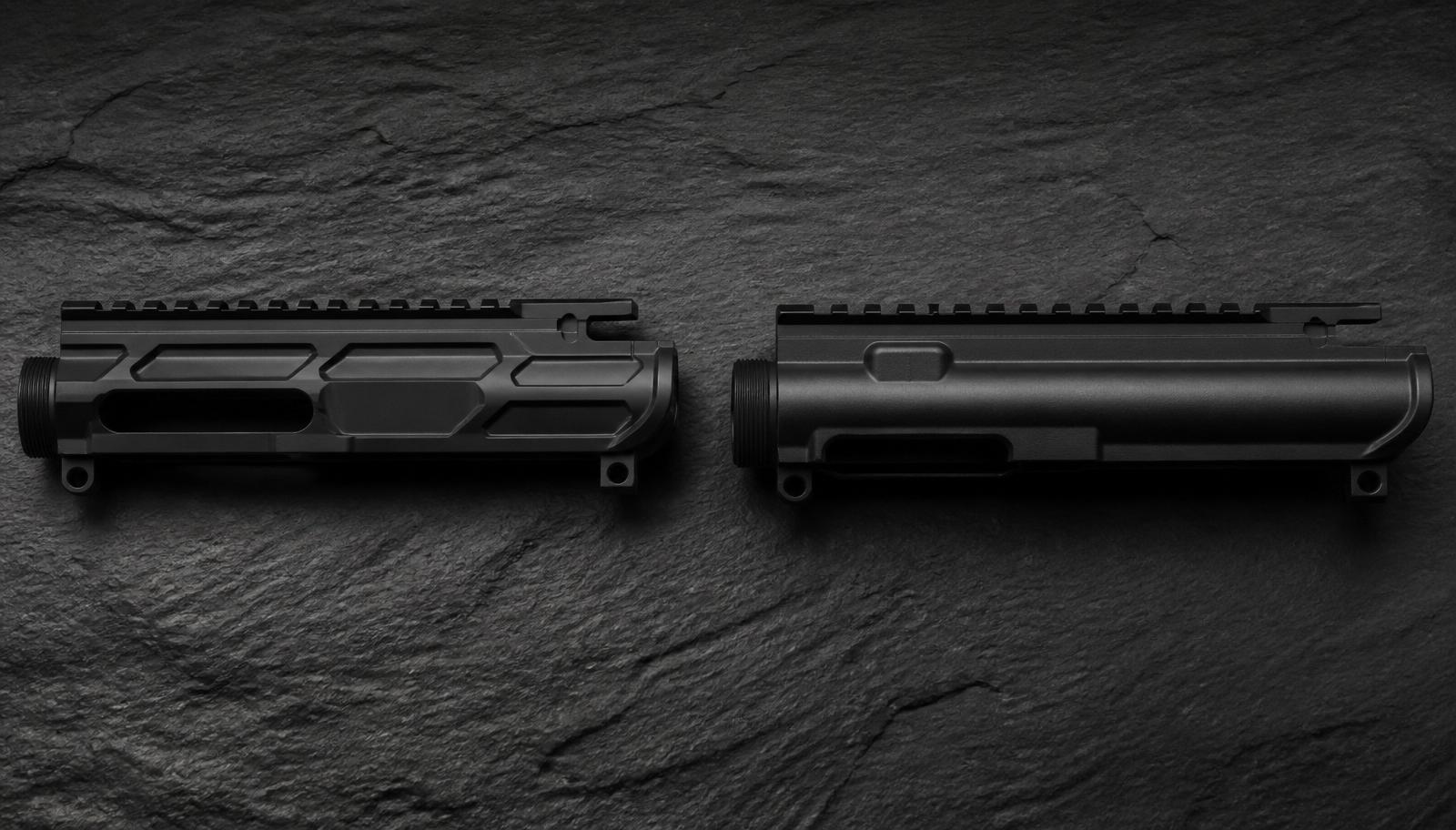
Forged uppers follow mil-spec dimensions closely and interchange with essentially every mil-spec lower on the market. They have the classic rounded AR-15 profile, forward assist bump, and shell deflector.
Billet uppers vary widely in design. Some replicate the mil-spec profile with sharper edges; others go fully angular with faceted, geometric styling. Some brands sell matched billet upper/lower sets that fit tighter than mil-spec, better fit, but potentially incompatible with a standard forged lower from a different manufacturer. If you're planning to mix and match parts, check our upper compatibility checklist before you buy a matched set.
Loose fit between an upper and lower is the most common complaint when mixing brands, and it's cosmetic, not a safety or accuracy issue. A small amount of wobble at the takedown pins doesn't move the barrel relative to the bolt, since headspace lives entirely in the barrel extension and bolt. If the rattle bothers you, a polymer Accu-Wedge style insert behind the rear takedown lug or a lower with a rear tension screw will snug things up. Going the other way, an overly tight pairing that needs a mallet to push the pins through should be sent back rather than forced.
If you're mixing an aftermarket upper with a lower from a different brand, forged is the safer choice. If you're buying a matched set from one manufacturer, either works. Our mil-spec vs. commercial upper guide covers the related dimensional question of buffer tube and stock compatibility.
Aesthetics and Design Freedom
Aesthetics are where billet uppers earn their following. Starting from a solid block frees a designer from the rounded, tooling-driven shape a forging die produces. That's why you see faceted trigger guards, integrated flared magwells, sculpted rail interfaces, and brand-specific styling cues almost exclusively on billet parts. If you want your rifle to look distinct rather than like a mil-spec clone, billet is the only path that delivers that reliably.
Forged uppers can still look sharp with a good finish and matched furniture, but the shape itself is constrained by the forging process and decades of mil-spec convention. For a build where the visual identity matters as much as the function, that's a legitimate, non-performance reason to pay the billet premium. It's also the reason many "matched set" builds pair a billet upper with a billet lower cut on the same tooling for a seamless look.
Cost and Value
A quality forged stripped upper runs $50 to $120. A comparable billet stripped upper runs $100 to $250 or more. That premium buys you machining time, material waste, and aesthetic freedom, not performance.
For a working-gun build (defense, range, hunting), a forged upper leaves budget for the parts that actually matter: a quality barrel, a properly staked bolt carrier group, and a good trigger. Our BCG buying guide is a good next stop if you're reallocating that saved money. For a showpiece build or a matched high-end set, billet can be worth the premium for how it looks and how it pairs with a matching billet lower.
Browse both forged and billet AR-15 uppers at ar15parts.com.
What to Check Before You Buy
Whichever type you choose, the quality markers are the same, and they're easy to verify on the listing or in hand:
- Alloy and temper: The listing should state 7075-T6 explicitly. Vague terms like "aircraft-grade aluminum" can mean either alloy.
- Feed ramps: Most modern uppers use M4 feed ramp cuts that extend into the upper. Pair an M4-cut upper with an M4-extension barrel for reliable feeding, especially on carbine and shorter gas systems.
- Top rail markings: Mil-spec style uppers have a Picatinny rail with T-markings. They make it easy to note and repeat optic mounting positions.
- Machining quality: Look for crisp, burr-free edges in the charging handle channel and bolt carrier bore, and threads with no chatter marks or torn metal.
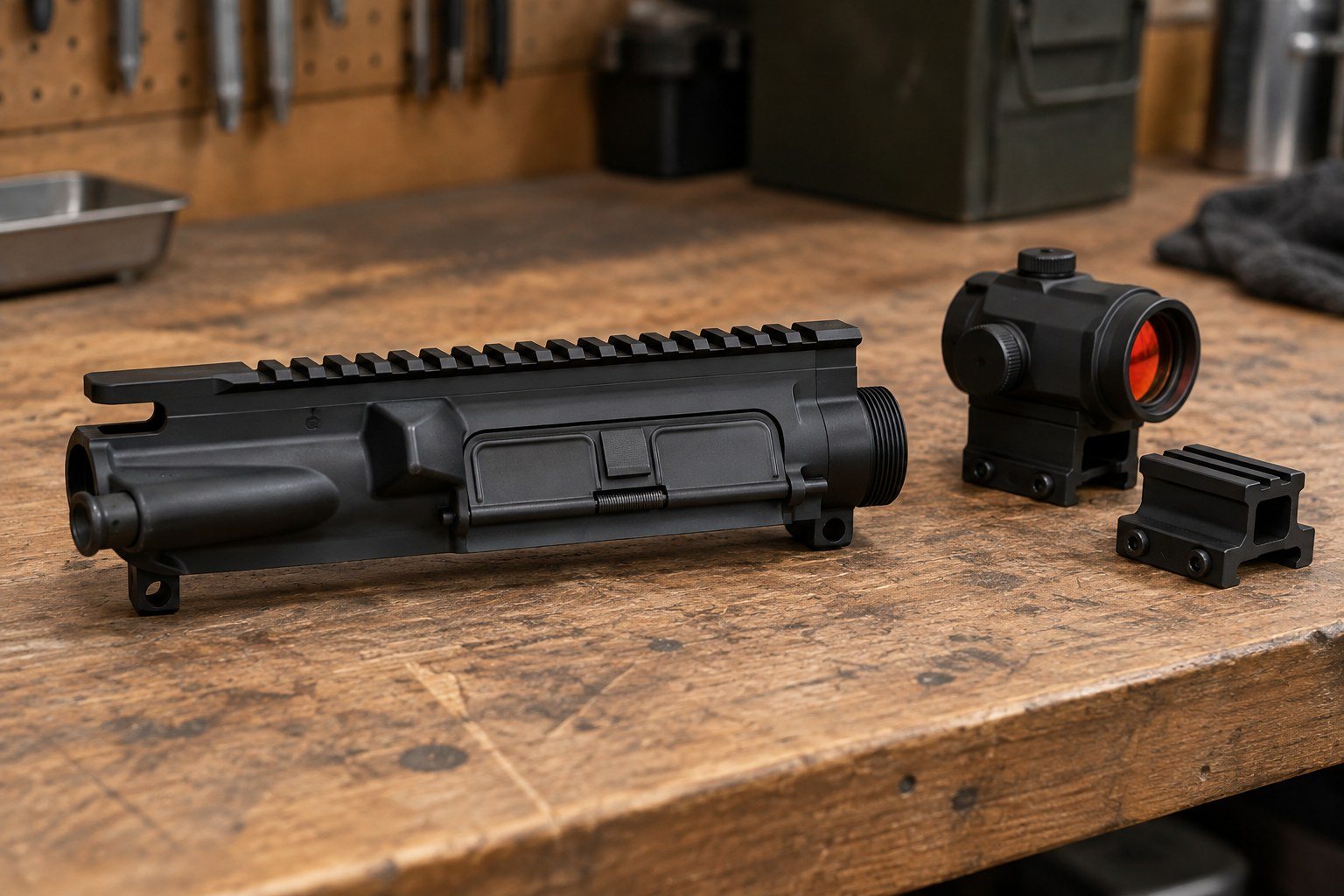
- Features included: Check whether the forward assist and dust cover come installed. A stripped upper usually needs both, which adds cost and a little assembly time.
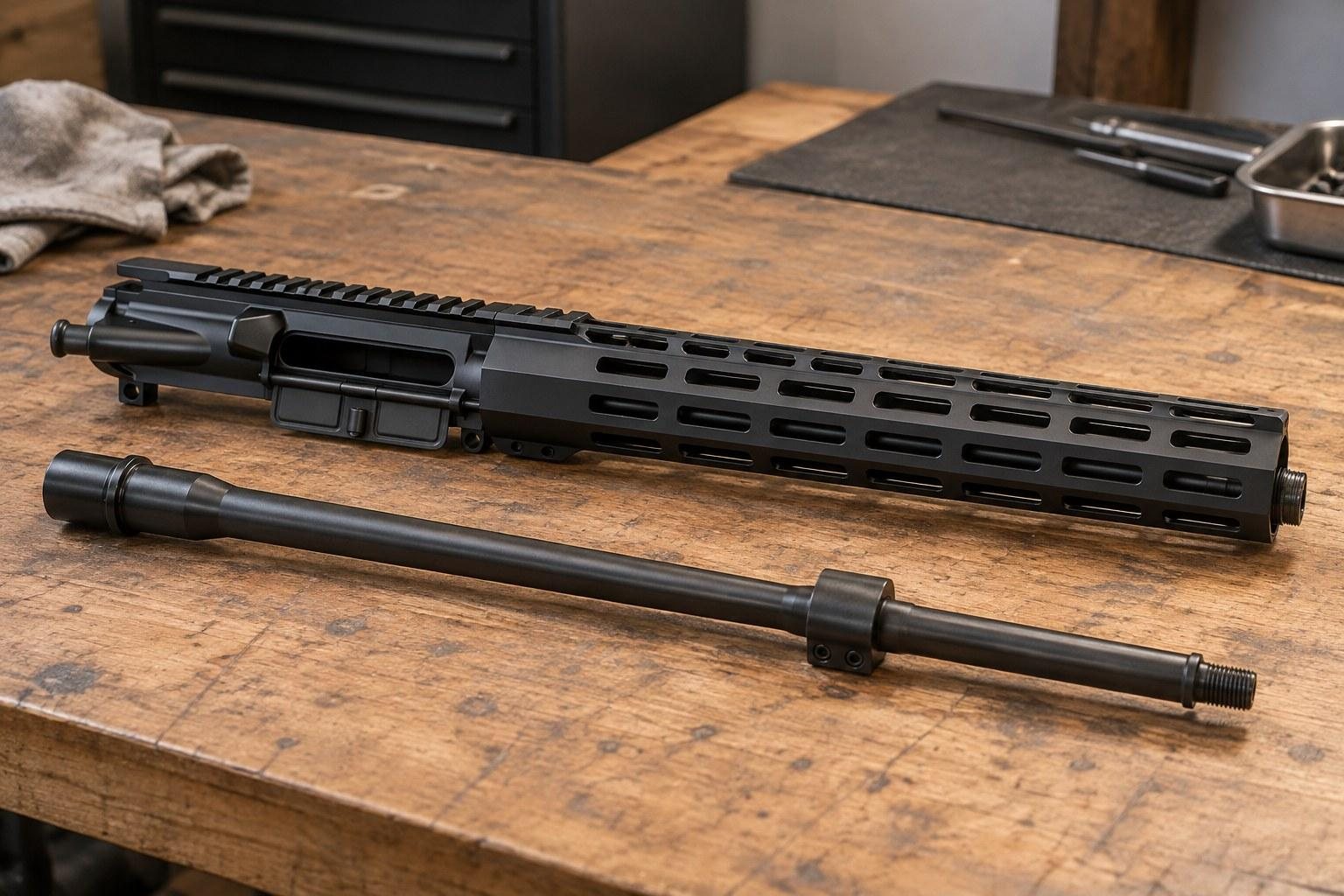
Before installing a barrel, it's worth reviewing correct barrel nut torque values in our upper torque specs guide, since over-torquing is a bigger risk to a receiver's threads than any difference between billet and forged.
Which Should You Pick?
- Pick forged if: You want the lowest cost, maximum compatibility, or a defensive/working rifle where every dollar should go toward barrel and BCG quality. This is the right answer for probably 80 percent of builds.
- Pick billet if: You want a specific angular or custom aesthetic, you're building a matched upper/lower set, or the design has a feature you want (integrated trigger guard, enhanced handguard interface, etc.). Just don't expect it to shoot better, and confirm the alloy is 7075-T6 if strength matters to you.
For more context on the upper receiver as a whole, see the complete upper receiver guide and the upper anatomy parts list. For choosing between a stripped and a complete upper, see the stripped vs. complete guide. As with any firearm part purchase or build, verify your federal, state, and local laws first.