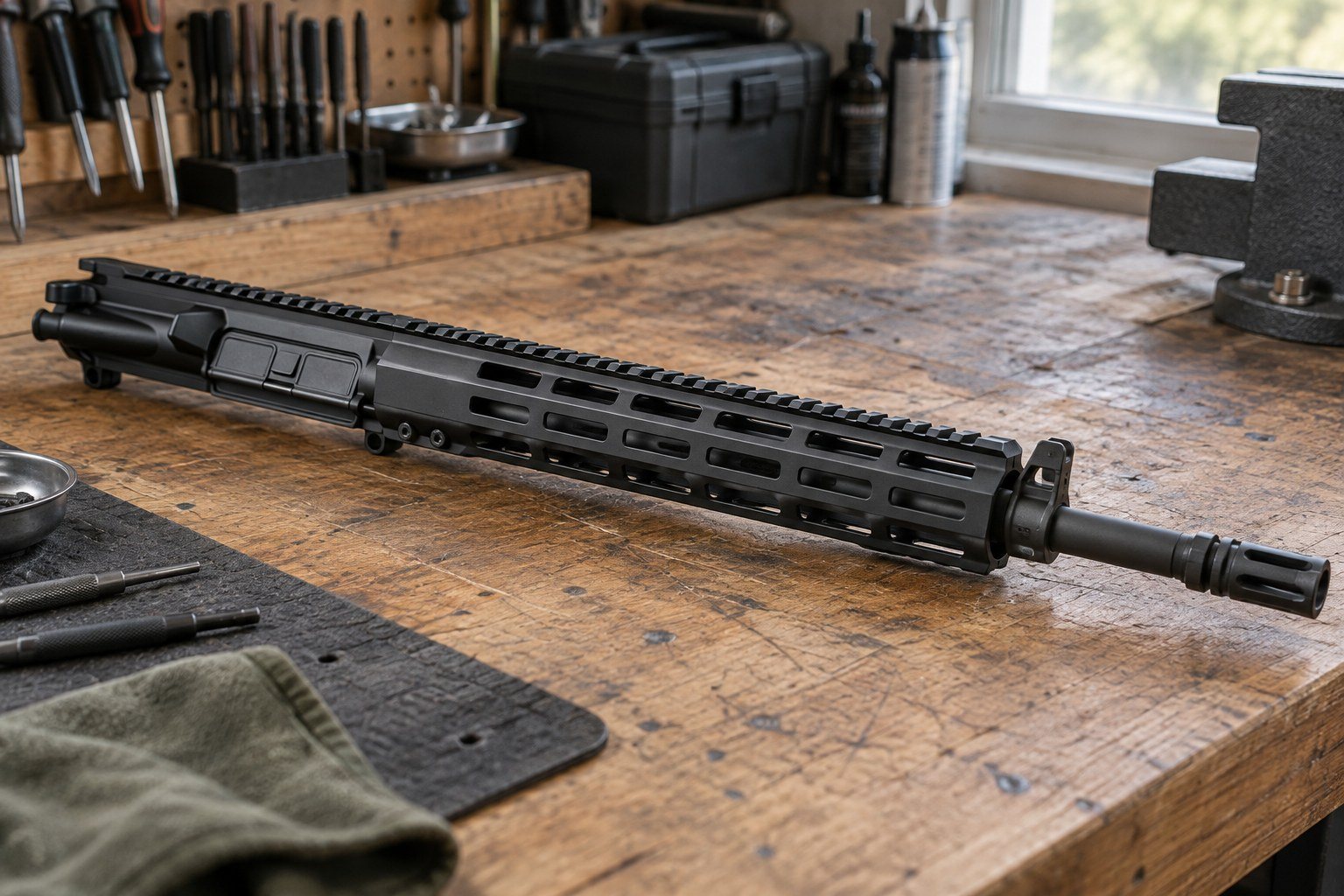
A 12.5 inch upper lands in a spot that many AR-15 owners find hard to ignore. It is noticeably handier than a 16 inch carbine, yet it keeps more barrel than the 10.5 inch setups that dominate the short end of the market.
That balance comes with tradeoffs, though. Barrel length affects velocity, muzzle blast, gas system choice, handguard fit and, most importantly, legal status. Our editors at AR15 Uppers break down where this length shines, where it falls short and what to check before you commit. If you already know the length suits your plans, you can compare complete options now.
Ready to see assembled, function-checked options across calibers?
Key Takeaways
- A 12.5 inch barrel splits the difference between compact 10.5 inch builds and standard 16 inch carbines in both handling and ballistic potential.
- Any rifle with a barrel under 16 inches is a short-barreled rifle under federal law, so registration with the ATF is still required even though the federal tax is now $0.
- Gas system length matters more on short barrels, so always follow the barrel maker's published gas spec rather than guessing.
- Larger cartridges such as 338 ARC are increasingly offered at this length, which shows the format is not limited to 5.56 NATO.
- State and local laws vary, so confirm your own rules before you build or buy.
Why Barrel Length Creates a Tradeoff
Every inch of barrel gives powder gas more time to push the bullet before it exits. Cut length and you generally give up some velocity. Add length and you gain velocity but carry more weight out front and a longer overall package.
Short barrels also tend to produce more muzzle blast and flash, because more powder is still burning when the bullet leaves the muzzle. How much depends heavily on the cartridge and the specific load, which is why ammunition makers publish data for specific test barrel lengths.
Handling and Balance
Weight forward of your support hand is what makes a rifle feel slow to swing. Trimming barrel length moves the balance point back toward the shooter. That is the main reason short uppers feel quick in vehicles, around buildings and inside blinds.
Velocity and Terminal Performance
Bullets often need a minimum impact speed to expand or fragment as designed. Losing velocity in a shorter barrel can shrink the distance at which a given load performs well. We do not publish blanket velocity numbers here because they vary widely by load. Check the ammunition maker's data, and if possible run your own load over a chronograph from your actual barrel.
For a wider look at how length affects every common configuration, read our AR-15 barrel length guide.
Where a 12.5 Inch Upper Fits Between 10.5 and 16 Inches
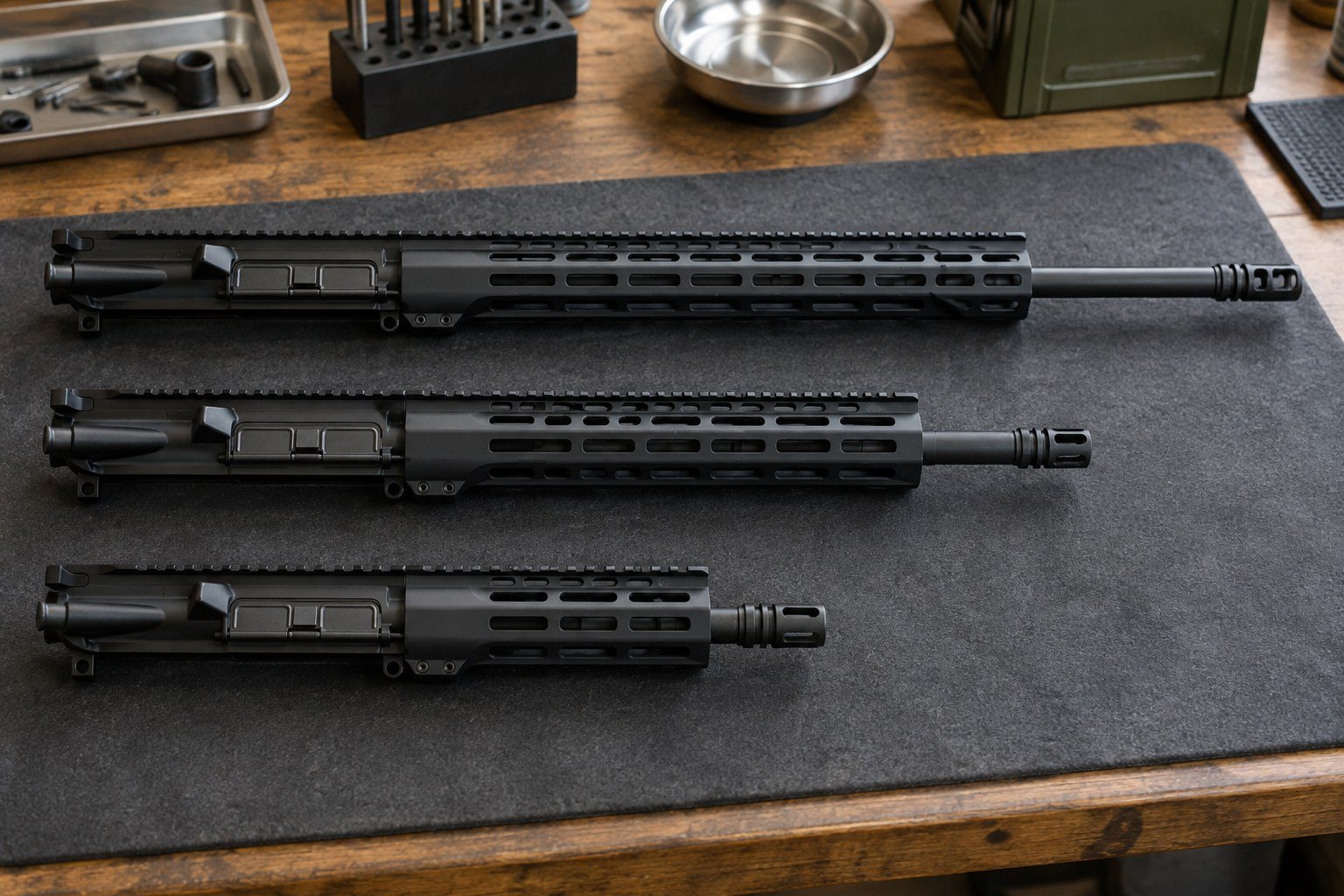
The appeal of the middle length is easiest to see side by side. The table below compares common AR-15 barrel lengths in qualitative terms. It is a general orientation, not a performance guarantee.
| Barrel Length | Federal Status (Rifle Configuration) | Handling | Ballistic Potential | Typical Role |
|---|---|---|---|---|
| 10.5 inch | Short-barreled rifle, ATF registration required | Very compact | Lowest of the three | Close quarters, vehicle, suppressed use |
| 12.5 inch | Short-barreled rifle, ATF registration required | Compact | Middle | General purpose short build |
| 14.5 inch | Short-barreled rifle unless a muzzle device is permanently attached to reach 16 inches | Carbine-like | Closer to 16 inch | Duty-style carbine |
| 16 inch | Standard rifle length (with 26 inch minimum overall length) | Standard carbine | Highest of the group | All-around rifle, hunting, range |
The Case for the Extra Two Inches
Compared with a 10.5 inch barrel, a 12.5 inch barrel gives the cartridge more room to burn powder. For owners who want a short rifle but still care about reach, that extra length is the selling point.
The Case for Staying Short
Compared with 16 inches, the shorter barrel trims length and front weight. If you plan to run a suppressor, the shorter barrel also helps keep the total package manageable once the can is attached.
If you are leaning toward the shortest end instead, our editors cover those options in the SBR uppers in the 10 to 11 inch range roundup.
Want to understand the legal side before choosing a length?
Legal Basics You Need to Know
Federal law treats a rifle with a barrel shorter than 16 inches, or an overall length under 26 inches, as a short-barreled rifle under the National Firearms Act. A rifle-configured 12.5 inch build falls in that category.
Registration Is Still Required
Since January 1, 2026, the federal tax on short-barreled rifles, short-barreled shotguns and suppressors is $0 under the One Big Beautiful Bill Act. The tax change did not remove the registration requirement. You still need ATF approval before assembling a short-barreled rifle. The ATF National Firearms Act page is the authoritative starting point.
Pistol Configurations and State Rules
Some owners pair short uppers with pistol lowers. Pistol rules, brace guidance and state restrictions change and vary widely. We do not give legal advice, so confirm federal, state and local requirements before you buy or build, and consult a qualified attorney if anything is unclear.
Gas System and Reliability on Short Barrels
Short barrels leave less distance between the gas port and the muzzle. That changes how long the system sees pressure, which is why gas length matters more as barrels get shorter.
Follow the Barrel Maker's Spec
Barrel makers publish the gas system length and gas block diameter for each barrel. For example, 12.5 inch 338 ARC barrels are commonly specified with a pistol length gas system and a 0.750 inch gas block. Match those parts exactly. Never drill or modify a gas port yourself.
For a deeper look at carbine, mid-length and pistol systems, see our guide on choosing the right gas system length.
Buffer and Spring Tuning
Short builds can be sensitive to buffer weight, spring and ammunition. If you see short strokes, failures to lock back or harsh ejection, start with the parts the manufacturer recommends. When you are unsure, have a qualified gunsmith inspect the rifle before you change anything.
Calibers That Work at 12.5 Inches
The length is not tied to one cartridge. A common pattern is for 12.5 inch options to be chambered in 338 ARC, while 5.56 NATO and 300 Blackout are more often found at 10.5 inch and 16 inch lengths. Stock changes, so check the current listings.
338 ARC
338 ARC uppers at 12.5 inches are commonly built with heavy stainless barrels, often paired with a 10 inch rail and A2 flash hider. Matching 338 ARC barrels are typically available with a 1:8 twist and a 5/8x24 muzzle thread. Our editors cover the cartridge further in our roundup of 338 ARC uppers for hunting and tactical builds.
5.56 NATO and 300 Blackout
Both cartridges are common in short AR-15 builds in general. If you want those calibers today, compare the 5.56 NATO uppers and 300 Blackout uppers currently listed, which are commonly offered at 10.5 and 16 inches. Either length may serve you better than waiting on a specific size.
Building Out the Rest of the Upper
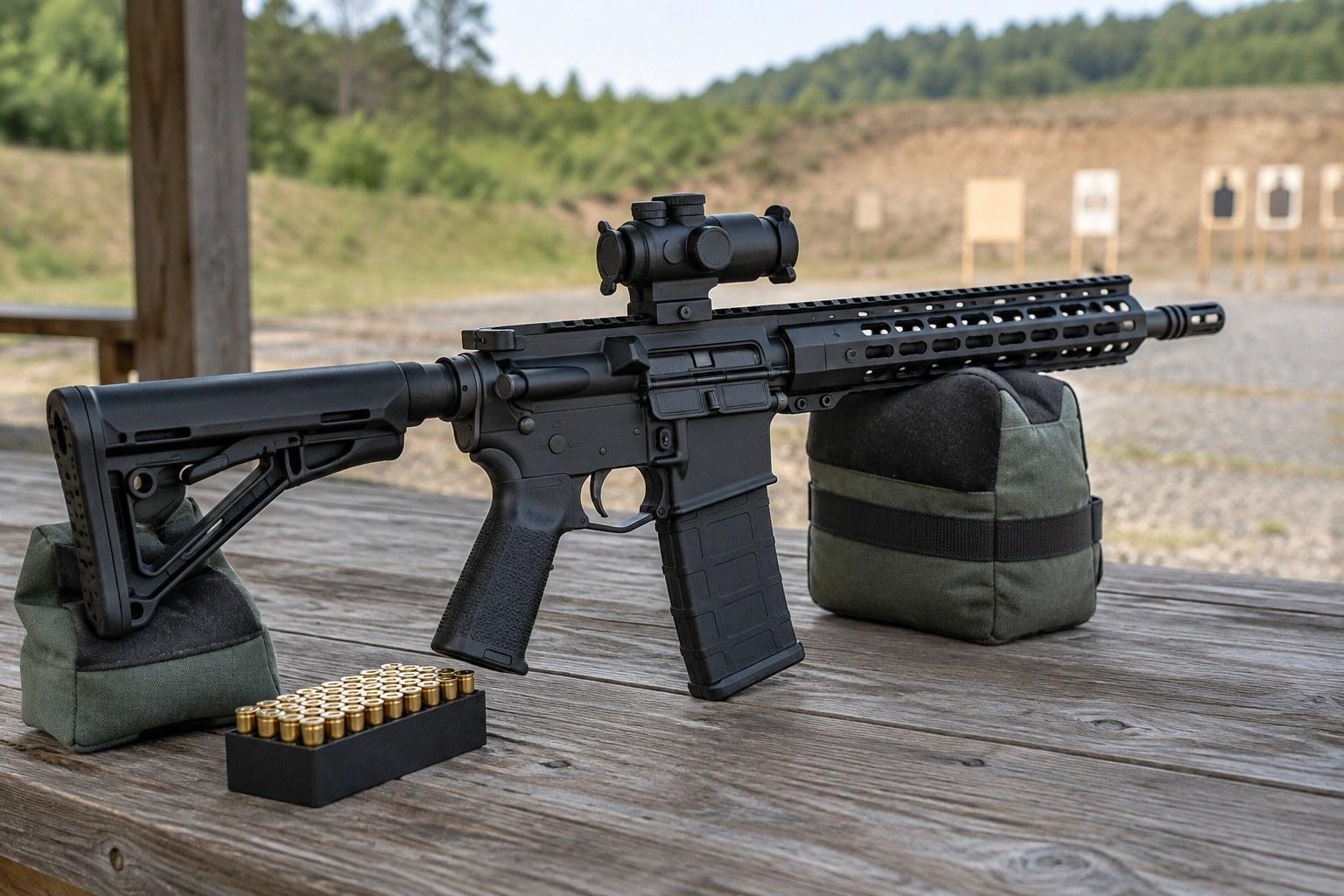
Barrel length drives several other choices. Getting them right is what makes a short upper feel finished instead of improvised.
Handguard Length
12.5 inch 338 ARC complete uppers commonly ship with a 10 inch rail, leaving some barrel exposed for the gas block area and muzzle device. A rail that runs too far forward can crowd a suppressor or muzzle device. Confirm clearance before you swap handguards.
Muzzle Devices
Short barrels make muzzle device choice more noticeable. Flash hiders tame flash, brakes reduce recoil but add side blast and suppressor mounts prepare the rifle for a can. Always match the thread pitch, which is 5/8x24 on the 338 ARC barrels mentioned above. Browse AR-15 muzzle devices by thread before you order.
Assembly and Safety
Complete uppers from AR15Parts.com are assembled in-house, headspaced and function-checked before they ship. If you build your own, work on an unloaded firearm, follow each manufacturer's instructions and torque specs, and use a qualified gunsmith whenever you are unsure.
Optics and Sighting
A compact upper pairs naturally with a red dot or a low power variable optic. Think about the distances you actually shoot. If most of your use stays inside typical home and ranch distances, a simple red dot keeps the rifle light. If you want to stretch the reach that the extra barrel length offers, a low power variable optic adds flexibility at the cost of some weight and bulk.
Bolt Carrier Group and Charging Handle
Use the bolt carrier group specified for your caliber. Some cartridges share a standard AR-15 bolt face and others do not, so confirm compatibility on the product page or with the barrel maker before you order parts separately.
Who Should Choose This Length
- Owners who want a compact rifle but feel 10.5 inches gives up too much.
- Shooters planning a suppressed build who want a shorter overall package than 16 inches allows.
- Builders who accept the NFA registration process in exchange for handling.
Ready to compare short and standard lengths across calibers?