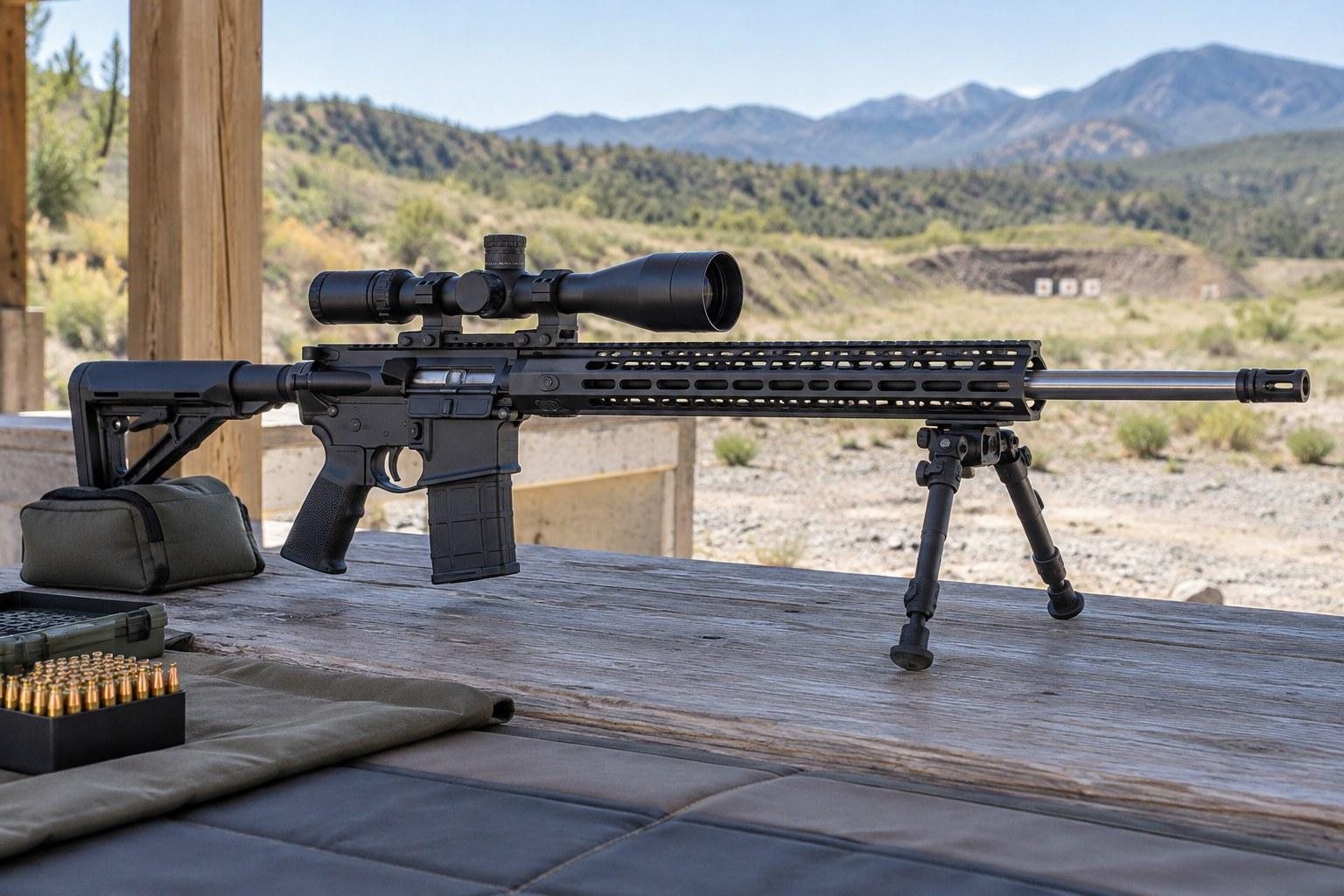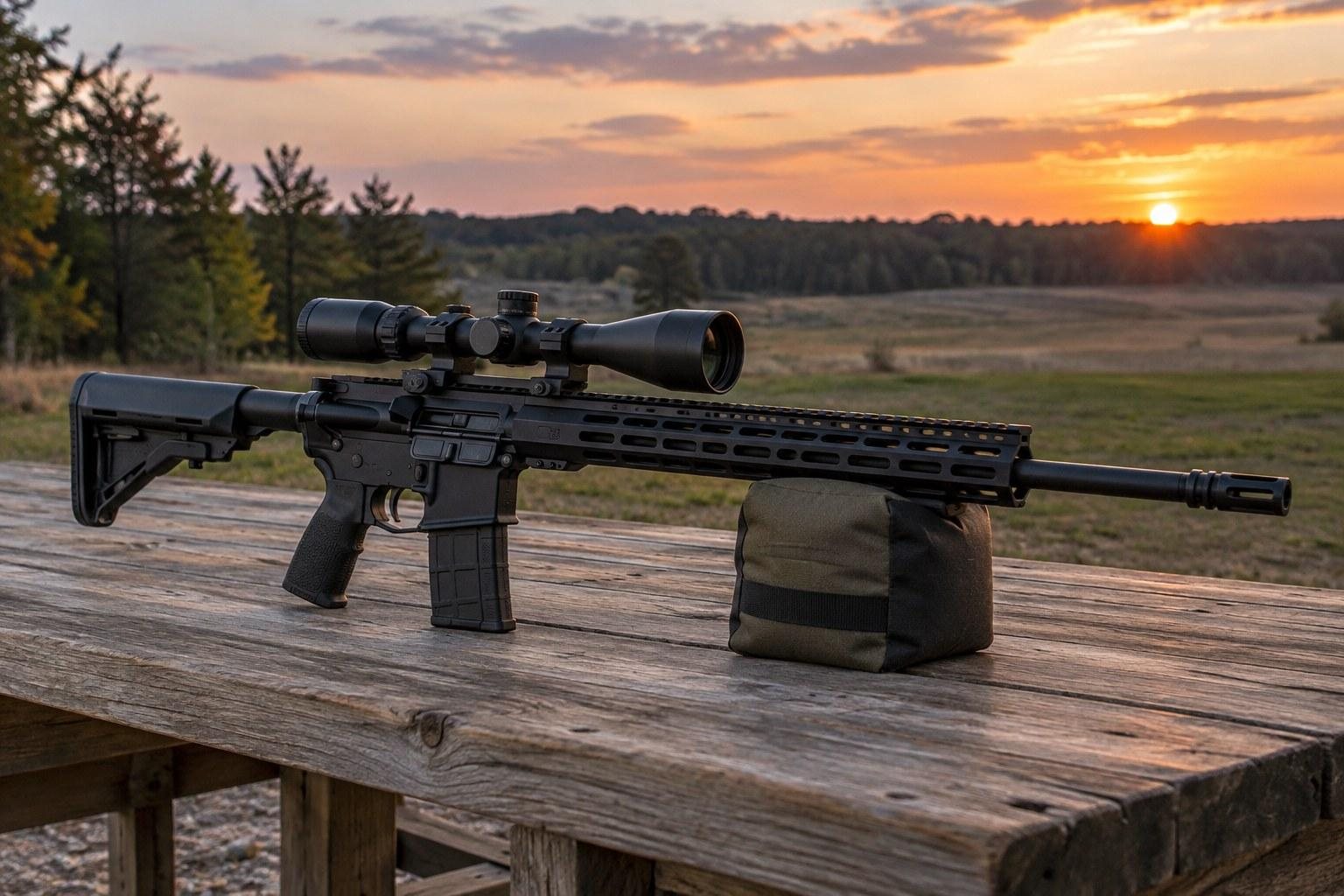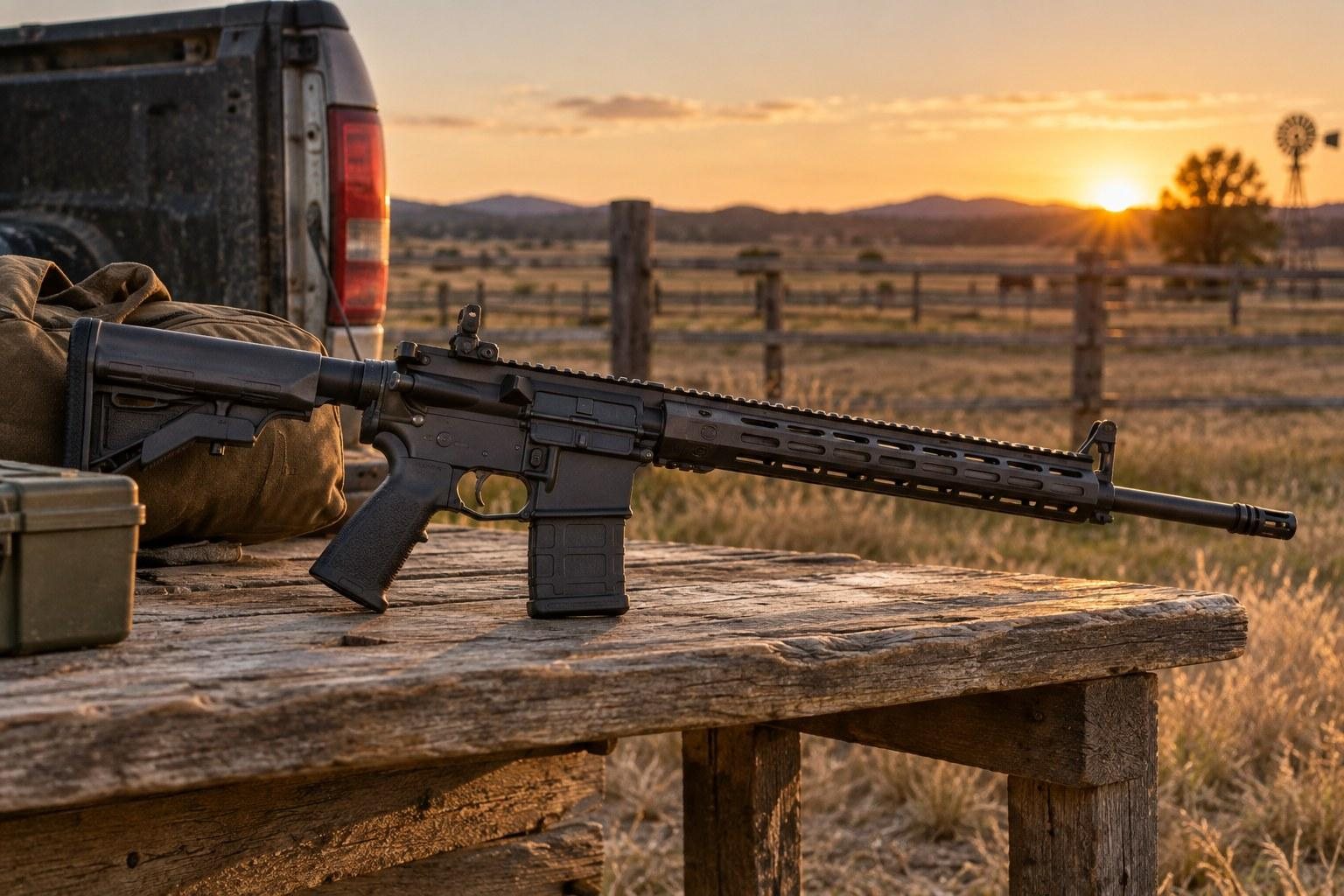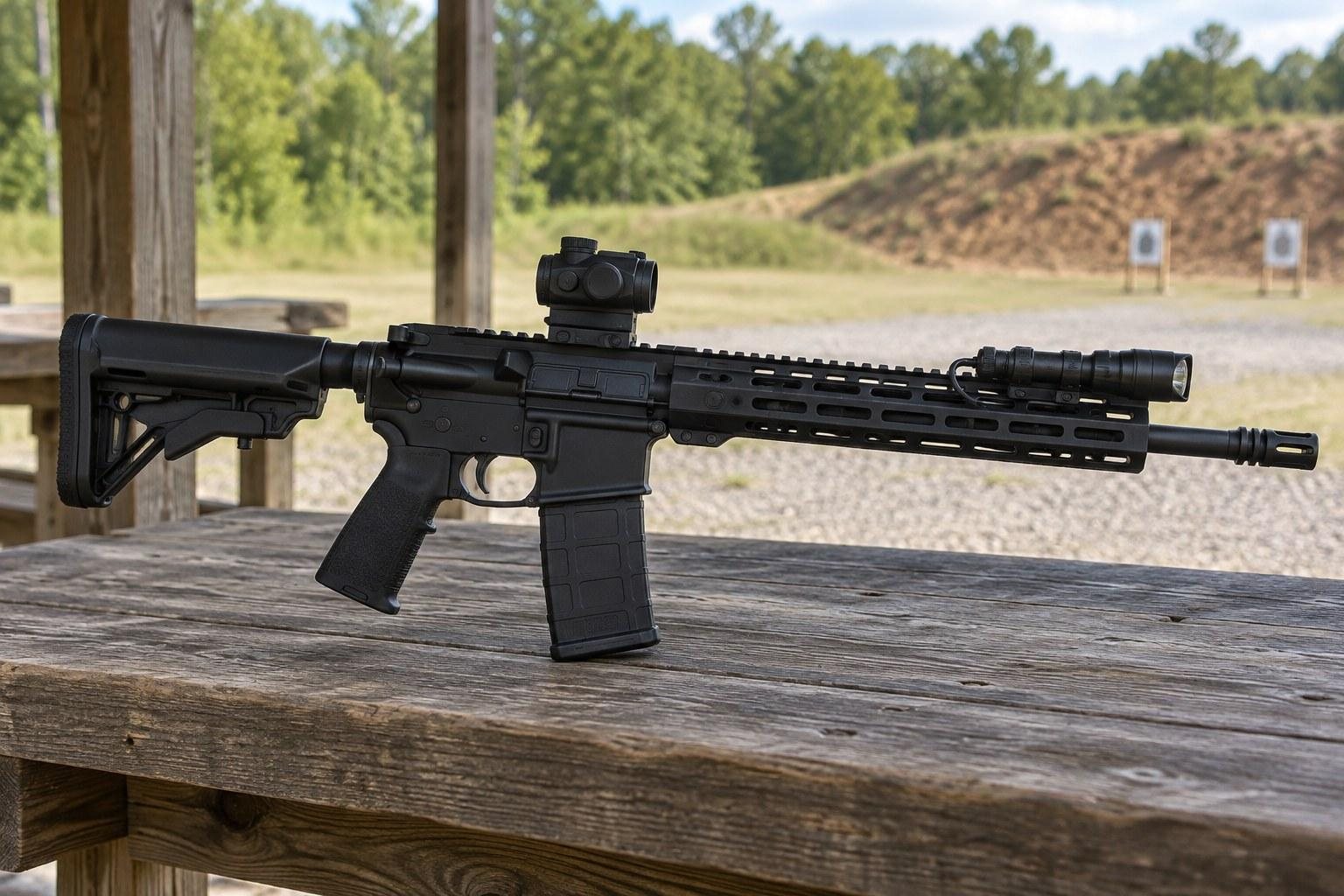
A patrol rifle is built around one idea: a dependable, general purpose carbine that works the same way every time you pick it up. If you train with that mindset, your upper should match it. That means a sensible barrel length, a proven chambering, a gas system that runs reliably, and a rail with room for a light and a sling.
Here are the features that matter most when you shop for a patrol style training upper, and the ones that are nice to have but not essential. We also point out common configurations in the market, so you can compare real options instead of marketing copy. Read on, then match the specs to the way you actually train.
Want to see assembled options first? Browse our complete upper coverage.
Key Takeaways
- A 16 inch barrel keeps a patrol style upper on the rifle side of federal law without any NFA paperwork.
- Chambering in 5.56 NATO or 223 Wylde gives you wide ammunition availability and lets you train with the same rounds you would rely on.
- A 1:8 or 1:7 twist barrel handles the common range of bullet weights used for training and duty style loads.
- Rail length, sling attachment points and room for a weapon light matter more than cosmetic upgrades.
- Complete uppers from AR15Parts.com are assembled in-house, headspaced and function-checked before they ship.
What Makes an Upper Patrol Style
The term describes a role more than a single spec sheet. A patrol style carbine is meant to be carried for long periods, deployed quickly and fired at practical distances, usually with a red dot or a low power variable optic. It favors reliability and simplicity over specialized features.
For a civilian shooter, a patrol style training upper is a way to build skills on a setup that mirrors that practical role. You are not chasing tiny groups at long range or the lightest possible build. You want something that runs, balances well, and stays consistent from one range session to the next.
Training Versus Duty Expectations
Agencies set their own standards for duty rifles, and those vary widely. As a private owner, you get to choose. Our advice is to keep the training upper close to whatever you would actually reach for in an emergency, so your manipulations, zero and holdovers transfer directly.
Why the Upper Is the Place to Focus
The upper holds the barrel, gas system, bolt carrier group, handguard and muzzle device. Those parts decide how the rifle shoots, how it cycles and how it handles. If you want a refresher on how every piece fits together, our upper anatomy and parts list breaks it down.
Barrel Length and the Legal Line
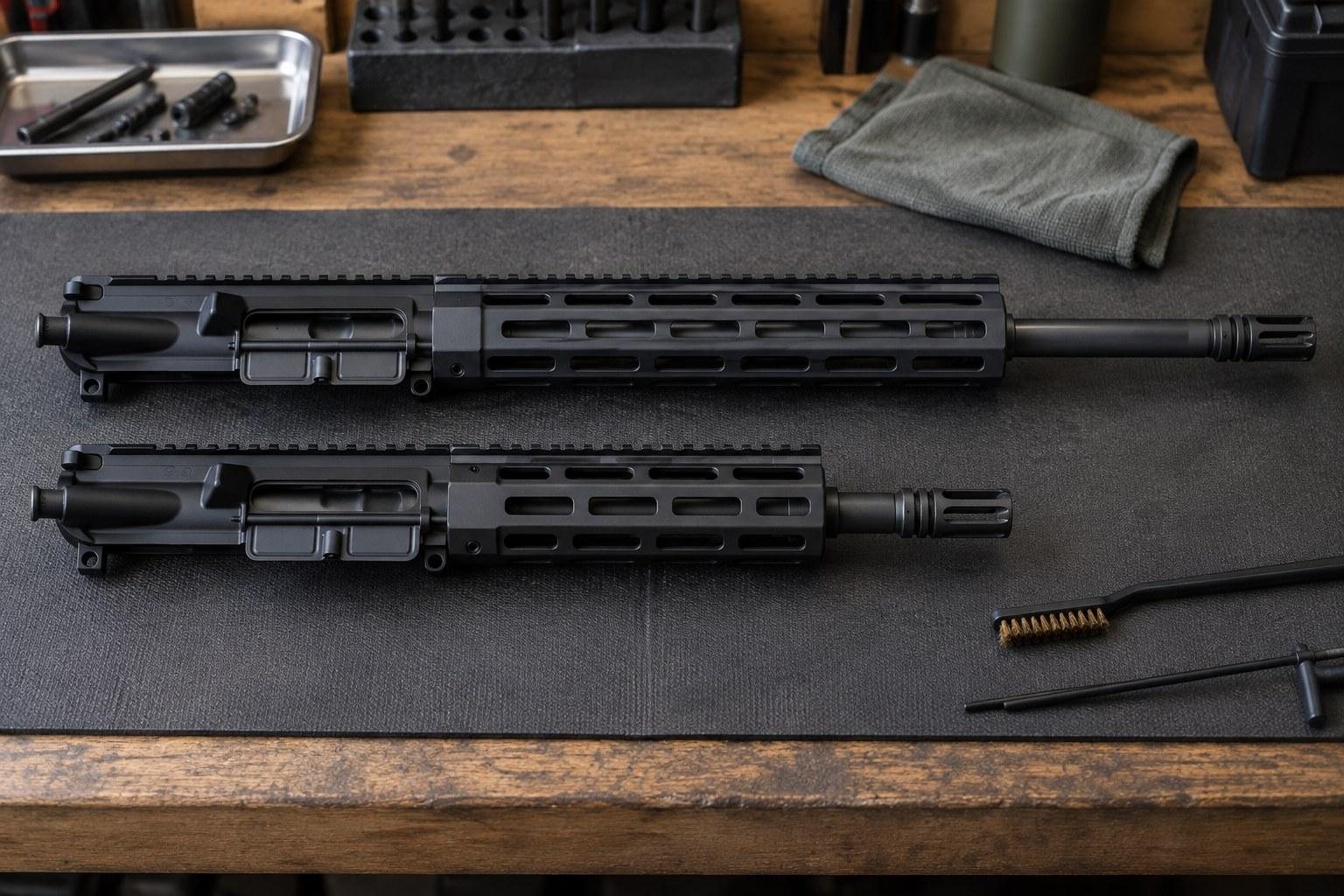
Barrel length is the first decision, and for most patrol rifle builds the answer is 16 inches. It is the shortest length that keeps a rifle out of short-barreled rifle territory under federal law, so you avoid NFA registration while keeping the carbine compact.
The 16 Inch Standard
A barrel under 16 inches on a rifle, or an overall length under 26 inches, makes a short-barreled rifle. That still requires ATF registration. Since January 1, 2026 the federal tax on SBRs is $0, but registration is still required, and the ATF National Firearms Act page explains the process. A pinned and welded muzzle device can bring a shorter barrel to 16 inches. State and local laws vary, so check yours before you buy.
When a Shorter Barrel Makes Sense
If you already work with registered SBRs, a 10.5 inch upper can be a compact trainer. 10.5 inch 5.56 NATO uppers with M4/Govt profile parkerized barrels are a common configuration in this category. Just remember that shorter barrels give up some velocity and are louder, and the registration rules above apply. Our AR-15 barrel length guide covers the trade-offs in more depth.
| Barrel Length | NFA Status (Federal) | Patrol Training Fit |
|---|---|---|
| 10.5 inch | SBR on a rifle; registration required | Compact, good for close-range drills if registered |
| 14.5 inch with pinned and welded device | Can reach 16 inches overall barrel length | Shorter handling with no registration when done correctly |
| 16 inch | Standard rifle, no registration | The common default for a patrol style upper |
| 18 inch and longer | Standard rifle, no registration | More velocity, but heavier and less handy |
Not sure which length matches your goals? Our configuration guides walk through each option.
Chambering, Twist Rate and Barrel Material
Most patrol style uppers are chambered in 5.56 NATO for a simple reason: ammunition is widely available, and you can practice with the same type of rounds you would carry. You can browse the current selection of 5.56 NATO uppers to see what lengths and rail options are in stock.
5.56 NATO or 223 Wylde
A 5.56 NATO chamber is the conventional choice. A 223 Wylde chamber is designed to fire both 5.56 NATO and 223 Remington while leaning toward precision. Either works for patrol style training. If you want the full comparison, read our 5.56 vs 223 Wylde vs 223 Remington breakdown, or look at 223 Wylde uppers directly.
Twist Rate
16 inch 5.56 NATO barrels, including M4/Govt parkerized profiles and Wilson Combat Ranger and Recon style barrels, commonly use a 1:8 twist. That rate stabilizes a broad range of common bullet weights. A 1:7 twist, which often appears on shorter M4/Govt profile barrels, leans toward heavier projectiles. Either is a reasonable patrol choice.
Chrome Lined 4150 or Stainless 416R
M4/Govt profile barrels are typically 4150 steel with chrome lining and a parkerized finish. Chrome lining is traditionally chosen for durability and easier cleaning on hard-use carbines. Wilson Combat style barrels are often 416R stainless with a glass bead finish, a material often picked for accuracy. For a training upper that will see a lot of rounds, either can serve; it comes down to priorities.
Gas System and the Bolt Carrier Group
A patrol rifle has to cycle reliably with a range of ammunition. The gas system and BCG do most of that work, so they deserve careful attention.
Carbine, Mid-Length or Intermediate Gas
A 16 inch M4/Govt 5.56 NATO barrel commonly uses a carbine length gas system, while a Wilson Combat Ranger style barrel often uses an intermediate system. Longer gas systems are commonly described as softer shooting on a 16 inch barrel, while carbine gas has a long track record. Our gas system length guide explains how each behaves.
What to Want in a BCG
Look for a full-size, properly staked carrier from a reputable maker, and keep it clean and lubricated. If you are buying a stripped or barreled upper, compare bolt carrier groups by coating and construction. Complete uppers listed with a "BCG - CH" designation generally include a bolt carrier group and charging handle.
Leave Gas Ports Alone
Never drill or modify a gas port. If a rifle short-strokes or runs too hard, work through buffer, spring, ammunition and cleanliness first, and see a qualified gunsmith if the problem continues.
Handguard, Sights and Accessory Space
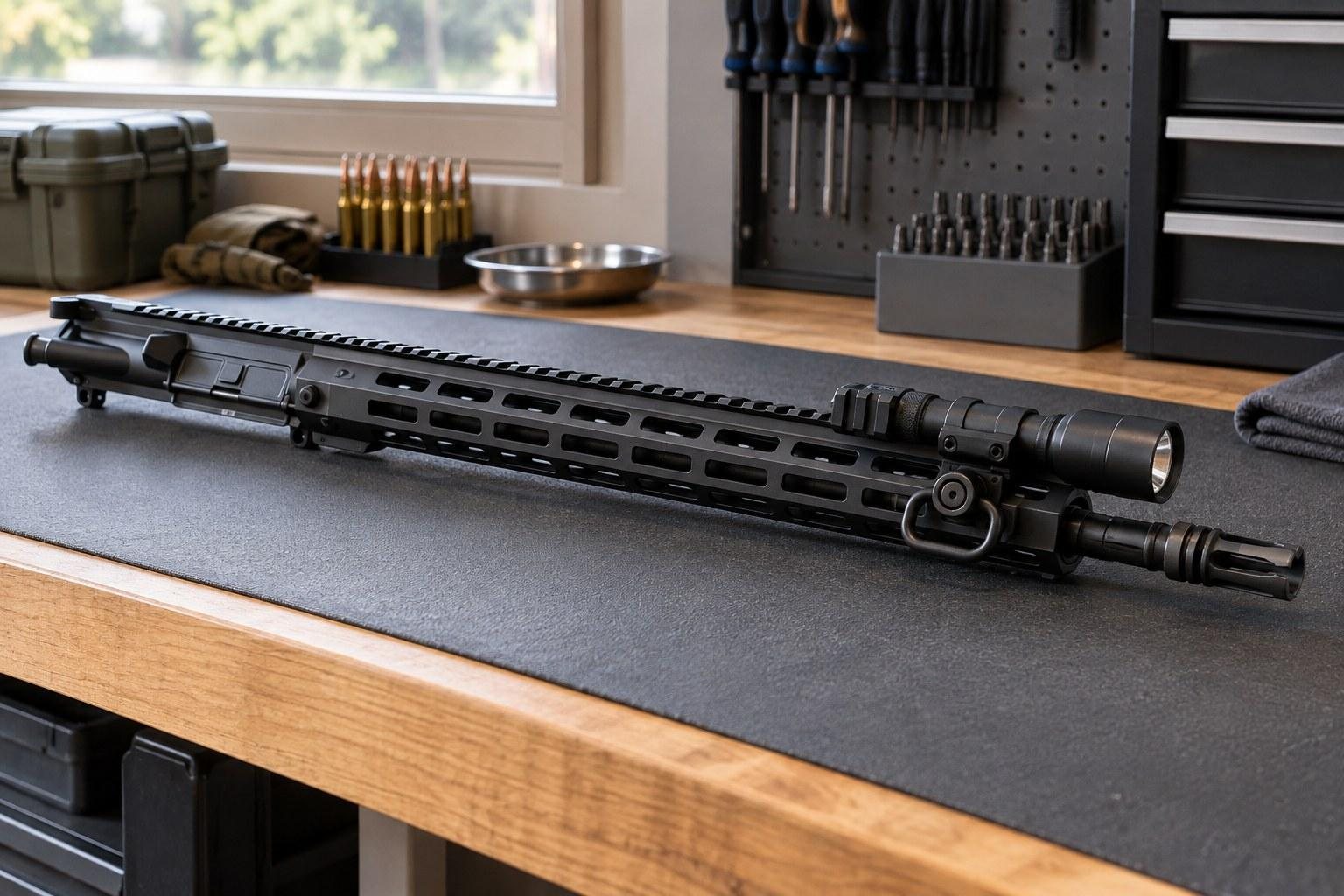
The handguard is where a patrol style upper becomes practical. It is where your support hand goes, where your light lives, and where your sling attaches.
Rail Length
16 inch 5.56 NATO uppers commonly come with either a 12 inch or 15 inch rail. A 15 inch rail gives more room to extend your support hand and mount a light near the muzzle. A 12 inch rail leaves more barrel exposed but can feel lighter up front. You can also browse AR-15 handguards separately if you are building from parts.
Light, Sling and Optic
Plan your accessory layout before you buy. Make sure there is space for a weapon light where your thumb can reach it, a sling mount that suits how you carry, and a flat top rail long enough for your optic and backup sights. Our optics guides help if you are weighing magnified optics.
Muzzle Device and Charging Handle
Small parts shape how a patrol rifle feels in training, especially during fast strings of fire or low light work.
Flash Hider or Brake
M4/Govt configurations commonly ship with an A2 flash hider or a flash can, while Wilson Combat style versions are often paired with a comp brake. A flash hider reduces visible flash, which matters in low light. A brake reduces recoil and muzzle rise but is louder and harsher for people beside you. For training at busy ranges, think about your lane neighbors.
Charging Handle
A standard charging handle works, but an extended or ambidextrous latch can make malfunction drills and optic-equipped manipulation easier. Compare charging handles if you want to upgrade later.
Putting Your Patrol Rifle Training Upper Together
Once you know your priorities, the shopping list gets simple. For most people, a patrol rifle training upper looks like this:
- 16 inch barrel in 5.56 NATO or 223 Wylde with a 1:8 or 1:7 twist.
- Carbine, mid-length or intermediate gas, with a quality BCG.
- A 12 to 15 inch free-float rail with sling and light mounting points.
- A flash hider for low light work, or a brake if recoil control matters more to you.
- A durable optic and backup sights that you zero and confirm regularly.
Safety Before Every Session
Always make sure the firearm is unloaded before installing or swapping an upper, follow the manufacturer's instructions, and use the component maker's published torque specs. If anything feels off, have a qualified gunsmith inspect it. When in doubt, slow down and verify each step.
Ready to compare uppers built for practical carbine work? Start with our buying guides.