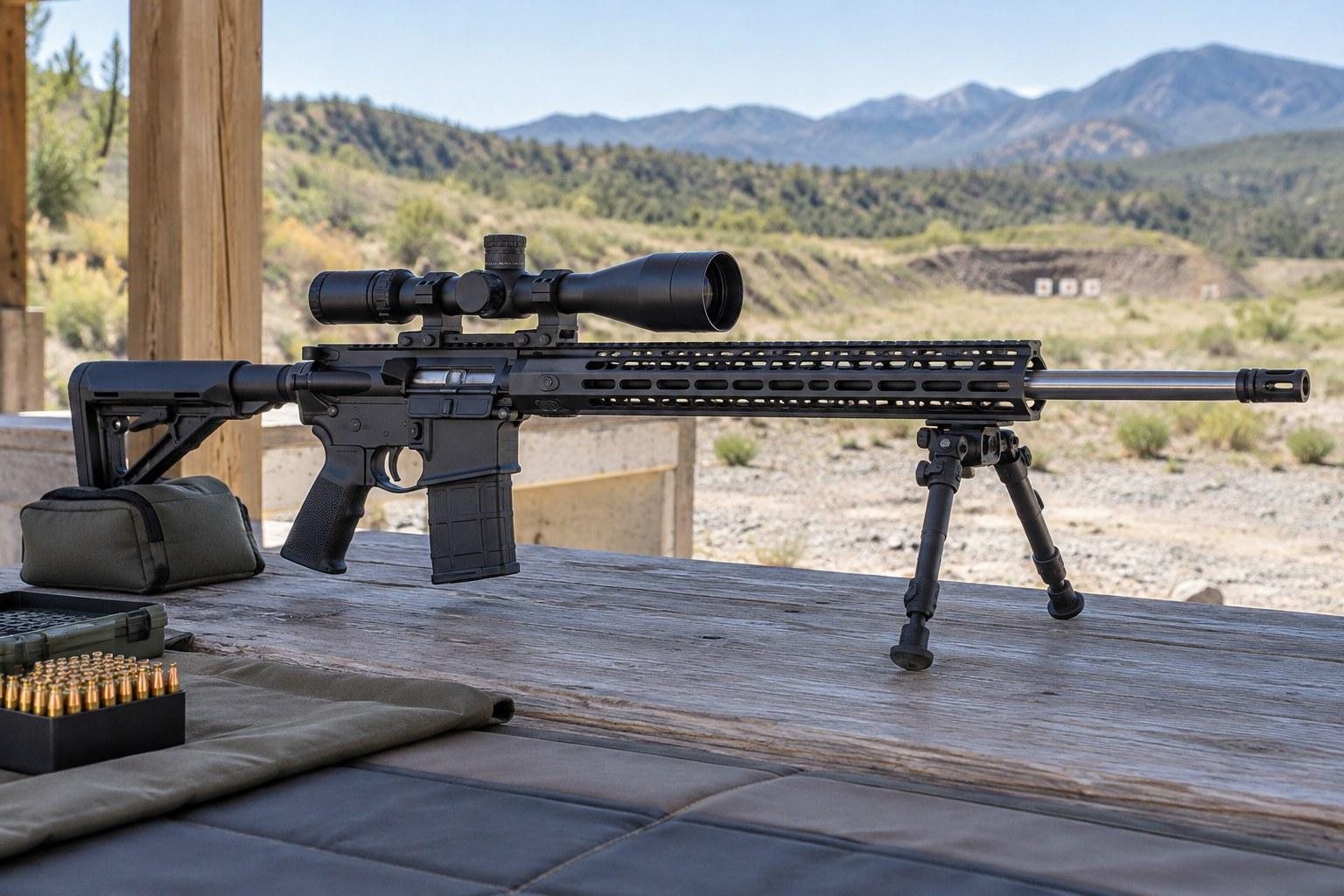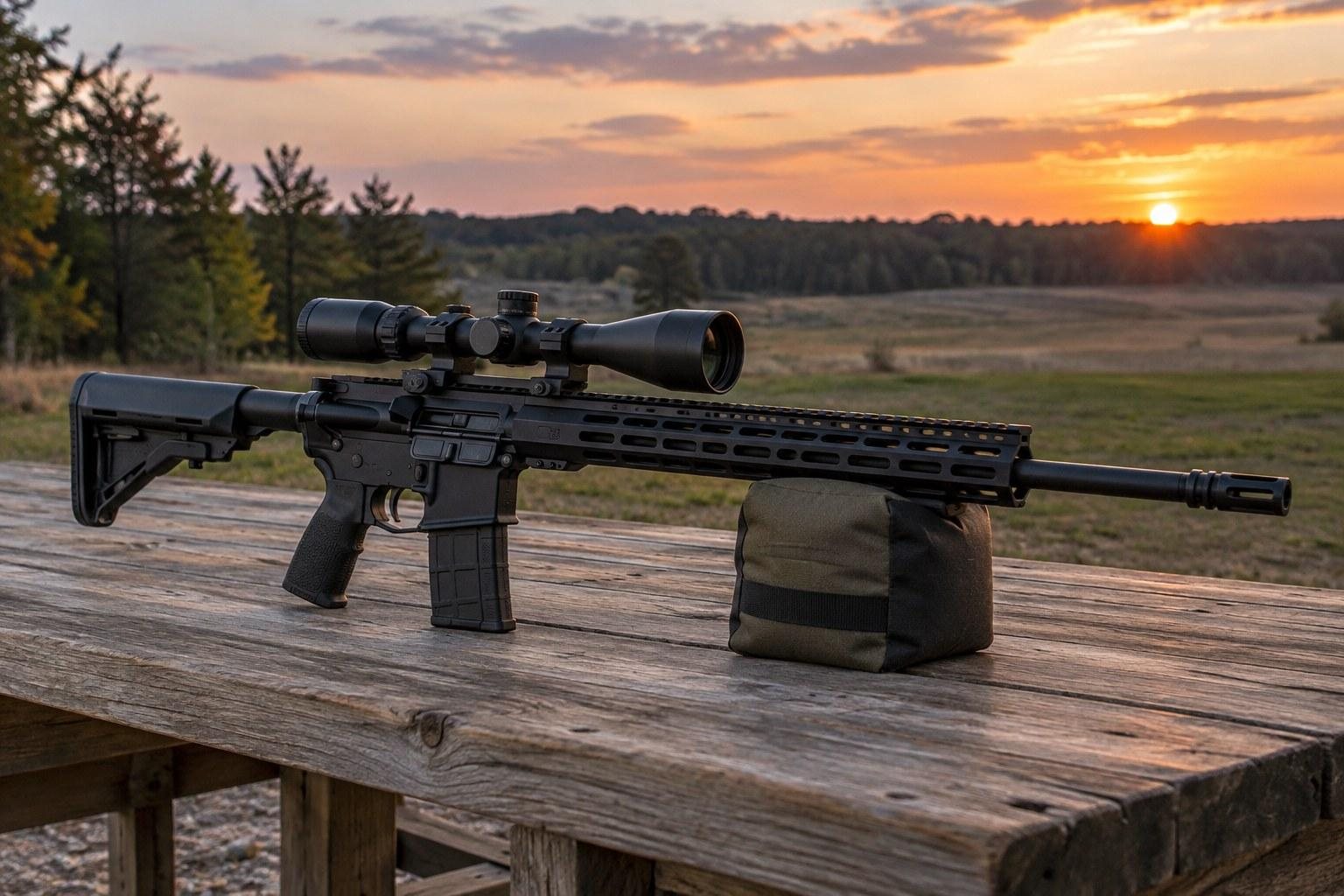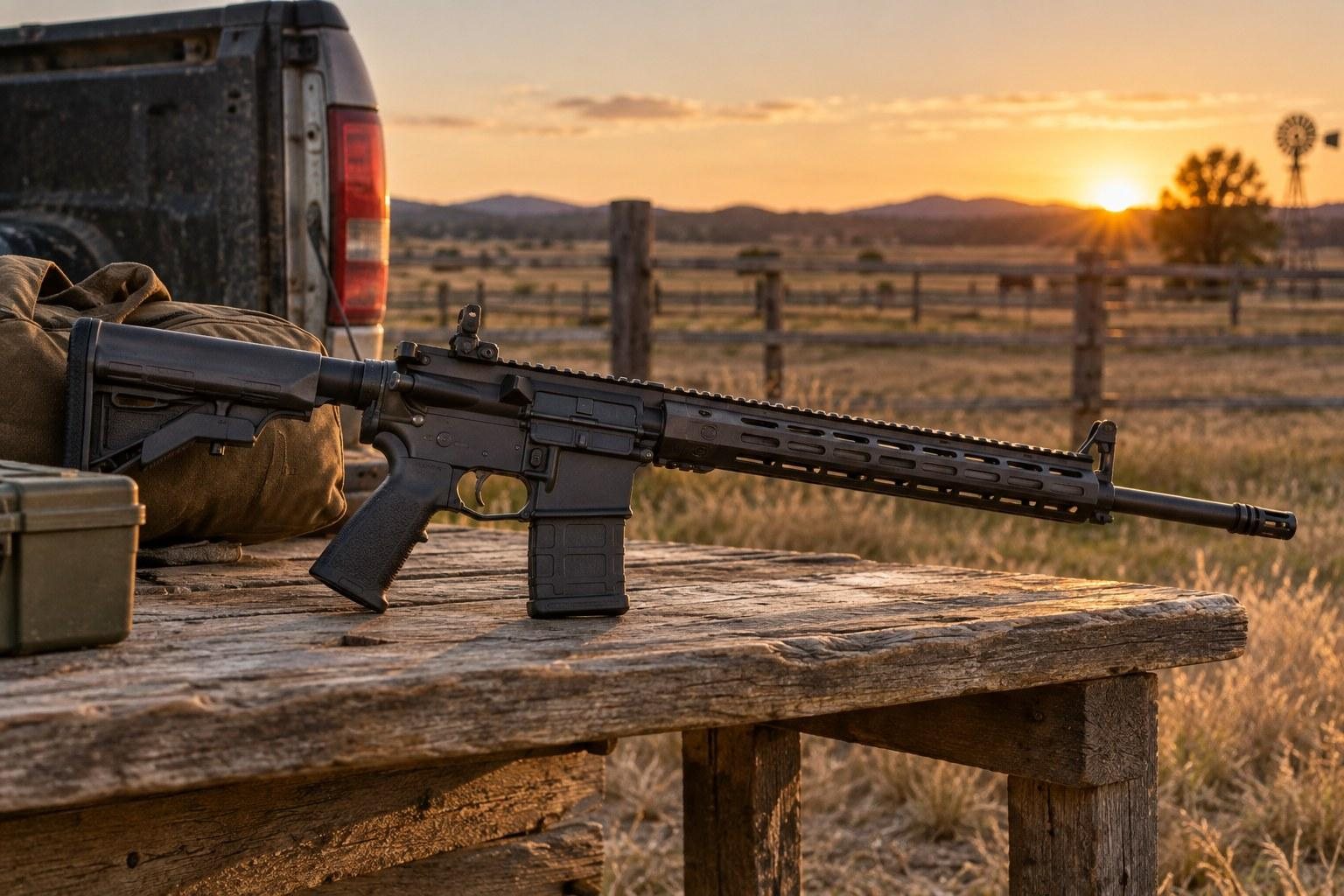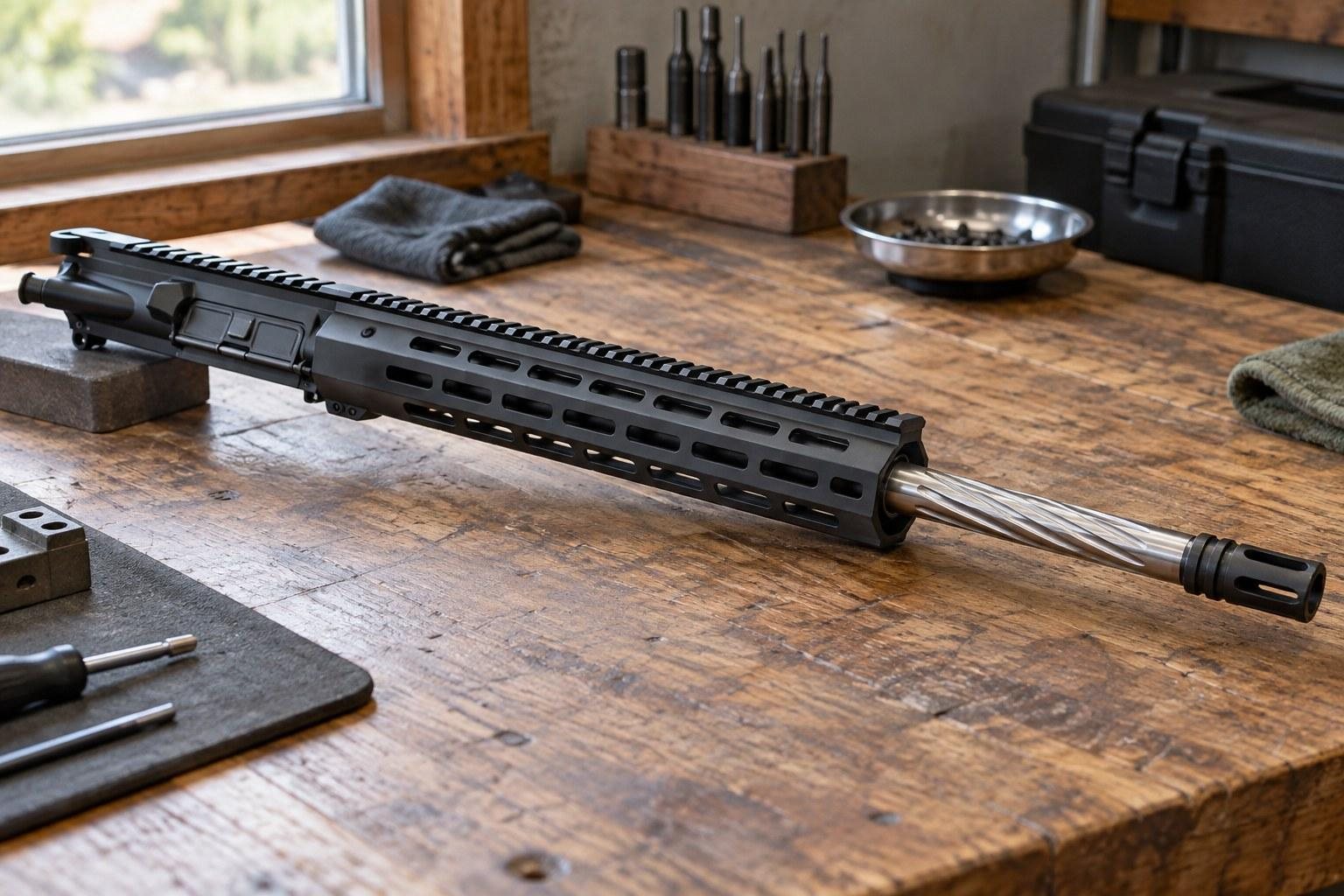
A fluted barrel has grooves machined lengthwise into its outside surface, removing steel while keeping a larger outside contour. Shooters pick one for a handful of practical reasons: to trim weight from a heavier profile, to change how a rifle balances, and, for many, simply because they like the look.
Fluting is not magic, though. It does not make a barrel more accurate by itself, and it adds machining work that shows up in the price. This guide breaks down what fluting actually changes on an AR-15 or AR-10 upper, where it makes sense, where it does not, and what fluted options generally look like so you can compare real specs instead of marketing copy.
Want to see complete uppers built around different barrel profiles?
Key Takeaways
- Fluting removes material from the outside of a barrel to reduce weight while keeping a larger outside diameter than a slim profile of similar weight.
- A fluted profile is usually lighter than the same contour left unfluted, but it is not automatically lighter than a thinner profile without flutes.
- Fluting does not improve the bore, chamber or rifling, so it is not a shortcut to accuracy on its own.
- Fluted options from makers like Wilson Combat and Satern Barrels are commonly available in several calibers, including Recon, Super Sniper and Straight Flute profiles.
- Always confirm the gas block journal diameter and handguard clearance for the exact barrel you choose.
What Fluting Actually Is
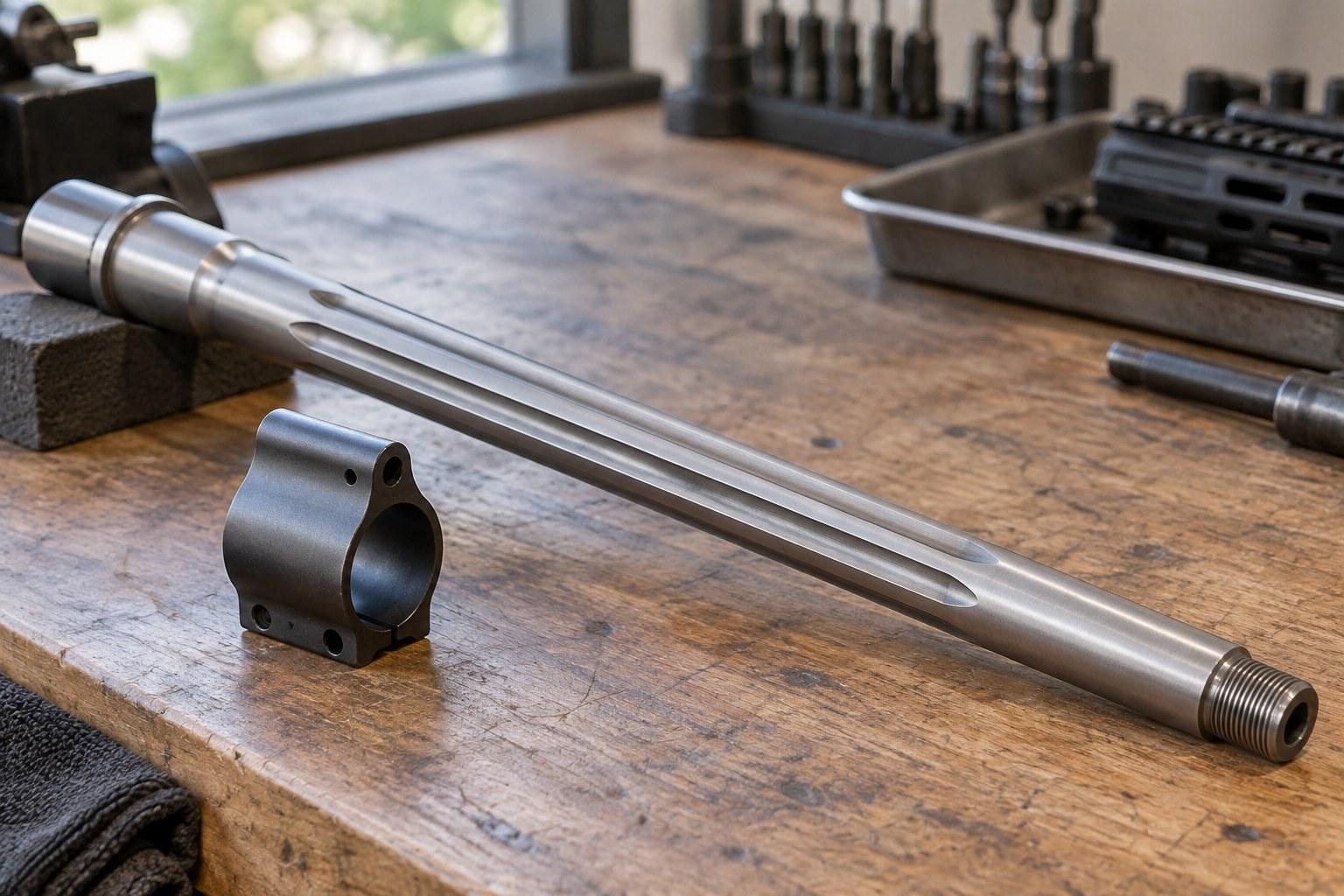
Barrel flutes are channels cut along the length of the barrel's exterior, usually forward of the gas block area and short of the muzzle threads. The bore, the chamber and the rifling stay untouched. Only the outside contour changes.
Think of it as taking a heavier contour and carving away some of the steel that is not doing much work. The barrel keeps a larger outside diameter, which is why fluted profiles often look beefy even when they weigh less than the unfluted version of the same contour.
Common Flute Styles
- Straight flutes: parallel grooves that run straight down the barrel. Satern Barrels lists its Straight Flute profile this way.
- Spiral or helical flutes: grooves that wrap around the barrel. They are mostly an aesthetic choice and add machining time.
- Interrupted or partial flutes: shorter cuts that stop and start, leaving full-diameter sections between them.
Manufacturers choose the number, depth and length of flutes for each profile, so two fluted profiles of the same length can weigh and behave quite differently. Always read the listed weight and contour for the specific barrel.
What Fluting Does Not Touch
Fluting does not change twist rate, chamber, gas system length, thread pitch or barrel steel. Those specs still decide which bullets stabilize, what ammunition you can run and which muzzle devices and gas blocks fit. Treat the flutes as one feature on top of the core barrel spec, not a replacement for it.
The Main Reasons Shooters Choose Fluting
When readers ask us why anyone pays more for fluting, the honest answer comes down to three things: weight, balance and appearance. Heat behavior is part of the conversation too, but it deserves a careful look rather than a big claim.
Trimming Weight From a Heavier Contour
Medium, heavy and sniper-style contours add steel near the muzzle. That steel can help stiffness and heat soak, but it also makes a rifle tiring to carry. Fluting lets a builder keep much of that larger outside contour while shaving some weight. For a hunting rifle or a precision rifle that also gets carried, that tradeoff can be worth it.
Moving the Balance Point
Weight out at the muzzle is felt more than weight near the receiver. Removing steel from the forward half of a barrel can bring the balance point back toward your support hand, which can make the rifle feel quicker when you transition between targets or shoulder it from a field carry.
Looks and Personal Preference
There is no shame in liking how something looks. Fluted stainless barrels under a free-float handguard are a popular style, and plenty of builders choose them for that reason alone. Just go in knowing you are paying partly for appearance.
Heat: Surface Area Versus Mass
Flutes add surface area, which can help a barrel shed heat. They also remove mass, and less steel means less material to absorb heat in the first place. How those effects balance out depends on the profile and how fast you shoot. It is generally wise not to choose fluting expecting it to stay cooler than a heavier unfluted contour during long strings. If sustained fire is your priority, a heavy or bull profile is usually the more straightforward choice.
Comparing barrel profiles before you buy? Our length guide is a useful companion read.
Fluted Versus Unfluted Profiles at a Glance
The comparison below is general. Exact differences depend on the specific contours being compared, so use it as a starting point and then check the listed specs on each barrel.
| Factor | Fluted Profile | Unfluted Heavier Profile | Unfluted Slim Profile |
|---|---|---|---|
| Weight | Lighter than the same contour unfluted | Heaviest | Often the lightest |
| Outside diameter | Larger contour retained | Large | Small |
| Heat soak during long strings | Less mass to absorb heat | Most mass to absorb heat | Least mass |
| Cleaning the exterior | Grooves can collect grime | Simple | Simple |
| Machining and cost | Extra machining step | Standard | Standard |
| Typical uses | Carried precision, hunting, style-focused builds | Bench, varmint, competition | Light carbines, general use |
Accuracy Is About the Whole Barrel
Accuracy comes from bore quality, chamber work, crown, steel, a proper fit to the upper receiver and good ammunition. Wilson Combat and Satern Barrels build fluted options in 416R stainless, but the same brands also make unfluted profiles in the same steel. Pick the maker and spec you trust first, then decide whether you want flutes on it. If materials are part of your decision, our breakdown of chrome-lined, nitride and stainless barrels explains the tradeoffs.
Fluted Options Listed at AR15Parts.com
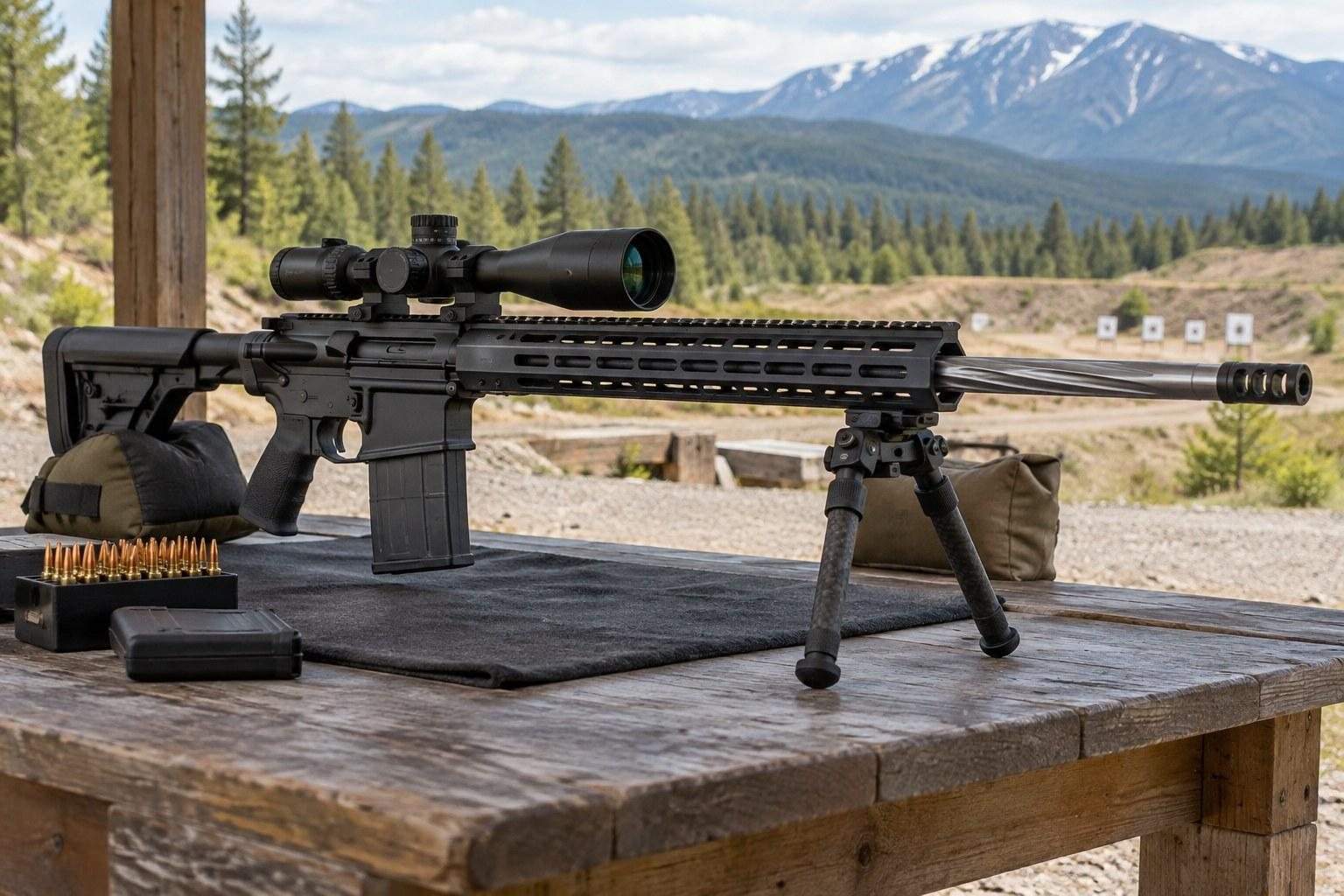
A practical routine is to check the current category pages before ordering, since fluted options and their specs can vary by retailer and change over time.
Wilson Combat Recon Fluted
Wilson Combat's 16-inch Recon Fluted profile in 416R stainless with a glass bead finish is commonly available in both 5.56 NATO and 300 Blackout. The 5.56 NATO version typically runs a 1:8 twist and an intermediate-length gas system, while the 300 Blackout version typically runs a 1:7 twist. It can be found as a bare barrel on the 5.56 NATO barrels page, and complete uppers built on it are generally available under 300 Blackout uppers and 5.56 NATO uppers with a range of rail lengths.
Wilson Combat Super Sniper Fluted
The Super Sniper Fluted line is a longer, precision-oriented profile. The 20-inch 223 Wylde version on the 223 Wylde barrels page typically comes in 416R stainless with a 1:8 twist, a rifle-length gas system, 1/2x28 threads and a .875-inch gas block journal. For AR-10 builders, 18-inch and 20-inch Super Sniper Fluted uppers are commonly available under 308 Win uppers.
Satern Barrels Straight Flute
Satern Barrels Straight Flute barrels are commonly available for 22 ARC in 18-inch, 20-inch and 22-inch lengths, typically in 416R stainless with 5/8x24 threads, a 1:7 twist and a rifle-length gas system. See the 22 ARC barrels page for current options.
Fitment Details to Check Before You Buy
A fluted profile can change more than weight. Larger contours affect what fits around the barrel, so a few checks save headaches later.
Gas Block Journal Diameter
Heavier and sniper-style contours may use a larger gas block journal. As noted above, the 20-inch Super Sniper Fluted 223 Wylde barrel is listed with a .875-inch journal, while many AR-15 barrels use .750 inch. A .750-inch gas block will not fit a .875-inch journal, so match the block to your exact barrel.
Handguard Clearance
Because fluted profiles keep a larger outside diameter, confirm that your handguard's inside diameter clears both the barrel and the gas block. Free-float handguards are the usual pairing. Our upper compatibility checklist walks through the full list.
Thread Pitch and Muzzle Devices
Check the thread pitch on the listing. The Satern Barrels Straight Flute barrels are listed with 5/8x24 threads, while the 223 Wylde Super Sniper Fluted is listed with 1/2x28. Your muzzle device or suppressor mount must match.
Gas System Length
Fluting does not change the gas system, but long precision barrels often use rifle-length gas. If you are unsure how gas length affects function, read our guide on choosing the right gas system length.
Care, Safety and Ownership Notes
Living with fluting is easy, but a few habits help.
Keeping the Flutes Clean
Carbon, oil and dust can settle in the grooves, especially near the gas block. A soft brush and a rag during your normal cleaning routine handle it. Always start with an unloaded firearm, and follow the barrel and component manufacturer's instructions for cleaning products and finishes.
Installation and Torque
Barrel nut torque and gas block installation should follow the component manufacturer's published specs. If you are not confident installing a barrel, a qualified gunsmith is the right call. Never drill or alter a gas port. Complete uppers from AR15Parts.com are assembled in-house, headspaced and function-checked before they ship, which removes that step for many buyers.
Barrel Length and the Law
Fluted options are generally 16 inches or longer, since shorter options are less common in this style. Under federal law, a rifle barrel under 16 inches on a rifle, or an overall length under 26 inches, makes a short-barreled rifle that still requires ATF registration. Since January 1, 2026 the federal tax on that registration is $0, but registration is still required. State and local laws vary, so check yours.
Is a Fluted Barrel Right for Your Upper?
Fluting makes the most sense when you want a larger contour but care about carry weight and balance, or when you simply like the style and accept the extra cost. It makes less sense when you want the most heat-soak capacity for long strings, or when a slim unfluted profile already meets your weight goal for less money.
Quick Decision Points
- Carried precision or hunting rifle: fluting is worth a look.
- Bench, varmint or long strings of fire: a heavy unfluted profile is usually simpler.
- Lightweight general-purpose carbine: a slim unfluted profile is often lighter still.
- Style-driven build: fluting is a fair choice as long as fitment checks out.
Still weighing barrel features against your budget? Our buying guides compare options side by side.