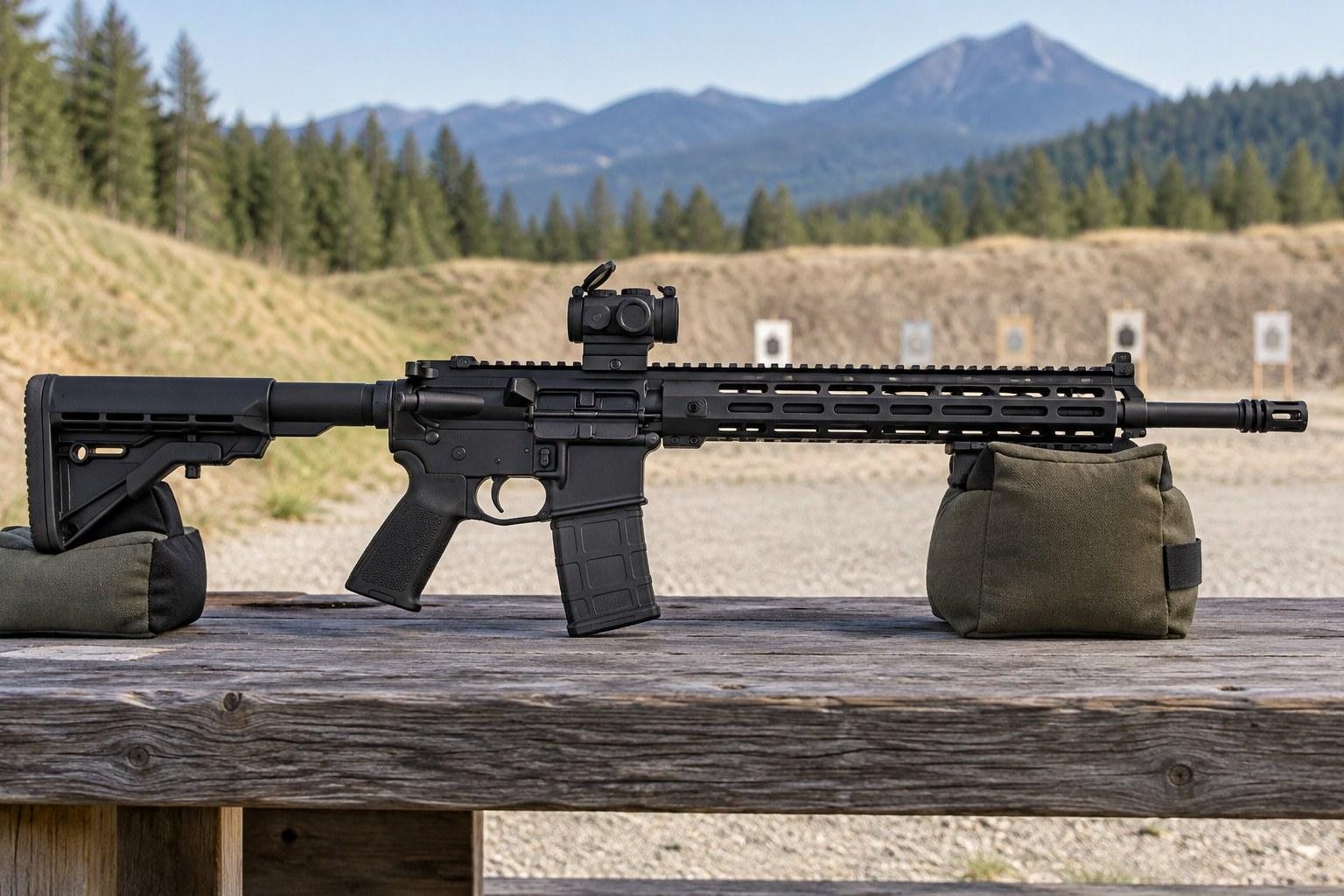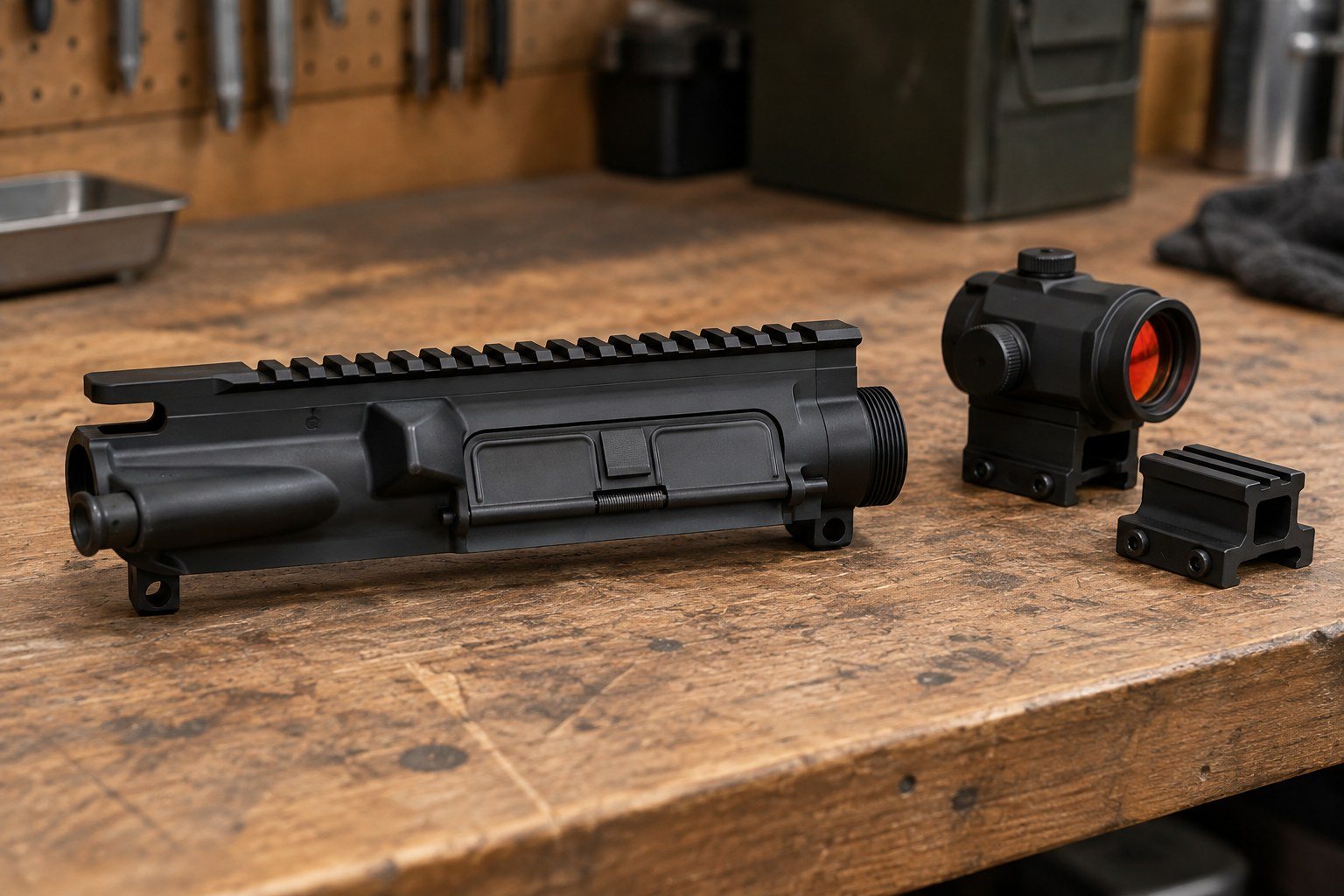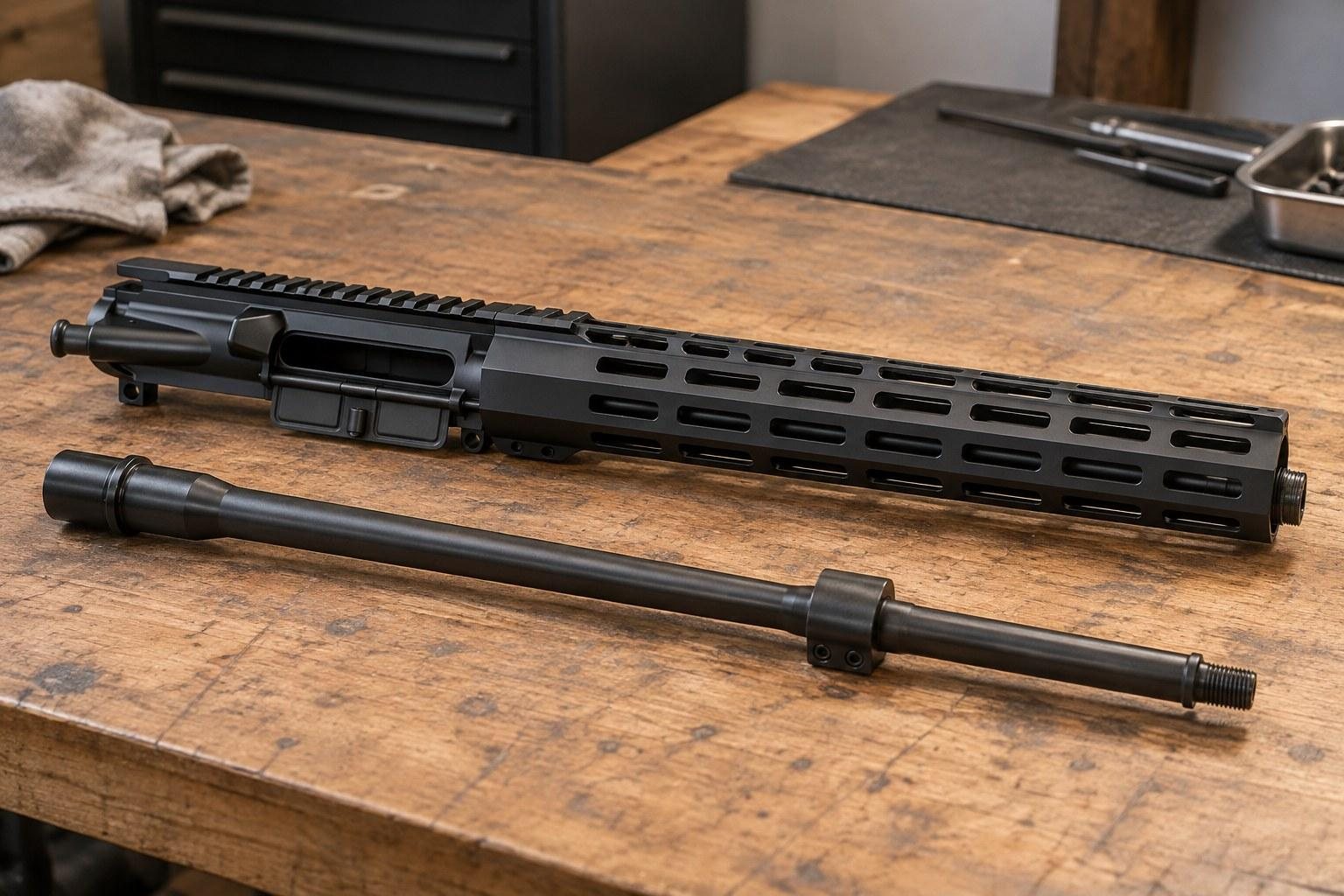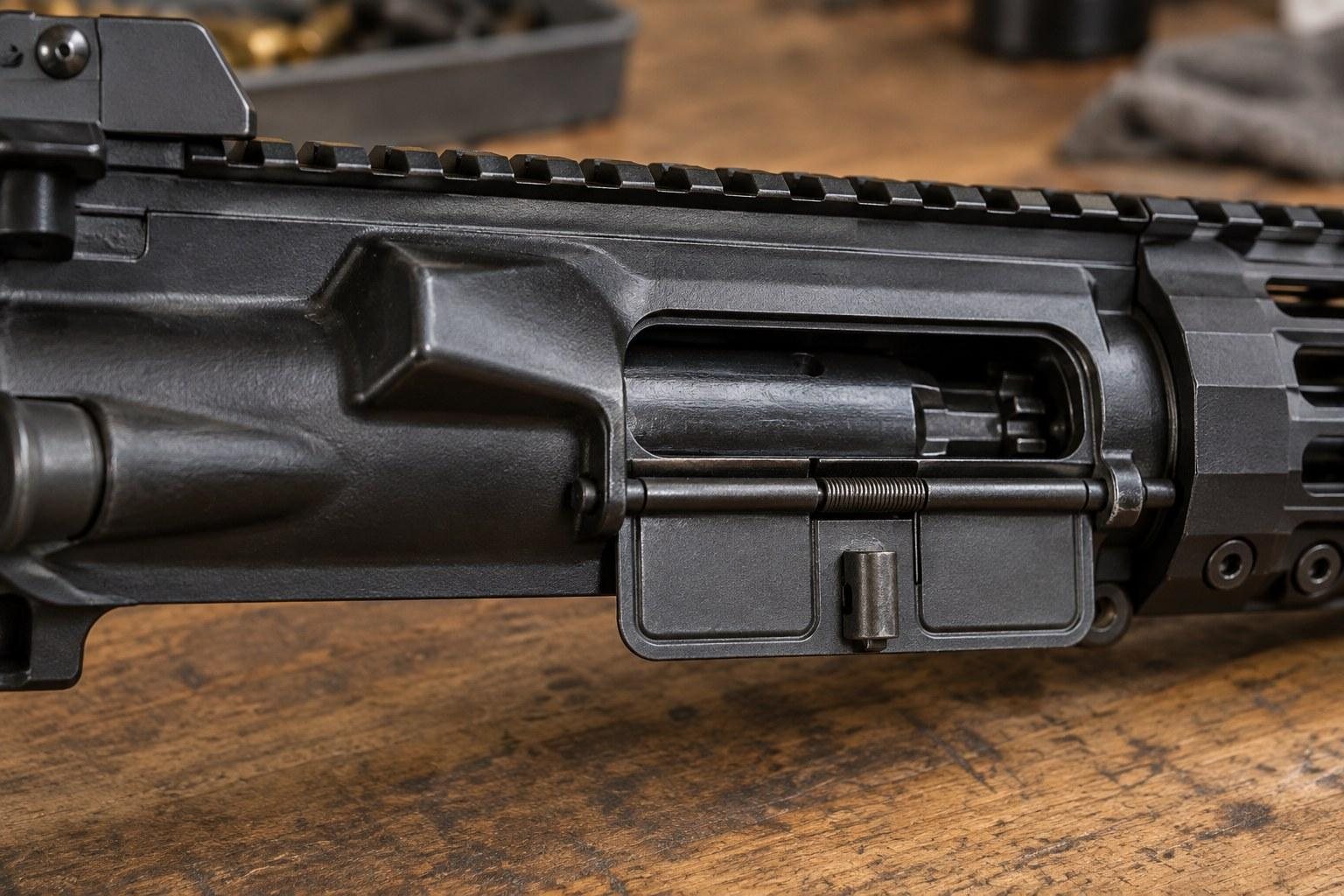
Look just behind the ejection port on most modern uppers and you will see a raised hump of aluminum. That bump is the AR-15 brass deflector, and it exists for one simple reason: to keep hot, spent cases from flying back toward the shooter's face. It is a small feature that most people never think about until a case bounces off their cheek.
This guide offers a plain explanation of what the deflector does, where it came from, who benefits most and how it should factor into choosing an upper receiver. If you are comparing uppers right now, the deflector is one of several details worth checking before you buy.
Want to see how complete uppers are configured from the ground up? Browse our complete upper coverage.
Key Takeaways
- The brass deflector is a raised section of the upper receiver located just behind the ejection port.
- Its job is to stop ejected cases from bouncing rearward toward the shooter, which matters most for left-handed shooters.
- The deflector became a standard feature with the A2 generation of military rifles and carried over to A3 and M4 style flat-top uppers.
- It is machined as part of the receiver forging, so it cannot be bolted on or removed like an accessory.
- A deflector does not change accuracy or reliability, but its presence or absence is a useful clue when identifying an upper's pattern.
What Is an AR-15 Brass Deflector?
The brass deflector, also called a shell deflector or case deflector, is a small wedge of material that rises from the right side of the upper receiver. It sits directly behind the ejection port and just ahead of the area where the charging handle and the shooter's face meet the rifle.
It is not a separate part. On a forged upper, the deflector is shaped into the forging and then finish machined along with the rest of the receiver. That means it stays put for the life of the upper and requires no maintenance beyond normal cleaning.
Where to Find It on Your Upper
Hold your upper with the ejection port facing you. Behind the port, toward the rear of the receiver, you will see the forward assist housing (if your upper has one) and a raised lip between the port and the rear of the receiver. That lip is the deflector.
On some uppers it is a sharp, angular bump. On others it is a smoother, rounded shape. Both do the same job.
Other Names You Will See
Manufacturers and retailers use several labels for the same feature. Product listings may say "shell deflector," "case deflector" or "brass deflector," and forged stripped uppers often use the term "shell deflector" in their specifications.
How the Deflector Works When You Fire
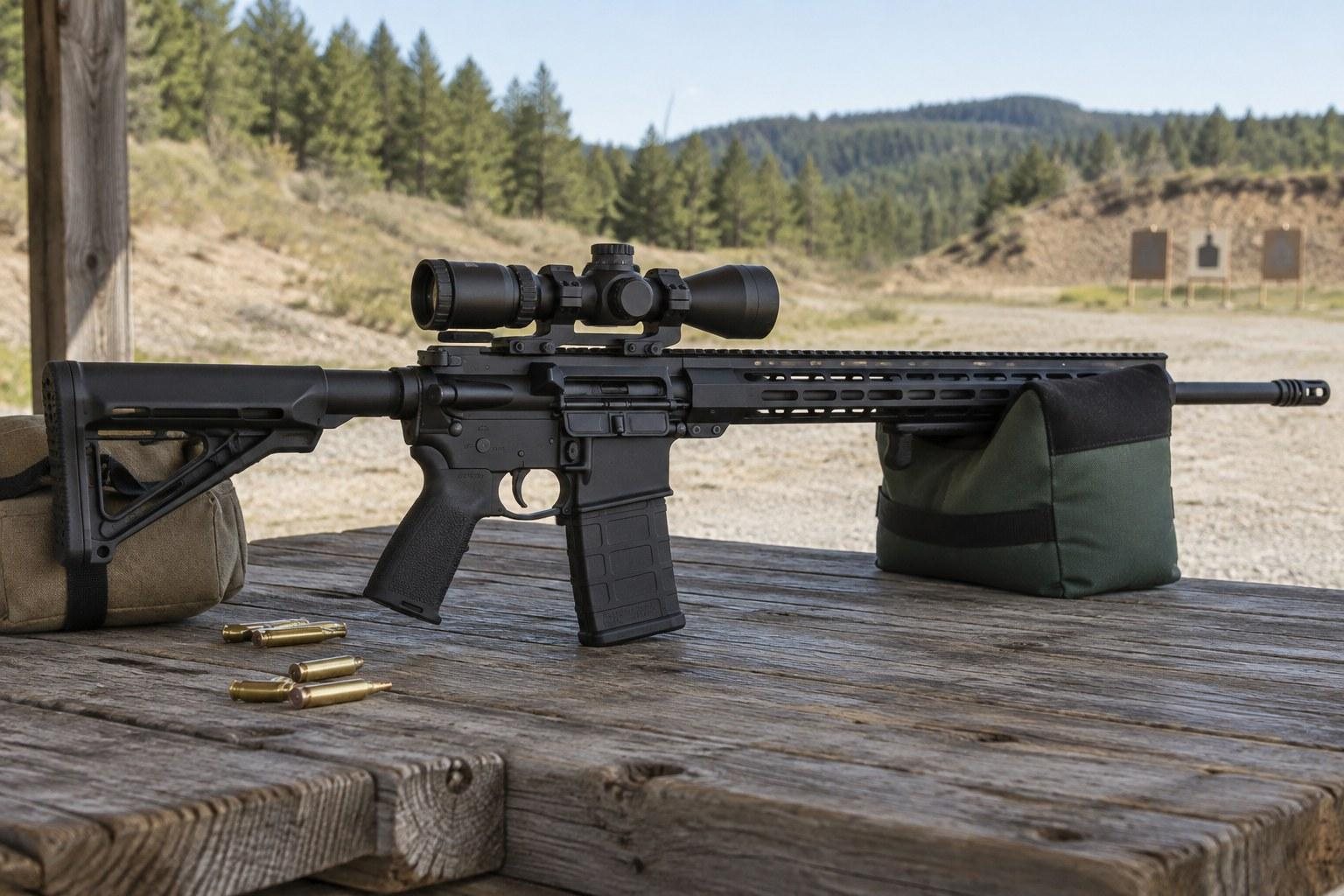
To understand the deflector, it helps to picture what happens during each cycle. When a round fires, gas pressure drives the bolt carrier group rearward. The extractor pulls the spent case out of the chamber, and the ejector pushes it out through the ejection port to the right.
Cases do not always leave in a neat, predictable line. Depending on the gas system, buffer weight, ammunition and how the rifle is held, some cases exit at a rearward angle. Without anything in the way, those cases can travel back toward the shooter.
Blocking the Rearward Path
The deflector stands in that rearward path. A case that would otherwise travel back past the receiver strikes the deflector instead and is redirected away from the shooter. The result is a more consistent ejection pattern out to the side and forward of the shooting position.
What It Does Not Do
The deflector is not a reliability device. It does not help the rifle extract or eject, and it will not fix a short stroking or overgassed rifle. If your cases are consistently landing far forward or straight back, that is a sign to look at your gas system, buffer and ammunition rather than the receiver. Our AR-15 cycling troubleshooting guide walks through those causes.
Planning a new build or replacing a receiver? Start with our upper receiver coverage.
Why Left-Handed Shooters Care Most
A standard AR-15 ejects to the right. For a right-handed shooter, the face sits on the left side of the stock, away from the ejection port, so a stray case rarely reaches it.
A left-handed shooter places their cheek on the right side of the stock, much closer to the ejection port. That puts their face near the path of any case that exits rearward. The AR-15 brass deflector reduces the chance of a hot case striking the shooter's cheek, nose or shooting glasses.
Right-Handed Shooters Benefit Too
Right-handed shooters also see the benefit in less obvious ways. Shooting from barricades, around the left side of cover, or from awkward positions can rotate the rifle and change where cases go. The deflector helps keep ejection consistent across those positions.
Deflectors Versus Left-Hand Uppers
Some manufacturers build true left-hand uppers that eject to the left side. Those are a different solution with their own mirrored parts. True left-hand uppers are less common than standard configurations, so left-handed builders typically rely on a standard upper with a deflector, plus quality eye protection at all times.
A Short History of the Brass Deflector
Early AR pattern rifles, often called A1 style, had no deflector. Their uppers had a smooth profile behind the ejection port, and left-handed shooters dealt with the occasional case to the face.
The deflector arrived with the A2 generation of military rifles, which introduced several changes based on field use. Along with the deflector, the A2 update brought a revised rear sight and other refinements. When flat-top A3 and M4 style uppers came along, the deflector stayed as part of the receiver design.
Why It Became the Standard
Once the deflector proved itself, there was little reason to remove it. It adds no moving parts and helps a meaningful group of shooters. Today, many standard forged uppers on the commercial market include some form of deflector.
A1 Retro Uppers
Retro builders sometimes want an A1 style upper without a deflector for historical accuracy. These are a niche product and less commonly stocked than modern patterns. If authenticity is your goal, expect to look at specialty retro manufacturers.
Comparing Upper Styles and Deflector Features
The table below summarizes how the deflector shows up across common upper configurations. Use it as a quick reference when reading product listings.
| Upper Style | Brass Deflector | Forward Assist | Notes |
|---|---|---|---|
| A1 style (retro) | No | Yes (teardrop style) | Historical pattern, not sold by AR15Parts.com |
| A2 carry handle | Yes | Yes | Fixed carry handle with rear sight |
| A3/M4 flat-top | Yes | Yes | Most common modern pattern with a Picatinny top rail |
| Slick side flat-top | Often yes, varies by maker | No | Check the manufacturer's listing |
| Large-bore (SOCOM style) | Yes, commonly on stripped units | Yes | Oversize ejection port for big cases |
| Billet | Varies by design | Varies | Shape is set by the machinist's design |
Big-Bore Uppers and Deflectors
Uppers built for large-bore cartridges such as 458 SOCOM (not truly straight-wall), 450 Bushmaster and 50 Beowulf use an enlarged ejection port so the fatter cases can exit cleanly. SOCOM style stripped uppers generally include an oversize ejection port for these big-bore cartridges, and they still include a shell deflector. You can see those builds on the 458 SOCOM uppers page.
Forged Versus Billet
On forged receivers, the deflector shape is fairly standard because it follows the mil-spec pattern. Billet receivers are machined from a solid block, so designers can reshape or restyle the deflector. Our billet vs forged upper receivers comparison covers the wider tradeoffs.
Choosing an Upper With the Right Deflector
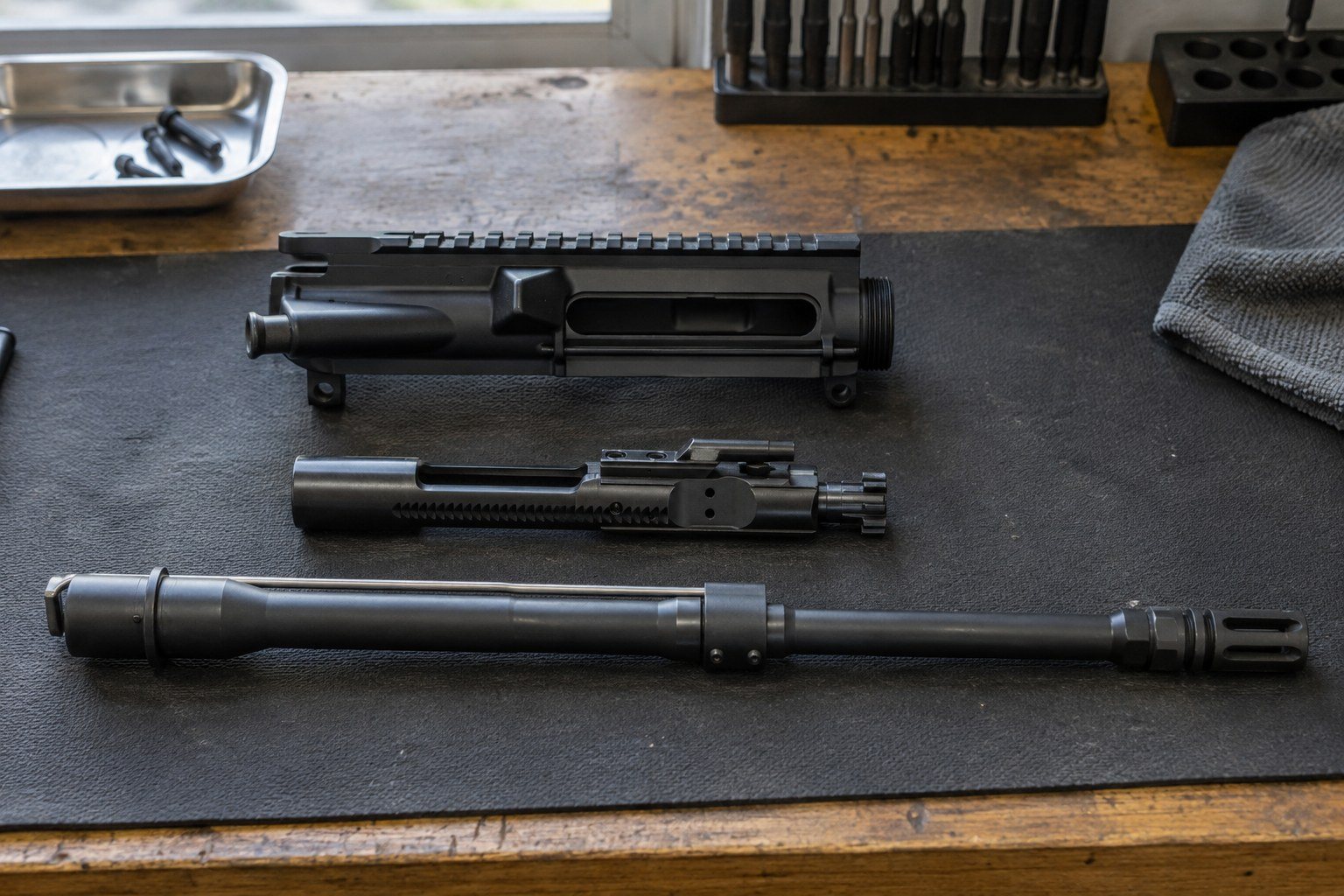
For most buyers, the deflector is not a deciding factor because most standard uppers have one. Still, it is worth confirming, especially if you are left-handed or buying a specialty receiver.
What to Check in a Listing
- Look for the words "shell deflector," "case deflector" or "brass deflector" in the specifications.
- Confirm whether the upper includes a forward assist and dust cover, or accepts them as add-ons.
- Check the feed ramp type. Many forged stripped uppers list M4 feed ramps, which pair best with an M4 feed ramp barrel extension.
- Note the material and finish. Forged receivers commonly use 7075 T6 aluminum with a Type 3 Class 2 hard coat anodized finish.
- For big-bore builds, make sure the ejection port is sized for your cartridge.
Stripped, Assembled or Complete
If you are building from scratch, a stripped upper receiver gives you the deflector and the shell to install your own forward assist, dust cover, barrel and handguard. You can browse AR-15 upper receivers and the matching upper parts, since forward assist and ejection port cover assemblies are commonly needed add-ons.
If you would rather skip assembly, complete uppers from AR15Parts.com are assembled in-house, headspaced and function-checked before they ship. Popular choices start with the 5.56 NATO uppers, since this caliber generally uses standard receivers with the familiar deflector profile. Our stripped vs complete upper guide can help you decide which route suits you.
Working Safely Around the Ejection Port
Any time you inspect or work on the upper, make sure the firearm is unloaded, the magazine is removed and the chamber is clear. Follow the manufacturer's instructions for assembly and torque. If you are unsure about any step, a qualified gunsmith is the right call. Never attempt to grind, file or reshape the deflector, since doing so can weaken the receiver and void any warranty.
Want to understand every part bolted to your upper? See our full anatomy breakdown.