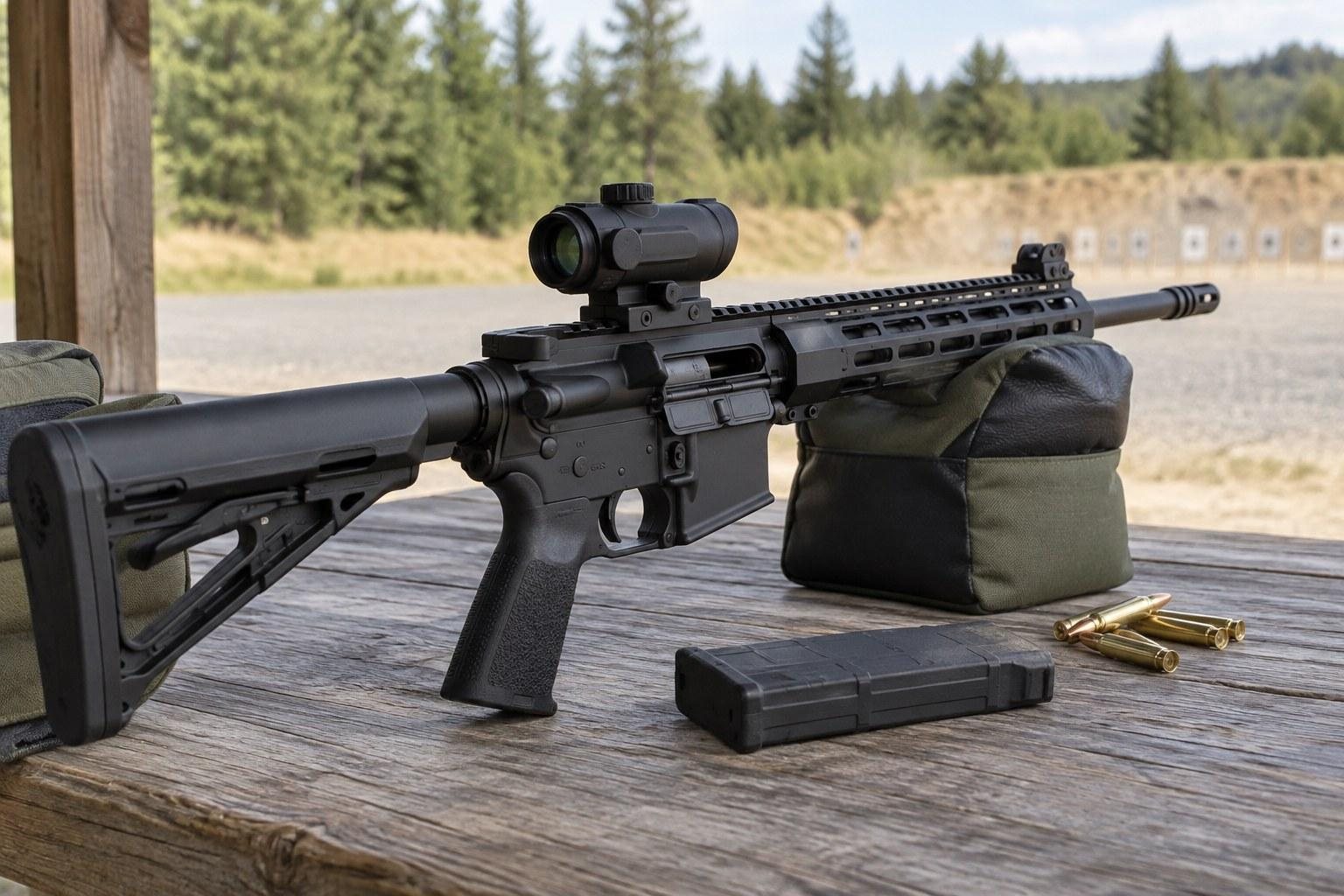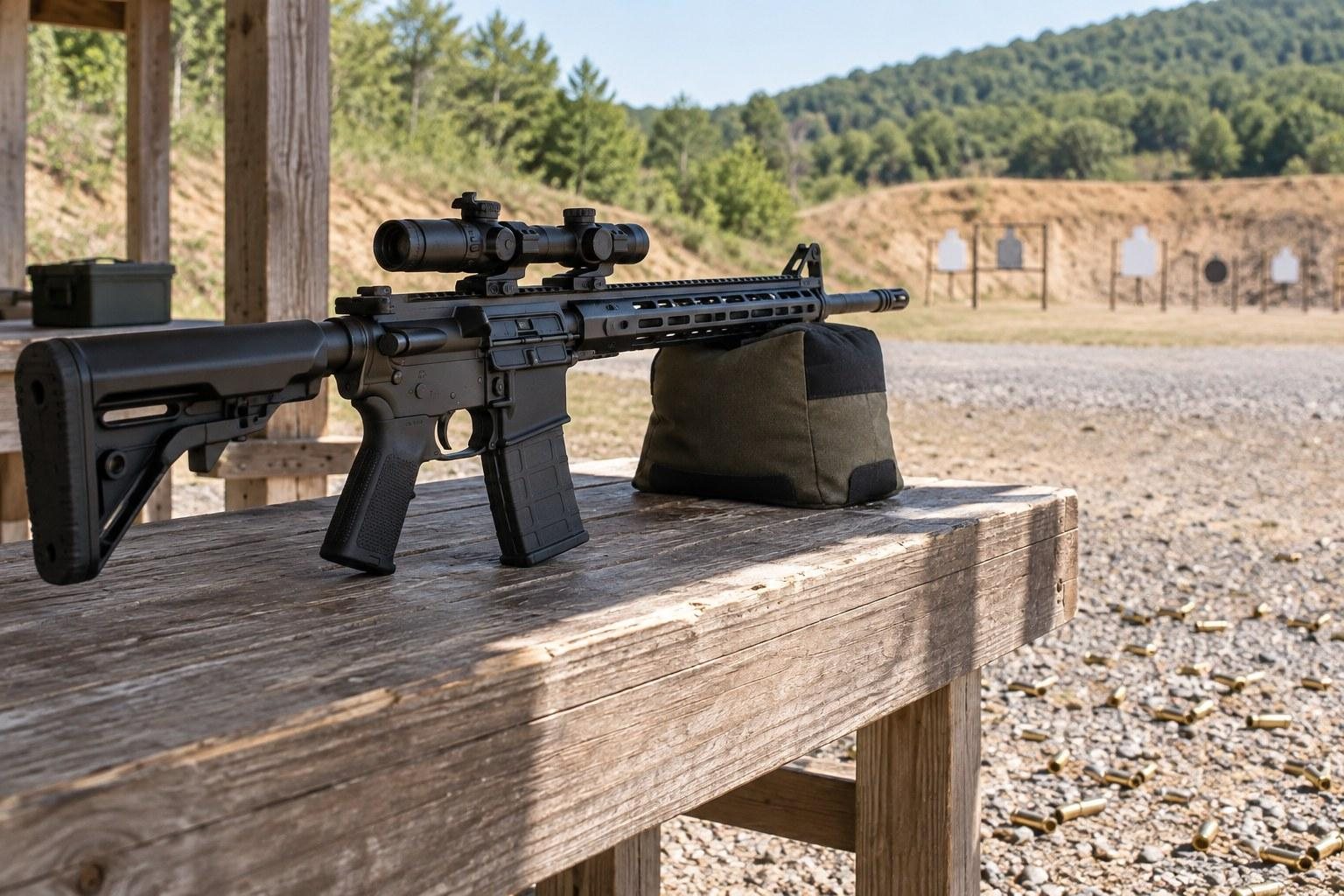
Your AR-15 ejection pattern is one of the easiest diagnostic clues you get at the range, and it costs nothing to read. Every time the bolt carrier cycles, the spent case leaves the port with a direction and distance that reflect how much energy the system had to work with.
Brass is best treated as a starting point, not a verdict. Ammunition, buffer weight, suppressors, springs and even a dirty chamber all change where cases land. Below we explain the classic clock-face method, what it can and cannot tell you, and how to work through the variables in a calm, safe order before you swap a single part on your upper.
Shopping for an upper that ships assembled, headspaced and function-checked? Browse complete uppers at AR15Parts.com.
Key Takeaways
- The clock-face method describes where brass lands relative to the muzzle, with 12 o'clock straight ahead and 6 o'clock behind you.
- Cases thrown well forward often point toward more gas energy, while cases dropping behind the shooter often point toward less.
- Ejection direction is a rule of thumb, so it should be read alongside other signs such as bolt hold-open behavior and case condition.
- Ammunition, buffer weight, action springs, suppressors and fouling can all shift the pattern without any change to the gas system.
- Never drill or alter a gas port; follow the gas block or barrel manufacturer's published guidance and consult a qualified gunsmith when unsure.
How the AR-15 Gas System Moves Brass
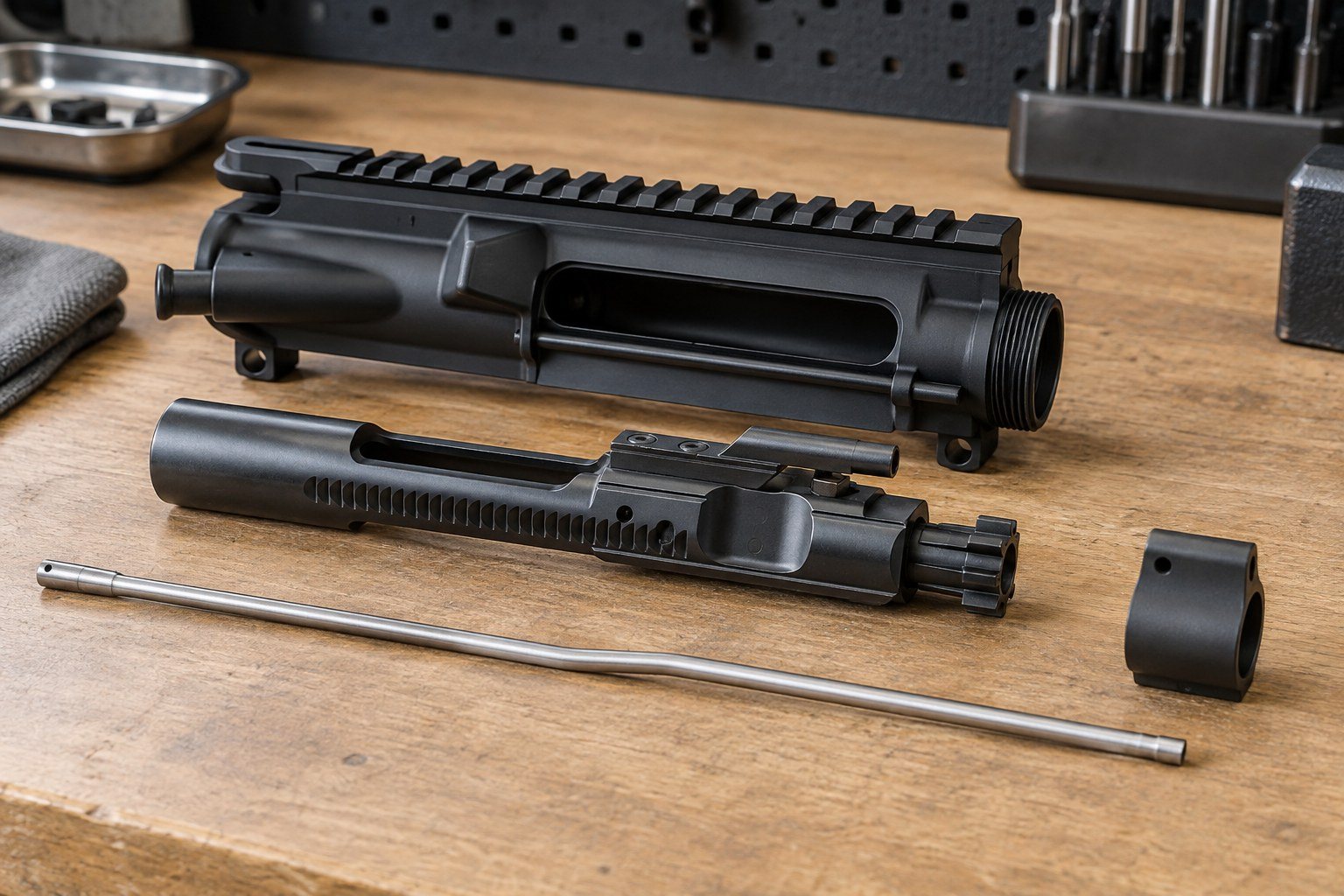
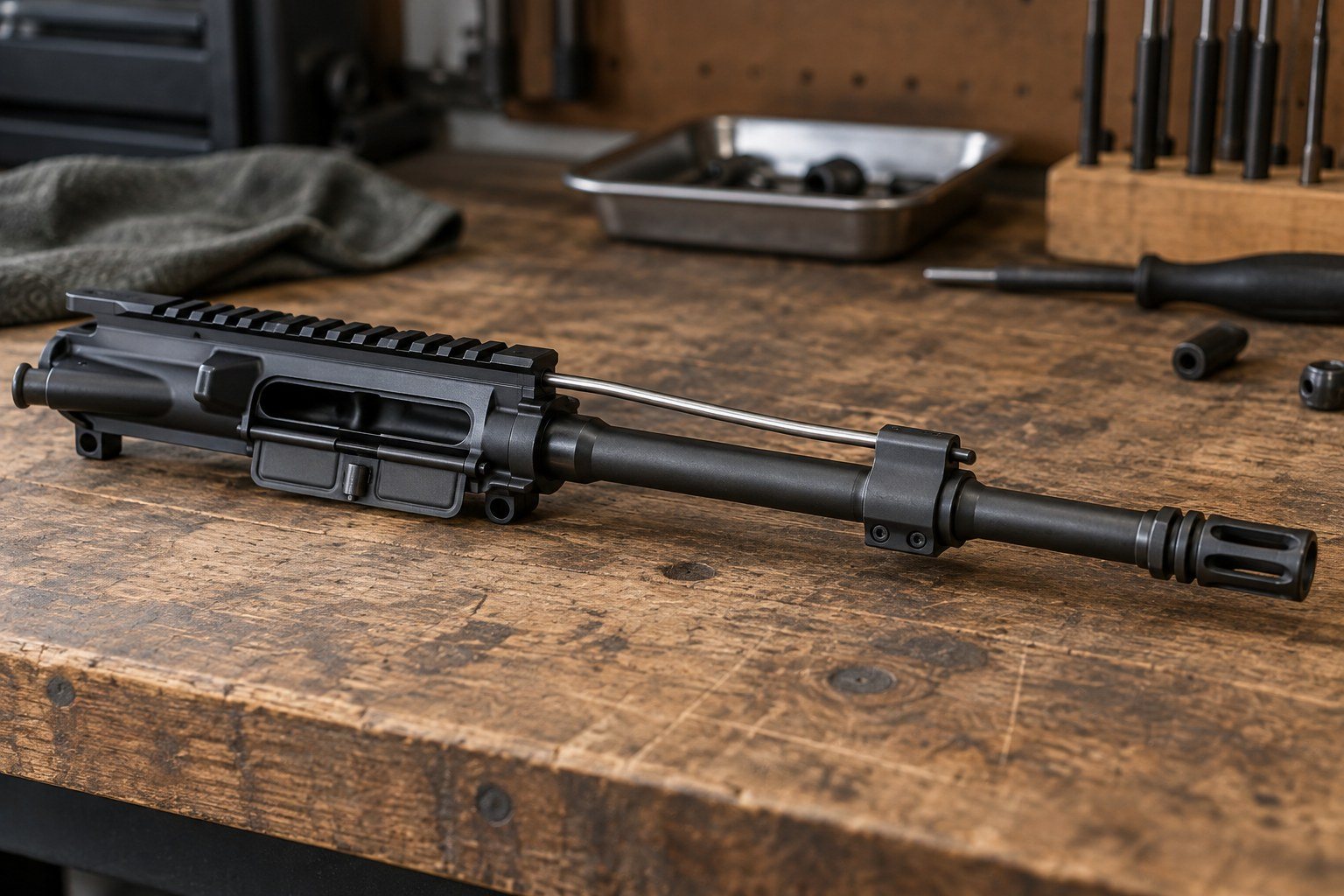
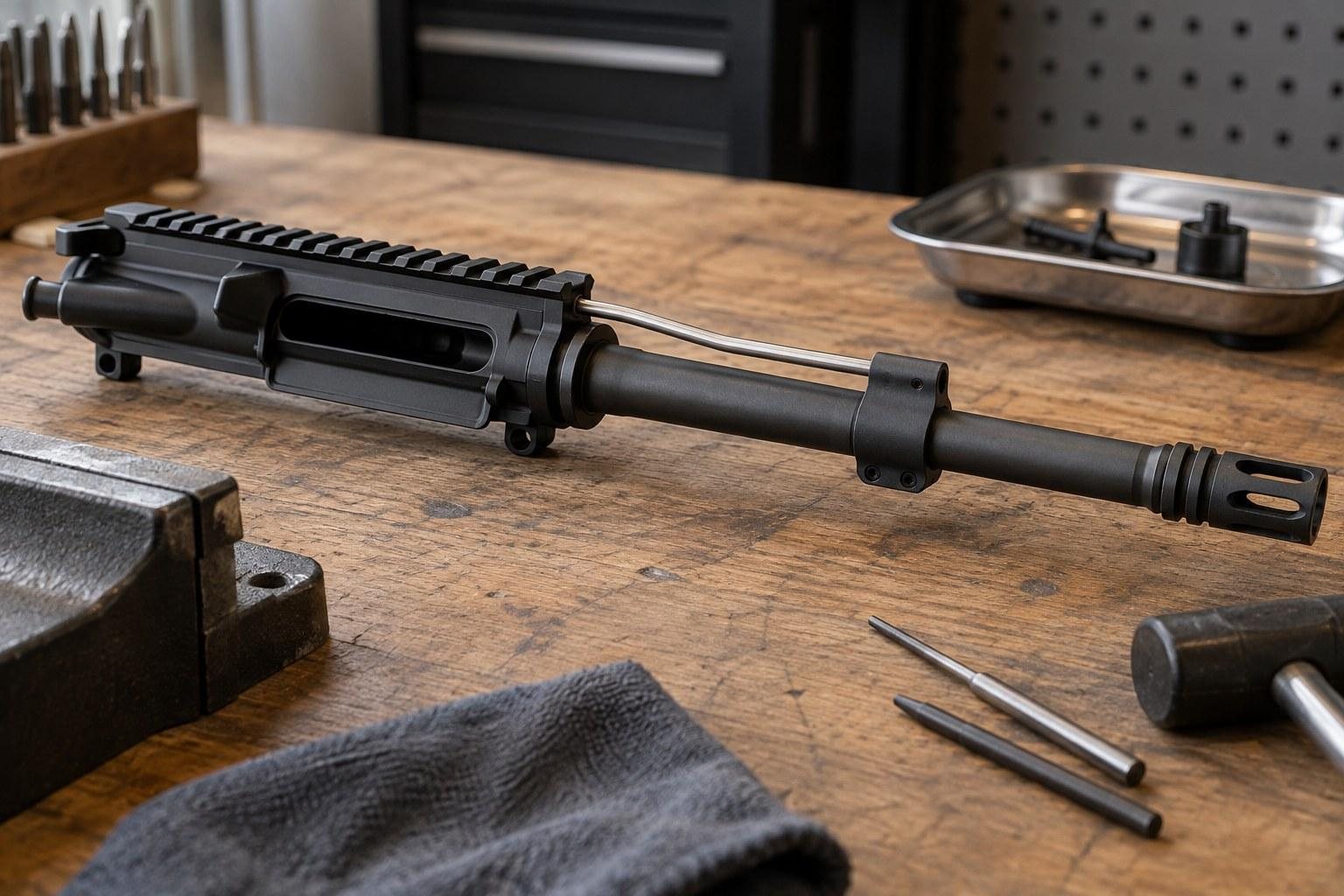
The AR-15 uses a direct impingement style system. As the bullet passes the gas port in the barrel, a portion of the propellant gas travels through the gas block and gas tube into the bolt carrier key, where it pushes the carrier rearward.
That rearward motion unlocks the bolt, extracts the spent case and lets the ejector kick it out the ejection port. The buffer and action spring then return the carrier forward to strip and chamber the next round.
Why Carrier Speed Matters
How fast the carrier moves when the case clears the port strongly influences where the brass goes. A faster carrier tends to rotate the case away from the extractor sooner and throw it more forward. A slower carrier tends to let the case pivot longer and drop more toward the rear.
Carrier speed itself depends on how much gas reaches the carrier and how much resistance the buffer system provides. That is why the same barrel can eject differently with a different buffer or ammunition.
Parts That Shape the Gas Signal
Several components decide how much gas does work on the carrier:
- Gas port size and location: set by the barrel maker and matched to the gas system length.
- Gas block: must be aligned and sealed so gas reaches the tube. Fixed blocks pass whatever the port delivers; adjustable blocks let you meter it.
- Gas tube and carrier key: leaks at the key or a damaged tube rob energy before it reaches the carrier.
- Bolt carrier group: worn or missing gas rings can let gas escape.
If you are pricing components, gas blocks and gas tubes are typically categorized under AR upper parts, with carriers found under bolt carrier groups. For the bigger picture on system lengths, see our explainer on choosing the right gas system length.
Reading the AR-15 Ejection Pattern With the Clock Method
Picture a clock laid flat on the ground with the rifle at the center and the muzzle pointing at 12 o'clock. The ejection port is on the right side, so brass from a right-side ejecting upper lands somewhere between roughly 12 and 6 o'clock on that imaginary dial.
Shooters widely use this as a quick check. It is a community convention rather than a published standard, so treat the zones below as general guidance and not exact specifications.
A Simple Interpretation Table
| Where Brass Lands | Common Interpretation | What to Check Next |
|---|---|---|
| Around 1 to 2 o'clock, thrown far | Possibly more gas energy than the setup needs | Suppressor use, buffer weight, ammunition power, gas block setting |
| Around 3 to 4 o'clock | Often described as a balanced range for many carbines | Confirm reliable bolt hold-open on an empty magazine |
| Around 5 o'clock or behind the shooter | Possibly less gas energy than the setup needs | Gas block alignment, carrier key, gas rings, fouling, weak ammunition |
| Scattered all over the dial | Inconsistent cycling or inconsistent ammunition | Try a different lot of ammunition and inspect the extractor |
How to Run a Fair Test
- Use one box or lot of ammunition so the load stays consistent.
- Fire from a stable position with the rifle level, since canting the rifle rotates the pattern.
- Fire a short string of single shots, then note the cluster rather than any one case.
- Repeat with and without a suppressor if you use one, and record both results.
Distance matters too. A case that lands at 3 o'clock several feet away and one that dribbles out at 3 o'clock right next to you are telling slightly different stories about energy.
Want a deeper look at fixing cycling problems step by step? Read our troubleshooting walk-through next.
Signs of an Overgassed Upper
An overgassed rifle sends more energy to the carrier than the system needs to run reliably. Brass thrown far forward is the classic hint, but it rarely shows up alone.
Symptoms That Often Travel Together
- Brass landing well forward of the ejection port and traveling a long way.
- Heavier felt recoil and more muzzle movement than you expect from the caliber.
- Dents or dings on case mouths from striking the port or brass deflector hard.
- Extra gas blowing back toward the face, especially with a suppressor attached.
- Faster wear concerns on the bolt and extractor over time.
Why Suppressors Change Everything
A suppressor raises backpressure, which typically pushes more gas back through the system. Many uppers that eject at a comfortable angle unsuppressed will throw brass noticeably more forward once a can goes on.
That is one reason adjustable gas blocks are popular on suppressed builds. If you are planning a can from day one, our roundup of suppressor-ready uppers covers what to look for.
Signs of an Undergassed Upper
An undergassed rifle does not deliver enough energy to cycle the action fully and consistently. Brass dropping close by or behind the shooter is the usual clue.
Symptoms That Often Travel Together
- The bolt fails to lock back on an empty magazine.
- Short-stroking, where the carrier does not travel far enough to strip the next round.
- Failures to eject or stovepipes, with a case caught in the port.
- Brass landing at 5 o'clock or further back, often very close to the rifle.
Common Causes Beyond the Port
Before anyone blames the barrel, check the simple things. A gas block that has shifted off the port, a loose carrier key, a cracked gas tube or worn gas rings can all mimic an undersized port.
Low-powered or steel-cased ammunition can also run softer than the load a barrel maker had in mind. And a heavy buffer paired with a short gas system can slow the carrier enough to change the pattern.
Other Factors That Shift Where Brass Lands
Gas is only one input. Many builders end up chasing gas settings when the real cause is elsewhere in the system.
Buffer Weight and Action Spring
A heavier buffer or stiffer spring slows the carrier and usually moves ejection rearward. A lighter buffer does the opposite. Changing buffers is often the first, simplest tuning step because it does not touch the gas system at all. AR15Parts.com explains the tradeoffs in its AR-15 buffer weight guide.
Ammunition
Different loads produce different pressure at the gas port. A hotter load can throw brass forward while a lighter target load drops it rearward, all from the same rifle in one range session.
Fouling and Lubrication
A dry or heavily fouled bolt carrier group adds friction and can slow cycling. A dirty chamber can also make extraction harder. Our upper cleaning guide covers a practical routine.
Extractor and Ejector Condition
A weak extractor spring or a sticky ejector changes how the case leaves the bolt face, and it can cause erratic patterns that look like a gas problem.
Fixing an AR-15 Ejection Pattern Safely
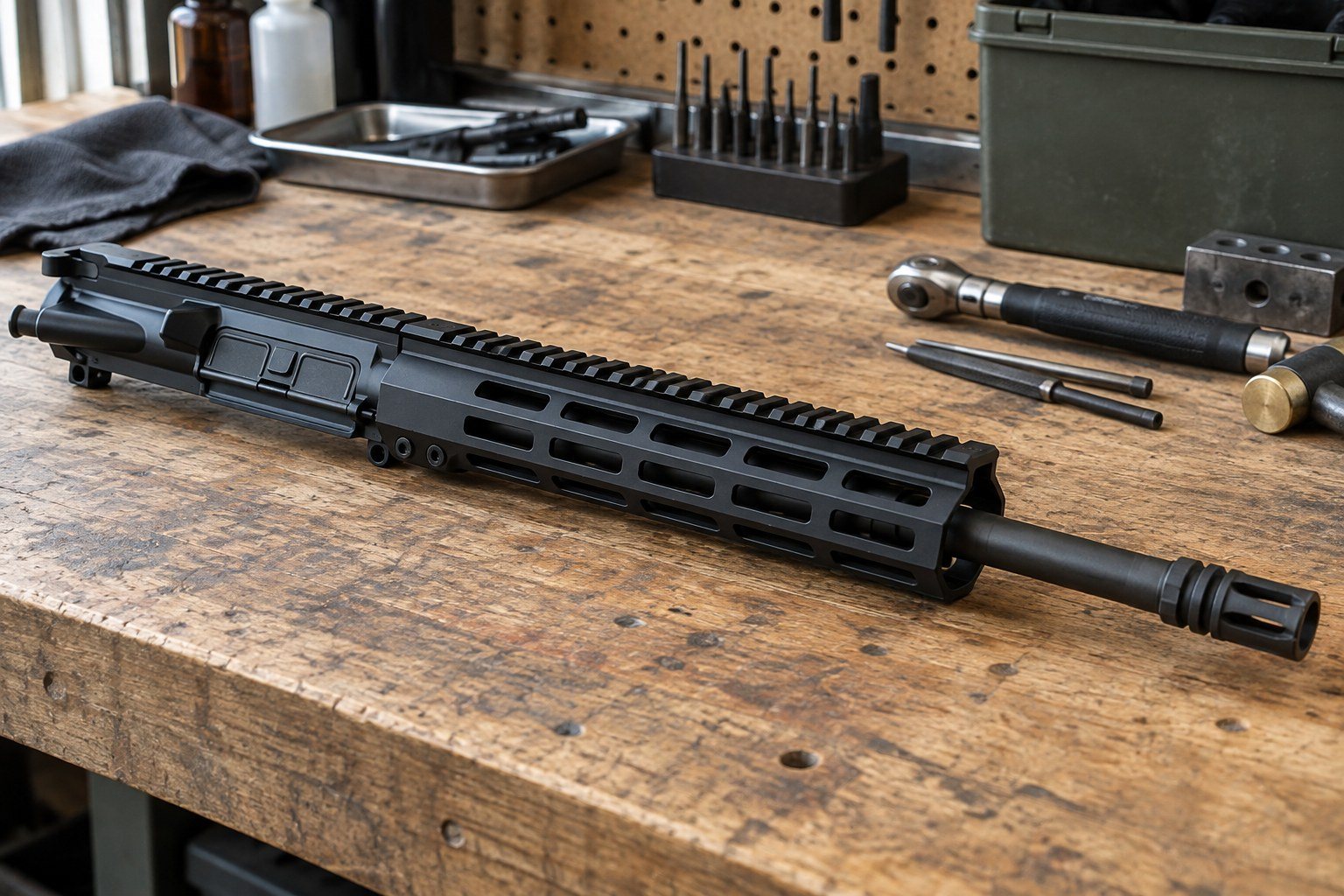
Once you have a consistent read on your AR-15 ejection pattern, work through fixes from least invasive to most invasive. Always unload the rifle, remove the magazine and visually confirm the chamber is empty before any inspection.
A Step-by-Step Order
- Clean and lubricate the bolt carrier group according to the manufacturer's instructions, then retest.
- Try another ammunition load to see whether the pattern follows the ammo.
- Inspect the gas path: carrier key screws, gas tube condition and gas block alignment.
- Check gas rings and the extractor for wear.
- Tune the buffer system with a different buffer weight or spring.
- Consider an adjustable gas block installed and set per its maker's instructions, especially for suppressed use.
What Not to Do
Never drill, enlarge or otherwise modify a gas port. Port sizing is a design decision made by the barrel manufacturer, and altering it is irreversible. If a barrel seems mismatched to your needs, contact the manufacturer or a qualified gunsmith.
For anything involving gas block installation or torque values, follow the component maker's published specifications. Our adjustable gas block guide explains how these blocks work in general terms.
Ready to compare complete assemblies that arrive tested? Browse our upper receiver category.