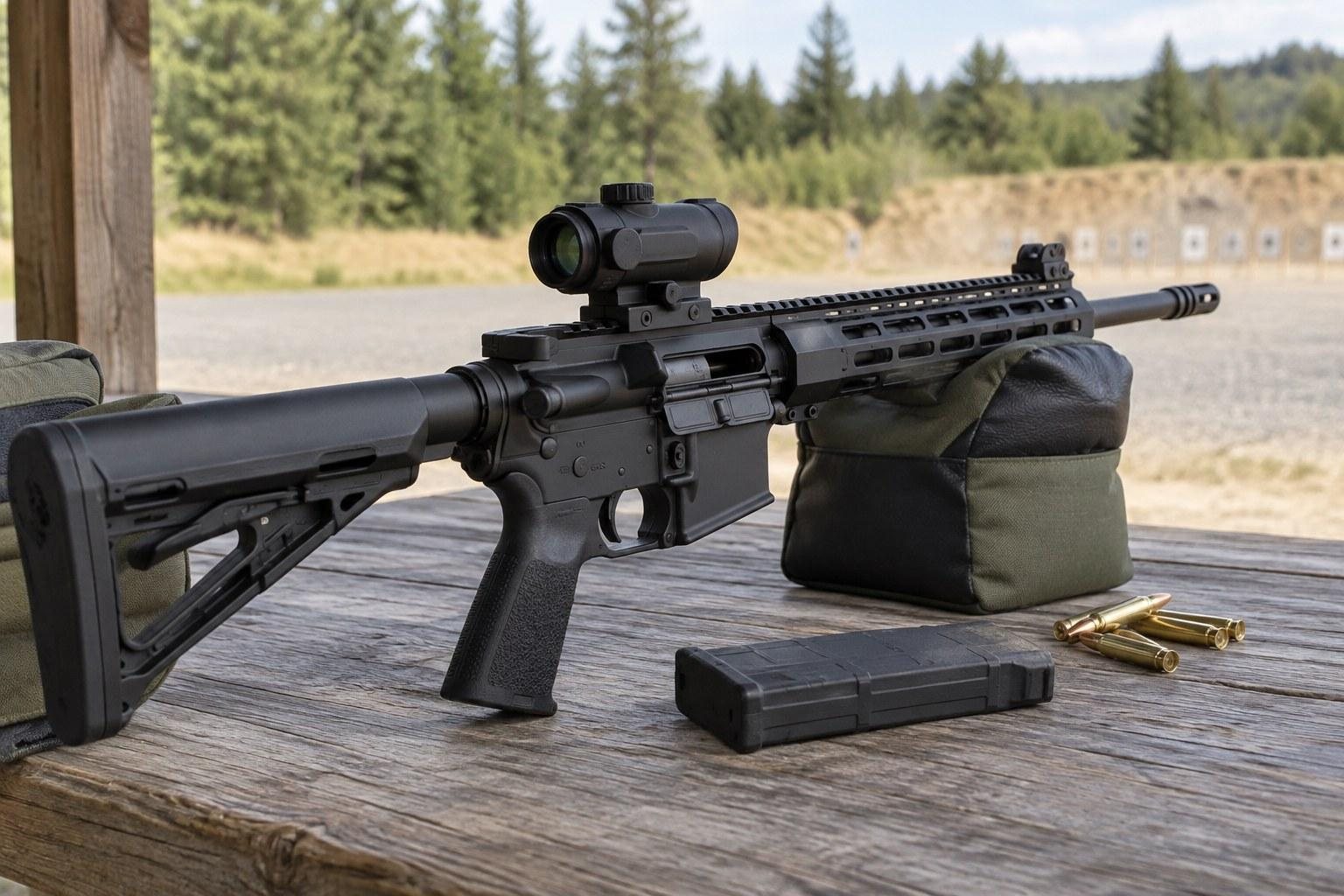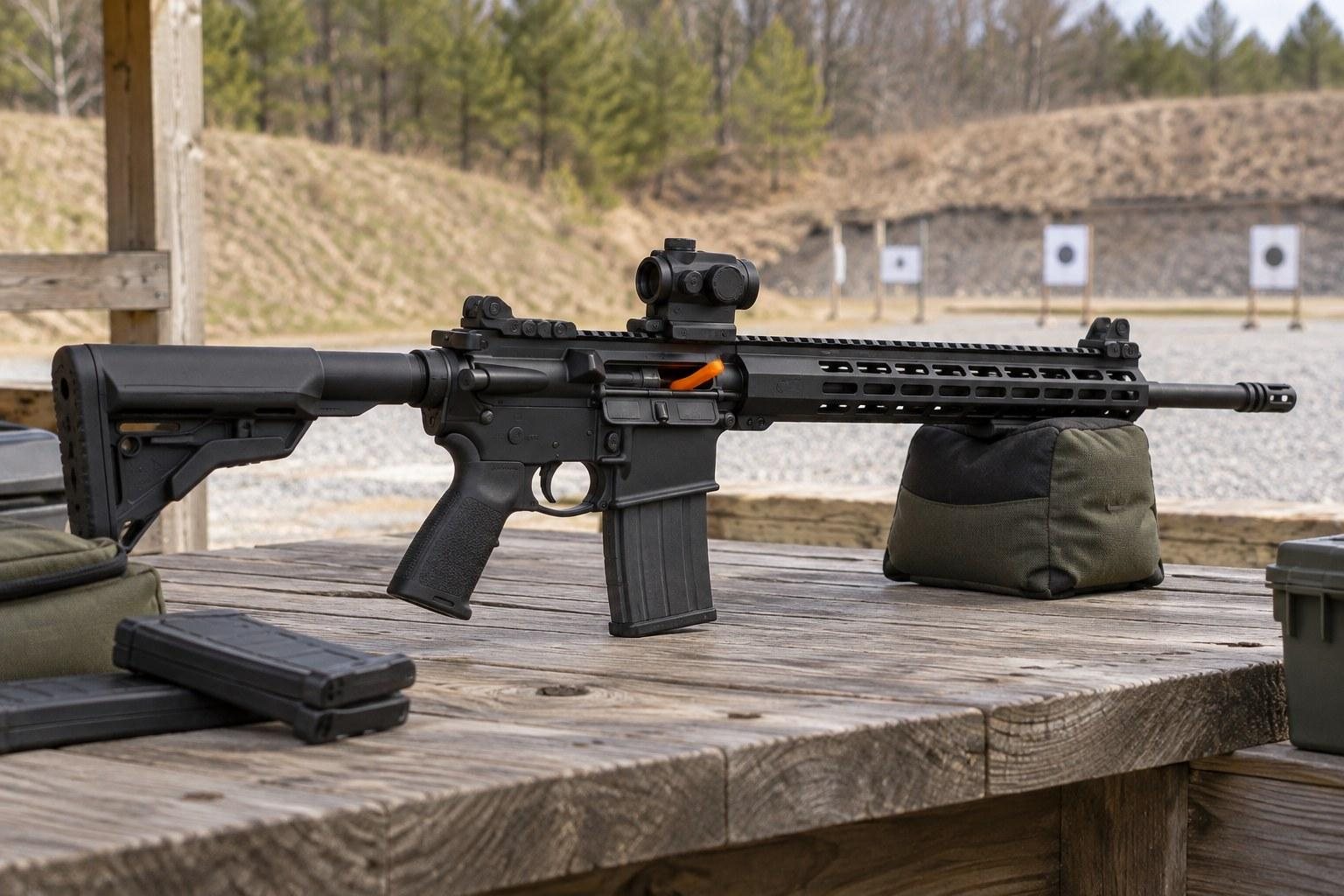
A chamber flag is a small, brightly colored insert that slides into an empty chamber so everyone on the line can see the rifle is clear. It costs almost nothing, weighs next to nothing, and answers the most important question at any range before anyone has to ask it. For an AR-15, a flag shows the chamber is clear or blocked, but it does not prove the bolt is locked back or that the receiver or magazine is empty.
This is a practical look at when the flag goes in, when it comes out, and how it fits around your upper, bolt carrier group and magazine routine. The goal is simple: safer cease-fires and fewer awkward moments on the line.
Want to see how the parts in your upper work together before your next range day? Browse our complete upper coverage.
Key Takeaways
- An empty chamber indicator gives a visual confirmation that the rifle is clear, but it never replaces your own physical and visual check of the chamber.
- Insert the flag only after you remove the magazine, lock the bolt to the rear and confirm the chamber and magazine well are empty.
- Many ranges and organized matches ask for an indicator whenever a rifle is benched, cased or moved during a cease-fire, so check the posted rules first.
- A flag that runs through the barrel to the muzzle also shows the bore is free of obstructions, while a short chamber-only style mainly shows the breech is open.
- Pull the flag before you close the bolt, and never let the bolt carrier slam forward on a flag that is still seated.
What an Empty Chamber Indicator Actually Does
An empty chamber indicator, often called an ECI or a flag, is a communication tool. It lets a range officer, a match official or the shooter on the next bench confirm from a distance that your rifle cannot fire. Without it, someone has to walk over, look into the ejection port and trust what they see.
On an AR-15, the flag also holds a small amount of physical meaning. Because the bolt must be locked open for the flag to sit in the chamber, the bolt carrier group cannot close and chamber a round while the flag is in place. That is why so many range rule books treat the flag as the standard signal of a safe rifle.
Chamber-Only Styles
The most common design is a short plastic piece shaped to fill the chamber, with a bright tab that sticks out of the ejection port. It is quick to insert and remove, and it is easy to keep in a pocket or on a lanyard. Its job is to show the breech is open and empty.
Full-Length Bore Flags
Another design is a long, flexible cord or line that runs from the chamber all the way out of the muzzle. Because it passes through the full length of the barrel, it shows both an empty chamber and a clear bore. Some shooters prefer this style during cleaning breaks or when a rifle sits racked for long periods.
What a Flag Cannot Tell You
A flag only reports what was true when you inserted it. If someone removes it, bumps it loose or never checked the chamber in the first place, the flag means nothing. Treat it as a signal to others, and treat your own eyes and fingers as the real safety check.
When a Chamber Flag Belongs in Your Upper
The short answer is any time your rifle is not on the firing line and actively in use. The details depend on the range, but the same pattern shows up at public ranges, private clubs and matches.
During a Cease-Fire
When the range officer calls a cease-fire so shooters can go downrange to change targets, every rifle on the line should be unloaded, with the magazine out and the action open. Many ranges require a visible indicator at this point. With the flag in place, the officer can scan the line in seconds instead of checking each rifle by hand.
When the Rifle Is Benched or Racked
If you set the rifle on a bench, in a rack or on a stand while you spot for a friend, swap optics or take a break, the flag should go in. A benched rifle with a flag tells everyone around you it is safe to walk behind and around it.
Moving to and From the Line
Ranges that allow uncased movement often expect a flag in the chamber while you carry the rifle between the parking area, the staging table and the line. Even when the rule is not posted, an inserted flag is a courteous habit that reassures the shooters around you.
Casing and Transport
Leaving the flag in when you case the rifle is a common habit, and it gives you a quick visual confirmation when you open the case at home or at your next range session. Check that the flag still sits correctly before the case closes.
| Range Situation | Flag In? | Why It Matters |
|---|---|---|
| Live fire on the line | No | The rifle is in use and the bolt must close to fire. |
| Cease-fire, people downrange | Yes | Lets the range officer confirm every rifle is clear at a glance. |
| Rifle resting on a bench during a break | Yes | Shows neighbors the rifle is safe to walk around. |
| Carrying the rifle to or from the line | Yes, where uncased movement is allowed | Signals a clear rifle while it is off the line. |
| Optic or accessory adjustments at the bench | Yes | Keeps the action open while your attention is on other parts. |
| Clearing a malfunction | After the rifle is cleared | The flag comes last, once the chamber is confirmed empty. |
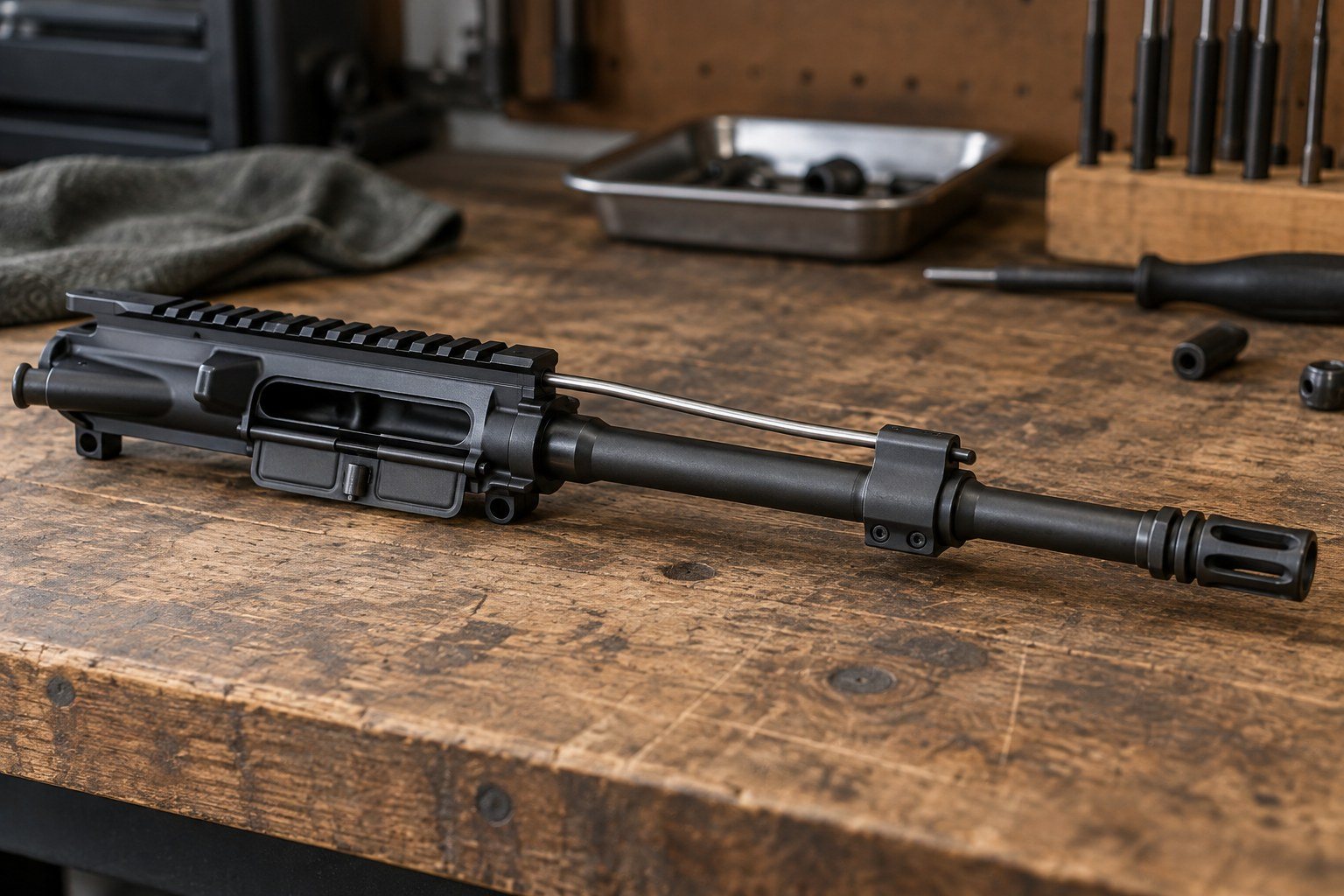
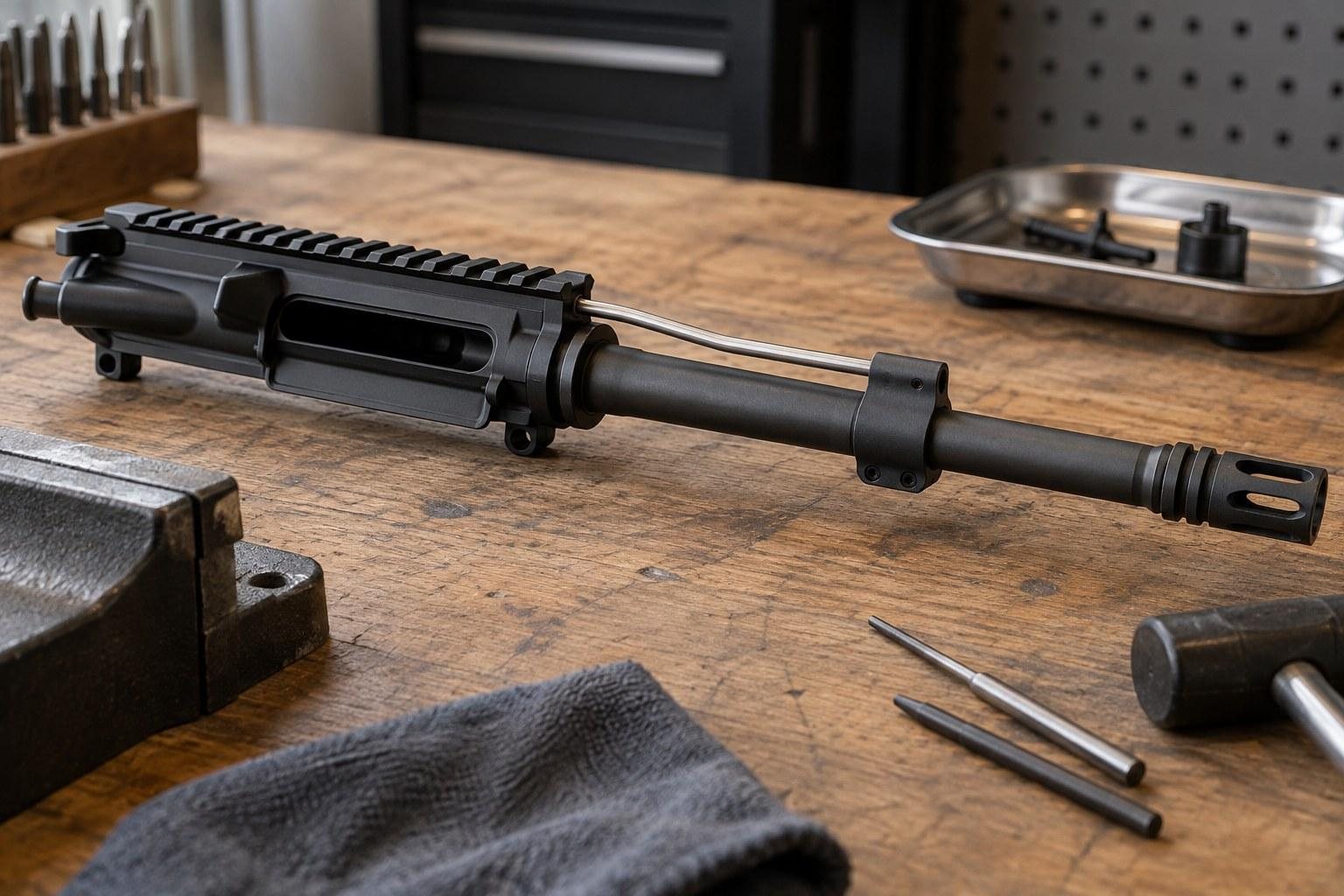
Range rules vary by facility, so always follow the posted rules and the range officer's instructions. If you want a refresher on the parts you are working around, our AR-15 upper anatomy breakdown walks through the receiver, ejection port and bolt carrier.
Curious how the bolt carrier group interacts with the chamber when the flag is in place? Our BCG explainer covers the moving parts.
How to Seat a Flag in an AR-15 Upper Safely
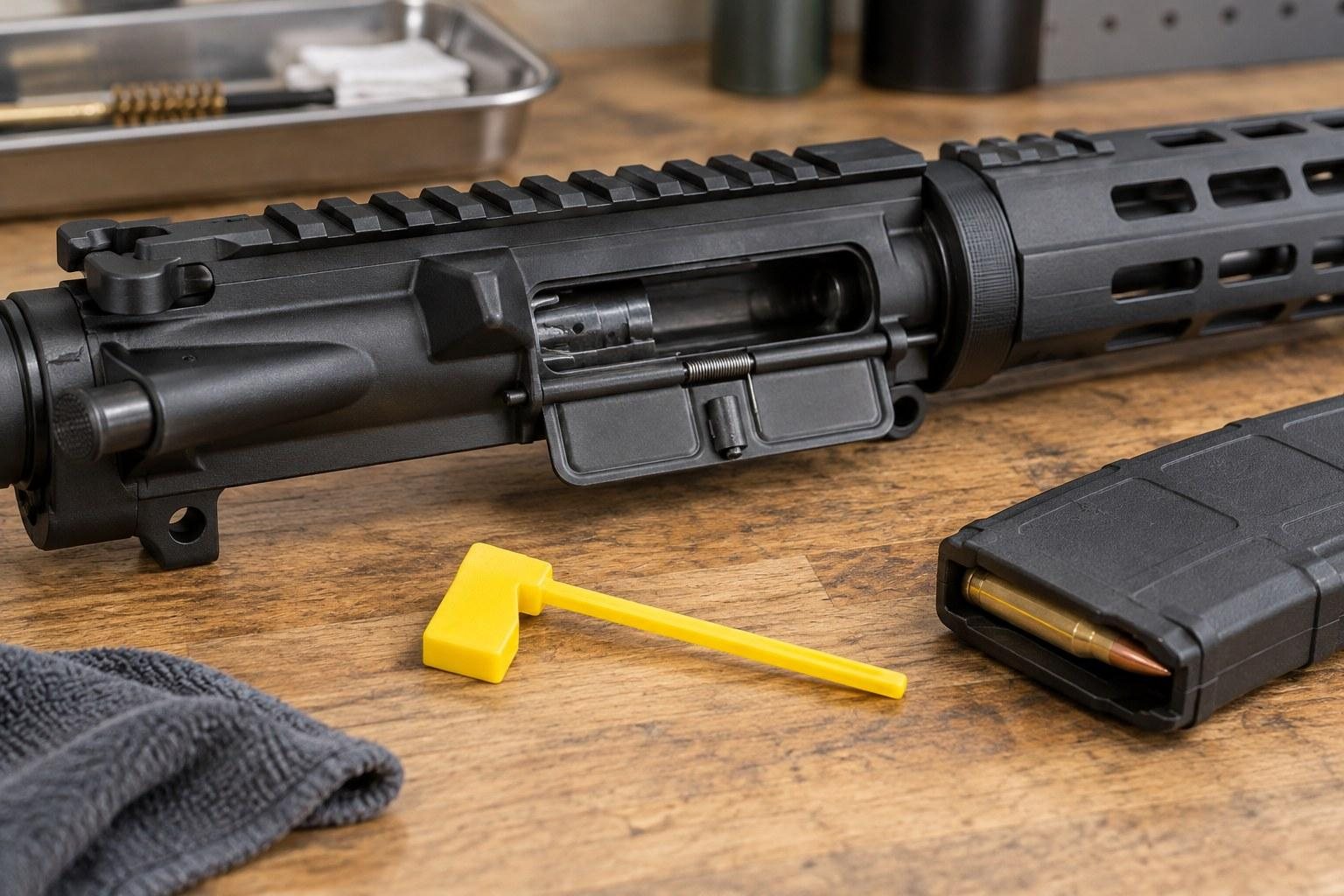
Inserting a flag takes a few seconds, but the order of steps matters. The flag should always be the last step of clearing the rifle, never a substitute for it.
- Point the muzzle in a safe direction and keep your finger off the trigger.
- Put the selector on safe if the rifle allows it.
- Press the magazine release and remove the magazine.
- Pull the charging handle to the rear and lock the bolt open with the bolt catch.
- Look into the chamber and the magazine well, and confirm with a finger that both are empty.
- Insert the flag into the chamber through the ejection port until it seats, with the bright tab clearly visible.
Removing the Flag Before Firing
When the range goes hot again and you return to the line, pull the flag out before you do anything else with the action. Once it is out, release the bolt only when you are ready to load and fire under the range's commands.
Avoid Closing the Bolt on a Flag
Letting the bolt carrier slam forward with a flag still seated can jam the plastic between the bolt face and the barrel extension. That can damage the flag and leave debris in the chamber or extension. If it happens, clear the rifle, remove the pieces and inspect the chamber before you fire. When in doubt, have a qualified gunsmith look it over.
Keep the Flag Clean
A flag that picks up dirt, grit or brass shavings can carry that debris into your chamber. Wipe it off when it looks dirty and replace it if it cracks or deforms. Our AR-15 upper cleaning guide covers keeping the chamber and barrel extension clean between sessions.
How Your Upper Configuration Affects the Flag
Most chamber-style flags are made to fit standard AR-15 chambers, but the parts around your chamber still affect how easy the flag is to use.
Ejection Port and Dust Cover
The flag goes in through the ejection port, so the dust cover has to be open. Some shooters find that a flag tab rubs against the cover or the brass deflector on a forward assist upper. Our dust cover guide explains how that cover works and why it stays open once the bolt cycles.
Caliber and Chamber Size
A flag sized for a 5.56 chamber may sit loosely in a larger chamber, such as the ones found on 300 Blackout uppers or big-bore options. A loose flag still signals an open action, but it can fall out when you move the rifle. If you run several calibers, check the fit of your flag in each chamber, or use a full-length bore flag that does not depend on chamber shape.
AR-10 Pattern Rifles
AR-10 pattern uppers, such as 308 Win uppers, use larger chambers and longer actions than the AR-15. Use a flag made for that size or a bore line long enough for the barrel.
Bolt Catch Function
A flag only works if the bolt stays locked to the rear. If your bolt catch does not hold the bolt open reliably on an empty magazine or by hand, fix that before your next range trip. Reliable lock-back depends on the bolt catch, the magazine follower and the bolt carrier group working together, and the manufacturer's instructions are the place to start. A qualified gunsmith can help if the problem persists.
Range Etiquette Around Indicators
Flags are part of a bigger set of habits that make a range comfortable for everyone. The rules are usually posted at the entrance or the range officer's station, and they often include the indicator policy.
Ask Before You Assume
If you visit a new range, ask how the staff wants rifles staged during a cease-fire. Some want flags, some want rifles grounded or racked with the action open, and some want both. Following the local rule is part of being a good guest.
Never Touch Equipment During a Cease-Fire
Once the flag is in and people are downrange, step back from the bench. Handling the rifle, magazines or ammunition during a cease-fire is against the rules at most ranges, flag or no flag.
Bring Spares
Flags are easy to lose in grass, gravel and range bags. Keeping a spare or two in your kit avoids borrowing one or sitting out a relay. For more broad range habits, see these gun safety tips at the range from AR15Parts.com.
Building a Range Kit Around Your Upper
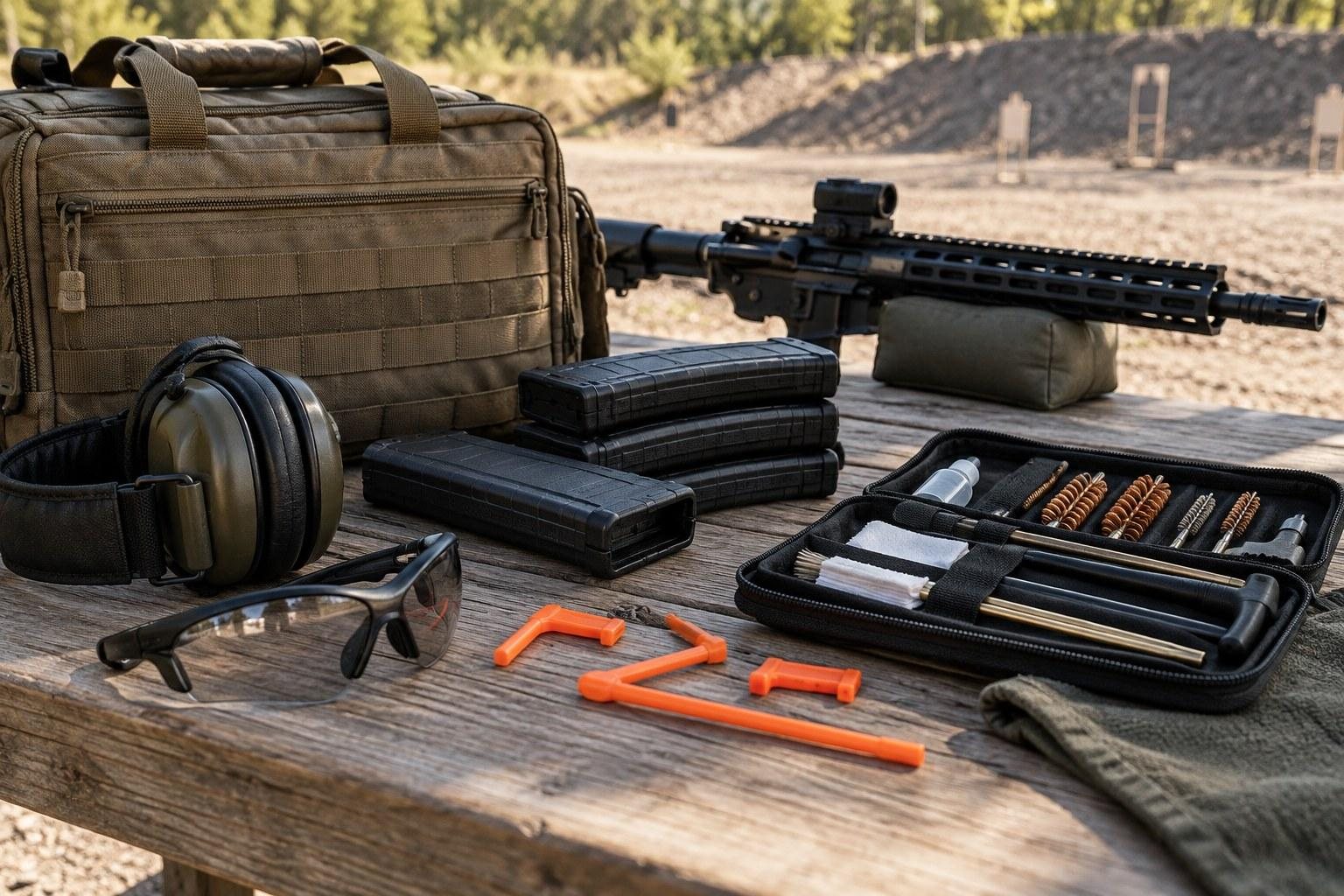
A flag is one small item in a kit that keeps your upper running and your range day smooth. Think of it alongside a few basics that are worth having on hand.
- Two or more empty chamber indicators sized for every caliber you shoot.
- Spare magazines that you have confirmed lock the bolt back on empty.
- A basic cleaning kit with a chamber brush and a bore cleaning tool.
- Eye and ear protection for you and anyone with you.
- A copy of the range rules if the facility publishes them.
Spare Parts Worth Knowing
If a part fails at the range, it helps to know what the replacements are called. Charging handles and other upper parts are worth keeping on hand, along with complete uppers that are assembled in-house, headspaced and function-checked before they ship. Shipping runs 3 to 5 business days, so order replacements well ahead of a match or hunt.
If you are still learning which upper components matter most, our builds and assembly guides are a good next stop.