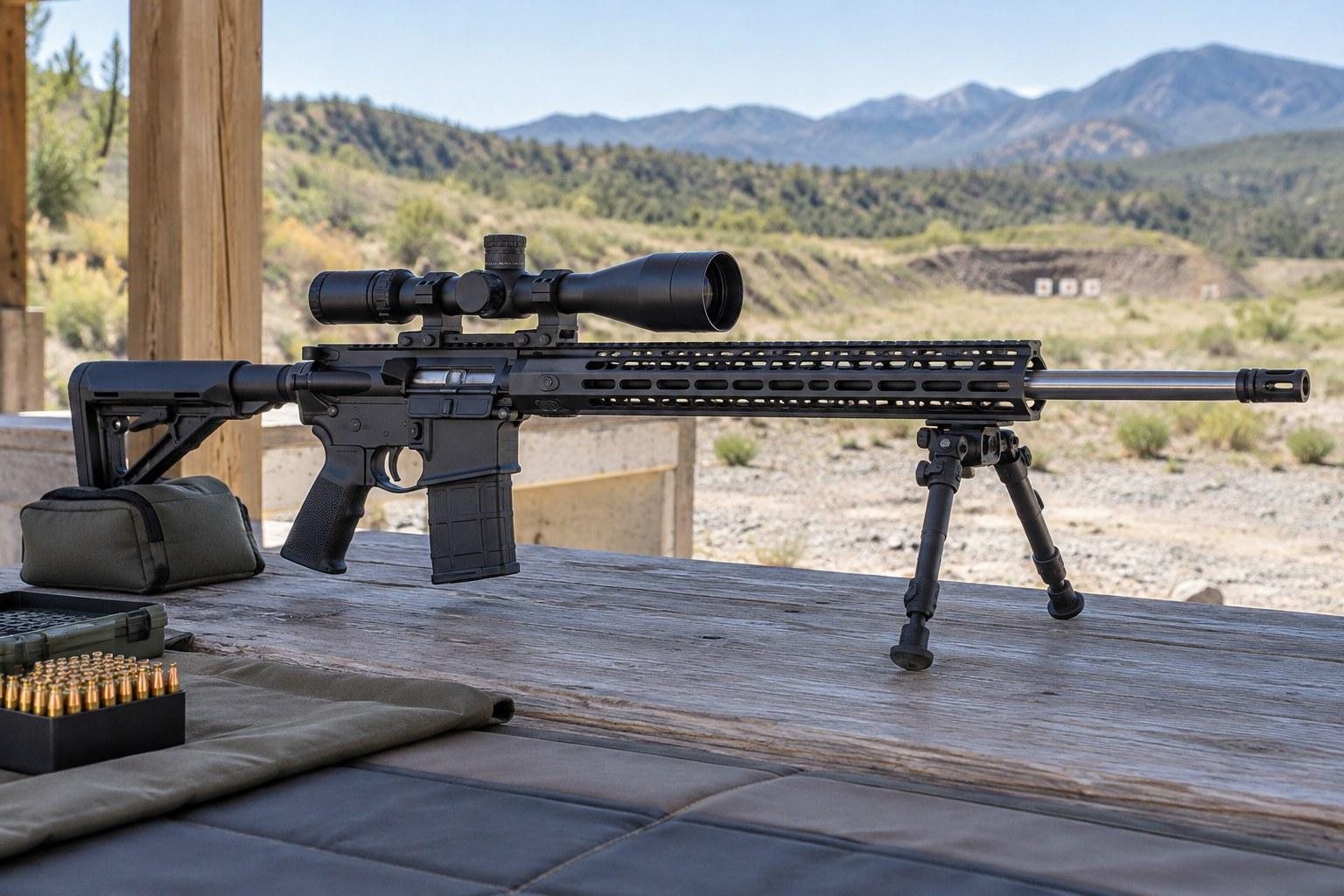
A lightweight BCG is one of the most talked about upgrades in competition circles, and one of the most misunderstood. Shaving mass off the bolt carrier changes how your upper cycles, how the rifle moves in recoil and how much gas the system needs to run reliably.
Those changes can be great on a tuned race gun and frustrating on a general purpose rifle. Our editors break down what actually happens inside the upper when carrier mass drops, which parts have to work together with it, and how to decide whether a reduced mass carrier makes sense for your build or whether a standard weight carrier is the better fit.
A rifle that is set up to run correctly from day one starts with a complete upper that is assembled and function-checked before it ships.
Key Takeaways
- A lighter bolt carrier has less momentum, so it speeds up the cycle and can reduce the felt jolt of the carrier bottoming out in the buffer tube.
- Less momentum also means less reserve energy to strip, chamber and lock a round when the rifle is dirty, cold or running weak ammunition.
- Reduced mass carriers usually need a tuned gas system, often with an adjustable gas block, plus a matched buffer and spring.
- Standard weight, full-auto profile carriers remain the reliable default for defensive, duty style and general purpose uppers.
- Always follow the component manufacturer's published guidance for gas settings and buffer pairings, and see a qualified gunsmith when unsure.
What Makes a Bolt Carrier Lightweight
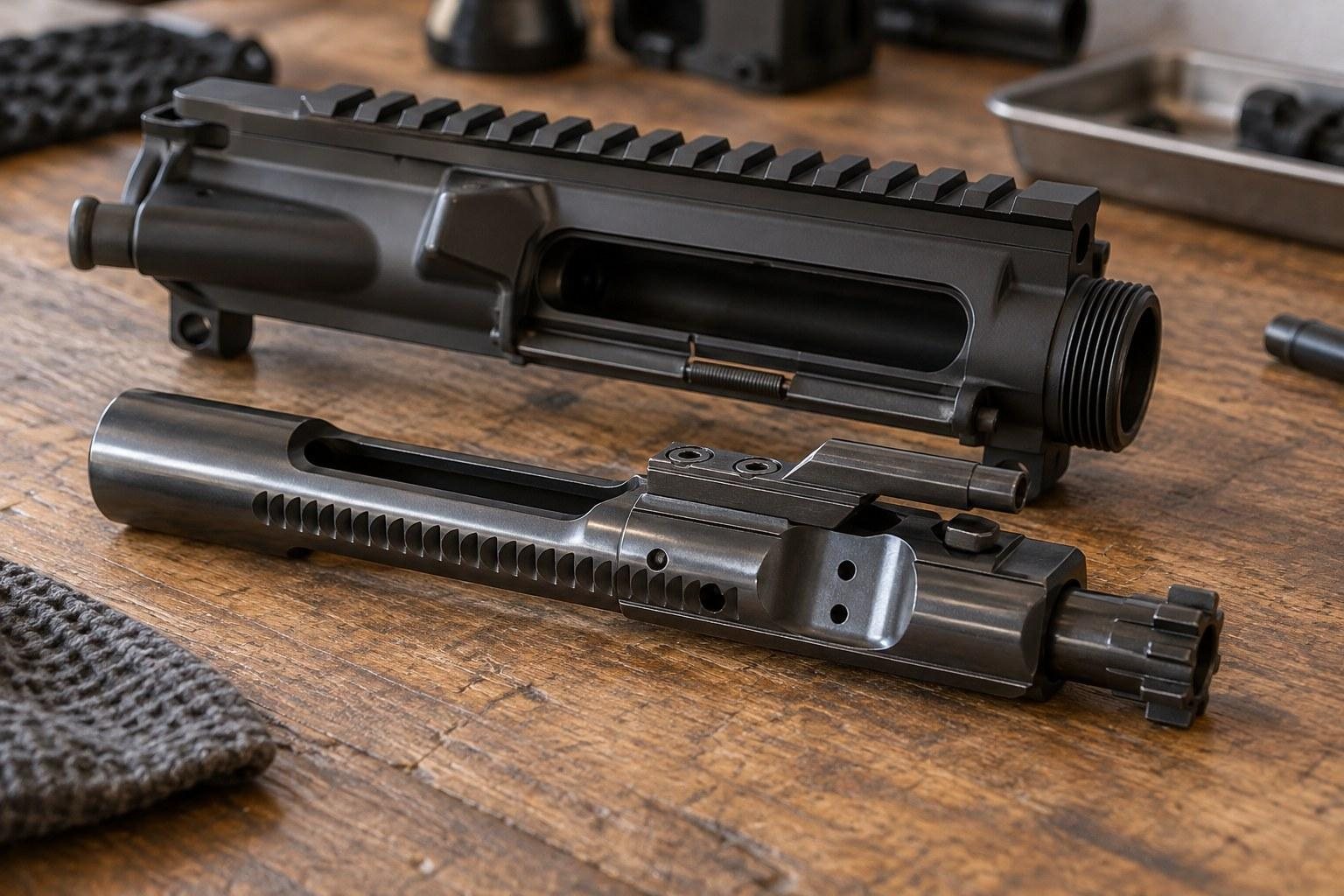
Every AR-15 bolt carrier group does the same job. It rides on the gas the barrel taps off, unlocks the bolt, extracts and ejects the spent case, compresses the buffer spring, then strips a fresh round and locks back into battery. For background on the parts involved, see our guide on what a bolt carrier group is and why it matters.
A carrier becomes "lightweight" when its maker removes mass from it. The bolt itself is rarely changed much, because the locking lugs and extractor need their strength. The weight savings come from the carrier body and sometimes the cam pin, firing pin or gas key.
Common Ways Makers Remove Mass
- Material changes. Some carriers are machined from aluminum or titanium instead of steel, which lowers weight across the whole part.
- Profile cuts. Skeletonized or lightening cuts remove steel from areas that do not carry critical loads.
- Semi-auto profile rear. A semi-auto (AR-15 style) carrier has less material at the rear than a full-auto (M16) profile carrier.
- Lighter small parts. Some kits swap in lighter firing pins or cam pins to trim a little more.
Why the Rear of the Carrier Matters
The rear section of the carrier rides inside the buffer tube and is a meaningful share of its total mass. That is why the full-auto versus semi-auto profile question overlaps with the weight conversation. If you want the full comparison, read our breakdown of full-auto vs semi-auto BCG profiles. Owning a full-auto profile carrier is legal for civilians; it is the other fire control parts that are regulated, though state and local laws vary.
How Carrier Mass Changes the Cycle of Operation
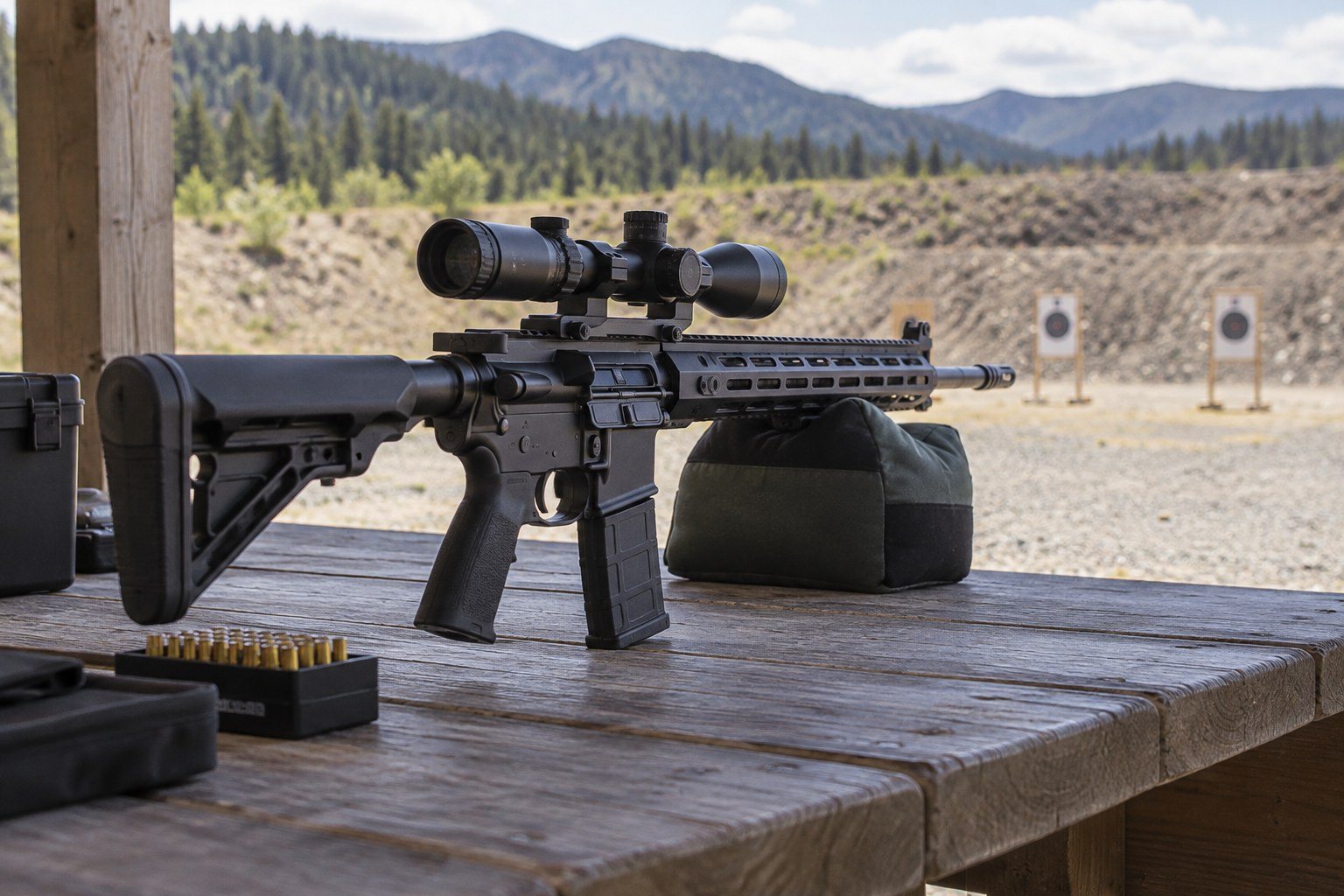
Think of the operating system as a balance between gas energy pushing the carrier rearward and the buffer spring pushing it forward. Mass sits in the middle of that equation. A heavier carrier takes more energy to get moving, but once moving it carries more momentum through every step of the cycle.
When you reduce carrier mass while leaving the gas system unchanged, the same pulse of gas accelerates a lighter part. The carrier unlocks and travels rearward faster, which affects timing at several points.
Unlocking and Extraction Timing
A faster carrier can begin unlocking slightly earlier, while chamber pressure is still higher. On an overgassed rifle this can make extraction harsher on the case and the extractor. That is one reason lightweight carriers are usually paired with less gas rather than more.
Rearward Travel and Bottoming Out
On a rifle with excess gas, a lighter carrier can slam into the rear of the buffer tube with a sharp impact. Tuned correctly, the reverse happens: the carrier gets just enough energy to eject and strip the next round, then returns gently. That softer, flatter feeling is what shooters chase with a lightweight BCG.
Forward Stroke and Lockup
On the return trip, the buffer spring does the work. A lighter carrier has less momentum to push a round out of the magazine, up the feed ramp and into the chamber, then rotate the bolt into lock. With clean ammo and a fresh spring that is fine. With fouling, a stiff magazine or tight chamber, the margin shrinks.
Planning an upper around a specific gas system? Our gas system guide covers the length choices that set the baseline for everything else.
Lightweight vs Standard Carriers Side by Side
The trade-offs are easier to see in one place. The table below compares general tendencies, not measured test results, because real behavior depends on the barrel, gas port, buffer, spring and ammunition in your specific upper.
| Factor | Lightweight Carrier | Standard Weight Carrier |
|---|---|---|
| Cycle speed | Faster | Slower, more forgiving |
| Felt recoil when tuned | Flatter, less carrier bounce | More felt carrier movement |
| Reserve energy for dirty or cold conditions | Lower | Higher |
| Gas tuning required | Usually yes, often an adjustable gas block | Usually runs on a properly sized fixed gas block |
| Sensitivity to ammo changes | Higher | Lower |
| Typical role | Competition, tuned range rifles | Defensive, duty style, general purpose |
Where the Lightweight Carrier Shines
Competition shooters who fire one known load through a rifle they clean often get the most out of a light carrier. When the rifle returns to the target faster, follow-up shots are quicker and the dot stays closer to where it started.
Where the Standard Carrier Wins
If your upper might see mixed ammunition, a suppressor on some days and not others, or long stretches between cleanings, extra carrier mass works in your favor. It keeps the action running through conditions you did not plan for.
Parts That Have to Work With a Lighter Carrier
A carrier never works alone. Dropping in a light carrier without looking at the rest of the system is the most common reason these builds run poorly. Treat it as one piece of a tuned package.
Gas Block and Gas Port
Most lightweight carrier setups use an adjustable gas block so the shooter can turn the gas down until the rifle cycles and locks back reliably with no extra. Our adjustable gas block guide explains how those blocks work. Never drill or modify a barrel's gas port yourself; port sizing belongs to the barrel maker.
Buffer and Spring
Buffer weight and spring rate decide how hard the carrier is pushed home and how quickly it is slowed on the way back. Many lightweight carrier makers specify a matching light buffer, and some recommend a particular spring. Follow that published pairing first. For background, AR15Parts.com has a useful explainer on AR-15 buffer weight.
Charging Handle and Upper Receiver
The charging handle and receiver do not change with carrier weight, but they do need to be in spec. A gritty upper or a sticky charging handle eats into the already smaller margin a light carrier has. You can compare options in the charging handle category and quality AR-15 upper receivers.
Reliability, Suppressors and Real World Use
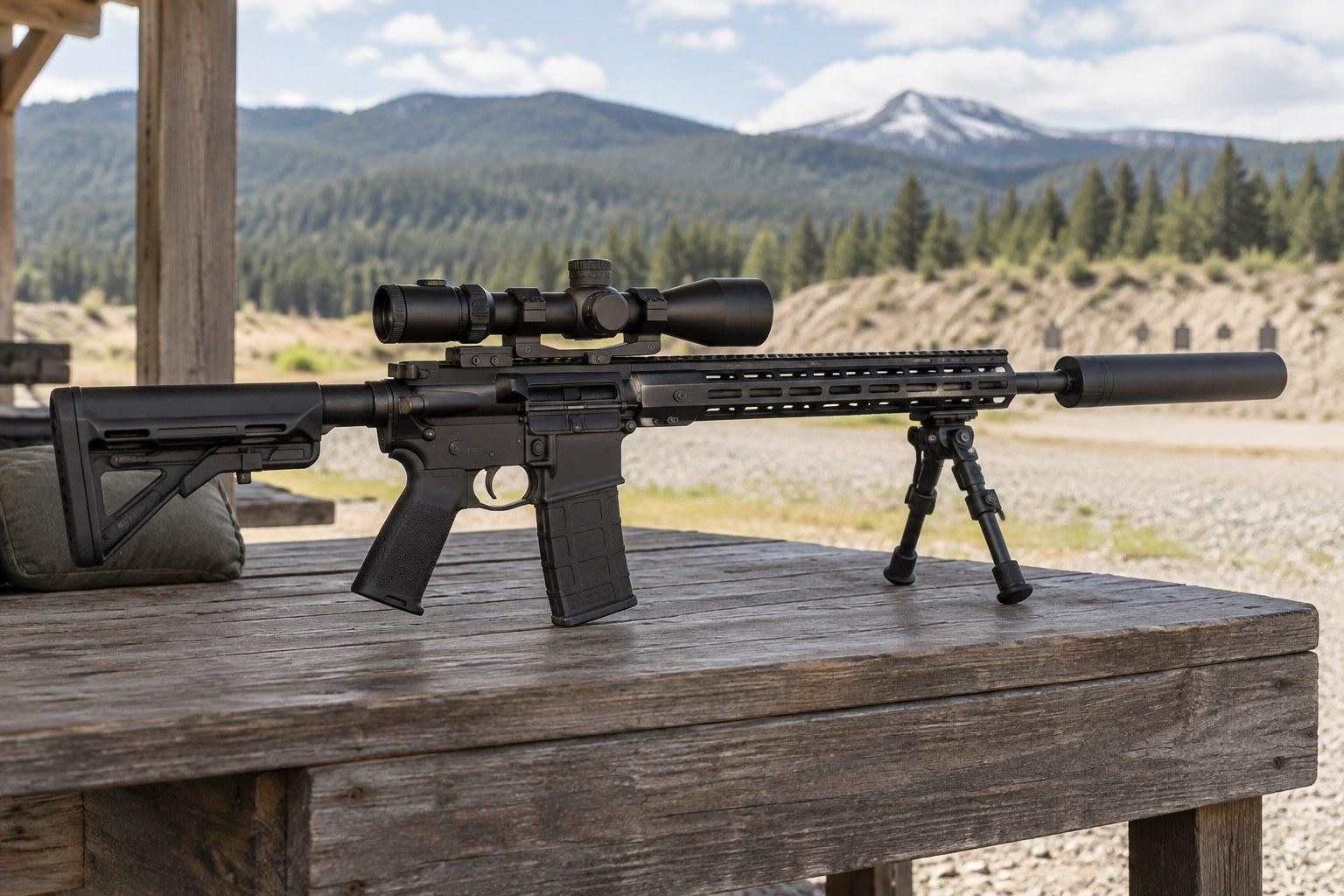
Reliability is where honest expectations matter most. A light carrier is not unreliable by nature, but it is less tolerant. Every factor that slows the action down affects it more than it would affect a standard carrier.
Suppressed Shooting
A suppressor raises back pressure, so more gas reaches the carrier. A light carrier in a suppressed rifle without an adjustable gas block can cycle violently. If you shoot suppressed, a tunable gas system is close to mandatory with a reduced mass carrier, and a heavier standard carrier is often the simpler answer.
Ammunition and Temperature
Different loads produce different gas pressures. A rifle tuned to the edge on one load may short stroke on a milder one. Cold weather and fouling make that worse. If you tune a light carrier, confirm function with every load you plan to carry, and leave a little gas margin rather than tuning to the bare minimum.
Simple Function Checks
- Clear the rifle and confirm it is unloaded before any inspection.
- Confirm the bolt locks back on an empty magazine with each load you use.
- Check that spent cases eject consistently and are not dented excessively.
- Watch for failures to go fully into battery, a sign of too little forward energy.
- If anything is inconsistent, consult the manufacturer's instructions or a qualified gunsmith.
Choosing the Right Carrier for Your Upper
Start with how you will use the rifle. The carrier choice follows from the role, not the other way around.
Build Profiles That Fit a Lightweight Carrier
- Dedicated competition rifles with an adjustable gas block and a single known load.
- Range rifles where the owner enjoys tuning and cleans regularly.
- Builds chasing the flattest possible recoil for fast follow-up shots.
Build Profiles That Fit a Standard Carrier
- Home defense or duty style rifles that must run through anything.
- Hunting uppers that may sit for weeks, then face cold mornings.
- Multi-caliber or large bore uppers where the barrel maker expects a standard carrier.
Choosing a Carrier Coating and Type
Standard weight nitride and nickel boron carriers are commonly available across many calibers in the bolt carrier group category, including 223/556, 6.5 Grendel, 224 Valkyrie and big bore options. For a ready-to-run rifle, complete 5.56 NATO uppers are generally assembled in-house, headspaced and function-checked before shipping. To learn how coatings and carrier types compare, read our AR-15 BCG guide.
Still deciding on carrier finishes? Our coatings breakdown explains how each finish handles heat and fouling.