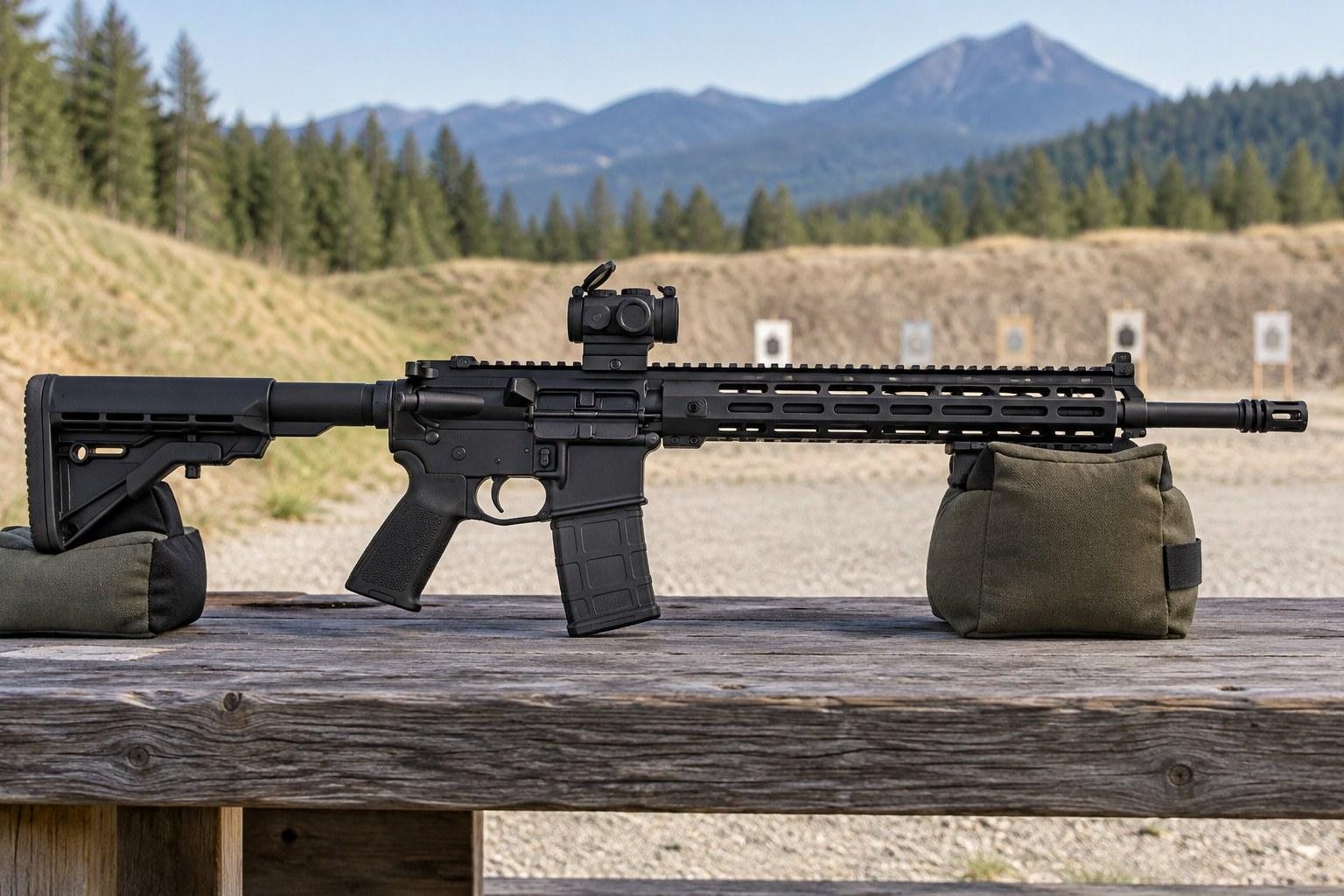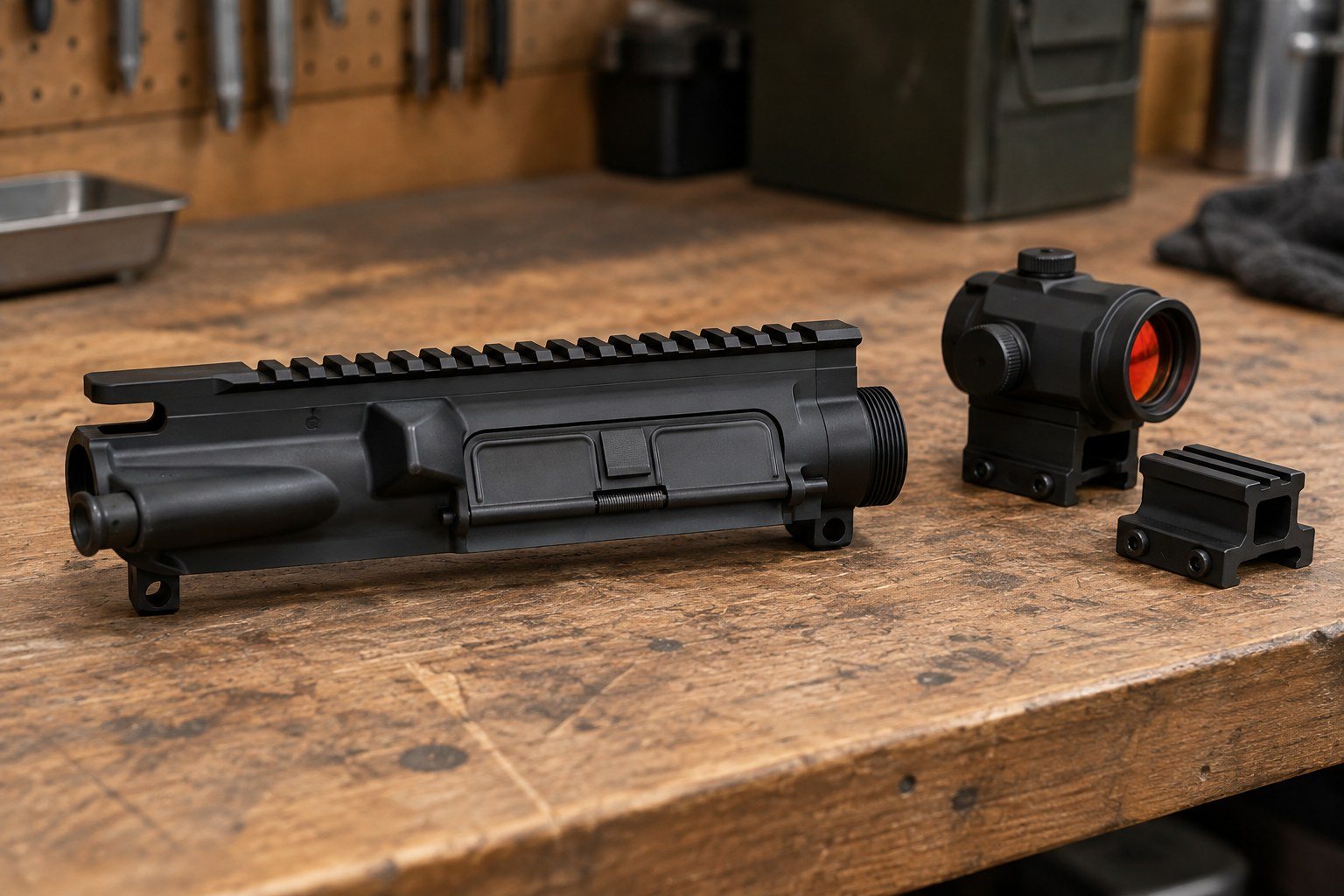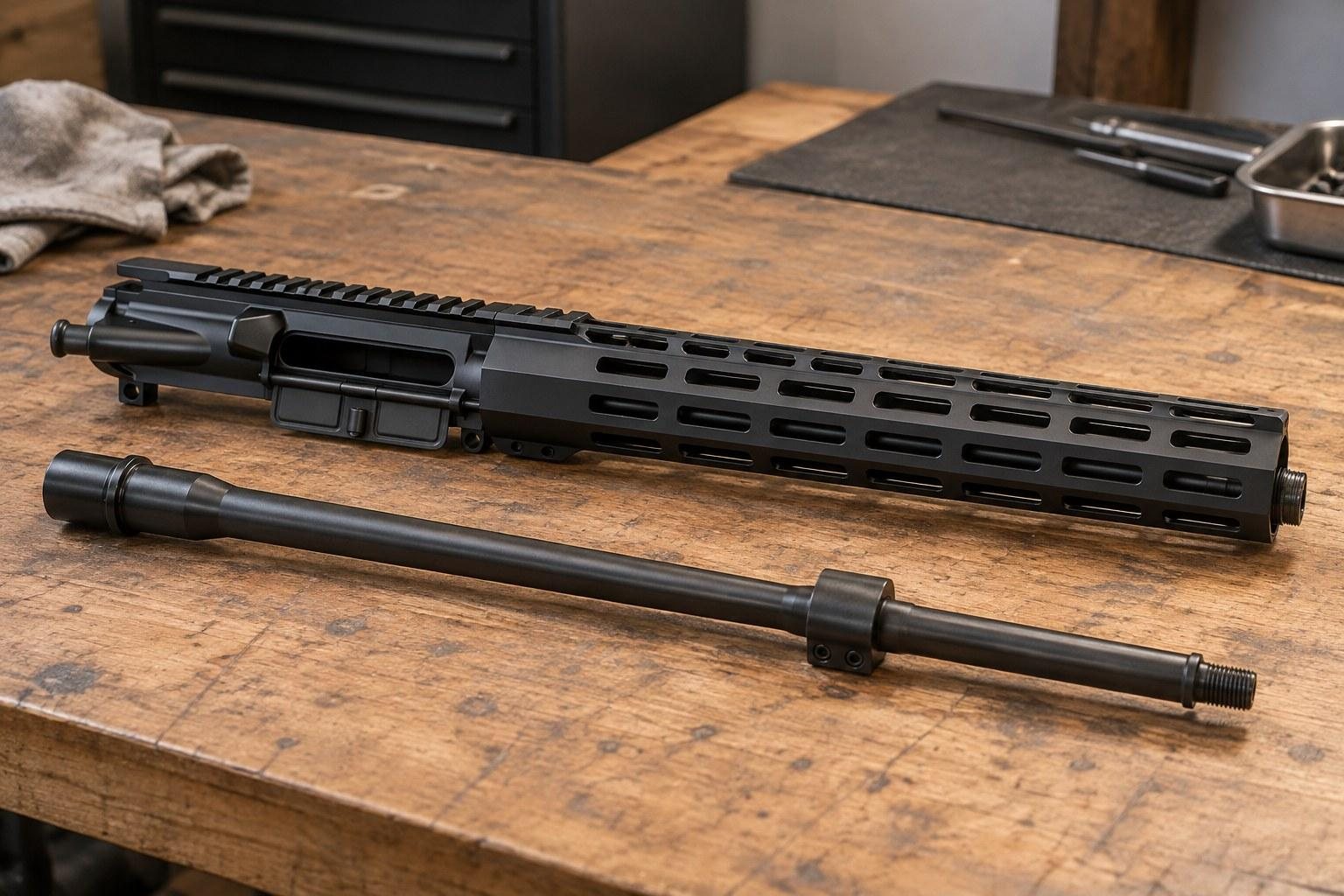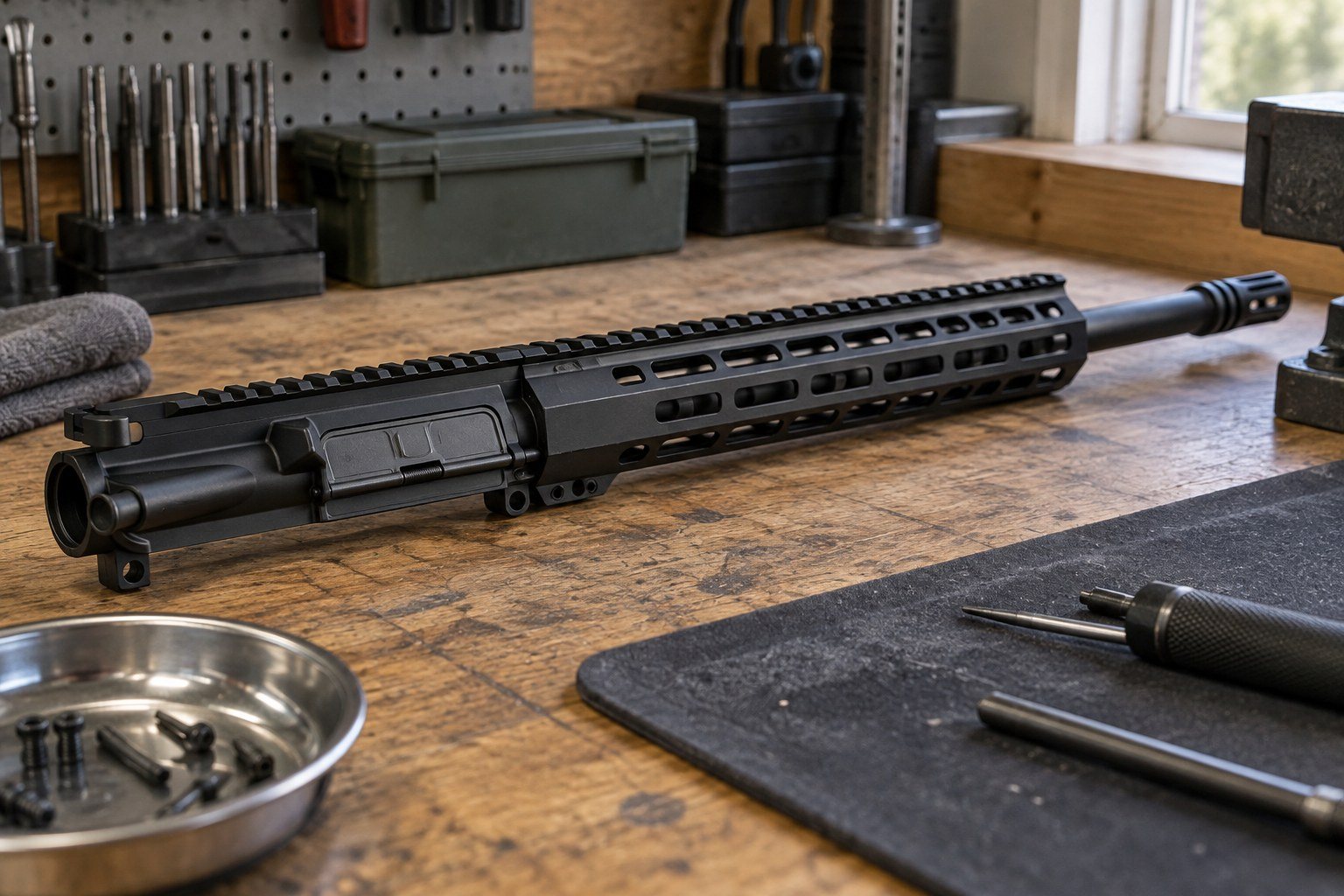
The barrel nut is one of the smallest parts on an AR-15 upper, yet it holds the barrel to the receiver and decides which handguards you can run. It rarely gets attention until a build goes sideways: a gas tube that will not line up, a rail that shifts under pressure or a nut that refuses to come off years later.
Our editors put together a plain-language look at how this part works, the main design families you will run into and what to check before you choose a handguard. We focus on how the pieces fit together, and we point you to the component maker's instructions for every torque value, because those numbers belong to the part you actually own.
Planning a build or a handguard swap? Start with our assembly resources.
Key Takeaways
- The nut threads onto the front of the upper receiver and clamps the barrel extension in place, so it directly affects how securely the barrel is held.
- Most free-float handguards use their own proprietary nut, which means the rail and the nut are usually chosen together as a system.
- On direct impingement uppers, the nut has to leave a clear path for the gas tube, so indexing and alignment matter during installation.
- Torque values come from the barrel, receiver or handguard manufacturer, and you should follow their published spec rather than a generic number.
- If you are unsure about any step, a qualified gunsmith can install and check the assembly for you.
What a Barrel Nut Actually Does
On an AR-15, the barrel is not threaded into the receiver the way it is on many bolt-action rifles. Instead, the barrel extension slides into the front of the upper receiver, and a threaded nut screws onto the outside of the receiver's front threads. As it tightens, a shoulder on the nut presses against the barrel's flange and clamps it in place.
That clamping force is what keeps the barrel seated and aligned with the receiver. The barrel extension also carries the locking lugs the bolt engages, so the stability of that joint matters every time you fire.
The Three Jobs It Handles
- Retention: it holds the barrel tight against the receiver face.
- Handguard interface: it is the mounting point for most handguards, whether a traditional delta ring setup or a free-float rail.
- Gas tube clearance: on direct impingement uppers, the gas tube passes from the gas block back into the receiver, and the nut must leave room for it.
Why It Is Easy to Overlook
Once the handguard is on, you cannot see the nut at all. Many shooters never think about it until they want to change a rail and discover that their new handguard needs a different nut, a different wrench or a different installation procedure.
Common Barrel Nut Designs Compared
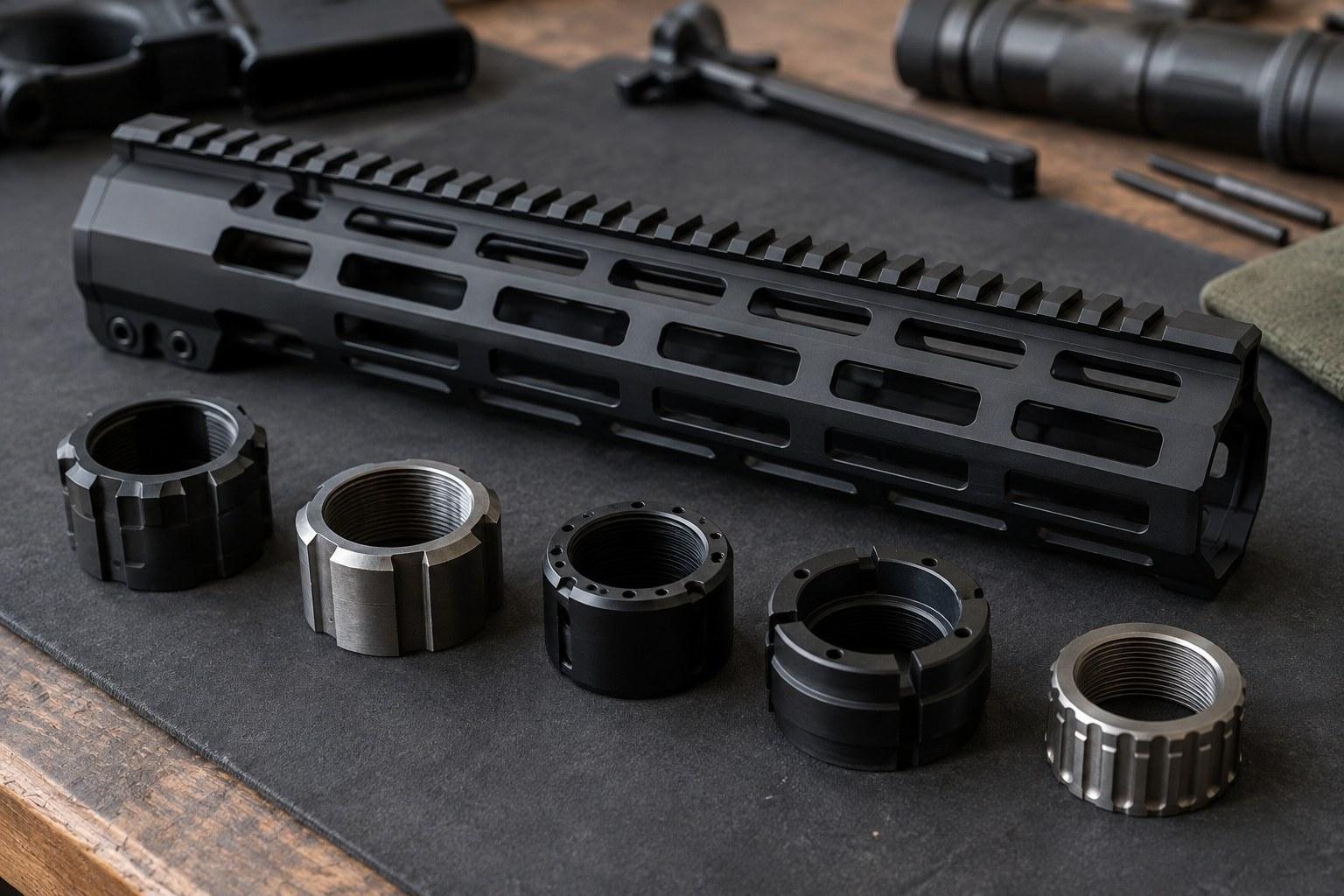
Designs vary widely between manufacturers, but most fall into a few broad families. The table below summarizes how they differ in general terms. Always confirm the specifics against the product you plan to buy.
| Design Type | Typical Use | Strengths | Things to Watch |
|---|---|---|---|
| Standard mil-spec style nut | Drop-in handguards with a delta ring and end cap | Widely understood, many tools fit it | Handguard touches the barrel area, so it is not free-floated |
| Proprietary free-float nut | One-piece free-float rails | Lets the rail clamp or bolt on without touching the barrel | Usually only works with that brand's rail and may need a specific wrench |
| Timed or indexed nut | Rails that must line up with the gas tube and top rail | Aligns the handguard cleanly with the receiver's top rail | Must be tightened within the maker's range while still hitting alignment |
| Larger frame (AR-10/LR308) nut | .308-class uppers | Sized for the larger receiver and barrel extension | Not interchangeable with AR-15 parts, and patterns differ between platforms |
Standard Style With Delta Ring
The traditional setup uses a nut with a spring-loaded delta ring, a weld spring and a snap ring behind it. The two-piece handguard is held between the delta ring and a front handguard cap. It works, and it is simple, but the handguard rests on parts connected to the barrel. Pressure on the handguard can therefore influence the barrel slightly.
Proprietary Free-Float Nuts
A free-float handguard attaches only at the receiver end, through the nut, and never touches the barrel past that point. Because each manufacturer engineers its own attachment method, the nut is usually part of the handguard kit. For example, lightweight free-float rails often list a steel nut in the product details, so the rail and its mounting hardware typically arrive together.
We cover the broader trade-offs of rail styles in our comparison of free-float vs drop-in handguards.
Want help choosing a rail that matches your nut and barrel? Read our handguard buying guide.
How Nut Design Affects Accuracy and Consistency
Accuracy on an AR-15 depends on many variables, including the barrel, ammunition and optic mounting. The nut and handguard play a supporting role by determining whether outside forces reach the barrel.
Free Floating and Point of Impact
When a handguard rests on the barrel assembly, resting the rifle on a bag or pulling against a sling can apply pressure that the barrel feels. A free-float design isolates the barrel from that pressure because the rail only connects at the receiver. Many shooters choose free-float rails for this reason, especially for precision or bench work. How much it helps on a given rifle depends on the rest of the build, so we avoid promising a specific gain.
Secure Clamping Matters
A nut that is properly tightened to the manufacturer's spec holds the barrel extension firmly against the receiver. One that is under-tightened or installed with damaged threads may allow movement that shows up as inconsistency. That is one reason we suggest reading the instructions carefully and using the correct tools.
Rail Stiffness and Mounting Surface
The nut also sets how much contact area the handguard has to clamp or bolt against. A rail that mounts solidly to a well-designed nut feels more rigid when you mount lights, lasers or bipods to it. Look for clear mounting instructions and hardware that is matched to the rail.
Gas Tube Alignment and Indexing
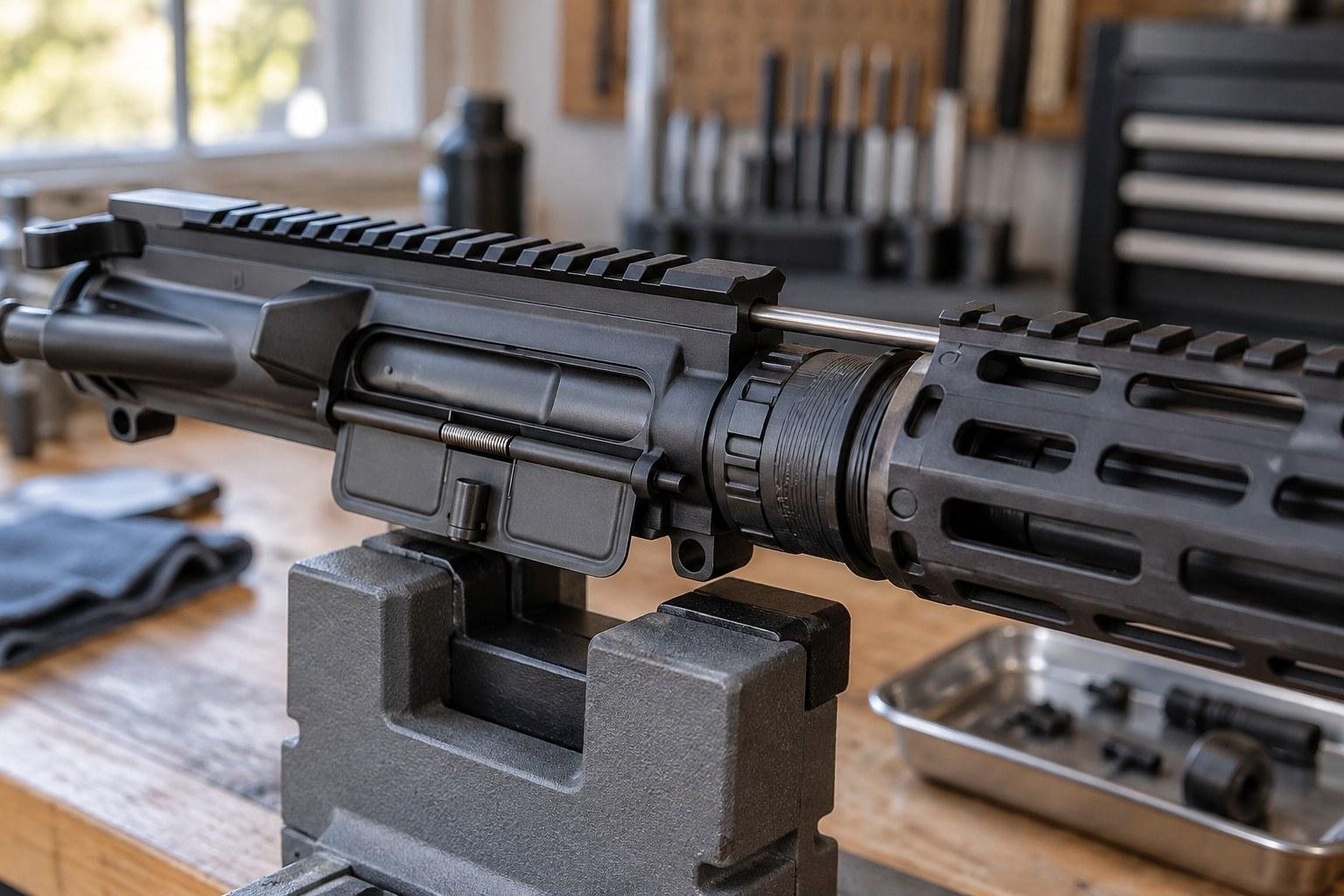
On direct impingement uppers, the gas tube runs from the gas block back through the front of the upper receiver and into the gas key on the bolt carrier. It has to pass through or past the nut on the way.
Why Timing Matters
Many nuts have slots, holes or teeth around their edge. One of those openings must line up with the gas tube hole in the receiver. If the nut stops between openings, the gas tube cannot pass straight through, and forcing it can bend the tube or prevent the rifle from cycling correctly. Manufacturers handle this in different ways, such as specifying a torque range so you can continue to the next alignment point, or providing shims or indexing features.
Checking Your Work
- Make sure the firearm is unloaded and the bolt carrier group is removed before you start.
- Confirm the gas tube passes freely through the nut and into the receiver without binding.
- Verify the handguard's top rail lines up with the receiver's top rail if that matters for your optic setup.
- Function-check the rifle according to the manufacturer's instructions before live fire.
Gas parts such as gas tubes and low-profile gas blocks are commonly sold among AR-15 upper parts if you need to replace a damaged tube after a mistake.
Compatibility: Matching the Nut to Your Upper and Handguard
The nut sits at the intersection of three parts: the upper receiver, the barrel and the handguard. A mismatch between any of them causes problems.
Upper Receiver Threads
The nut threads onto the front of the receiver. AR-15 and AR-10 receivers are different sizes, and AR-10/LR308 patterns are not all identical, so parts must be matched to the platform. Before you buy, confirm which pattern your upper receiver uses. Our AR-15 upper compatibility checklist walks through the other fit points to verify.
Barrel Profile and Gas Block
The inside diameter of a free-float rail must clear the barrel and the gas block. A low-profile gas block is common under free-float rails. Gas blocks are sized to the barrel's journal diameter, so check your AR-15 barrel specs before ordering one.
Handguard Pattern and Length
Lightweight free-float rails are commonly available in M-LOK and KEYMOD patterns in several lengths for the AR-15, plus M-LOK options for the AR10/LR308 DPMS high-profile pattern. You can see current options on the handguards page. If you are still deciding on an attachment pattern, read M-LOK vs KEYMOD handguards.
Installation, Torque and Serviceability
Installing or replacing a nut is a common home-build task, but it requires the right tools and patience. Our editors do not publish a universal torque figure because the correct value depends on the specific nut, receiver and barrel. Always follow the component manufacturer's published spec.
Tools You Will Typically Need
- An upper receiver vise block or clamshell that supports the receiver without crushing it.
- The wrench specified by the handguard or nut manufacturer.
- A calibrated torque wrench.
- Any thread compound or grease the manufacturer recommends.
Common Mistakes
- Clamping the receiver itself in a vise without proper support.
- Using an ill-fitting wrench that slips and damages the nut.
- Ignoring the maker's torque range to force gas tube alignment.
- Skipping thread preparation called for in the instructions.
For general guidance, see our notes on AR-15 upper torque specs, and treat the manufacturer's instructions as the final word. If you are unsure at any point, have a qualified gunsmith do the installation.
Skipping the Work Entirely
If you would rather not install a barrel and nut yourself, a complete upper is an option. Complete AR-15 uppers from AR15Parts.com are assembled in-house, headspaced and function-checked before they ship, and shipping is 3 to 5 business days.
Comparing complete uppers? Browse our roundups and buying advice.