M4 feed ramps are two small cuts that decide whether each cartridge slides cleanly into your chamber or noses into a ledge. They sit where the barrel extension meets the upper receiver, and you rarely think about them until a round stalls halfway home. Feed ramp questions come up constantly for builders who mix barrels and receivers from different sources.
Below we explain what the ramps do, how M4 cuts differ from the older rifle pattern, why the barrel extension and the upper receiver have to agree, and how to inspect your own parts. The goal is simple: an upper that feeds round after round without drama.
Shopping for a complete assembly that already has matched parts? Start with complete uppers at AR15Parts.com.
Key Takeaways
- Feed ramps guide the bullet tip from the magazine up into the chamber as the bolt pushes the round forward.
- M4 feed ramps are cut into both the barrel extension and the upper receiver, so the two parts must line up as a matched pair.
- A rifle-pattern barrel extension paired with an upper that has M4 cuts can leave a ledge at the extension face where a bullet tip may snag.
- Many modern AR-15 stripped uppers and barrels are made with M4 ramps, which is now a common industry standard.
- Feed ramps work alongside magazines, extractor tension, gas and buffer setup, so they are one piece of reliability, not the whole story.
- Never grind, polish or recut feed ramps yourself; ask a qualified gunsmith if your ramps look damaged or misaligned.
What Feed Ramps Actually Do in an AR-15 Upper
Every time the bolt carrier group runs forward, the bolt face strips the top cartridge from the magazine. That round starts out below the bore line and has to climb into the chamber. The feed ramps give the bullet tip a smooth, angled path to follow on that climb.
The Path From Magazine to Chamber
As the round moves forward, its nose rises and contacts the ramp surface. The ramp steers it upward and inward until the case lines up with the chamber mouth. When the ramp surface is continuous and clean, this happens in a fraction of a second without you ever noticing.
Where the Ramps Live
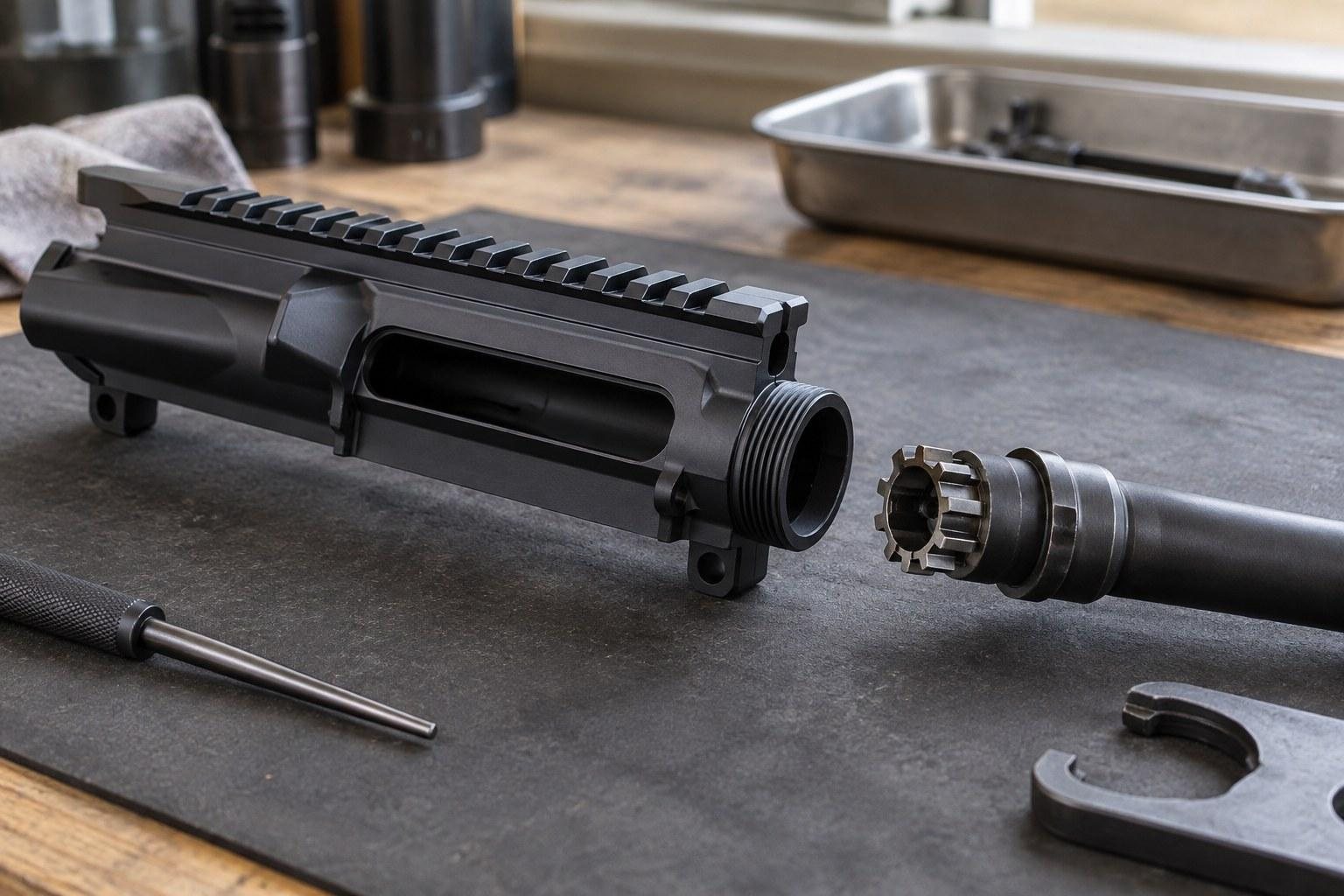
On an AR-15, the ramps are machined at the rear of the barrel extension, the steel collar threaded onto the breech end of the barrel that holds the locking lugs. With the M4 pattern, matching cuts continue into the front of the upper receiver itself. If you want a refresher on how all of these pieces fit together, see our AR-15 upper anatomy and parts list.
M4 Feed Ramps vs Rifle Pattern Ramps
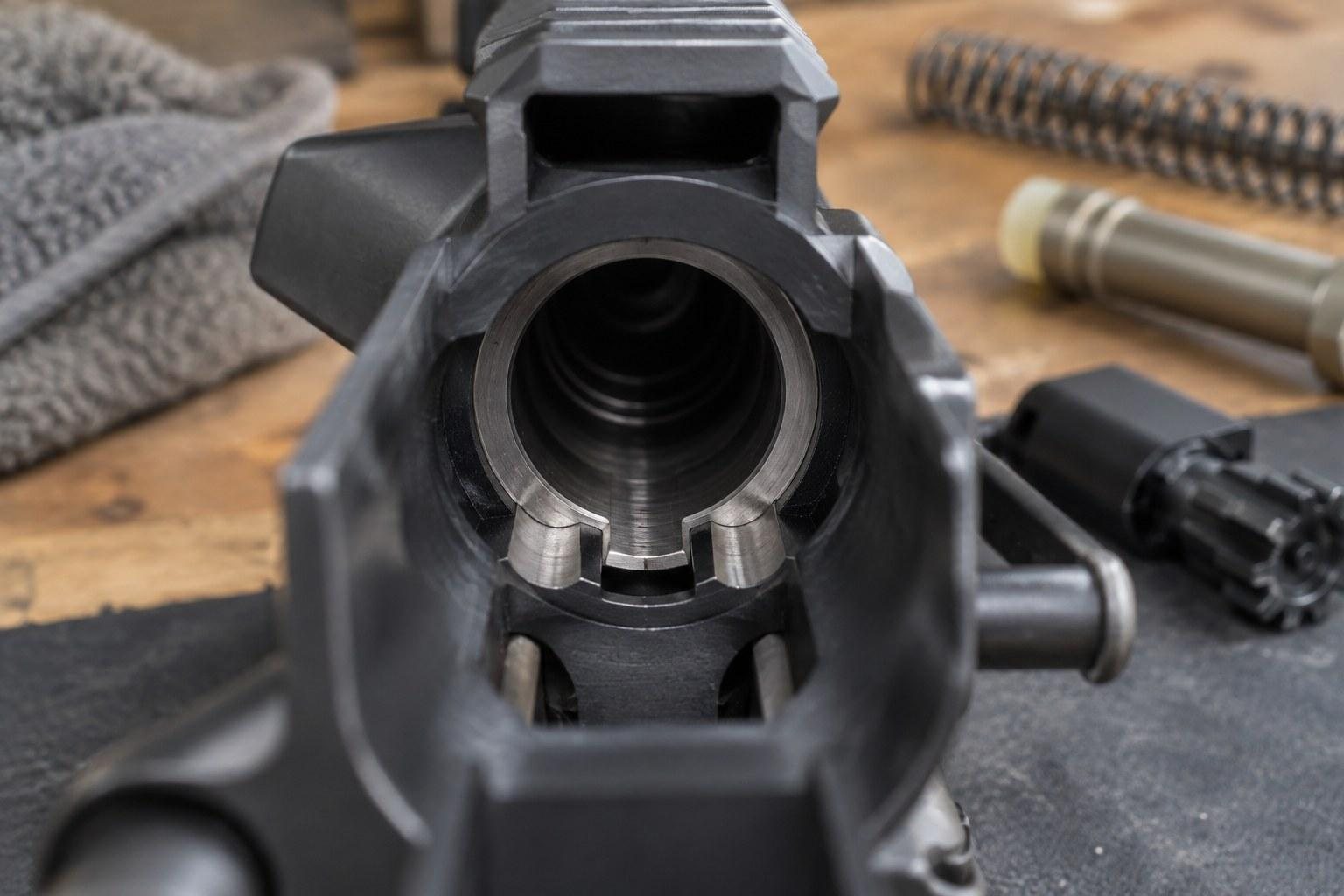
The original AR-15 and M16 design used shallower ramps contained within the barrel extension alone. The M4 pattern, which the military adopted on its carbines, uses deeper ramps that extend down past the extension and into the receiver. Commercial makers widely adopted the M4 style, and you will now see it listed on many barrel and receiver spec sheets.
Why the Deeper Cut Exists
The deeper M4 ramps give the bullet tip more room and a longer guided path before it reaches the chamber. That extra margin is commonly credited with smoother feeding, particularly on carbines where shorter gas systems tend to run the bolt faster. We describe this as a reliability margin rather than a guarantee, since magazines, ammunition and gas setup all play a part.
Side by Side Comparison
| Feature | Rifle Pattern Ramps | M4 Feed Ramps |
|---|---|---|
| Where the ramps are cut | Barrel extension only | Barrel extension and upper receiver |
| Ramp depth | Shallower | Deeper, extending into the receiver |
| Matching requirement | Best paired with an upper without M4 cuts (an M4-cut upper can leave a ledge) | Ideally paired with an M4-cut upper, though it generally feeds fine in an uncut upper |
| Typical use | Older rifle-pattern builds | Most modern carbine and rifle builds |
| How to identify | No ramp cuts visible in the receiver | Two ramp cuts visible in the receiver below the chamber |
Before you buy a barrel, use our AR-15 upper compatibility checklist to confirm the extension and receiver agree.
Why Matching the Barrel Extension and Upper Matters
M4 feed ramps only work as designed when the cuts in the barrel extension flow straight into the cuts in the receiver. Because these are two separate parts, often from two different manufacturers, a mismatch is a common feed ramp problem builders run into.
M4 Extension in an Upper Without M4 Cuts
If the barrel has M4 ramps but the receiver does not have M4 cuts, the extension's ramps generally still feed fine, though the full benefit of the M4 design is lost. Matching an M4 extension with an M4-cut upper remains the ideal pairing for a rifle you depend on.
Rifle Extension in an M4 Upper
The reverse pairing puts shallow extension ramps above deeper receiver cuts, which can expose a ledge at the face of the barrel extension where a bullet tip may catch. This is the mismatch builders most want to avoid. Matching patterns removes the guesswork.
Alignment Within a Matched Pair
Even with M4 parts on both sides, the ramps need to line up. The barrel extension uses an indexing pin that locates in a notch in the receiver, which clocks the extension so its ramps face the receiver cuts. A barrel installed without that pin seated correctly can leave the ramps misaligned. Our AR-15 upper installation guide covers the assembly order, and barrel nut torque should always follow the component manufacturer's published spec.
How to Check Your M4 Feed Ramps
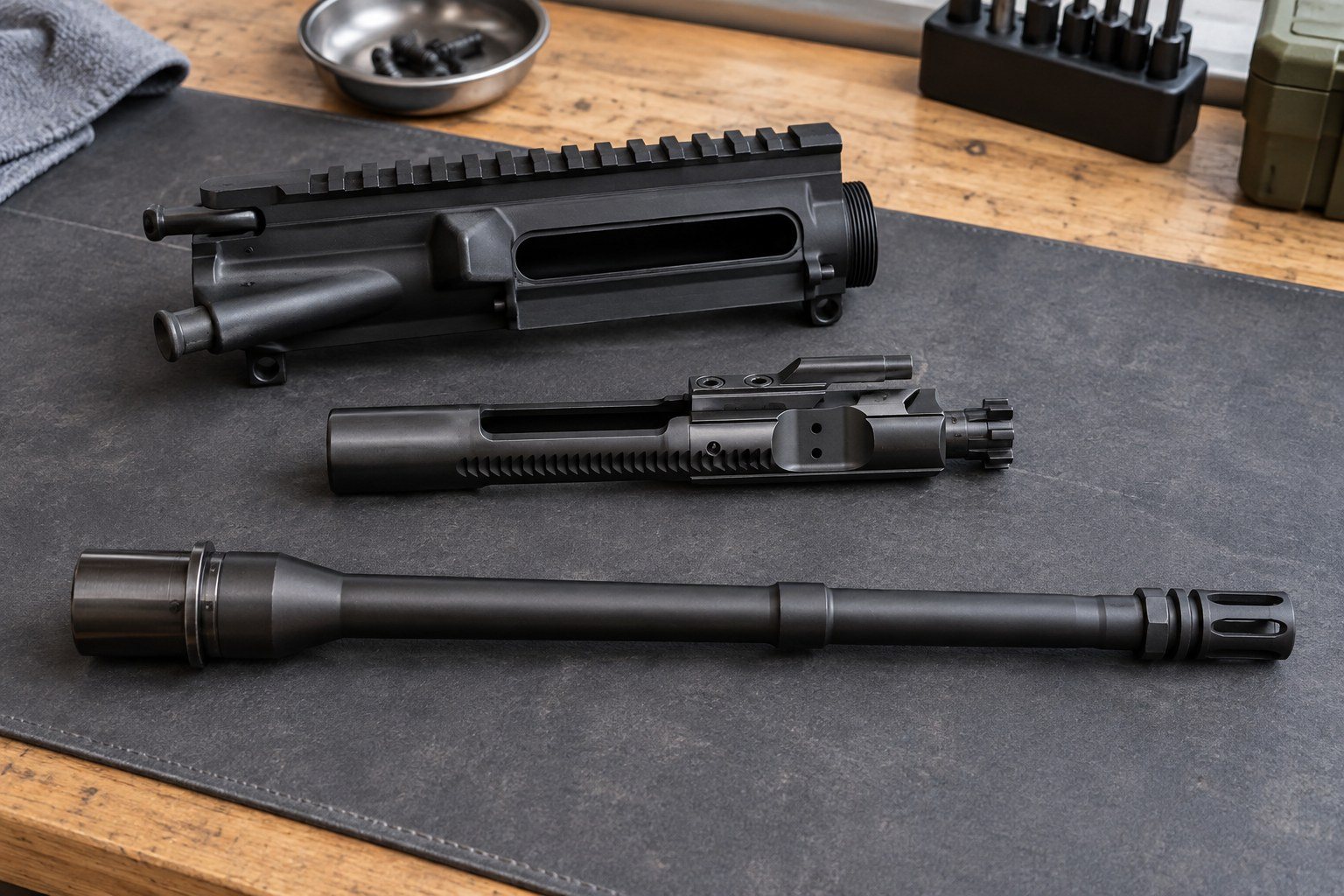
Inspecting your ramps takes a few minutes and a flashlight. Always start by confirming the firearm is unloaded: remove the magazine, lock the bolt open, and visually and physically check the chamber.
A Simple Visual Inspection
- Separate the upper from the lower and remove the bolt carrier group and charging handle.
- Shine a light through the rear of the upper toward the chamber.
- Look below the chamber for two ramp cuts. If the receiver has M4 cuts, you should see the ramps continue from the receiver into the barrel extension.
- Check that the edges line up without an obvious step, gap or burr where the two parts meet.
- Look for heavy brass marks, gouges or rough finish on the ramp surfaces.
Reading Product Spec Sheets
Many barrels list the ramp style right in the specifications. For example, barrels in the 556 NATO barrel lineup commonly list "Feed Ramps: M4" on their product pages, and forged stripped uppers in the upper receivers category are typically forged from 7075 T6 aluminum, machined to M16/M4 specs and feature M4 feed ramps.
When to Call a Gunsmith
If you see a step you cannot explain, damage on the ramps, or a barrel that does not seem properly indexed, stop and have a qualified gunsmith inspect it. Do not grind, file or polish the ramps yourself. Removing metal in the wrong place can create new feeding problems and is not reversible.
Feed Ramps Are One Piece of the Reliability Puzzle
These ramps remove one common source of feeding trouble, but they cannot make up for other issues. When an upper fails to feed, it is generally wise to look at the whole system before blaming the ramps.
Other Common Feeding Culprits
- Magazines: worn feed lips or weak springs can present rounds at the wrong angle.
- Bolt carrier group: a dirty or worn bolt and extractor can affect how rounds are stripped and held. A quality bolt carrier group is worth inspecting regularly.
- Gas and buffer setup: an over gassed or under gassed upper can change bolt speed and timing.
- Ammunition: bullet shape and case dimensions vary between loads.
- Fouling: carbon and debris on the ramps or in the chamber area add friction.
Troubleshooting in Order
Swap magazines first, then try a different load, then inspect the bolt and the ramps. Our AR-15 cycling issues troubleshooting guide walks through the full process.
Choosing Parts With M4 Feed Ramps for Your Build
The easiest way to avoid a mismatch is to buy parts that clearly list M4-style ramps, or to start with an upper that is already assembled.
Building From a Stripped Upper
If you are building, pair a receiver with M4 cuts with a barrel that lists M4 ramps. Forged stripped uppers are generally compatible with any caliber build that fits the AR-15 platform, including 6.8 SPC, 300 Blackout, 7.62x39 and 5.56/223. Matching upper parts such as forward assists and dust covers are typically available in the upper parts category.
Buying a Complete Upper
A complete upper takes the matching question off your plate. AR15Parts.com assembles its complete uppers in-house, headspaces them and function-checks them before they ship, with shipping in 3 to 5 business days. 556 NATO uppers often include configurations built on a range of barrel profiles.
Want help narrowing down which upper fits your plans? Our upper receiver coverage is a good next stop.