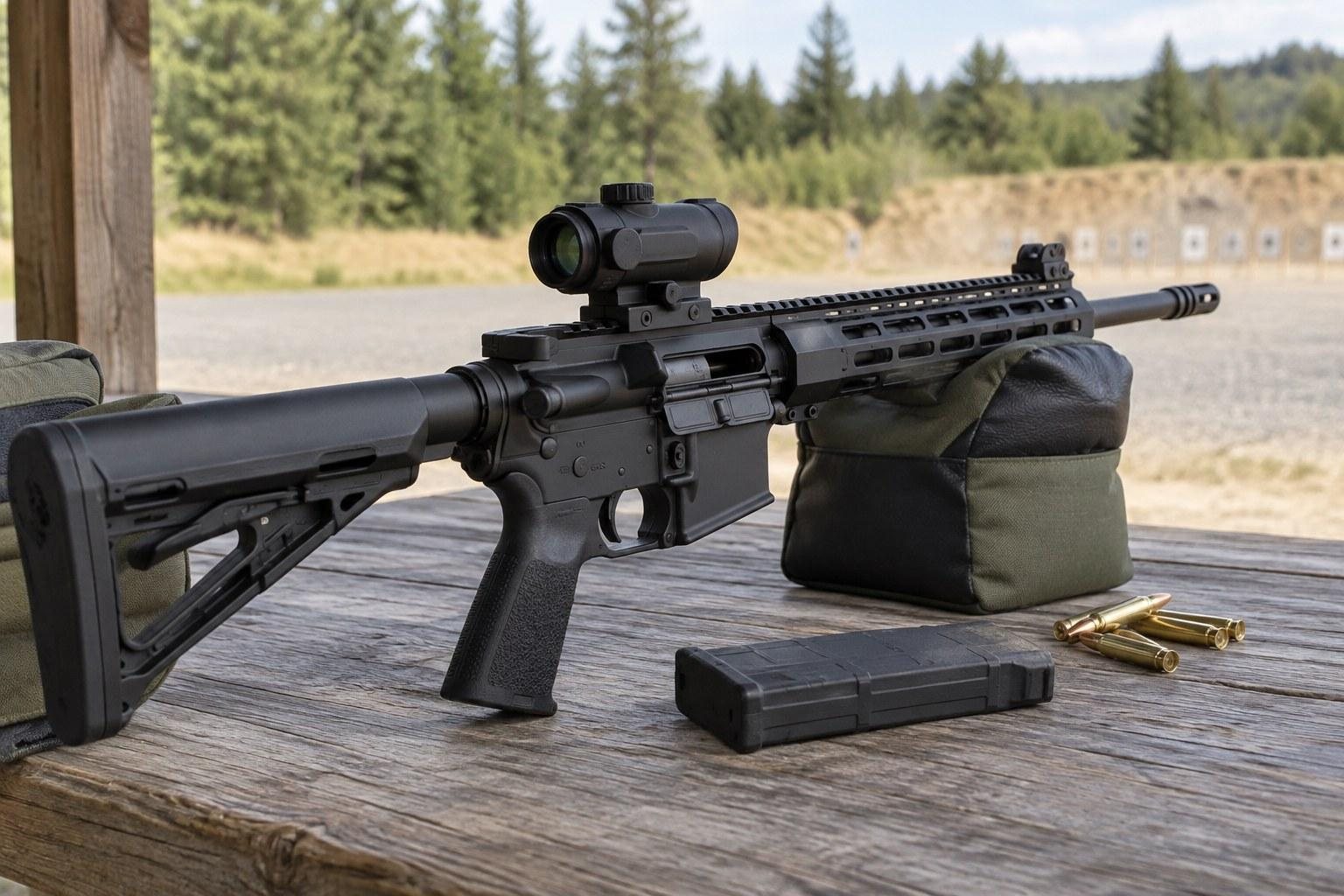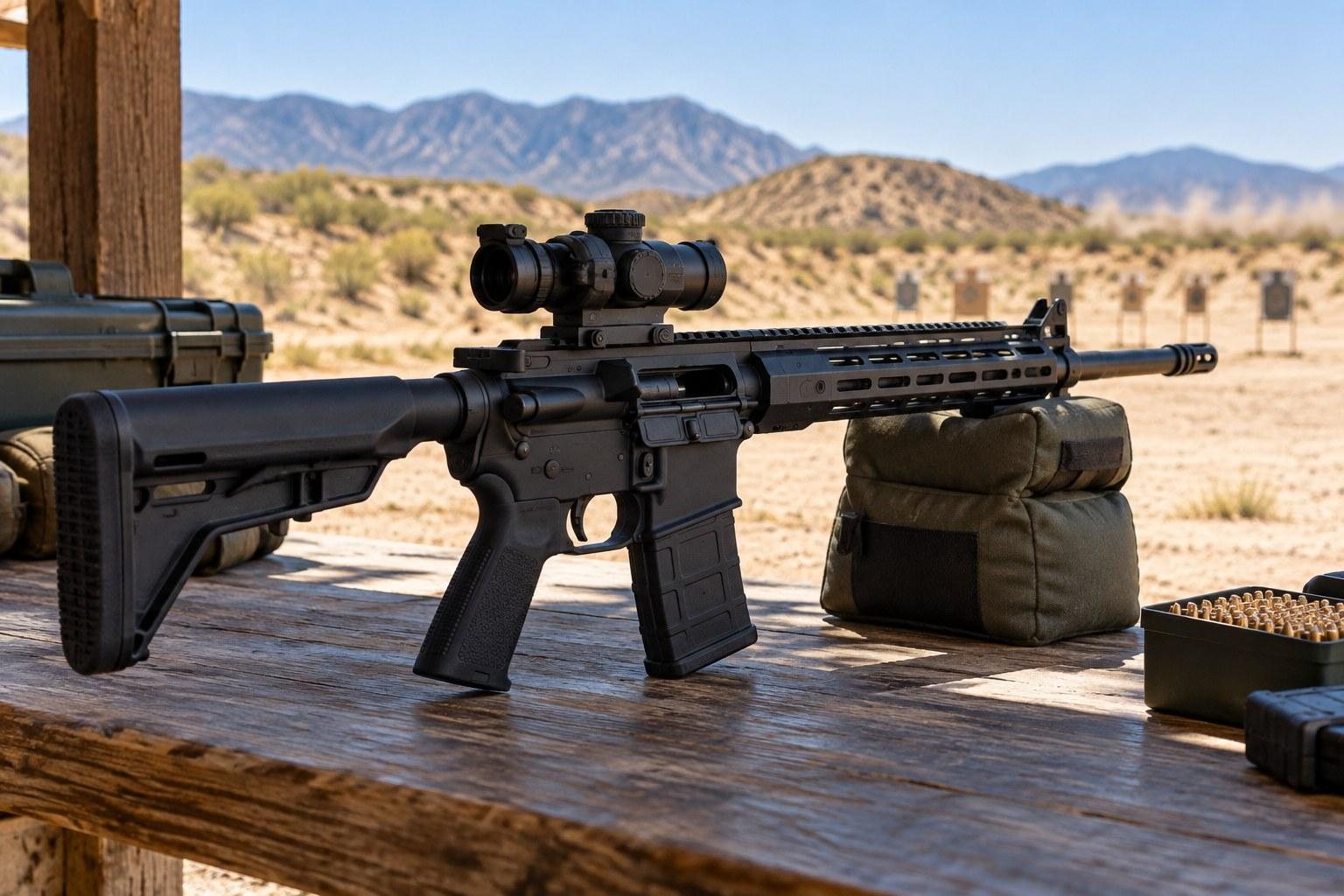
AR-15 overheating is rarely one dramatic event. On a hot summer afternoon it usually shows up as a slow stack of small problems: a handguard you can no longer hold comfortably, a wandering group, mirage dancing over the barrel, and a bolt carrier group that feels gritty and dry by the last magazine.
This is a practical look at where heat comes from, what it does to each part of your upper, and the habits that keep a rifle accurate and reliable when the sun and your rate of fire are both working against you. None of it requires special gear, just attention and a little planning before you load the truck.
If you are shopping for a rifle that is assembled and function-checked before it ships, start with complete uppers at AR15Parts.com.
Key Takeaways
- Most of the heat in your upper comes from firing, not from the sun, so your pace of fire matters more than the air temperature.
- A hot barrel can shift your point of impact and create mirage that blurs your sight picture through an optic.
- Heat thins and burns off lubricant, so a properly lubed bolt carrier group is one of the simplest ways to stay reliable in summer.
- Free float handguards and good airflow help keep your support hand comfortable, but they do not stop the barrel from heating.
- Never leave a round chambered in a very hot barrel during a break, and keep the muzzle pointed in a safe direction at all times.
Where the Heat in Your Upper Really Comes From
It is easy to blame the weather when a rifle feels hot, but the biggest heat source is the cartridge itself. Every shot sends burning powder gas down the bore, and a portion of that energy soaks into the barrel steel, the gas block and the bolt carrier group.
Summer conditions simply raise the starting point. A rifle sitting in direct sun on a bench starts warmer than one in the shade, and it has a harder time shedding heat between strings because the surrounding air is already warm.
Firing Heat vs. Ambient Heat
Think of ambient heat as the floor and firing heat as the ceiling. The sun and air set how warm your rifle is before the first shot. Your rate of fire decides how far above that floor it climbs, and how fast.
A slow string of carefully aimed shots lets the barrel cool between rounds. Rapid strings, mag dumps and back-to-back drills pile heat on faster than the steel can release it.
Direct Gas Impingement and the Bolt Carrier Group
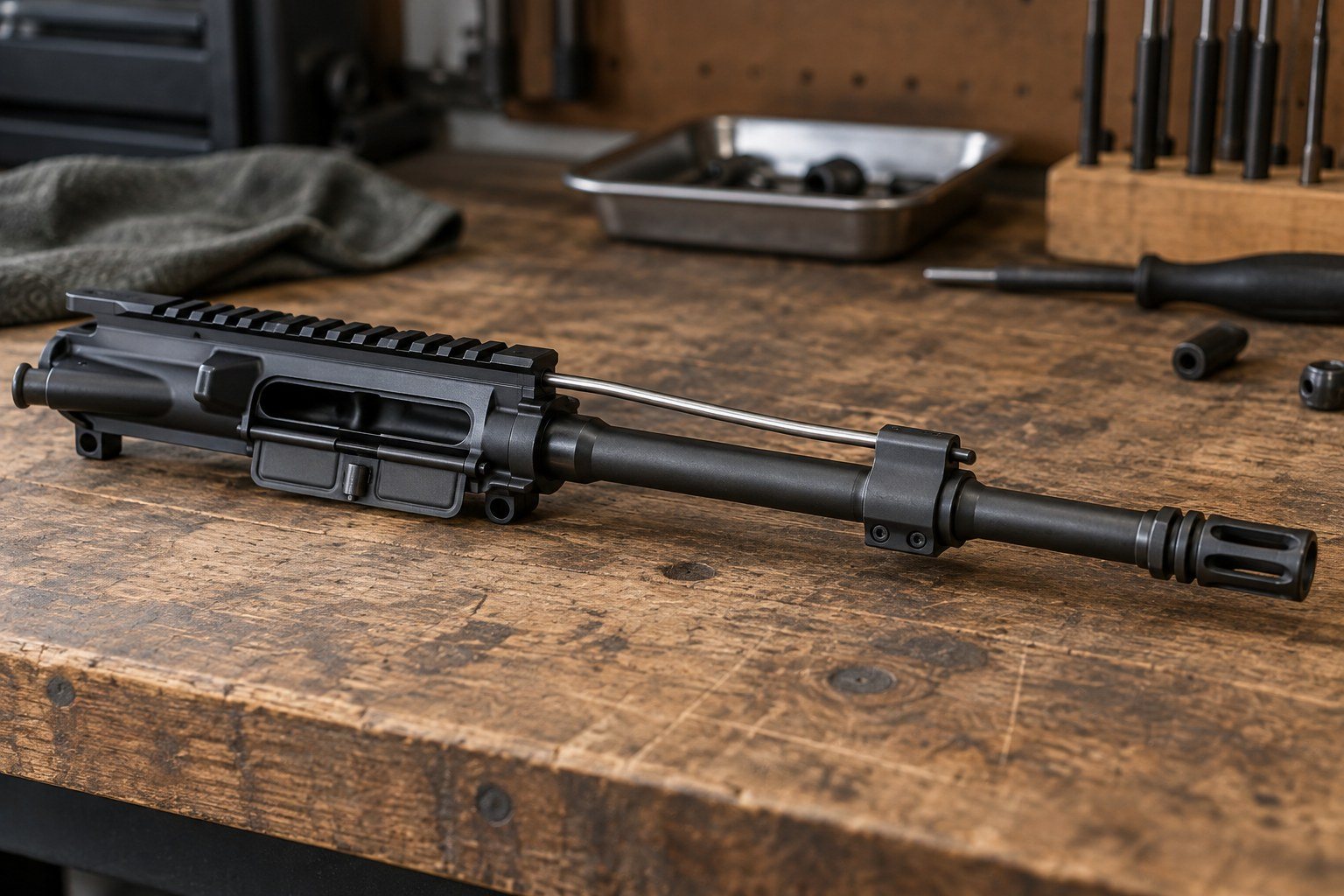
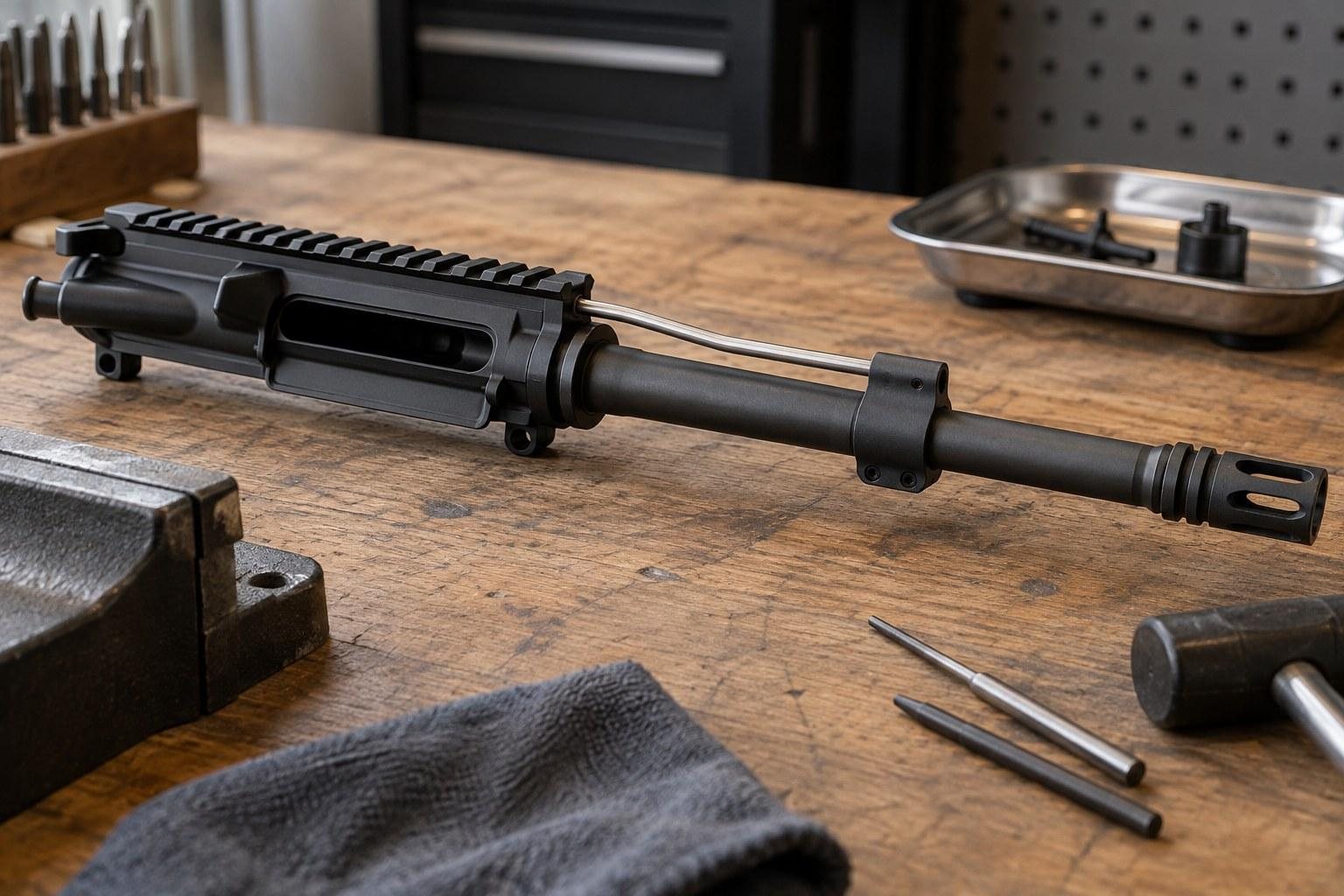
A standard AR-15 uses direct impingement. Gas is tapped from a port in the barrel, routed through the gas tube and sent into the carrier to drive the action. That means hot gas and carbon are delivered right into the upper receiver and the bolt carrier group with every shot.
That design is proven and simple, but it also means your BCG and the inside of the receiver warm up along with the barrel. In summer, that is one reason lubrication matters so much. For a deeper look at how gas length shapes cycling, see our guide on choosing the right gas system length.
How AR-15 Overheating Affects Accuracy
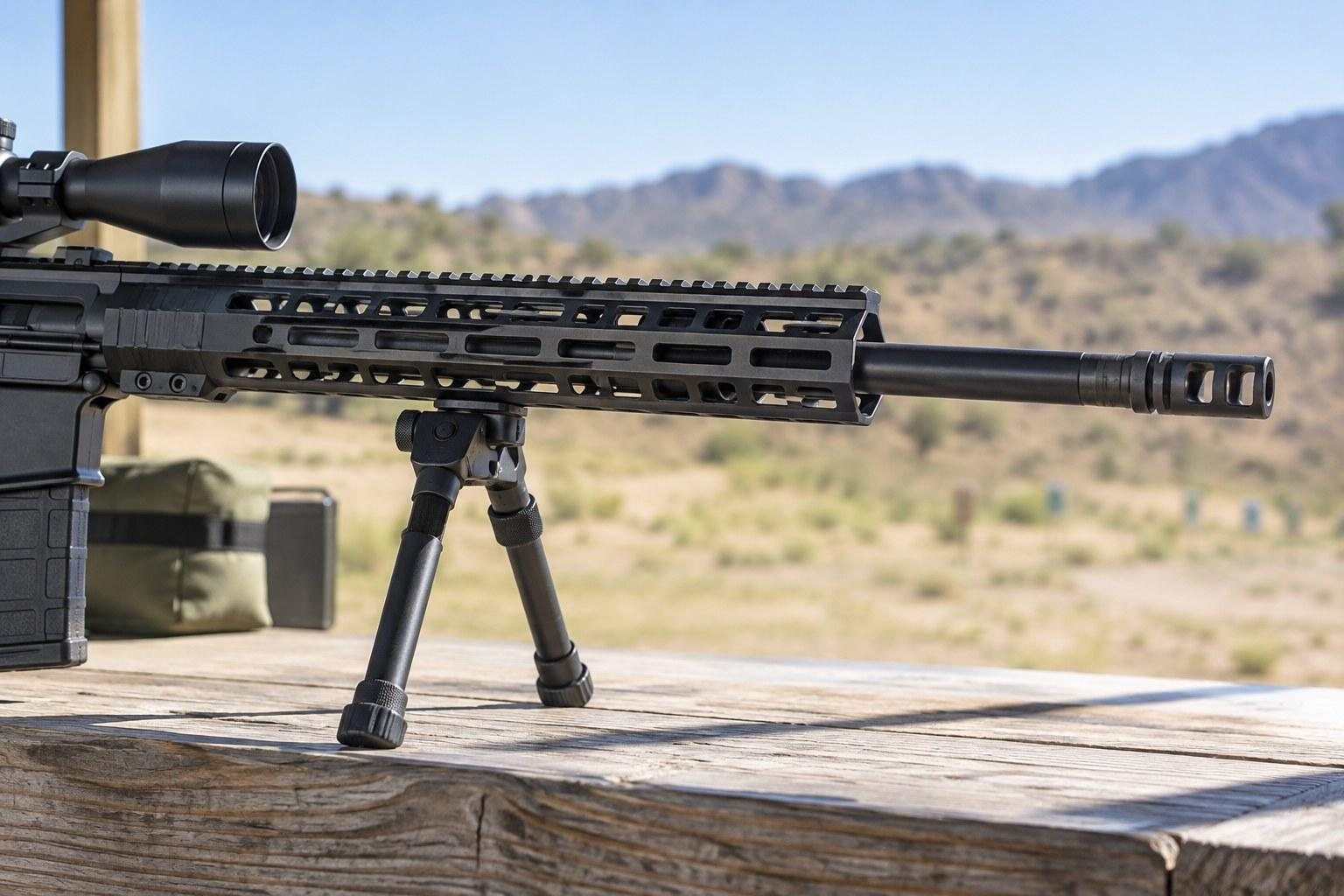
Heat changes how a barrel behaves. As steel warms, it expands, and any small stress left in the barrel from manufacturing can cause it to move slightly as it heats. The result can be a point of impact that drifts as a string goes on.
Thin, lightweight profiles heat up faster than heavier ones because there is less steel to absorb the energy. Heavier profiles take longer to warm but also take longer to cool. Neither is wrong; they just suit different shooting styles.
Point of Impact Shift
If your first few shots land in one spot and later shots creep away, heat is a likely suspect. The honest test is simple: shoot a cold group, let the rifle get hot with a faster string, then shoot another group and compare.
Knowing how your own barrel behaves is more useful than any general rule. Some barrels hold zero well when hot, while others walk noticeably.
Mirage Through Your Optic
Mirage is the shimmering effect you see when hot air rises off the barrel and passes in front of your scope. It can make the target look like it is moving or blurred, which makes precise aiming difficult.
Mirage is more noticeable with higher magnification. If your target starts to swim, that is a cue to pause and let the barrel cool rather than fighting the sight picture.
Barrel Profiles and Heat at a Glance
| Barrel Trait | How It Behaves in Heat | Best Fit |
|---|---|---|
| Lightweight or pencil profile | Heats quickly, sheds heat fairly quickly once you stop | Carry rifles, hunting, slow fire |
| Government or medium profile | Balanced heating and cooling | General range and training use |
| Heavy or bull profile | Slow to heat, slow to cool, more stable over long strings | Bench and precision shooting |
| Chrome lined bore | Lining helps the bore resist erosion and corrosion | High volume and duty-style use |
| Nitride treated barrel | Hard, corrosion resistant surface treatment | All-around builds |
For more on how bore treatments compare, read our breakdown of chrome lined vs. nitride vs. stainless barrels. If you are thinking about a new barrel built for longer strings, you can browse the AR barrels at AR15Parts.com.
Want to compare barrel lengths before you buy? Our length guide covers handling, velocity and legal considerations.
Heat, Lubrication and Reliability
Lubricant is the part of your upper most affected by summer heat. As the rifle warms, oil thins out and can run off or burn away, especially on the bolt and the carrier rails. A dry BCG creates more friction, and friction plus carbon is a recipe for sluggish cycling.
The fix is not complicated. Start each range day with a properly lubricated bolt carrier group, follow the lubricant maker's directions, and check it during longer sessions.
Signs Your BCG Is Running Dry
- The charging handle feels gritty or harder to pull than usual.
- Spent cases eject weakly or land in an unusual spot.
- You see failures to feed or failures to lock back on an empty magazine.
- The bolt looks dull and dry instead of having a light film of oil.
If these symptoms keep showing up even with good lube, the cause may be elsewhere in the gas system. Our AR-15 cycling troubleshooting guide walks through common causes step by step.
Choosing and Maintaining a BCG for Hot Weather
Coatings such as nitride and nickel boron are popular because they resist corrosion and are easier to wipe clean. A coating does not replace lubrication, though. Every BCG still needs oil to run smoothly.
If your carrier is worn or you simply want a spare, bolt carrier groups are available for AR-15 and AR-10 builds. Always confirm compatibility with your caliber and bolt face before ordering.
Keeping Your Hands and Gear Comfortable
Even when the rifle is running perfectly, a hot handguard makes shooting miserable. Your support hand sits right over the barrel, and heat radiates outward as the barrel warms.
Free Float Handguards and Airflow
A free float handguard does not touch the barrel except at the receiver end, which leaves an air gap that helps limit how much heat reaches your hand. Slotted designs like M-LOK rails also let air move around the barrel.
That said, a handguard is not a heat shield. A long, fast string will still make it uncomfortable. If you are weighing options, our article on free float vs. drop-in handguards explains the tradeoffs, and you can see current options in the handguards category at AR15Parts.com.
Gloves, Shade and Your Own Body
Light shooting gloves make a hot handguard far more manageable. Keep your rifle and ammunition out of direct sun between strings when you can, using a shaded bench or a light-colored cover.
Do not forget yourself. Heat exhaustion slows your reactions and judgment, which matters around firearms. Drink water, take breaks and call it a day if you start feeling unwell.
Safe Habits to Prevent AR-15 Overheating
The best way to manage heat is to control your pace. You do not need to stop shooting fast; you just need to give the rifle time to recover.
Pace Your Strings
- Alternate fast drills with slow, aimed strings.
- Rotate between two rifles if you brought more than one.
- Lock the bolt open between strings so air can move through the chamber and bore.
- Rest the rifle with the muzzle pointed in a safe direction and the action open.
Never Leave a Round in a Hot Chamber
A very hot chamber can heat a cartridge left sitting in it. To stay safe, unload completely and lock the bolt open whenever you pause, especially after a long string. Treat every firearm as loaded and keep the muzzle in a safe direction.
Cool Down the Right Way
Let the rifle cool in the air with the action open. Avoid dousing a hot barrel with water or ice; sudden temperature changes are hard on steel and can introduce moisture where you do not want it. Patience is the safest cooling method.
Post-Range Care After a Hot Day
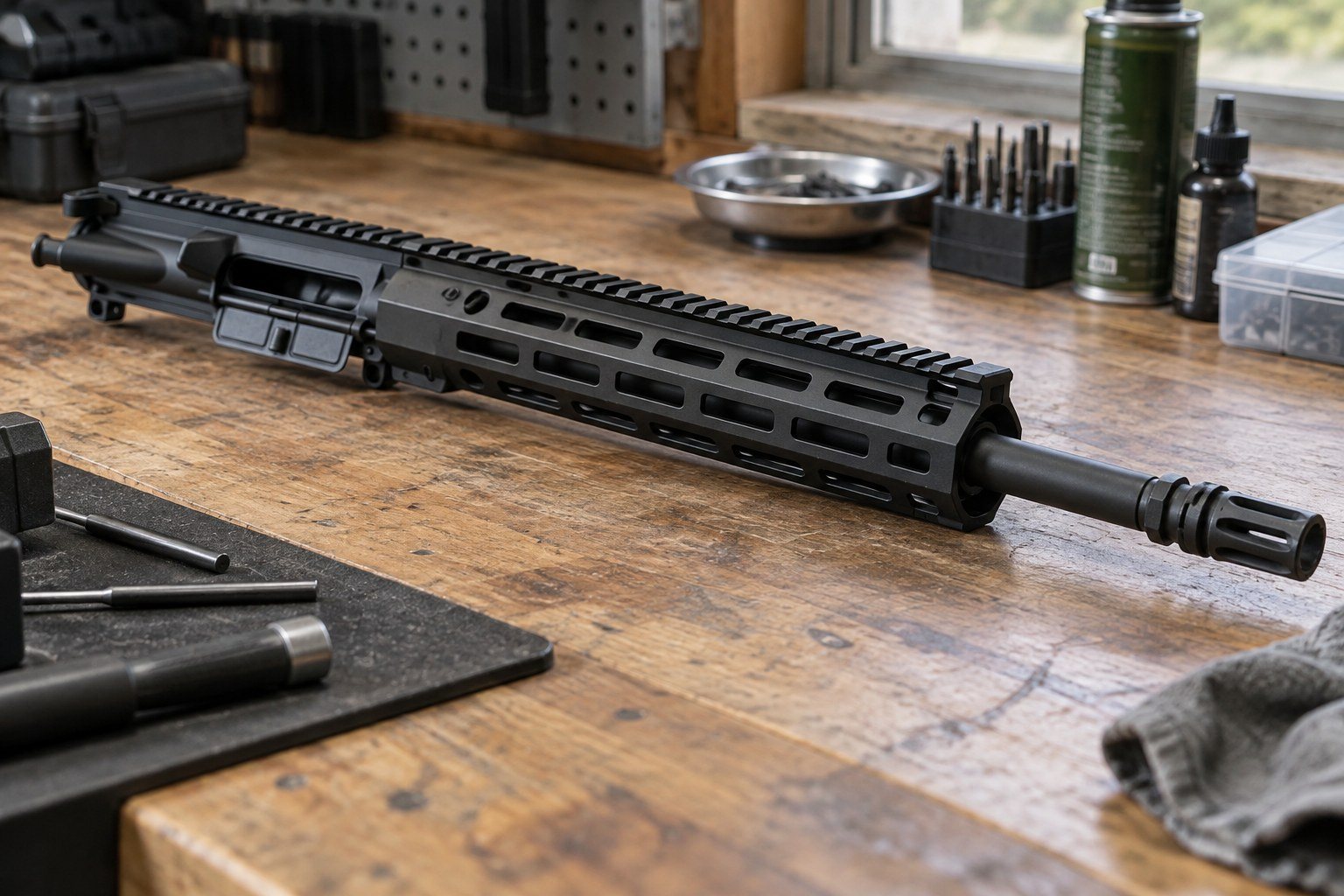
Summer sessions leave behind more carbon, more sweat and often more dust. A quick cleaning once the rifle is cool keeps small problems from becoming bigger ones.
A Simple Cleaning Routine
- Confirm the rifle is unloaded and the magazine is removed.
- Separate the upper and lower, then remove the bolt carrier group and charging handle.
- Wipe carbon from the bolt, carrier and the inside of the upper receiver.
- Clean the bore following your barrel maker's instructions.
- Re-lubricate the BCG and wipe down exterior surfaces to remove sweat and fingerprints.
Our upper cleaning guide goes into more detail. If you notice anything unusual, like cracks, bulging or heavy erosion near the gas port, stop using the rifle and have a qualified gunsmith inspect it.
Inspect Small Parts Too
Check the charging handle latch, the gas key screws and the muzzle device for anything loose. Heat cycles can expose parts that were not torqued correctly. For torque values, always use the component manufacturer's published spec. Replacement muzzle devices are widely available if yours is damaged.
Planning your next summer build or upgrade? Explore our maintenance and troubleshooting articles for more hands-on advice.