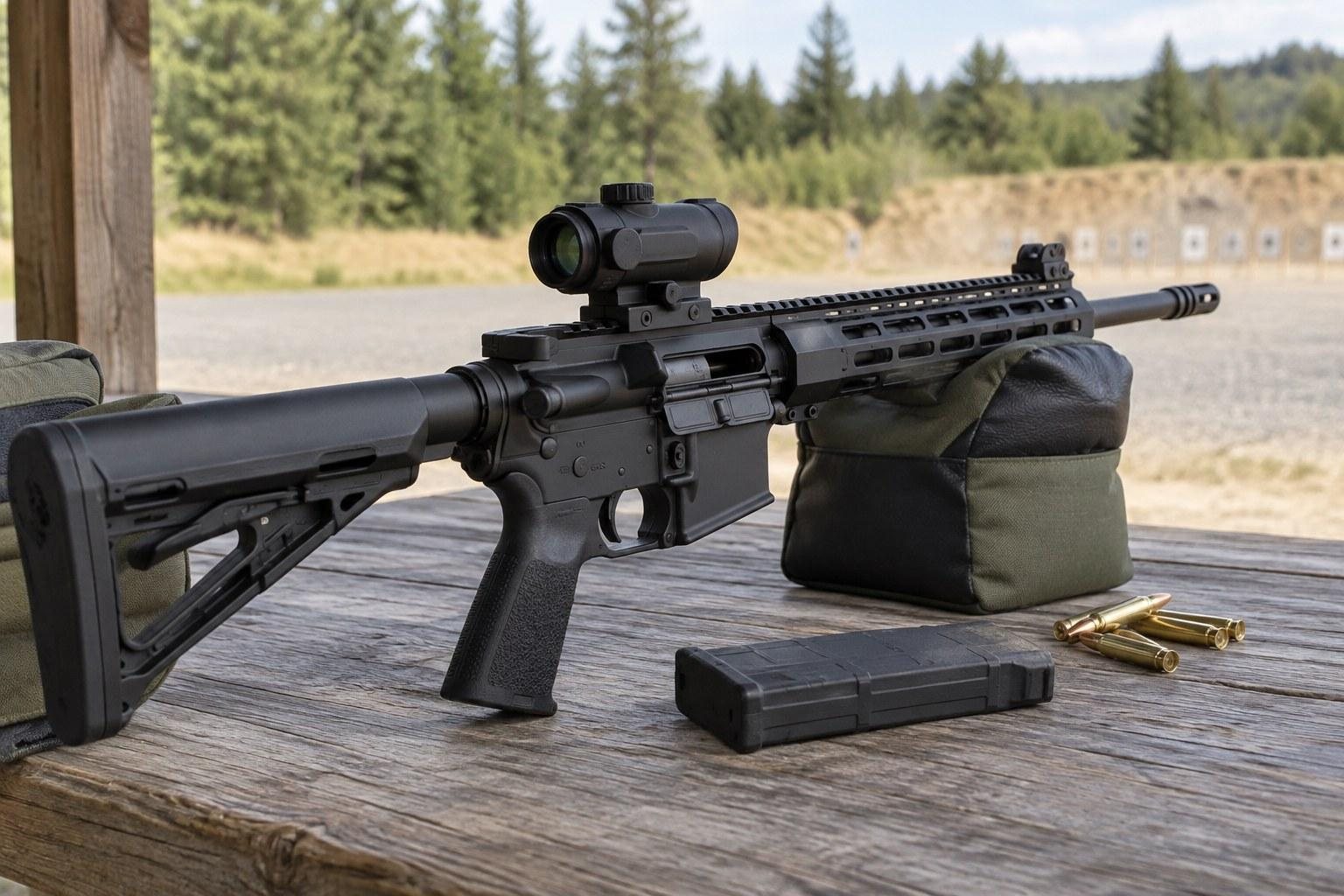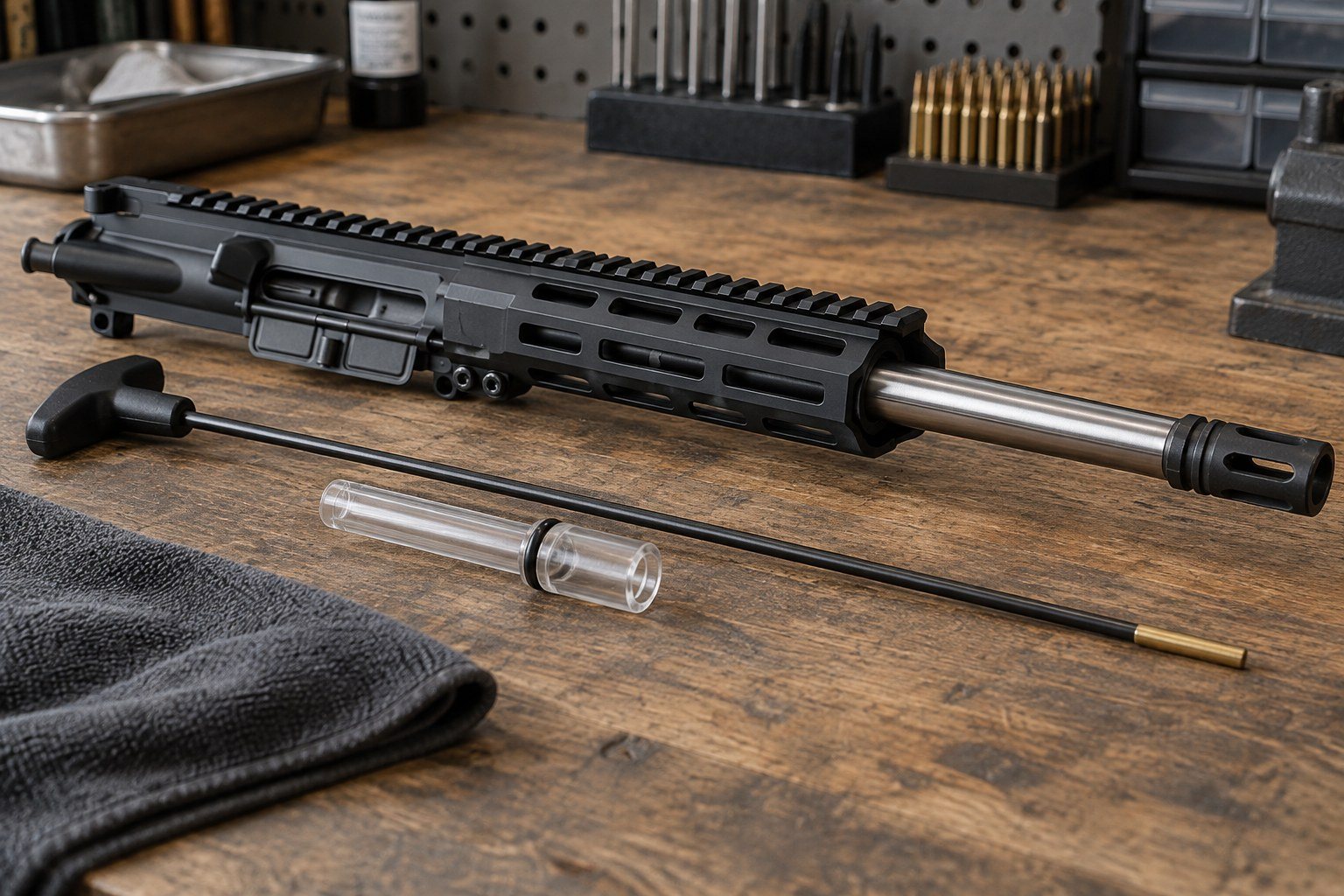
Barrel life is one of the most argued topics in the AR world, and the honest answer to "how many rounds?" is that it depends. Caliber, barrel steel, bore finish, how hot you run the gun and what you expect from it all change the number. A barrel that is "shot out" for a precision shooter can still be perfectly serviceable for a weekend plinker.
Here is a practical way to think about it. Instead of chasing one magic round count, you will learn which factors wear a bore the most, how different barrel types age, and what signs tell you it is time for a new barrel or a complete upper.
Ready to compare options now? Browse complete uppers at AR15Parts.com.
Key Takeaways
- There is no single round count that applies to every barrel, because wear depends on caliber, steel, finish and how the rifle is fired.
- Throat erosion from hot powder gas is the main wear mechanism, so heat and rate of fire matter more than the raw number of trigger pulls.
- Small cases pushed hard and fast, such as 22 ARC and 224 Valkyrie, tend to wear throats faster than mild rounds like 300 Blackout.
- Chrome lining and nitride treatments are generally chosen for durability, while stainless 416R barrels are generally chosen for accuracy.
- Judge a barrel by its results: growing groups, velocity loss, keyholing or a throat that measures long tell you more than a counter.
- When in doubt, have a qualified gunsmith inspect the bore and headspace before you replace anything.
Why There Is No Single Barrel Life Number
Ask ten shooters how long a barrel lasts and you will hear ten numbers. That is not because nine of them are wrong. It is because each person defines "worn out" differently and shoots a different rifle in a different way.
Accuracy Life vs Service Life
Accuracy life is how long a barrel holds the precision its owner expects. A competition shooter may retire a barrel once groups open up even slightly. Service life is how long a barrel stays safe and reliable enough to hit a reasonable target. For a carbine used at practical distances, service life can run far longer than accuracy life.
Why Manufacturers Rarely Promise a Count
Barrel makers control the steel, rifling and finish, but they do not control your ammunition, cleaning habits or rate of fire. For that reason, you will rarely see a guaranteed round count printed on a barrel listing. Treat any internet figure as a rough anecdote, not a spec, and lean on the condition of your own barrel instead.
What Actually Wears Out a Barrel
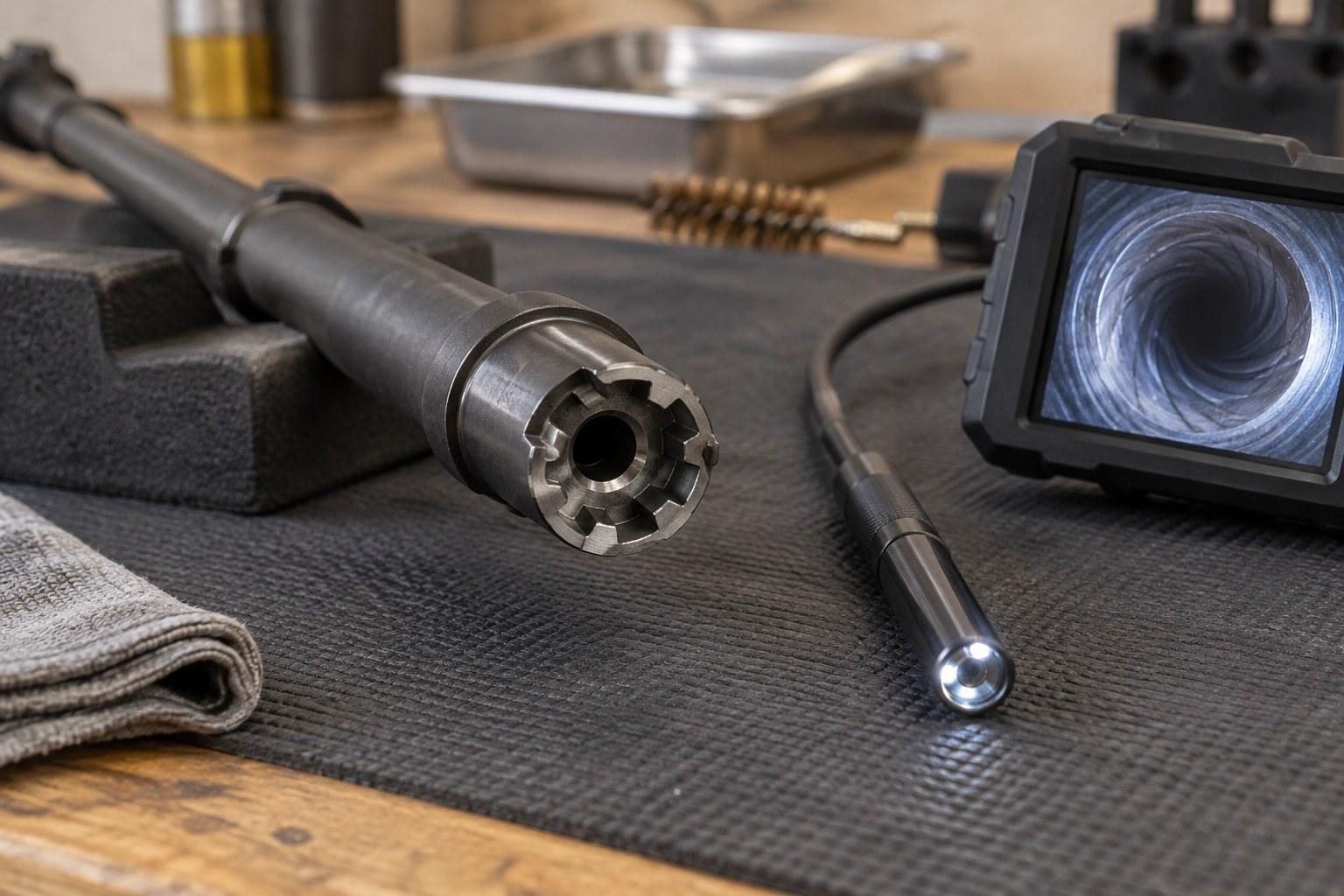
Most barrel wear happens in a short section just ahead of the chamber called the throat or leade. Every shot sends extremely hot, high pressure gas across that steel, and over time the surface cracks and erodes.
Throat Erosion
As the throat erodes, the bullet has to jump farther before it engages the rifling. That longer jump can hurt consistency, and you may notice groups opening or velocity dropping. Fire cracking, sometimes called heat checking, often appears first as a rough, "alligator skin" look on the throat when viewed with a bore scope.
Heat and Rate of Fire
Heat is the accelerator. Long strings of rapid fire let the barrel get hot and stay hot, which speeds erosion of the throat and can also wear the muzzle crown and rifling. The same number of rounds fired slowly with cooling breaks is generally easier on a barrel than a single fast mag dump after mag dump session.
Cleaning Mistakes
Ammunition is not the only thing that wears a bore. A steel rod dragged against the crown, or an aggressive brush used carelessly, can damage the crown and rifling. Use a coated rod or pull-through, a bore guide, and the cleaning steps in our AR-15 upper cleaning guide.
How Caliber Changes Barrel Wear
Caliber may be the single biggest variable you choose. A useful rule of thumb is to compare how much powder a cartridge burns relative to the size of its bore and how fast it pushes the bullet. More powder through a small hole at high velocity means more heat on the throat.
| Caliber Type | Examples | General Throat Wear | Why |
|---|---|---|---|
| Mild, larger bore | 300 Blackout, 350 Legend, 450 Bushmaster | Lower | Moderate velocities and relatively wide bores spread the heat. |
| Standard intermediate | 5.56 NATO, 223 Wylde, 7.62x39 | Moderate | Balanced powder charge for the bore size. |
| Small bore, high velocity | 22 ARC, 224 Valkyrie, 204 Ruger | Higher | A lot of powder pushed through a small bore at speed. |
| Full power AR-10 | 308 Win, 6.5 Creedmoor, 243 Winchester | Varies, often higher for the smaller bores | Larger powder charges, with the 6.5 mm and 6 mm bores working harder than 308. |
This table is a qualitative comparison, not a promise. Two barrels in the same caliber can age very differently depending on how they are made and fired.
Want to compare cartridges side by side before choosing a barrel? Read our caliber breakdown.
Common 5.56 and 223 Wylde Barrels
For most AR-15 owners, the question is about 5.56 or 223 Wylde. Both are moderate on throats, which is part of why they remain popular as general purpose chamberings. 5.56 NATO and 223 Wylde barrels are widely available, so check current options on the 5.56 NATO barrels and 223 Wylde barrels pages. Our 5.56 vs 223 Wylde vs 223 Remington comparison explains the chamber differences.
Hot Small Bore Cartridges
If you are building a long range 22 ARC or 224 Valkyrie upper, plan from day one for a shorter accuracy life than a mild carbine. Shooting slower strings and letting the barrel cool between them is the simplest way to stretch it. 22 ARC options are becoming more common, so check current options on the 22 ARC barrels page.
Barrel Steel and Bore Finish
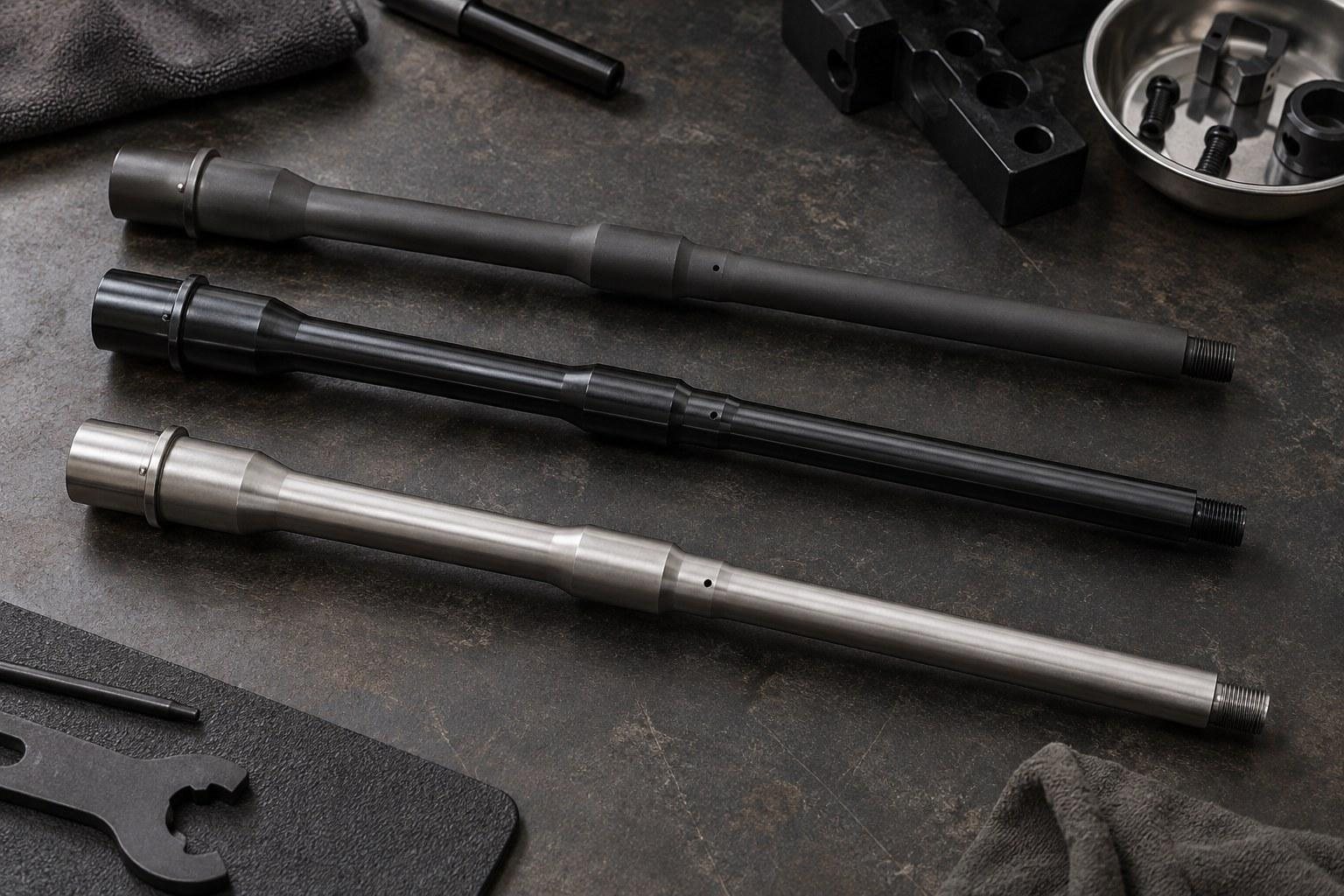
The steel and the treatment inside the bore shape how a barrel ages. The trade-off is usually durability vs precision, and different finishes answer that question differently.
Chrome Lined 4150
Chrome lining puts a hard layer inside the bore and chamber. It is valued for corrosion resistance and durability under heat, which is why it is common on duty-style carbines. Chrome lined, Parkerized 4150 barrels are common in 5.56 NATO and 223 Wylde, including 16 inch M4/Govt profile models.
Nitride and QPQ Treated Steel
Nitriding, including the QPQ process, hardens the surface of the steel rather than adding a plated layer. Ballistic Advantage barrels are a well known example of QPQ treatment on 4150 CMV and 416R steel. Nitride is generally regarded as a durable, accuracy friendly middle ground.
416R Stainless
Stainless 416R barrels are popular for precision builds because the steel machines cleanly and supports fine rifling. Stainless is often described as wearing at the throat sooner than chrome under hard heat, so precision shooters usually accept a shorter accuracy life in exchange for tighter groups. Our chrome lined vs nitride vs stainless guide goes deeper on the trade-offs.
| Finish | Typical Strength | Typical Trade-off | Example Brands on AR15Parts.com |
|---|---|---|---|
| Chrome lined 4150 | Heat and corrosion durability | Lining can slightly limit peak precision | AR15Parts.com house barrels |
| QPQ / nitride | Hard surface, good all around | Less heat tolerance than chrome in some opinions | Ballistic Advantage |
| 416R stainless | Precision potential | Throat may erode sooner under heavy heat | Wilson Combat, Satern Barrels, Shaw Barrels |
Signs Your Barrel Is Wearing Out
A round counter is useful, but the barrel itself tells you more. Watch for these signs, and always confirm the rifle is unloaded before inspecting anything.
- Groups opening up with the same ammunition, optic and shooter that used to deliver tighter results.
- Keyholing, where bullets strike the target sideways and leave oblong holes.
- Velocity loss on a chronograph compared with earlier strings from the same lot of ammunition.
- Visible throat damage such as heavy fire cracking or missing rifling when viewed with a bore scope.
- Damaged crown, such as dings or uneven wear at the muzzle.
Measuring the Throat
Some shooters track throat wear by measuring how far a given bullet seats before touching the rifling, then comparing over time. Others use a throat erosion gauge. Either way, the trend matters more than any single reading.
When It Is Not the Barrel
Poor accuracy is not always a worn bore. A loose optic mount, a handguard touching the barrel, a loose barrel nut or a dirty bolt can all mimic barrel wear. Check those first, and check headspace if you suspect a chamber or bolt issue. If you are unsure, take the upper to a qualified gunsmith.
How to Stretch Your Barrel Life
You cannot stop wear, but you can slow it. Good habits cost little and can keep a barrel accurate longer.
Manage Heat
- Shoot in strings and let the barrel cool between them.
- Avoid long sessions of rapid fire if accuracy matters to you.
- Do not pour water on a hot barrel to cool it.
Clean Smart, Not Hard
Clean from the chamber end whenever possible, use a bore guide, and protect the crown. Follow the barrel and solvent manufacturers' instructions. It is generally wise to review the barrel break-in guide for new barrels, keeping in mind that makers disagree on whether break-in is needed.
Pick the Right Barrel for the Job
If you want an upper that will see lots of high volume practice, a chrome lined or nitride barrel in a mild caliber is a sensible choice. If you want maximum precision and accept periodic barrel replacement, a stainless barrel makes sense. The full selection lives on the AR barrels page.
Not sure which length or profile fits your plans? Our barrel length guide can help.